The Science of Daily Intentionality
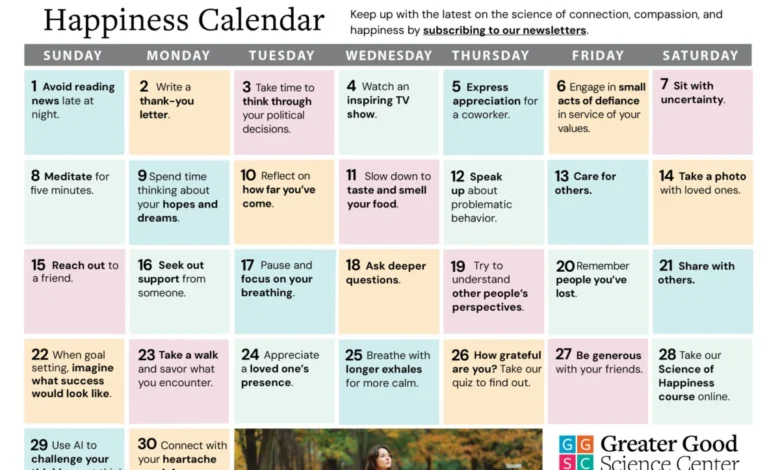
The Happiness Calendar functions as more than a simple schedule; it is an evidence-based framework grounded in the principles of positive psychology. Research consistently demonstrates that the human brain possesses a natural "negativity bias," an evolutionary trait that prioritizes the processing of threatening or negative information over positive stimuli. By engaging in daily, structured exercises, individuals can effectively retrain their neural pathways to identify and savor positive experiences, thereby enhancing overall emotional regulation.
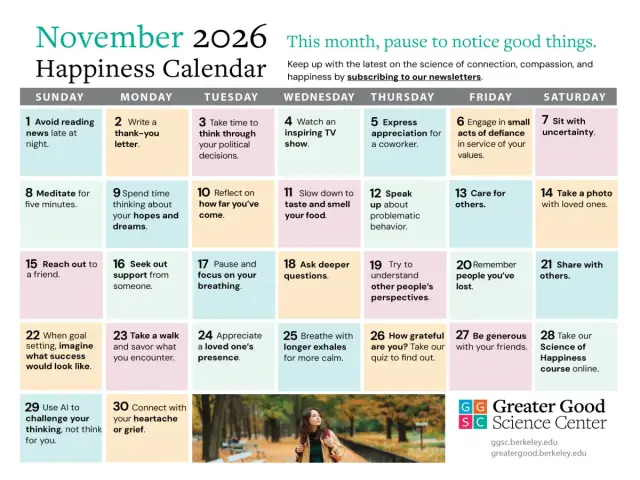
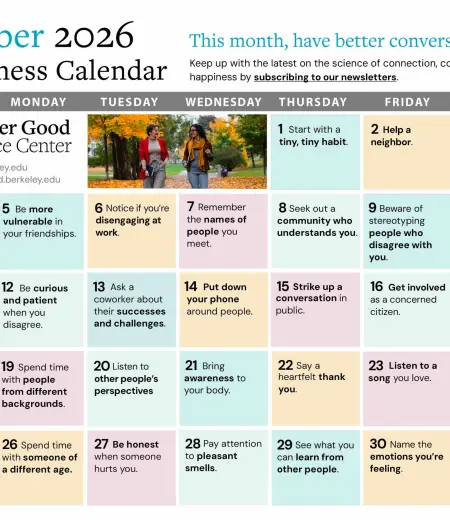
The October 2026 edition emphasizes the theme of pausing to notice the "good things." This specific focus aligns with established clinical practices in mindfulness-based stress reduction (MBSR). According to data from the American Psychological Association, consistent engagement with mindfulness practices is correlated with lower cortisol levels, improved immune function, and enhanced cognitive flexibility. The calendar provides a day-by-day roadmap, ensuring that users do not need to invent their own exercises, which lowers the barrier to entry for those struggling with time-management or mental fatigue.
Chronology of the Calendar Initiative
The development of the Happiness Calendar by the Greater Good Science Center represents a decade-long evolution in public health communication. Initially launched as a digital newsletter feature, the calendar has expanded into an interactive, multimedia tool.
- 2016-2018: Pilot Phase: The project began as a static list of suggested activities, focusing on broad themes such as kindness, altruism, and self-compassion.
- 2019-2021: Digital Transformation: Recognizing the increase in remote work and digital consumption, the center transitioned the calendar into a clickable, PDF-integrated format to allow users to link directly to research-backed articles and guided meditations.
- 2022-2026: Refinement and Expansion: The current iteration utilizes specialized graphic design and user-experience testing to ensure that the calendar remains accessible across various browser platforms, such as Chrome and Adobe-integrated readers, ensuring that technical friction does not impede the user’s well-being practice.
Supporting Data on Well-being Interventions
A meta-analysis conducted by researchers at the University of Pennsylvania indicated that interventions focused on "savoring"—the act of stepping out of an experience to review and appreciate it—can lead to a 25% increase in self-reported life satisfaction over a three-month period. The October 2026 calendar incorporates this research by dedicating specific days to gratitude journaling, observational walks, and intentional social connection.
Furthermore, the integration of these activities into a monthly cadence addresses the "hedonic treadmill" phenomenon, wherein humans quickly return to a relatively stable level of happiness despite major positive or negative events. By introducing new, varied, and specific tasks each month, the calendar disrupts this cycle, forcing the user to remain engaged and attentive rather than falling into habitual, passive routines.

Expert Perspectives and Theoretical Foundations
Kira M. Newman, the primary contributor to the project, has frequently noted that the effectiveness of such tools lies in their consistency. Experts in the field of behavioral economics suggest that "nudges"—small, low-cost interventions—are highly effective in influencing human behavior. By providing a calendar, the Greater Good Science Center creates a visual cue that serves as a nudge, reminding users of their commitment to personal development.
Psychological researchers who study the impact of these initiatives point out that the objective is not to ignore life’s difficulties but to build a "buffer" of positive emotions. This buffer is critical for building resilience. When individuals are accustomed to identifying small, positive occurrences, they are better equipped to handle acute stressors when they arise. This is often referred to as the "Broaden-and-Build" theory, developed by Barbara Fredrickson, which posits that positive emotions broaden an individual’s awareness and encourage novel, varied, and exploratory thoughts and actions.

Technical Implementation and User Accessibility
The digital architecture of the October 2026 calendar reflects a commitment to universal design. While digital tools for well-being are proliferating, accessibility remains a significant hurdle. The Greater Good Science Center has acknowledged the difficulties users sometimes face with browser compatibility—specifically regarding PDF interaction within the Google Chrome environment. By providing troubleshooting resources, the organization ensures that the technical aspect of the resource does not become a source of frustration, which would be antithetical to the calendar’s purpose.
The calendar is designed to be highly responsive, functioning on both mobile and desktop devices. This mobility allows for "just-in-time" learning, where users can access the daily prompt while commuting, during a work break, or at the end of the day, making the practice of well-being highly portable and adaptable to the user’s specific environment.

Broader Implications for Public Health
The existence of such resources underscores a broader societal shift toward proactive mental health maintenance. Historically, mental health resources were largely reactive, focusing on treatment after the onset of clinical symptoms. The current trend, as exemplified by the Happiness Calendar, represents a move toward "preventative mental hygiene."
Public health policy experts have suggested that if a significant portion of the population engaged in daily, low-cost well-being practices, the cumulative effect on public health infrastructure could be substantial. By reducing the reliance on crisis-based care and focusing on emotional self-regulation, tools like the Happiness Calendar contribute to a more resilient society.

Practical Application: How to Utilize the Calendar
For optimal results, behavioral scientists recommend the following framework when utilizing the calendar:
- Environment Setup: Ensure that the PDF is properly downloaded or bookmarked. The center provides specific links for those using Chrome, as these tools require specific plugin permissions to function correctly.
- Daily Commitment: Allocate a specific time, ideally in the morning or early evening, to check the prompt. The prompts are designed to be brief, requiring no more than 5 to 10 minutes of active engagement.
- Reflection: The calendar is not intended to be a checkbox activity. The value lies in the reflection that follows the action. Documenting the outcomes of these daily prompts in a private journal can amplify the benefits.
- Community Engagement: Many of the prompts encourage social connection. Participating in these activities with family or colleagues can create a supportive ecosystem, further increasing the likelihood of long-term adherence.
Future Directions for Well-being Tools
As we move toward the end of 2026, the data gathered from user interactions with the calendar will likely inform future research. The Greater Good Science Center continues to refine these tools, looking for ways to integrate feedback from its subscriber base. There is ongoing discussion regarding the potential for gamification—such as streaks or rewards—to increase engagement. However, the organization remains cautious, ensuring that any added features do not detract from the authentic, intentional nature of the exercises.

The October 2026 Happiness Calendar stands as a testament to the intersection of rigorous psychological research and accessible, user-friendly design. It serves as a necessary reminder that in an increasingly complex and fast-paced world, the simple act of pausing to notice the positive is an essential component of human health. By following this day-by-day guide, individuals can cultivate a more grounded, reflective, and ultimately, more resilient perspective on their daily lives. Whether through the simple observation of nature or the deliberate practice of gratitude, the calendar offers a structured path toward achieving the objective of "noticing good things."