Uncovering the cellular survival mechanism behind tissue regeneration and cancer recurrence

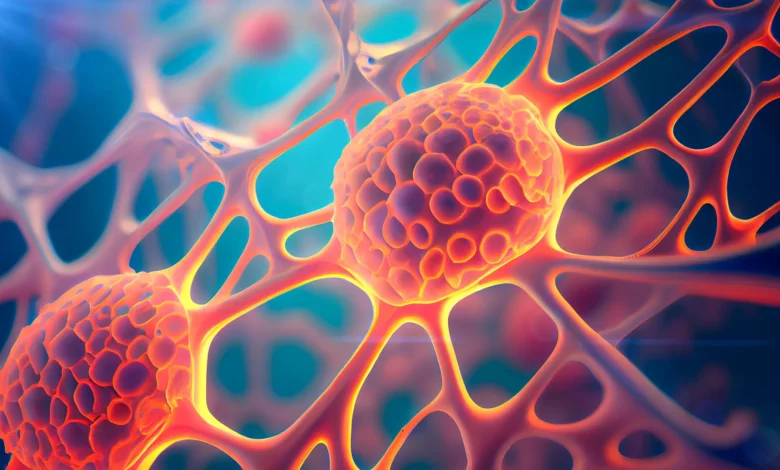
For over half a century, biologists have grappled with a fundamental enigma of regenerative medicine: how do epithelial tissues, such as skin and organ linings, orchestrate massive, rapid regrowth following severe trauma? While the phenomenon of "compensatory proliferation" has been documented since the 1970s, the precise molecular triggers governing this restorative process remained elusive. Recent research conducted at the Weizmann Institute of Science, published in the journal Nature Communications, has finally illuminated this mystery, revealing a dual-edged sword of cellular survival that may explain both efficient wound healing and the insidious return of aggressive cancers.
The Historical Context of Compensatory Proliferation
The scientific journey to understand tissue regrowth began in the 1970s, when developmental biologists subjected fruit fly larvae to high doses of ionizing radiation. Despite sustaining catastrophic damage to their epithelial layers, these organisms exhibited a remarkable capacity to regenerate fully functional wings. This discovery challenged the prevailing view that severe cellular damage necessitated total tissue replacement or permanent scarring. Instead, it suggested an active, internal compensatory mechanism.
For decades, the standard assumption was that this process relied primarily on simple cell division triggered by the absence of neighboring cells. However, the work of the team at the Weizmann Institute, led by Professor Eli Arama of the Molecular Genetics Department, shifts the focus from simple growth to the sophisticated manipulation of cell-death pathways.
The Paradox of Caspases: From Executioners to Protectors
Central to the study is the role of caspases—a family of protease enzymes traditionally categorized as the "executioners" of apoptosis. Apoptosis is the body’s programmed, controlled suicide mechanism for cells that are aged, mutated, or irreparable. Under normal circumstances, an initiator caspase triggers a cascade, followed by effector caspases that systematically dismantle the internal structure of the cell.
However, the Weizmann team’s investigation, spearheaded by Dr. Tslil Braun, suggests that these enzymes possess nonlethal, life-sustaining functions. By utilizing advanced genetic tools to track the regenerative response in fruit fly larvae, the researchers identified two distinct populations of cells that emerge following radiation exposure: DARE (Death-Associated Recovery) cells and NARE (Non-Death-Associated Recovery) cells.
Mapping the Cellular Response: DARE and NARE Cells
The study offers a granular breakdown of how these cell populations interact. The DARE cells are defined by their ability to initiate the apoptotic pathway without completing it. When exposed to radiation, these cells begin the self-destruct process, but the pathway stalls. The researchers identified that a specific "molecular motor" protein tethers the initiator caspase to the cell membrane, effectively trapping the signal and preventing the executioner caspases from completing the destruction of the cell.
These DARE cells are not merely survivors; they are active agents of regeneration. Within 48 hours of injury, DARE cells were observed to multiply rapidly, accounting for nearly 50% of the newly formed tissue. The remaining half of the regeneration is driven by NARE cells—a population that never activates the initiator caspase but is nonetheless stimulated to divide by signaling molecules released by their dying neighbors.
The interplay between these two groups is governed by a precise negative-feedback loop. DARE cells secrete growth signals that encourage NARE cell proliferation, while NARE cells, in turn, release inhibitory signals that ensure the regeneration does not become uncontrolled or tumorous. This delicate, homeostatic balance prevents the system from spiraling into hyper-proliferation.
Implications for Oncology and Treatment Resistance
The most sobering aspect of the discovery lies in the potential for cancer cells to hijack this survival mechanism. If DARE cells can "stall" their own death signals, it stands to reason that tumor cells could exploit the same protein-tethering mechanism to evade the effects of radiation therapy.
The researchers tested this hypothesis by subjecting previously irradiated tissue to a second, follow-up dose. The results were stark: the descendants of DARE cells were seven times more resistant to radiation-induced death than the original cell population. This provides a compelling biological explanation for why recurrent tumors are often significantly more aggressive and treatment-resistant than the primary malignancies from which they originate. Essentially, the "survival memory" of these cells is inherited by their progeny, creating a hardened lineage of cancer cells that are primed to withstand therapeutic intervention.
Scientific Analysis and Future Applications
This research suggests a profound shift in how clinical oncology might approach radiotherapy. Traditionally, radiation is designed to deliver a lethal dose to trigger mass apoptosis. If a subset of cells utilizes the DARE mechanism to survive and adapt, the therapy may inadvertently act as a selective pressure, culling sensitive cells while leaving behind a highly resistant, hyper-proliferative population.
"We hope that the knowledge gained here can be translated into an understanding of the mechanisms that balance growth and confer resistance to cell death in human tissues," stated Professor Arama. By identifying the molecular motor protein responsible for stalling the death pathway, researchers may eventually develop targeted inhibitors that prevent cancer cells from "stalling" their destruction, thereby increasing the efficacy of existing radiation protocols.
Conversely, for regenerative medicine, the ability to safely activate DARE-like mechanisms could prove revolutionary. If scientists can harness the signals that DARE cells use to initiate controlled, healthy regrowth, it may be possible to accelerate healing for patients with chronic wounds, severe burns, or degenerative tissue conditions.
Collaborative Research and Peer Recognition
The complexity of this study required a multidisciplinary approach. The Weizmann Institute team worked in close collaboration with international experts, including Professor Andreas Bergmann from the UMass Chan Medical School and Professor Luis Alberto Baena-Lopez from the Severo Ochoa Molecular Biology Center in Spain. This collaborative effort ensures that the findings are robust and cross-validated across different genetic models.
As the scientific community reviews these findings, the focus will likely turn to identifying the human orthologs of these fruit fly proteins. While the biological architecture of a fruit fly is simpler than that of a human, the fundamental pathways of apoptosis are highly conserved across species. The identification of DARE and NARE cells serves as a vital blueprint, offering a new lens through which to view the persistent challenge of tumor recurrence.
Conclusion: A New Era in Regenerative Biology
The discovery at the Weizmann Institute represents more than just an advancement in developmental biology; it is a significant step toward understanding the fragility and resilience of human cellular life. By mapping the nuanced communication between DARE and NARE cells, scientists have moved closer to unraveling the biological trade-offs that define our survival.
As research transitions from fly models to more complex mammalian systems, the goal remains clear: to decouple the beneficial aspects of tissue regeneration from the destructive capacity of cancer. If the "death-resistant" survival pathways can be manipulated or blocked at the molecular level, the medical community may finally hold the key to preventing the recurrence of aggressive cancers while simultaneously unlocking new, efficient avenues for tissue repair. This study stands as a testament to the power of fundamental research in clarifying the complex, often paradoxical, behaviors of the cells that build and sustain the human body.