The Silent Alarm: How One Mother’s Postpartum Intuition Led to a Life-Saving Breast Cancer Diagnosis

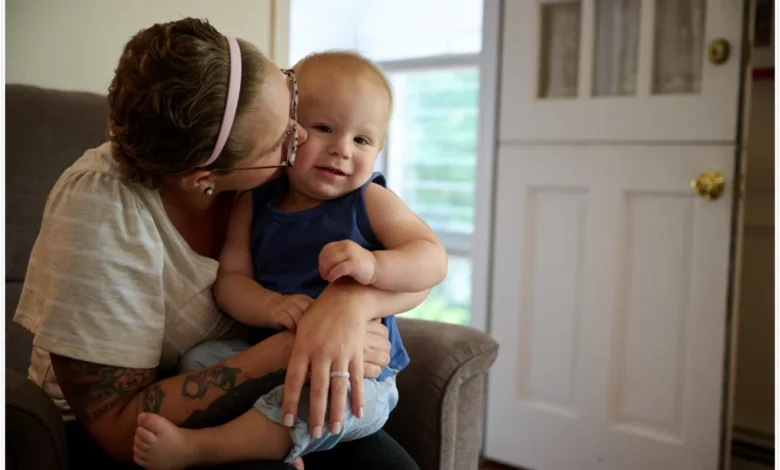
In January 2025, just two weeks after welcoming her second child, Hudson, Dana Sherer discovered a lump in her breast. While many women attribute physical changes during the postpartum period to the demands of breastfeeding, Sherer, 40, recognized that this anomaly was different. It was firm, approximately the size of a kiwi, and persistent. Her decision to act immediately upon this intuition would prove to be the critical turning point in a battle against an aggressive, HER2-positive malignancy.
The diagnostic journey that followed underscores a significant challenge in modern oncology: identifying and treating breast cancer during the complex physiological environment of the postpartum period. Sherer’s experience serves as a stark reminder of the importance of self-advocacy and the need for increased awareness regarding breast health during the months following childbirth.

A Chronology of Discovery and Intervention
When Sherer first noticed the mass, her prior experience with her eldest son, Dallas, provided a baseline for what was normal during lactation. Unlike a clogged duct—a common and painful condition for breastfeeding mothers—this mass did not fluctuate with nursing or dissipate over time.
By mid-January 2025, Sherer had secured a referral to Dr. Ashley Newman, a specialized breast surgeon at Penn Medicine Princeton Health. Dr. Newman’s clinical assessment was immediate. "When we did her exam, I just remember thinking, like, this is cancer," Dr. Newman stated. The physician noted that while postpartum breast tissue is notoriously difficult to examine due to hormonal swelling and milk production, the physical characteristics of the mass and the patient’s clear-headed description of the timeline made the diagnosis highly probable.
The subsequent diagnostic phase was fraught with technical hurdles. Standard imaging, such as MRIs, is typically scheduled according to a patient’s menstrual cycle to minimize "background noise" in the tissue. In the immediate postpartum phase, such timing is impossible. Despite these limitations, the medical team utilized targeted ultrasounds and biopsies to confirm the presence of ductal carcinoma in situ (DCIS). However, Dr. Newman suspected the cancer was already invasive, noting that the physical extent of the mass suggested a more advanced progression than the initial biopsy indicated.

The Medical Challenge of Postpartum Cancer
Breast cancer occurring during pregnancy or the postpartum period—known as pregnancy-associated breast cancer (PABC)—is defined as cancer diagnosed during gestation or within one year of delivery. According to medical data, PABC accounts for approximately 0.2% to 3.8% of all breast cancer cases. Because these cases often present in dense, lactating tissue, they are frequently diagnosed at a later stage, making the clinical vigilance shown by both Sherer and Dr. Newman exceptional.
The treatment plan was aggressive. Dr. Newman recommended a mastectomy, a procedure that necessitated the cessation of breastfeeding. For Sherer, this was an emotionally taxing requirement, as she deeply valued the nursing experience. Yet, the medical imperative was clear: the cancer was multifocal and microinvasive. Subsequent analysis confirmed that the disease was HER2-positive, a subtype characterized by the overproduction of the HER2 protein, which causes cancer cells to grow and spread more rapidly than other types of breast cancer.
A Rigorous Treatment Regimen
Following the mastectomy, Sherer entered a grueling 12-week regimen of Taxol chemotherapy, followed by a year-long course of targeted therapy using Herceptin. The physical toll of these treatments was compounded by the demands of caring for two young children.

During the months of treatment, Sherer’s husband frequently traveled for work, leaving her to navigate the challenges of single-parenting while managing the side effects of oncology infusions. She often brought her children to the hospital, a routine that highlighted the intersection of maternal duty and life-saving medical intervention. Despite the exhaustion and the emotional weight of her diagnosis, Sherer relied on support systems—including her parents and stepmother—to sustain her household during her recovery.
The Broader Implications for Postpartum Health
The implications of Sherer’s story reach far beyond her individual outcome. The case highlights a critical gap in postpartum care: the lack of standardized breast health screening for women who have recently given birth. While postpartum checkups focus heavily on uterine health, cardiovascular recovery, and mental health screenings, formal assessments of breast tissue outside of breastfeeding complications are not always routine.
Medical experts emphasize that the "it’s just a clogged duct" narrative can be dangerous. Dr. Newman stresses that the medical community must listen to patients who report changes in their bodies, regardless of their age or the recency of their pregnancy. "I treat women in their 20s with breast cancer. This can happen to anybody, at any time, for any reason," Dr. Newman said.

Furthermore, the advancement in oncology has significantly shifted the prognosis for patients like Sherer. Because the cancer was caught before it reached the lymph nodes, her treatment path, while intense, was successful in arresting the disease. Modern targeted therapies, such as the Herceptin she received, have transformed HER2-positive cancer from a highly lethal diagnosis into a condition with significantly higher survival rates and long-term remission possibilities.
Advocacy and the Path Forward
Reflecting on her journey, Sherer emphasizes that her survival was predicated on her refusal to accept the potential dismissal of her concerns. She advocates for a change in mindset, urging women to prioritize their health even amidst the chaotic, sleep-deprived reality of early motherhood.
"Take care of your breasts even during and after pregnancy," Sherer advises. "Make that a part of your postpartum checkup."

The medical consensus supports this proactive approach. Early detection remains the most effective tool in reducing mortality rates. When breast cancer is caught at an early stage, before it has metastasized to the lymph nodes or distant organs, the five-year survival rate is significantly higher, often exceeding 90%.
Dr. Newman concludes that while the experience was traumatic, it serves as a powerful testament to the necessity of clinical vigilance. "This is not something that has to define you," she noted. "It doesn’t have to be the end of anything."
For Sherer, the ordeal has fundamentally altered her perspective on motherhood and self-care. She emphasizes the importance of granting oneself grace during illness, acknowledging that while she struggled with the perceived loss of "perfect" parenting, she ultimately prioritized her survival for the sake of her children. By choosing to share her story, she hopes to encourage other women to trust their instincts and demand comprehensive diagnostic care, ensuring that no mother ignores a "silent" warning sign until it is too late. The journey from a simple lump discovered in January 2025 to a state of sustained health is a reminder that in the face of a cancer diagnosis, intuition is not just a feeling—it is a vital component of the medical process.