Belgium and World Health Organization Deepen Strategic Partnership to Advance Universal Health Coverage and Global Health Security

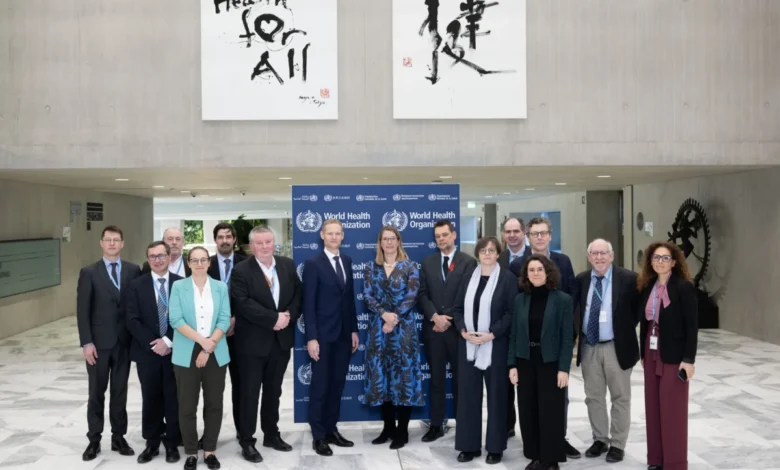
GENEVA — In an intensive three-day diplomatic and technical summit held in early March 2025, representatives from the Kingdom of Belgium and the World Health Organization (WHO) convened to evaluate their long-standing multilateral partnership. The high-level strategic dialogue resulted in renewed commitments to bolster cooperation across critical pillars of international public health, including universal health coverage (UHC), health-systems strengthening, and equitable access to essential medicines, vaccines, and health technologies.
The comprehensive dialogue brought together a robust Belgian delegation alongside WHO leadership and technical experts from headquarters and regional offices for Africa and Europe. The talks served as a crucial platform to harmonize Belgium’s development cooperation priorities with the overarching strategic direction of the WHO, particularly as the international community navigates a complex and rapidly shifting global health landscape characterized by intersecting crises, budgetary pressures, and emerging biological threats.
The Evolution of a Strategic Alliance: Background and Context
The relationship between Belgium and the WHO has historically been defined by strong financial backing, technical collaboration, and shared values centered on the right to health. Belgium has consistently ranked among the reliable state donors supporting the WHO’s normative work, emergency responses, and targeted disease eradication initiatives.
The timing of this strategic dialogue carried profound significance, following closely on the heels of Belgium’s presidency of the Council of the European Union in 2024. During its EU presidency, Belgium leveraged its political influence to spotlight several neglected global health priorities, including equitable vaccine manufacturing, the reinforcement of primary health care, and the protection of health systems in fragile and conflict-affected states.
The multi-day summit in Geneva was designed to take stock of how these European-level priorities translate into concrete, field-level interventions. The Belgian delegation featured a broad representation of the country’s complex federalized structure, including delegates from the federal government as well as the Flemish and Walloon regional governments. This multi-level representation underscored Belgium’s coordinated domestic approach to international development and global solidarity.
Day-by-Day Chronology and Core Agenda
The strategic dialogue unfolded over three structured days, addressing distinct thematic pillars of international public health through a combination of plenary sessions, technical briefings, and field-level case studies.
The first day of the dialogue focused on the overarching architecture of global health development and Belgium’s bilateral contributions. Ambassador Christophe Payot, Permanent Representative of Belgium to the United Nations and other international organizations in Geneva, opened the sessions by emphasizing the necessity of agile and resilient multilateral institutions. Discussions centered on aligning the WHO’s strategic frameworks with Belgium’s multi-year development cooperation strategy. Officials reviewed ongoing programmatic support in target countries, evaluating how bilateral funding mechanisms can most effectively plug gaps in under-resourced health systems.
The second day shifted toward operational realities, focusing heavily on health emergencies, pandemic prevention, preparedness, and response (PPPR), and the Access to Medicines program. Technical experts from the WHO presented sobering real-world case studies detailing the organization’s frontline operations. Presentations on the ground realities in Gaza and the Democratic Republic of Congo provided stark reminders of the logistical and humanitarian challenges inherent in delivering healthcare amid active conflict and acute biological risks.
The final day of the dialogue concentrated on universal health coverage, primary health care, and the future framework of the Belgium-WHO partnership. Participants evaluated the legacy of the UHC-Partnership from 2021 through 2024, examining tangible metrics of success in partner countries across sub-Saharan Africa. The talks concluded with a forward-looking consensus on drafting a renewed WHO-Belgium Country Cooperation Strategy to guide joint initiatives through the remainder of the decade.
Accelerating Equitable Access to Medicines and Local Production
A cornerstone of the Belgium-WHO partnership is the sustained financial and political support directed toward expanding access to essential health products. During the Geneva talks, both delegations scrutinized the performance metrics of the WHO Access to Medicines program, which receives vital funding from the Belgian government.
The WHO presented detailed assessments of how this program operates on the ground, highlighting implementation challenges and successes in countries such as Senegal. The dialogue moved beyond mere drug distribution to address the structural economics of global health, focusing on market shaping and the localization of manufacturing capacity.
Global health inequities laid bare during previous health crises have convinced both Belgium and the WHO that long-term sustainability requires empowering low- and middle-income countries to produce their own vaccines, diagnostics, and therapeutics. WHO technical experts outlined current normative policies aimed at strengthening regulatory authorities in developing nations, transferring technology safely, and fostering regional manufacturing hubs. Both parties concurred that market-shaping strategies must be designed to withstand market volatility and commercial disincentives, ensuring that life-saving innovations remain affordable and accessible to the populations most in need.
Health Emergencies, Biological Risks, and the One Health Approach
The ongoing negotiations surrounding the global pandemic agreement and the broader reform of the international health emergency architecture formed a major component of the security-focused discussions.

With zoonotic spillover risks and biological threats accelerating due to climate change, deforestation, and changing agricultural practices, the WHO briefed the Belgian delegation on its enhanced risk mitigation strategies. The discussions underscored the operationalization of the "One Health" approach—an integrated, unifying mechanism designed to balance and optimize the health of people, animals, and ecosystems.
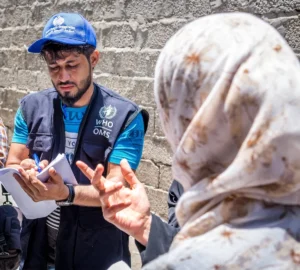
To ground these high-level policy discussions in operational reality, WHO officials detailed their emergency response mechanisms in active conflict zones, with a specific focus on Gaza. The presentation highlighted the logistical nightmares of coordinating medical evacuations, protecting healthcare workers, and supplying hospitals under siege. The Belgian delegation expressed deep appreciation for the WHO’s frontline workers, noting that these operational briefings provided invaluable insight into the organization’s capacity to save lives in the world’s most dangerous environments.
Advancing Universal Health Coverage and Primary Care
Universal health coverage remains the ultimate metric by which global health development is judged. The strategic dialogue featured a comprehensive review of the UHC-Partnership milestones achieved between 2021 and 2024 with Belgian financial backing.
Particular attention was dedicated to country-level execution. Representatives reviewed data from the Democratic Republic of Congo, analyzing the persistent structural barriers to healthcare access, including inadequate infrastructure, workforce shortages, and supply chain bottlenecks.
Furthermore, the dialogue addressed the integration of mental health services into primary health care—a critical area historically neglected in international development frameworks. WHO specialists shared policy updates regarding the scaling up of mental health interventions at the community level, ensuring that psychological support is treated as an integral component of comprehensive healthcare rather than an afterthought.
Beyond UHC, the partners reviewed targeted programs combating Neglected Tropical Diseases (NTDs) and safeguarding Sexual and Reproductive Health and Rights (SRHR). Both delegations reaffirmed that all interventions in these sensitive domains must strictly adhere to evidence-based public health principles to maximize impact and cost-effectiveness.
Official Statements and Multilateral Commitments
The collaborative spirit of the dialogue was reflected in statements from key figures on both sides, underscoring a shared dedication to effective multilateralism at a time when international cooperation faces severe geopolitical strains.
"After listening to the leaders and experts of WHO, we now better understand how they are navigating these challenging times," remarked Mr. Koen Van Acoleyen, Minister Counselor at the Permanent Representation of Belgium to the UN. "We are honoured that we can walk this road together."
Dr. Catharina Boehme, WHO Assistant Director-General for External Relations and Governing Bodies, praised the multifaceted nature of Belgium’s political engagement, highlighting the inclusion of federal, Flemish, and Walloon government representatives. "We thank you for your support, honesty, and strong engagement for global health," Dr. Boehme stated. "Your efforts in supporting our work in Mozambique and Senegal are clear examples of the crucial work we accomplish together."
Echoing these sentiments, Mr. Dirk Brems, Director of Thematic and Multilateral Cooperation at the Directorate-General Development Cooperation and Humanitarian Aid, emphasized the mutual value of the partnership. "We recognize WHO as a trustworthy partner in global health. We felt proud hearing how crucial our support is to the Organization and how it is having a positive impact at country, regional, and global levels," Mr. Brems noted. "It’s important we continue these discussions as we tread uncharted territories, and we look forward to working together for strong and sustained multilateralism."
Broader Implications and the Road Ahead
The conclusion of the three-day dialogue sets the stage for the formalization of a renewed multi-year cooperation framework between Belgium and the WHO.
Looking forward, the enhanced alignment between Belgian development assistance and the WHO’s 14th General Programme of Work (GPW14) is expected to yield significant dividends. As the WHO prioritizes its strategic goals under GPW14—with universal health coverage and health systems strengthening placed firmly at the heart of its ambitions—predictable, flexible funding from reliable bilateral partners like Belgium will be indispensable.
In an era marked by competing national interests and skepticism toward international institutions, the renewed Belgium-WHO partnership serves as a robust model of effective international solidarity. By combining technical expertise with targeted financial resources and a shared commitment to equity, Belgium and the WHO are positioning themselves to better withstand future health shocks while steadily advancing the fundamental human right to health across the globe.
Related posts: