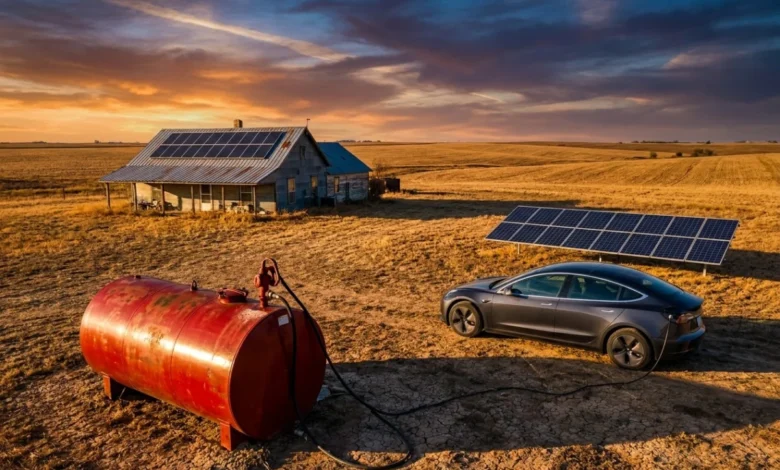
The recent issuance of a statewide disaster declaration by Texas Governor Greg Abbott regarding diesel fuel shortages marks a significant escalation in the ongoing volatility of the American energy sector. As domestic refining capacity faces sustained pressure from geopolitical instability and long-term supply chain constraints, the emergency order seeks to mitigate immediate economic disruption by temporarily relaxing tax-related restrictions on off-road diesel usage. While this policy shift provides a temporary reprieve for logistics, agriculture, and transportation sectors, it also highlights the fragile nature of a centralized, "just-in-time" fuel delivery infrastructure. For many residents, particularly those in rural regions, the crisis has prompted a fundamental reassessment of energy autonomy, leading to an increasing interest in decentralized power sources, including solar-integrated electric vehicle (EV) technology.
The Anatomy of the Diesel Crisis
The current diesel shortage is not an isolated event but rather the culmination of years of systemic shifts in global energy markets. Historically, diesel fuel has served as the lifeblood of the global economy, powering the heavy-duty machinery, maritime vessels, and commercial trucks that facilitate the distribution of essential goods. Over the last three years, several compounding factors have constrained supply: the global reduction in refining capacity, the strategic redirection of fuel exports due to the Russia-Ukraine conflict, and heightened tensions in critical maritime chokepoints like the Strait of Hormuz.
Data from the energy sector indicates that national average diesel prices have remained elevated, often exceeding the $6.00 per gallon threshold, placing extreme financial strain on the agricultural and trucking industries. The volatility is exacerbated by historically low inventory levels in the Strategic Petroleum Reserve (SPR), which recently reached levels not seen since the early 1980s. Despite large-scale releases authorized by the federal government—most notably the 172-million-barrel drawdown—these measures have functioned primarily as stopgaps rather than structural solutions to the underlying supply-demand imbalance.
Chronology of the Regulatory Shift
The Texas Railroad Commission, which oversees the state’s energy production, has supported the Governor’s emergency declaration as a necessary, common-sense measure to maintain the flow of commerce. The core of the issue involves "red-dyed" diesel. In the United States, diesel intended for off-road use—such as tractors, irrigation pumps, and stationary generators—is dyed red to distinguish it from taxable highway fuel. The use of this fuel on public roadways is strictly prohibited and carries significant financial penalties, with fines often exceeding $20,000 for non-compliance.
The emergency order effectively suspends these penalties, allowing commercial operators to utilize off-road fuel reserves to keep supply chains moving during the shortage. This regulatory adjustment, while providing immediate relief, underscores a long-standing tension between the state’s revenue collection mechanisms and the operational realities of its citizens. Historically, these rules were designed to ensure that those utilizing public infrastructure for commercial transit contribute to the maintenance of that infrastructure via fuel taxes. However, during periods of extreme scarcity, the strict enforcement of these tax regulations becomes an obstacle to the basic function of the economy.
Economic and Infrastructure Implications
The broader implications of this emergency order reach far beyond the immediate fuel availability. Economists note that the crisis has exposed the inherent vulnerability of the "just-in-time" supply chain model. Because commercial entities maintain minimal fuel inventories to optimize cash flow, any disruption in regional refining or delivery cycles results in immediate shortages at the pump.
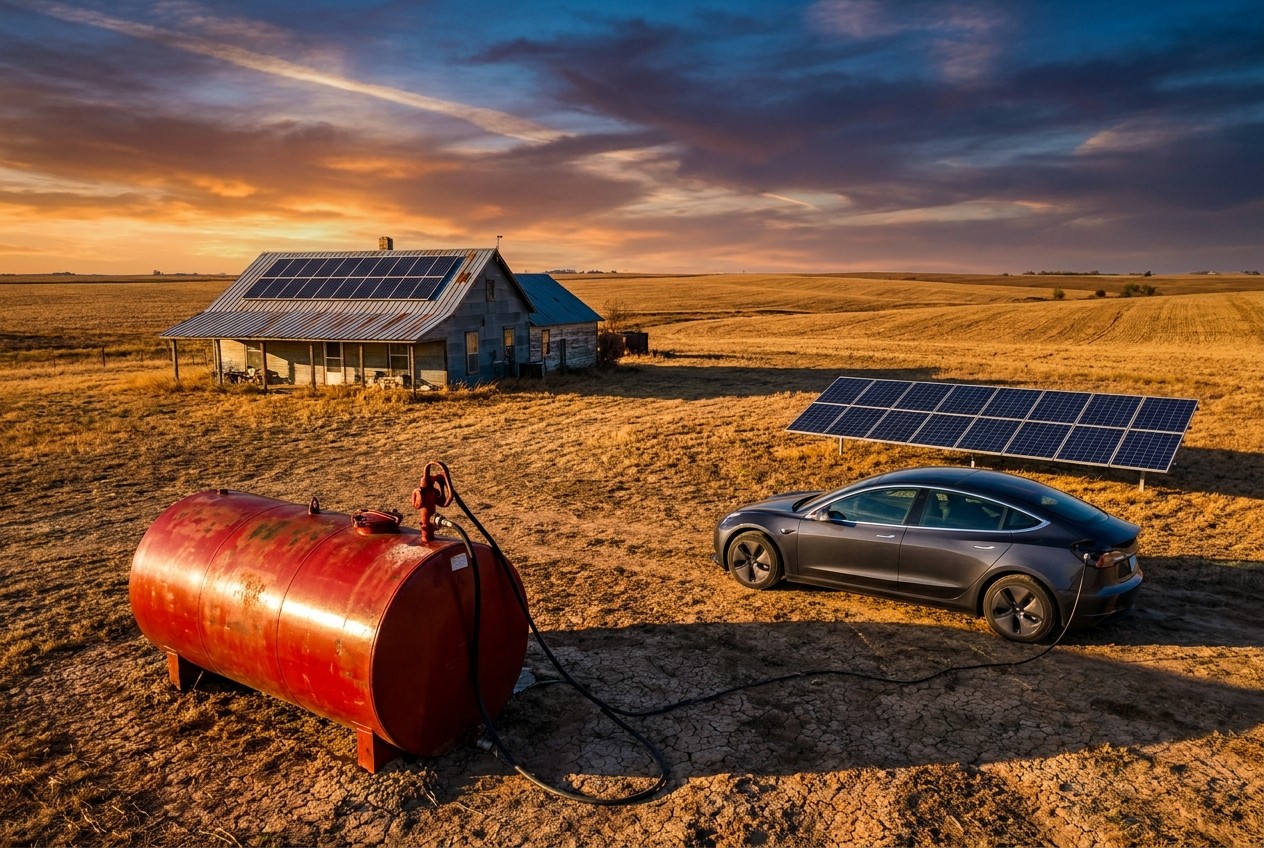
This fragility was starkly illustrated during the 2021 Texas winter freeze, where a cascading failure of the electrical grid forced many rural residents to rely on internal combustion generators for heating and essential life support. The experience served as a catalyst for a shift toward decentralized energy strategies. Many landowners have since moved to integrate solar arrays and battery storage systems, not merely as a matter of environmental preference, but as a calculated survival strategy against future grid instability.
The Shift Toward Personal Energy Independence
As the limitations of conventional, fossil-fuel-dependent logistics become more apparent, there is a measurable trend toward the adoption of electric vehicles among those who prioritize energy autonomy. The rationale for this transition in rural areas is increasingly pragmatic rather than purely ideological. By pairing an electric vehicle with an independent, off-grid solar installation, a homeowner can theoretically bypass the retail fuel market entirely.
This transition represents a decoupling from global oil price volatility. If a consumer generates their own electricity through solar photovoltaic systems and stores it in high-capacity residential batteries, they gain a degree of immunity from the price spikes and supply disruptions that characterize the diesel market. For individuals involved in farming or remote operations, the ability to "fuel" a vehicle from a private, renewable source offers a level of operational security that is impossible to achieve with a dependence on external, state-regulated fuel supplies.
Regulatory and Enforcement Challenges
The suspension of the red-dye rules creates a unique enforcement dilemma for the state. Thousands of vehicles will, by necessity, be running red-dyed diesel during the emergency window, resulting in residual staining of fuel filters and engine systems. Once the emergency order is rescinded, the presence of red dye will no longer be an immediate indicator of a current violation, as many operators will have legitimate claims that the fuel was introduced during the sanctioned period.
This reality highlights the administrative burden of a tax system based on chemical markers. Many industry observers argue that the crisis serves as a compelling case for a broader simplification of the tax code. Rather than relying on punitive enforcement and temporary waivers, advocates for energy reform suggest that lowering baseline fuel taxes would provide more consistent economic relief and remove the necessity for such complex and disruptive emergency interventions.
Looking Ahead: The Future of Energy Resilience
The current diesel emergency in Texas is a reminder that energy policy must account for the reality of supply chain fragility. While the immediate focus is on stabilizing fuel access, the longer-term concern for policymakers is the structural integrity of the nation’s energy infrastructure. Whether through the potential invocation of the Defense Production Act to boost refining capacity or through the ongoing, slow-motion transition toward decentralized power, the focus is shifting toward redundancy.
For the individual, the lesson remains consistent: reliance on centralized, fragile systems creates exposure to unpredictable market forces. As the cost of conventional fuels continues to climb and supply chains remain prone to geopolitical interference, the shift toward personal energy independence—leveraging solar, wind, and battery storage—will likely continue to accelerate. The emergency order issued by Governor Abbott may solve the immediate, short-term deficit, but it does little to address the fundamental instability of the current energy model. Ultimately, the transition toward decentralized energy is not merely a technological evolution; it is a defensive response to a global market that is becoming increasingly volatile and prone to disruption. As such, the move toward electric vehicles in rural sectors is likely to persist as a long-term trend, driven by the desire for stability in an increasingly unpredictable world.