U.S. Bolsters Global Health Initiatives Across 80+ Nations with FY 2024 Programs Focusing on Critical Health Areas

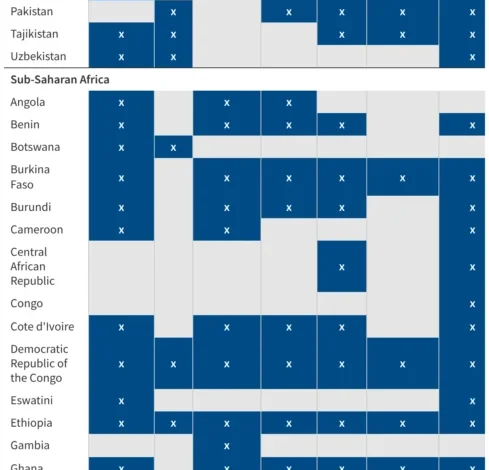
The United States maintains a comprehensive and expansive commitment to global health, actively supporting programs in over 80 countries worldwide. This extensive bilateral engagement is further augmented by regional initiatives and substantial contributions to multilateral organizations, underscoring a multifaceted approach to addressing some of humanity’s most pressing health challenges. For Fiscal Year 2024, the U.S. government’s global health programs span a diverse array of critical areas, including the President’s Emergency Plan for AIDS Relief (PEPFAR), Tuberculosis (TB) control, the President’s Malaria Initiative (PMI), Family Planning and Reproductive Health (FP/RH), Maternal and Child Health (MCH), Nutrition, and Global Health Security. This robust framework is meticulously tracked, providing transparent overviews of U.S. bilateral global health investments and activities by country and region, with the latest data reflecting current operations and commitments.
A Legacy of Global Health Engagement: Historical Context
The United States’ involvement in international health is not a recent phenomenon but rather a deeply rooted aspect of its foreign policy and humanitarian ethos, evolving significantly over the past century. Early efforts often stemmed from post-World War II reconstruction and the Cold War era, where health initiatives served as tools for diplomatic engagement and goodwill. Programs in sanitation, disease control, and basic healthcare infrastructure were common, often delivered through agencies like USAID, established in 1961. These early endeavors laid the groundwork for a more structured and strategic approach to global health, recognizing that health outcomes in one part of the world could have far-reaching implications, including for U.S. national security and economic interests.
The Dawn of Large-Scale Initiatives: PEPFAR and PMI
The turn of the 21st century marked a pivotal moment, characterized by the launch of unprecedented, large-scale, disease-specific initiatives. The President’s Emergency Plan for AIDS Relief (PEPFAR), initiated in 2003 by President George W. Bush, stands as a landmark commitment. Born out of the devastating global HIV/AIDS pandemic, PEPFAR rapidly scaled up access to antiretroviral treatment (ART) in resource-limited settings, transforming the trajectory of the disease in many of the hardest-hit countries, particularly in sub-Saharan Africa. Its establishment signified a profound shift towards direct, comprehensive, and sustained funding for a single disease on a global scale. This initiative quickly became a cornerstone of U.S. global health diplomacy, showcasing the power of sustained political will and significant financial investment.
Following PEPFAR’s success, the President’s Malaria Initiative (PMI) was launched in 2005, also under President Bush. Recognizing the immense burden of malaria, particularly on children and pregnant women, PMI aimed to dramatically reduce malaria-related deaths and illnesses. By deploying a comprehensive strategy including insecticide-treated bed nets, indoor residual spraying, accurate diagnosis, and effective antimalarial treatments, PMI has significantly contributed to global efforts to control and eliminate malaria. These two initiatives, PEPFAR and PMI, not only delivered critical health interventions but also spurred the development of stronger health systems, built local capacity, and fostered enduring partnerships with host nations and international organizations.
Evolving Threats and Responses: Global Health Security
The landscape of global health continually evolves, with new threats emerging and existing ones persisting. The devastating outbreaks of Ebola in West Africa (2014-2016) and the subsequent COVID-19 pandemic highlighted critical gaps in global preparedness and response capabilities. In response, the concept of Global Health Security (GHS) gained paramount importance, focusing on preventing, detecting, and responding to infectious disease threats. The U.S. has significantly bolstered its investment in GHS, working with partner countries to strengthen surveillance systems, laboratory capacity, emergency operations centers, and rapid response teams. This proactive approach aims to build resilient health systems capable of containing outbreaks before they escalate into global crises, thereby protecting both domestic and international populations. The integration of GHS into broader global health strategies reflects a pragmatic understanding that health threats transcend borders and require collective action.
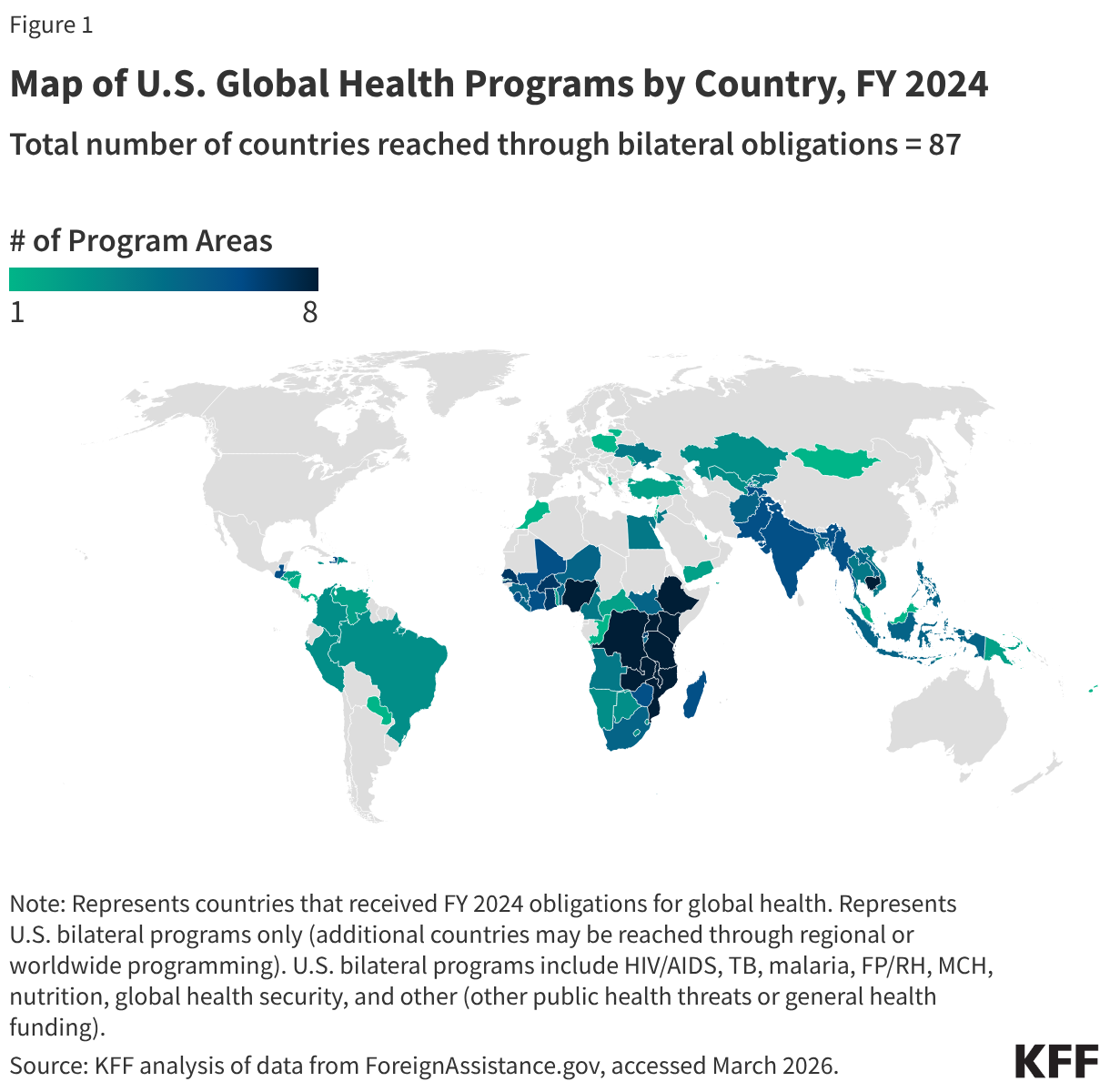
The Breadth of U.S. Bilateral Global Health Programs (FY 2024 Overview)
The U.S. government’s FY 2024 global health portfolio reflects a strategic combination of long-standing commitments and adaptive responses to evolving health needs. Each program area is designed to address specific health challenges, often operating in an integrated manner within partner countries to maximize impact and strengthen overall health systems.
President’s Emergency Plan for AIDS Relief (PEPFAR): As the largest commitment by any nation to address a single disease globally, PEPFAR continues to be a central pillar of U.S. global health efforts. Its focus extends beyond providing antiretroviral therapy (ART) to include comprehensive prevention programs (e.g., voluntary medical male circumcision, pre-exposure prophylaxis), care and support for people living with HIV, and efforts to strengthen health systems. PEPFAR’s approach emphasizes country ownership, data-driven programming, and sustainable transitions, working towards epidemic control and ultimately, ending HIV/AIDS as a public health threat.
Tuberculosis (TB): Often intertwined with HIV, tuberculosis remains a leading infectious killer worldwide. U.S. programs address TB through detection, diagnosis, and treatment initiatives, particularly focusing on multi-drug resistant TB (MDR-TB) and TB/HIV co-infection. These efforts involve strengthening laboratory networks, expanding access to newer diagnostics and treatments, and ensuring comprehensive patient care, aligning with global targets to reduce TB incidence and mortality.
President’s Malaria Initiative (PMI): PMI continues its critical work in reducing malaria burden across sub-Saharan Africa and the Greater Mekong Subregion. The initiative employs a multi-pronged strategy encompassing vector control (e.g., insecticide-treated nets, indoor residual spraying), preventative treatments for vulnerable populations, rapid diagnostic tests, and effective antimalarial medications. PMI also invests in surveillance systems and operational research to adapt strategies to changing epidemiological landscapes and insecticide resistance patterns.
Family Planning and Reproductive Health (FP/RH): U.S. support for FP/RH programs aims to empower individuals and couples to make informed decisions about their family size and spacing. These programs provide access to a wide range of contraceptive methods, counseling services, and maternal and newborn care. By promoting voluntary family planning, the U.S. contributes to improving maternal and child health outcomes, enhancing women’s empowerment, and fostering economic development.
Maternal and Child Health (MCH): Reducing preventable maternal and child deaths is a core objective of U.S. global health assistance. MCH programs focus on critical interventions such as skilled birth attendance, essential newborn care, childhood immunizations, prevention and treatment of childhood illnesses (e.g., pneumonia, diarrhea), and integrated community case management. These efforts are crucial for achieving sustainable development goals related to health and well-being.
Nutrition: Malnutrition, particularly in children, undermines development and exacerbates disease susceptibility. U.S. nutrition programs address both undernutrition and micronutrient deficiencies through interventions like promoting exclusive breastfeeding, providing micronutrient supplementation, treating severe acute malnutrition, and integrating nutrition education into broader health services. These programs aim to improve child survival, cognitive development, and overall population health.
Global Health Security (GHS): Building robust national capacities to prevent, detect, and respond to infectious disease threats is a growing priority. GHS initiatives support partner countries in strengthening their public health infrastructure, including disease surveillance systems, laboratory networks, emergency preparedness and response plans, and workforce development. These investments are vital for mitigating the impact of future pandemics and protecting global health.
Funding and Impact: A Commitment in Numbers
The scale of U.S. global health commitment is reflected in its significant financial contributions. While specific FY 2024 country-level funding details are tracked by resources such as the KFF tracker, overall U.S. global health assistance consistently represents one of the largest bilateral investments in the world. For context, in recent fiscal years, the U.S. has allocated billions of dollars annually to global health, with major portions directed towards HIV/AIDS, tuberculosis, malaria, and maternal and child health. For instance, PEPFAR alone has received over $100 billion in U.S. government funding since its inception, demonstrating an unparalleled commitment.
These investments have yielded tangible and profound impacts. PEPFAR is credited with saving more than 25 million lives, preventing millions of HIV infections, and enabling millions of babies to be born HIV-free. PMI has contributed to a dramatic reduction in malaria deaths, with estimates suggesting millions of lives saved, particularly among young children. Maternal and child health programs have played a critical role in reducing global child mortality rates by more than half since 1990, alongside significant improvements in maternal survival. These outcomes are not merely statistics; they represent communities strengthened, economies bolstered, and futures secured, directly contributing to global stability and human dignity.
Transparency and Accountability: The Role of Data Trackers
In an era demanding accountability and data-driven decision-making, the U.S. government’s commitment to transparency in its global health endeavors is paramount. The existence of dedicated trackers, such as the one reflecting FY 2024 data and others like the KFF U.S. global health country-level funding tracker, serves several crucial functions. Firstly, they provide stakeholders, including policymakers, implementing partners, recipient governments, and the public, with a clear overview of where U.S. assistance is directed and in which health areas. This transparency fosters trust and allows for informed discussions about program effectiveness and resource allocation.
Secondly, these trackers facilitate strategic planning and coordination. By mapping out bilateral programs by country and region, they help identify areas of need, potential overlaps, and opportunities for synergistic partnerships. The periodic updates ensure that the information remains current, reflecting the dynamic nature of global health challenges and programmatic adjustments. This commitment to data accessibility underscores a broader principle of good governance in international development, emphasizing impact measurement and continuous improvement.
Perspectives from Leadership and Partners
U.S. government officials, from the State Department to USAID, consistently articulate the strategic importance of global health initiatives. Statements often highlight that these investments are not merely acts of charity but are fundamental to U.S. national security, economic prosperity, and diplomatic objectives. A healthier, more stable world reduces the likelihood of humanitarian crises, strengthens trading partners, and mitigates the spread of infectious diseases that could threaten American borders.
For instance, the Secretary of State or the USAID Administrator frequently emphasizes that U.S. global health leadership contributes to building resilient health systems globally, which in turn protects the U.S. from emerging health threats. These initiatives are presented as powerful tools of soft power, fostering goodwill and strengthening diplomatic ties with partner nations.

Crucially, the success of U.S. global health programs hinges on robust partnerships. Recipient countries are not passive beneficiaries but active collaborators, often contributing their own resources, personnel, and policy frameworks. International organizations, local civil society groups, and private sector entities also play indispensable roles in implementation, capacity building, and advocacy. Feedback from these partners often underscores the transformative impact of U.S. support, not only in terms of disease control but also in empowering local communities and strengthening national health systems.
Strategic Implications and Future Horizons
The comprehensive nature of U.S. global health programs carries significant strategic implications, extending beyond immediate health outcomes.
Geopolitical Influence and Soft Power: By investing in global health, the U.S. reinforces its position as a global leader and a benevolent power. This "health diplomacy" enhances its influence, fosters international collaboration, and strengthens alliances, serving as a powerful counterpoint to other geopolitical narratives. The goodwill generated through these life-saving interventions translates into stronger diplomatic relationships and a more stable international environment.
Economic Stability and Human Development: Healthy populations are more productive, contributing to stronger economies and sustainable development. By reducing disease burden, U.S. global health initiatives enable children to attend school, adults to work, and communities to thrive. This creates a virtuous cycle where improved health fuels economic growth, which in turn can support further health investments, reducing reliance on external aid over time.
Addressing Emerging Global Health Challenges: The U.S. global health framework is increasingly adapted to tackle new and evolving threats. Climate change, for example, is exacerbating health crises through increased vector-borne diseases, food insecurity, and extreme weather events. Antimicrobial resistance (AMR) poses another grave danger, threatening to undo decades of progress in treating infectious diseases. U.S. programs are progressively integrating responses to these challenges, supporting research, surveillance, and policy development to mitigate their impact.
Ensuring Program Sustainability and Local Ownership: A critical long-term goal for U.S. global health assistance is to build sustainable health systems that are ultimately owned and managed by partner countries. This involves significant investments in human resources for health, policy development, financing mechanisms, and local research capacities. The aim is to transition from aid-dependent models to self-sufficient systems, ensuring that health gains are durable and resilient against future shocks.
In conclusion, the U.S. commitment to global health, as evidenced by its extensive bilateral programs in over 80 countries in FY 2024, is a multifaceted endeavor with profound humanitarian, economic, and strategic implications. From combating historical scourges like HIV/AIDS and malaria to bolstering global health security against future pandemics, these initiatives reflect a sustained vision for a healthier, safer, and more prosperous world. The continuous tracking and evaluation of these programs underscore a dedication to transparency and effectiveness, ensuring that U.S. investments continue to make a tangible difference in the lives of millions worldwide and contribute to a more secure global future.
Related posts: