Viral Midnight Trek: Three Tourists’ 9.4-Kilometer Journey to Changi Airport Spotlights Singapore’s Unparalleled Safety and Urban Dynamics


A daring nocturnal adventure undertaken by three female tourists, who opted to traverse 9.4 kilometers on foot to Singapore’s world-renowned Changi Airport in the pre-dawn hours of July 16, 2026, has unexpectedly captivated global audiences and ignited widespread discussion across social media platforms. The unconventional decision by these travelers to embark on a two-and-a-half-hour walk instead of utilizing readily available 16-minute ride-hailing services, documented in a now-viral TikTok video, has garnered over half a million views, shining an unprecedented spotlight on Singapore’s reputation as one of the safest cities in the world.
The Unprecedented Dawn Trek to Changi
The extraordinary journey began at approximately 2:42 AM local time, as the trio, identified only as "Angie" and her companions from the TikTok post, commenced their pilgrimage towards Changi Airport. With flights scheduled for a 7:00 AM departure, the women were seen in the uploaded footage pulling their individual suitcases and carrying hand luggage along the deserted sidewalks and thoroughfares of Singapore. The video, characterized by its eerie quietness, depicted an urban landscape devoid of the usual hustle and bustle, presenting a stark contrast to the city’s daytime vibrancy. Their path occasionally led them through dimly lit underpasses, where the only source of illumination was the flashlights on their smartphones, casting long, dancing shadows that underscored the solitude of their endeavor.
Despite the physical demands of hauling luggage for such a significant distance and the inherent unfamiliarity of navigating a foreign city in the dead of night, the tourists appeared remarkably undeterred. Their determination ultimately paid off, as they successfully reached Changi Airport by 5:04 AM. This early arrival afforded them ample time to proceed with check-in, security clearance, and boarding preparations, well ahead of their scheduled departure. The almost 150-minute trek, while unconventional, became a testament to both their adventurous spirit and, more notably, the perceived safety of their chosen route.
Behind the Decision: An Exploration of Motives
While the precise reasons for the tourists’ decision to walk remain undisclosed, several hypotheses have emerged from online discussions and travel analyses. It is plausible that the choice was driven by a desire for a unique, immersive travel experience, seeking an authentic encounter with Singapore beyond the typical tourist itinerary. For some travelers, especially budget-conscious adventurers, the appeal of minimizing expenses, even for a short ride-hailing trip, can be a factor. Although ride-hailing services are generally affordable in Singapore, a late-night surge pricing or a preference for a completely free option might have influenced their decision.
Another potential, albeit less likely, scenario could involve difficulties in securing a ride-hailing service at that specific hour or location, though Singapore’s robust transport network usually mitigates such issues. Alternatively, the act could have been a spontaneous challenge, a test of endurance, or simply a miscalculation of the distance and time involved, turning into an unexpected adventure. Regardless of the exact motivation, the outcome served to inadvertently showcase a facet of Singapore often highlighted by its residents and authorities: its exceptional urban safety.
Singapore’s Unrivaled Safety Profile: A Global Benchmark
The viral incident has amplified global conversations surrounding Singapore’s steadfast reputation as one of the world’s safest cities. This perception is not merely anecdotal but is consistently supported by various international indices and statistical data. For instance, the Global Peace Index frequently ranks Singapore among the top safest nations globally, particularly excelling in categories related to societal safety and security. Similarly, Numbeo’s Crime Index routinely places Singapore at the apex for low crime rates, often with a safety index score in the high 80s or low 90s, indicating a very low perception of crime by residents and visitors alike. Violent crime, in particular, is exceedingly rare, contributing to a pervasive sense of security, even during solitary nocturnal wanderings.
This remarkable safety record is the product of a multi-faceted approach encompassing stringent legal frameworks, highly effective law enforcement, pervasive surveillance infrastructure, and a society with high living standards and a strong sense of civic responsibility. Singapore’s legal system, known for its strict penalties for offenses ranging from petty theft to vandalism, acts as a significant deterrent. The Singapore Police Force (SPF) is highly efficient, well-resourced, and proactive, maintaining a visible presence and rapid response capabilities.
Furthermore, the city-state boasts an extensive network of Closed-Circuit Television (CCTV) cameras strategically deployed across public spaces, transport hubs, and residential areas. This comprehensive surveillance system not only aids in crime prevention and investigation but also contributes to the general feeling of security, knowing that public areas are monitored. Coupled with a high standard of living, which often correlates with lower crime rates, Singapore has cultivated an environment where incidents like the tourists’ midnight walk are met with admiration for the city’s safety rather than concern for their well-being.
The Role of Urban Planning and Infrastructure
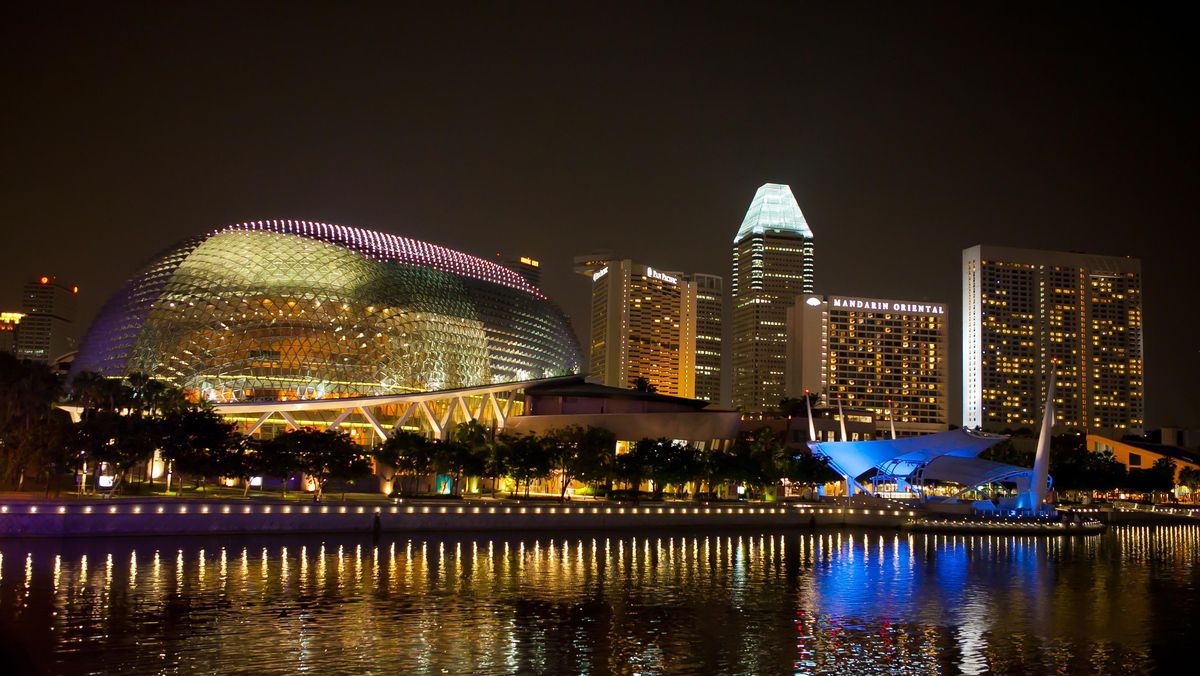
Singapore’s meticulous urban planning and world-class infrastructure also played an undeniable role in making such a long-distance walk feasible. The city’s pedestrian pathways are meticulously maintained, well-lit in most areas, and generally free from obstructions, providing a smooth surface for pulling wheeled luggage. The journey to Changi Airport, while long, largely follows well-defined routes designed for both vehicular and pedestrian traffic. Even the necessity of traversing a dark underpass, as described by the tourists, speaks to the underlying infrastructure that separates pedestrian and vehicular flows, prioritizing safety even in less illuminated segments.
However, the incident also implicitly highlighted a paradox in Singapore’s walkability. Despite its safety, the city-state ranked 70th in GuruWalk’s list of 100 best cities for walking, trailing regional counterparts like Hanoi, Ho Chi Minh City, and Kuala Lumpur. This seemingly contradictory ranking can be attributed to several factors. Singapore’s tropical climate, characterized by high heat and humidity year-round, along with frequent, heavy rainfall, often discourages prolonged outdoor walking. Moreover, the city’s exceptionally efficient and affordable public transport system, including the Mass Rapid Transit (MRT) and extensive bus network, often makes long-distance walking a choice rather than a necessity, especially when factoring in the climate. While specific sections of the city are highly walkable for leisure or short commutes, covering 9.4 kilometers with luggage is not a typical pedestrian experience for most residents or visitors.
The Echo Chamber of Social Media: Reactions and Interpretations
The TikTok video quickly transcended its initial viewership, becoming a topic of fervent discussion across various social media platforms and traditional news outlets. Netizens expressed a wide array of reactions, primarily centered on two key themes: admiration for Singapore’s safety and humorous commentary on the physical exertion involved.
Many commenters lauded Singapore for providing an environment where such an act could be undertaken without fear. Phrases like "I love Singapore because three girls can walk for two hours to the airport on proper pavements at 2 AM and feel completely safe doing so" and "Singapore is indeed very safe for female tourists" were commonplace, reflecting a global appreciation for the city’s secure environment. This sentiment is particularly resonant for female travelers, who often face heightened safety concerns in many parts of the world, making Singapore a beacon of secure travel.
Conversely, a significant portion of the online discourse embraced a more jocular tone, marveling at the sheer effort involved in pulling suitcases for nearly 10 kilometers. Many users imagined the physical toll and the inevitable perspiration in Singapore’s humid climate, while others questioned the rationale of eschewing a relatively inexpensive and convenient ride-hailing service. These humorous reactions, while lighthearted, subtly underscored the unusual nature of the act, even within Singapore’s safe confines.
Broader Implications and The Singapore Brand
This viral incident, while seemingly minor, carries broader implications for Singapore’s tourism narrative and its global brand. It provides an authentic, albeit unconventional, testimonial to the city-state’s safety and reliability, qualities highly valued by international travelers. The Singapore Tourism Board (STB) could potentially leverage such organic virality to reinforce its messaging about Singapore as a premier, safe, and welcoming destination for all types of travelers, including solo female adventurers.
While the STB has not issued an official statement directly addressing this specific incident, it is reasonable to infer their consistent messaging. A hypothetical statement might emphasize Singapore’s unwavering commitment to safety and the provision of diverse, efficient transport options. "While we deeply appreciate the adventurous spirit of these visitors and are immensely proud of our city’s exceptional safety standards, we always encourage all tourists to make use of Singapore’s comprehensive and convenient public transport network or ride-hailing services for a comfortable and seamless travel experience, particularly during late-night hours," an STB representative might remark, balancing appreciation for the viral moment with practical advice.
Similarly, the Changi Airport Group (CAG) could reiterate its focus on accessibility and traveler convenience. "Changi Airport is designed to be easily accessible via multiple modes of transport, ensuring that every traveler can reach us comfortably and efficiently. We continuously work to enhance our connectivity options to serve the diverse needs of our passengers," a CAG spokesperson might comment, acknowledging the incident while highlighting standard operational excellence. The Land Transport Authority (LTA) would likely affirm their commitment to an integrated and safe transport system that serves the public around the clock, albeit with varying frequencies for different services during off-peak hours.
From a security expert’s perspective, this event, though unusual, is a powerful endorsement of Singapore’s urban model. A security analyst might state, "This viral episode offers compelling real-world evidence of Singapore’s success in creating a truly secure urban environment. It demonstrates that the city’s robust legal framework, effective law enforcement, and advanced surveillance infrastructure are not just theoretical constructs but translate into a tangible sense of safety for residents and visitors alike, even in the most vulnerable hours."
The episode also taps into a growing global trend of "experiential travel," where tourists seek unique, often self-challenging, ways to interact with their destinations. While most travelers prioritize comfort and convenience, a niche segment values the story and personal accomplishment derived from such unconventional journeys. This incident might inspire other adventurous travelers to consider similar, albeit perhaps less arduous, explorations of urban environments perceived as safe.
In conclusion, the unscripted midnight trek of three female tourists to Changi Airport has become more than just a viral video; it has evolved into a compelling narrative that underscores Singapore’s enduring reputation as a global beacon of safety, efficiency, and meticulous urban planning. It serves as an organic, powerful testimonial, reinforcing the image of a city where extraordinary acts of pedestrian endurance can unfold safely under the watchful, yet unobtrusive, gaze of its secure environment. This singular event, captured and amplified by social media, adds another unique chapter to the rich tapestry of Singapore’s international appeal.