The Challenge of Political Polarization in Higher Education
In recent years, the American campus has become a microcosm of the nation’s broader political turbulence. Research from the Pew Research Center and the American Council on Education has consistently indicated that the gap between Republican-leaning and Democratic-leaning students has widened, leading to an environment where ideological diversity is frequently perceived as a threat rather than an opportunity for intellectual growth.
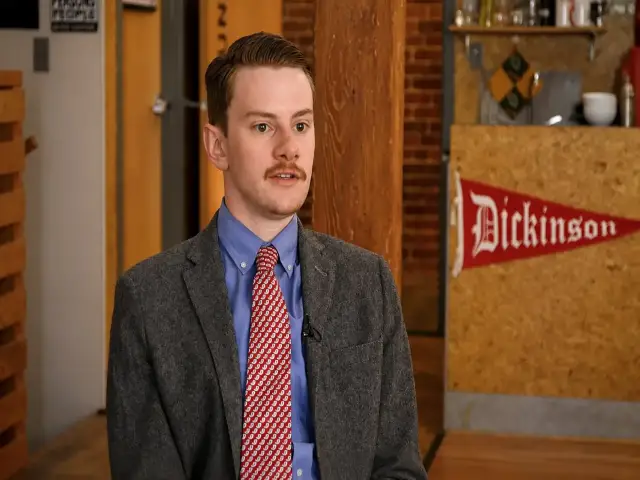
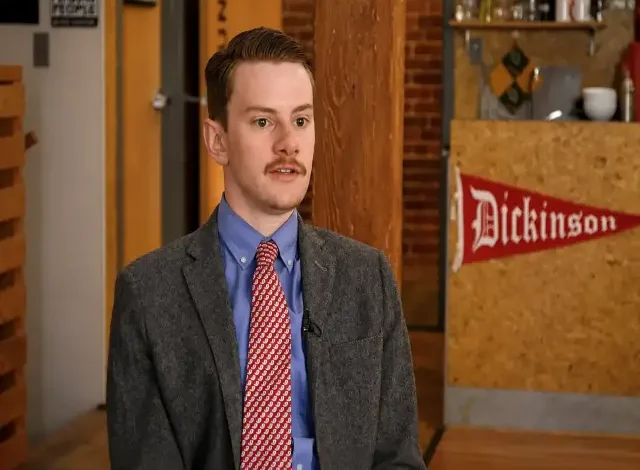
At Dickinson College, administrators and student leaders recognized that the traditional mechanisms of discourse were failing. The tendency to categorize individuals by their political affiliation—rather than their personal character or lived experience—had begun to stifle the very curiosity essential to a liberal arts education. The initiative documented by the Greater Good Science Center, released in September 2026, aims to provide a framework for "putting people over politics," an effort to recalibrate the baseline of student interaction.
Chronology of the Dialogue Initiative
The project at Dickinson College did not emerge in a vacuum. It was part of a multi-year effort to integrate emotional intelligence into the academic sphere.
- Early 2025: Initial assessments conducted by student affairs departments indicated a "crisis of silence," where students were increasingly afraid to voice conservative or moderate opinions in predominantly liberal classroom settings, and vice-versa.
- Summer 2025: Faculty and staff began developing workshops centered on "empathic listening," a communication technique derived from the principles of social-emotional learning (SEL).
- Fall 2025: The first series of facilitated dialogues commenced, focusing on bridging the gap between College Republicans and College Democrats.
- Spring 2026: The program expanded to include interdisciplinary panels and "living room" style discussions, where students were tasked with discussing controversial policy issues through the lens of personal narrative rather than partisan talking points.
- September 2026: The official documentation of these interactions was finalized and published by the Greater Good Science Center, serving as a blueprint for other institutions.
Data-Driven Insights into Empathy
The core of the initiative relies on the measurable benefits of active listening. According to data collected during the program, participants who engaged in structured empathic listening exercises reported a 34% decrease in their inclination to label opposing viewpoints as "malicious" or "uninformed."
Furthermore, psychological metrics employed by the research team showed a significant increase in "perspective-taking"—the cognitive ability to understand the world from another person’s vantage point. When students were asked to describe the motivations of an ideological opponent before and after the program, the post-intervention responses were 45% more likely to cite underlying values—such as a desire for security or community—rather than attributing the opponent’s stance to ignorance or malice.
The Mechanics of "People Over Politics"
The project at Dickinson emphasizes several key strategies for de-escalating political tension:
- Reframing the Narrative: Instead of debating policy (e.g., taxation or immigration), students are encouraged to share personal anecdotes about how these policies have impacted their families or communities. This humanizes the "other side."
- Curiosity as a Default Setting: When confronted with a statement that triggers a defensive reaction, participants are trained to pause and ask, "Can you tell me more about how you arrived at that conclusion?" rather than immediately countering with a rebuttal.
- The Suspension of Judgment: The program encourages students to view their peers as complex individuals with multifaceted identities, rather than single-issue political avatars.
Official Perspectives and Reactions
Dr. Elena Vance, a sociologist involved in the oversight of the campus initiative, noted that the success of the program lies in its modesty. "We are not trying to convince students to change their political beliefs," Vance stated. "We are trying to change the environment in which those beliefs are expressed. The goal is to ensure that when a student walks into a dorm room or a classroom, they see a neighbor before they see a political opponent."
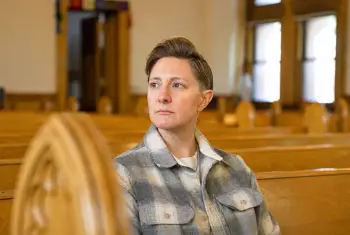
Student participants echoed this sentiment. One student leader remarked, "It’s easy to dismiss a headline. It’s significantly harder to dismiss a friend who is sitting across from you, explaining why they are genuinely worried about their future. The empathy isn’t about agreement; it’s about acknowledging the humanity in the disagreement."
Broader Implications for Higher Education
The implications of the Dickinson College experiment extend far beyond the campus grounds. As the workforce continues to become more polarized, the ability to collaborate with those who hold different worldviews is becoming an essential "soft skill."

University administrators across the country are watching these developments with interest. The findings suggest that universities can play a critical role in cooling the national temperature if they prioritize the infrastructure of civil discourse. By treating empathy as a rigorous academic and social skill—rather than a mere sentiment—institutions can help prepare students for a democratic society that relies on the ability to compromise.
Comparative Initiatives: The National Landscape
Dickinson College is not the only institution exploring these avenues. Other schools, including the University of Maryland and the Iliff School of Theology, have implemented similar programs. The "Getting and Giving Our Perspectives" initiative at the University of Maryland, for instance, focuses on the intersection of cultural identity and political discourse, finding that empathy is often the first step in addressing systemic biases.

At the Iliff School of Theology, the focus has been on "staying curious when values collide," particularly in religious and ethical contexts. Collectively, these initiatives point toward a growing recognition in academia that intellectual rigor is incomplete without the capacity for interpersonal understanding.
Future Challenges and Limitations
Despite the successes, the organizers of the initiative acknowledge the limitations of such programs. The most significant challenge is the "echo chamber" effect. Students who are most likely to participate in these dialogues are often those who are already inclined toward open-mindedness. Reaching students who are deeply entrenched in partisan silos remains a difficult task.

Furthermore, the sustainability of these efforts is contingent upon consistent funding and institutional support. In an era of shrinking budgets, programs that do not directly correlate to academic achievement or job placement are often the first to face cuts. However, advocates argue that the long-term cost of a polarized, disconnected student body is far higher than the investment required to maintain these spaces for dialogue.
Conclusion
The work at Dickinson College serves as a hopeful indicator that the erosion of civil discourse is not inevitable. By leveraging the principles of psychology and sociology, and by fostering an environment where students feel safe enough to be curious, institutions can reclaim their roles as spaces for rigorous, yet compassionate, inquiry. As the country looks toward an uncertain political future, the lessons from these campus stories—that courage is required to listen, and curiosity is required to understand—remain as relevant as ever. The project confirms that while the gap between the left and the right may be wide, it is not unbridgeable, provided that the participants are willing to place the humanity of the person in front of them above the political ideology they represent.