Judy Campisi: A Scientific Titan and Cherished Mentor Remembered for Groundbreaking Contributions to Aging Research

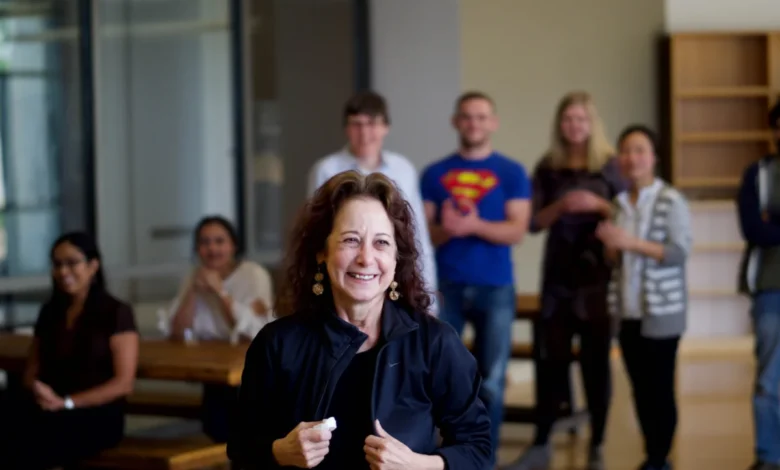
The scientific community and countless colleagues, mentees, and friends are mourning the profound loss of Dr. Judy Campisi, a pioneering researcher in cellular senescence whose work fundamentally reshaped our understanding of aging. Dr. Campisi passed away on January 19th, leaving behind a legacy of groundbreaking discoveries, unparalleled mentorship, and a reputation for intellectual rigor tempered with genuine warmth and humility. News of her passing, which spread rapidly on social media platforms, was met with an outpouring of heartfelt tributes, painting a vivid picture of a scientist who was not only a giant in her field but also a deeply influential and cherished human being.
The initial reactions on social media underscored the immense void left by her absence. Phrases like "Devastating news. Judy was a scientific giant and a warm wonderful colleague and friend," and "A superb mentor and a second mother. A big loss, personally and professionally," echoed the sentiments of many. One poignant observation stated, "The world will be a worse place without her in it," encapsulating the widespread feeling of loss.
Dr. Campisi was internationally recognized for her seminal contributions to the study of cellular senescence, the process by which cells stop dividing. Her research illuminated the complex roles of senescent cells in aging, cancer, and a host of age-related diseases. Beyond her scientific achievements, she was lauded as an invaluable mentor, collaborator, teacher, and friend, impacting the careers and lives of generations of researchers.
A comprehensive profile, published following her esteemed election to the National Academy of Sciences, offered insights into her early life and career trajectory. Furthermore, a detailed obituary in the prestigious journal Nature served as a testament to her significant scientific stature and the personal qualities that endeared her to so many. Recently, a "Celebration of Life" was held at the Buck Institute, a hub for aging research, where family members, friends, and colleagues shared deeply personal and moving tributes, further solidifying her impact.
A Legacy of Discovery: The Science of Cellular Senescence
Cellular senescence, once a poorly understood biological phenomenon, has been brought to the forefront of aging research largely due to Dr. Campisi’s pioneering work. Her research group meticulously characterized the senescence-associated secretory phenotype (SASP), a complex cocktail of inflammatory cytokines, chemokines, and growth factors released by senescent cells. This discovery revolutionized the field by revealing that senescent cells are not merely passive bystanders in aging but actively contribute to the inflammatory microenvironment that drives age-related tissue dysfunction and disease.
Her early investigations, dating back to the late 20th century, challenged prevailing notions about cellular aging. At a time when the focus was primarily on telomere shortening as the sole driver of cellular senescence, Dr. Campisi’s lab demonstrated that other stressors, including DNA damage and oncogene activation, could also induce this state. This broader perspective opened up new avenues of research into the diverse triggers and consequences of senescence.
The implications of her work are far-reaching. Understanding the mechanisms of senescence and the SASP has paved the way for the development of senolytic therapies—drugs designed to selectively eliminate senescent cells. Pre-clinical studies have shown promising results, with senolytics demonstrating the ability to ameliorate various age-related conditions in animal models, including osteoarthritis, cardiovascular disease, and neurodegenerative disorders. While human trials are still in their early stages, the potential for these therapies to extend healthspan and improve the quality of life in later years is immense, a testament to Dr. Campisi’s foundational discoveries.
A Humble Giant: Personal Tributes to Dr. Campisi’s Character
Beyond her scientific prowess, the tributes consistently highlight Dr. Campisi’s remarkable humility, warmth, and dedication to her community. These personal anecdotes offer a poignant glimpse into the character of a scientist who balanced intellectual brilliance with profound humanity.
Steve Austad, Distinguished Professor at the University of Alabama, Birmingham, remarked on Dr. Campisi’s unique combination of greatness and humility, stating, "There was no greater contributor than Judy to our understanding of cellular senescence. Despite the major influence of her work, she was absolutely devoid of hype. Golda Meir once said to someone, ‘Don’t be so humble, you’re not that great.’ Judy was both great and humble." He shared a humorous anecdote from a dinner in New York City where Dr. Campisi’s strong disapproval of altering wine with sangria ("Doing that to wine is an abomination") revealed her discerning nature and conviction.
The protective nature of Dr. Campisi towards her trainees was emphasized by Christopher Wiley, a former Buck postdoc now running his own lab at Tufts University. He recounted an incident at a conference where a senior investigator made an insensitive joke at his expense. Dr. Campisi, overhearing the remark, swiftly intervened, playfully but firmly defending him. "With a smile on her face, she put her fists up and told the investigator if he wants to pick on her trainees, he needs to go through her. He laughed, but quickly disengaged from the conversation. While Judy disliked conflict, she was also fully willing to use her stature to protect those she cared about." This story exemplifies her role as a steadfast advocate for her mentees.
The appreciation for her personal touch extended to administrative staff as well. Lise Castro, Buck Institute Director of Finance, noted Dr. Campisi’s consistent gratitude. "All the years I’ve worked at the Institute, Judy never overlooked those in administration who provided help or assistance to her or those in her lab and would email individuals personally on my team to thank them. For someone so busy and sought after, I always appreciated this about Judy. In addition to her incredible contributions to research on aging, it is also the simple little things that add up over the arc of a lifetime." This highlights her recognition of the interconnectedness of a research institution.
A Guiding Light: Mentorship and Inspiring a Generation
Dr. Campisi’s impact as a mentor was a recurring theme in the tributes, with many crediting her with shaping their academic and personal lives. Simona Parrinello, a former graduate student now at University College London, described her as a "wonderful mentor throughout my career from PhD to professor." She fondly recalled Dr. Campisi’s "tough but fair approach" and her memorable mottos, such as "the data are the data" and "you are as good as your last paper." Parrinello also shared a profound personal insight from Dr. Campisi: after Parrinello became a Principal Investigator and a mother, Dr. Campisi remarked that as a PI, she would now see how many more children she would have. "I think we all felt like her kids at some level, and she definitely had our backs. I will miss her terribly." This sentiment of Dr. Campisi fostering a familial atmosphere within her lab was widely shared.
Jacob Rose, a Buck Research Associate in the Schilling lab, admired Dr. Campisi’s willingness to listen, even when she disagreed. "She could (and often would) completely disagree with people, but she would hear them out. She let them make their points and didn’t often interrupt. I really admired the fact that such a prolific scientist treated people with so much respect and carried such a small ego." This ability to engage respectfully, even in disagreement, is a hallmark of exceptional scientific leadership.
Jan Hoeijmakers, a long-time collaborator and Principal Investigator at Erasmus MC in the Netherlands, emphasized her diplomatic skills in scientific discourse. "In fierce scientific discussions, Judy would calmly raise her hands, close her eyes and depict in a visionary way the best solution and in a friendly manner reconcile opposing views as an ingenious way out of the discussion. She always stayed steady and friendly, never lost her temper." He concluded, "I lost not only an outstanding kind colleague, but also a close personal friend who I am now already dearly missing."
Nathan Basisty, a former Buck postdoc now leading his own lab at the NIA/NIH, spoke about the empowering effect of Dr. Campisi’s attention. "Judy had an uncanny way of giving me the feeling I had her complete attention and encouraging me. When I gave talks, I would look over at Judy nodding along enthusiastically and gain confidence from her; it is amazing the effect that had! Now, as a leader of my own research group, I use Judy as a model for mentorship and only hope that I can inspire the same confidence in my trainees."
Su Liu, a former Buck postdoc and now Senior Scientist at Astellas Gene Therapies, shared a lighthearted yet illustrative story of Dr. Campisi’s dedication to educating everyone about her field. "The first time I brought my husband, who is not a biologist, to Judy’s party, Judy was surprised to find out that he didn’t know anything about cellular senescence. She asked me, ‘What do you guys talk about at home?’ and gave my husband a 20-minute education on cellular senescence, SASP, and aging. She tolerated and answered all the embarrassingly dumb questions from my husband during that mini class and eventually convinced him that cellular senescence is the key driver of aging."
Even in large group settings, Dr. Campisi made a point of amplifying the voices of junior researchers. Shona Mookerjee, a Buck Research Scientist, observed, "I appreciated how Judy would interrupt faculty in group meetings to hear what students and postdocs thought—I always liked that about her." This inclusive approach fostered an environment where all voices were valued.
A Timeline of Impact and Recognition
Dr. Campisi’s career was marked by a consistent trajectory of scientific excellence and increasing recognition. While the exact start date of her research career is not specified in the provided text, her election to the National Academy of Sciences, a significant milestone, indicates a career of substantial impact and widespread acclaim. The National Academy of Sciences, established by Abraham Lincoln in 1863, is a prestigious honorific society composed of leading scientists and engineers, elected by their peers for outstanding contributions to science and technology. Membership is considered one of the highest honors a scientist can receive in the United States.
Her election to this esteemed body, which was highlighted in a profile, likely occurred in the years leading up to her passing, signifying the culmination of decades of dedicated research and profound influence. The Nature obituary further solidifies her standing within the global scientific community, as Nature is one of the world’s foremost scientific journals, known for its rigorous peer-review process and its role in disseminating cutting-edge research.
The "Celebration of Life" event at the Buck Institute, held recently, suggests a timeline where her passing occurred after a period of continued engagement with her colleagues and the institute she so deeply influenced. These events, often organized shortly after a death, provide a platform for collective mourning and the sharing of memories, underscoring the immediate and profound impact of her absence.
Broader Implications and the Future of Aging Research
The passing of Dr. Judy Campisi represents a significant loss not only to her immediate circle but to the entire scientific enterprise dedicated to understanding and combating the aging process. Her foundational research on cellular senescence has opened up entirely new therapeutic avenues, promising to extend not just lifespan but, more importantly, healthspan—the period of life spent in good health.
The ongoing development of senolytic drugs, directly inspired by her work, stands as a direct testament to the enduring legacy of her scientific contributions. As these therapies move from the laboratory to clinical trials, her insights will continue to inform and guide the efforts to alleviate the burden of age-related diseases.
Furthermore, her exemplary mentorship has cultivated a new generation of scientists who are now carrying the torch of aging research forward. The personal qualities she instilled—rigor, humility, curiosity, and a deep respect for scientific inquiry and for one another—will undoubtedly shape the future direction and ethical considerations of this rapidly evolving field. The collaborative spirit she fostered and her ability to bridge diverse scientific perspectives will remain a model for effective scientific leadership.
The scientific community will continue to build upon the bedrock of knowledge she established. Her passing serves as a poignant reminder of the critical importance of fundamental research and the profound impact that a single individual, armed with intellect and dedication, can have on the trajectory of scientific understanding and human well-being. The scientific world has lost a truly remarkable mind and a deeply compassionate soul, but her legacy will undoubtedly continue to illuminate the path for future discoveries in aging and beyond.
Related posts: