Global COVID-19 Data Tracker Provides Comprehensive Overview of Cases, Deaths, and Policy Responses Amidst Evolving Pandemic Landscape

A comprehensive global tracker continues to provide vital insights into the COVID-19 pandemic, meticulously documenting confirmed cases, fatalities, and the dynamic array of policy measures implemented worldwide to combat the virus. This essential resource, updated weekly, aggregates data from authoritative international bodies, offering a crucial historical and ongoing perspective on the pandemic’s trajectory and the varied governmental responses. The tracker, which transitioned its primary data source for cases and deaths from Johns Hopkins University (JHU) to the World Health Organization (WHO) in early 2023, underscores the persistent need for robust surveillance and transparent data reporting in the face of global health crises.
The Evolving Landscape of Global COVID-19 Data Tracking
Since its inception, the global health crisis spurred an unprecedented demand for real-time data to inform public health strategies, allocate resources, and communicate risk effectively. Early in the pandemic, organizations like Johns Hopkins University’s Coronavirus Resource Center emerged as frontrunners in consolidating disparate national data into a single, accessible global dashboard, becoming a de facto standard for tracking the virus’s spread. The transition on March 7, 2023, marked a significant pivot, with the tracker now drawing all its data on COVID-19 cases and deaths directly from the World Health Organization’s (WHO) Coronavirus (COVID-19) Dashboard. This shift occurred just prior to the Johns Hopkins University’s own COVID-19 Map concluding its operations on March 10, 2023, reflecting a natural evolution in global data stewardship as the pandemic’s acute phase began to recede and established international health bodies solidified their long-term data collection efforts.
The tracker provides a cumulative count of confirmed COVID-19 cases and deaths, alongside the rate of daily new cases and deaths, disaggregated by country, income level, region, and globally. This granular approach allows for nuanced analysis of the pandemic’s differential impact and response across various socioeconomic and geographical contexts. A notable data correction was implemented on March 18, 2024, clarifying that the figures represent new cases and deaths over a full week, rather than an average per day over a seven-day period. This adjustment enhances the accuracy and interpretability of the reported trends, ensuring that policymakers and researchers are working with the most precise information available. Despite its weekly updates, there is an inherent two-week lag in the data reporting, a common challenge in global health surveillance attributed to the time required for national health authorities to collect, verify, and submit their data to international bodies. To maintain optimal performance and prevent slow load times, the online tracker typically displays data from the last 200 days. However, the complete historical dataset remains accessible for comprehensive research and analysis, downloadable from the project’s GitHub page, offering an invaluable archive of the pandemic’s progression.
The scale of the COVID-19 pandemic, as reflected in these cumulative figures, is staggering. Globally, confirmed cases have surpassed hundreds of millions, with fatalities numbering in the millions. These figures represent not just statistical points but countless individual tragedies and a profound societal disruption that touched virtually every corner of the globe. The initial rapid acceleration of cases in early 2020, followed by subsequent waves fueled by new variants, underscored the virus’s relentless nature and the critical importance of continuous monitoring. The tracker’s ability to present these trends at various levels—from global aggregates to specific country breakdowns—highlights periods of intense transmission, the effectiveness of interventions, and the varying resilience of health systems.
Policy Interventions: A Global Tapestry of Response
Beyond the epidemiological data, the tracker provides a crucial parallel narrative: the policy measures enacted by governments to mitigate the pandemic’s multifaceted challenges. This section, while no longer actively updated as its source, the Oxford Covid-19 Government Response Tracker (OxCGRT), ceased its operations at the end of 2022, serves as an invaluable historical record of the unprecedented global policy response. It categorizes interventions into three main pillars: social distancing & closure measures, economic measures, and health systems measures. These policies were tracked at country, income, and regional levels, demonstrating the diverse and often adaptive strategies employed by nations in their fight against COVID-19.
The cessation of updates for policy actions data reflects a broader shift in the global response to COVID-19. As the world transitioned from an emergency footing to a more integrated management approach, many governments relaxed or dismantled the stringent measures that characterized the initial phases of the pandemic. However, the documented policies offer critical insights into the scope and nature of interventions considered necessary during a global health crisis. Public health officials and policymakers, in particular, will find this archive invaluable for future pandemic preparedness, understanding which measures were deployed, to what extent, and for how long. The wealth of detail provided by the OxCGRT, now preserved within this tracker, covers everything from strict lockdowns to nuanced economic support packages, painting a comprehensive picture of global governance in crisis.
Social Distancing and Closure Measures: The Initial Frontline Response
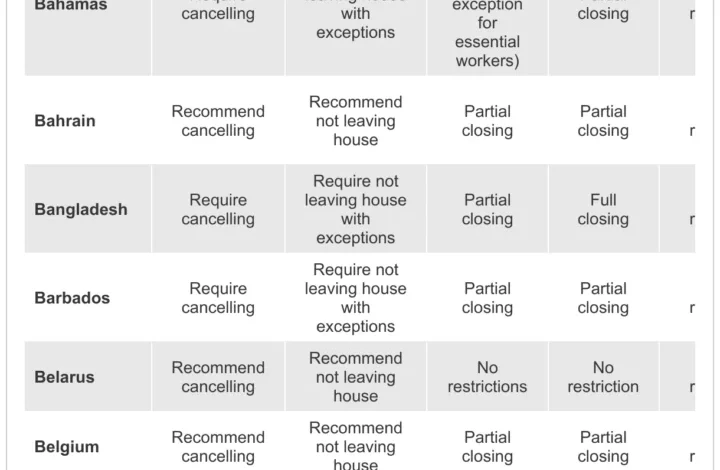
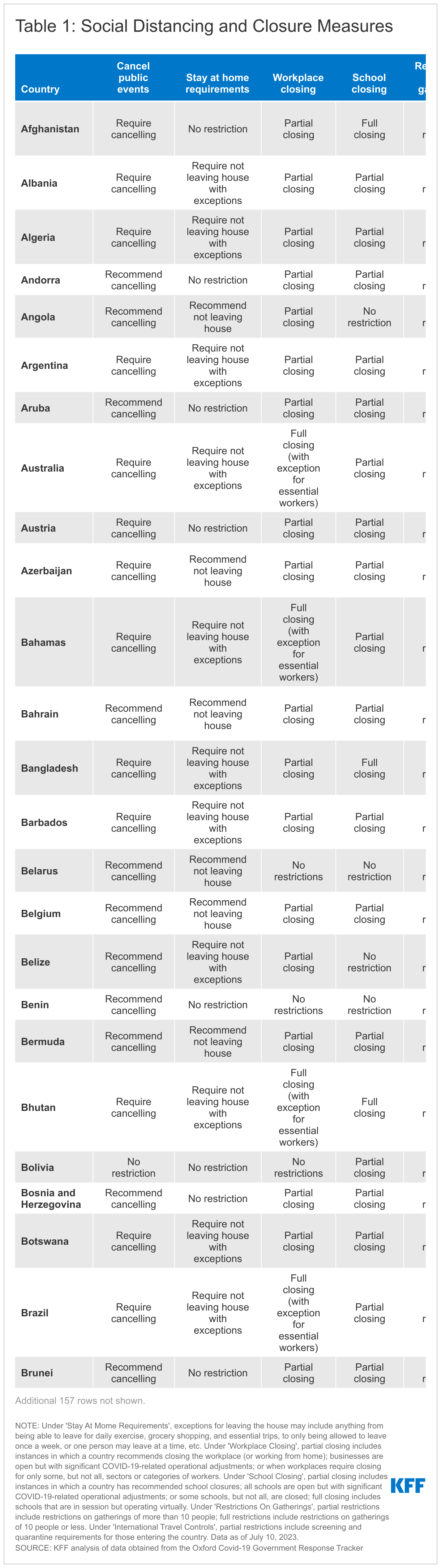
The initial and most visible policy responses to the burgeoning pandemic centered on social distancing and closure measures, designed to curtail the transmission of SARS-CoV-2. These interventions ranged from broad societal lockdowns to targeted restrictions, all aimed at reducing human interaction and, consequently, viral spread. Key categories tracked included ‘Stay At Home Requirements,’ which varied widely from recommendations to strict mandates with exceptions for essential activities like grocery shopping or daily exercise. The nuances within these policies are critical; for example, a "partial" stay-at-home order might allow daily outdoor activity, while a "full" order could restrict outings to once a week or for a single household member.
‘Workplace Closing’ policies similarly demonstrated a spectrum of enforcement. "Partial closing" could encompass recommendations for remote work, operational adjustments for businesses (e.g., reduced capacity, enhanced hygiene protocols), or mandated closures for only non-essential sectors. In contrast, "full closing" typically implied a broad mandate for workplaces to cease in-person operations, with only critical services exempted. ‘School Closing’ measures followed a similar pattern, ranging from recommended closures and operational adjustments to partial closures affecting specific grades or regions, and full closures that sometimes included a shift to virtual learning environments. The profound impact of these measures on daily life, education, and economic activity was immediate and far-reaching.
‘Restrictions On Gatherings’ were another cornerstone of social distancing, with "partial restrictions" often limiting gatherings to more than 10 people, and "full restrictions" extending to groups of 10 people or less. These policies fundamentally altered social life, religious practices, and cultural events globally. Finally, ‘International Travel Controls’ became ubiquitous, with "partial restrictions" typically involving screening and quarantine requirements for incoming travelers, while stricter controls included outright bans on non-essential travel or specific nationalities. The tracker also noted that ‘Cancel Public Events’ values were not recodified, indicating a consistent approach to this particular measure throughout the tracking period. These measures, while disruptive, were deemed essential by public health authorities worldwide to "flatten the curve" and prevent healthcare systems from being overwhelmed.
Economic Safeguards: Cushioning the Pandemic’s Financial Blow
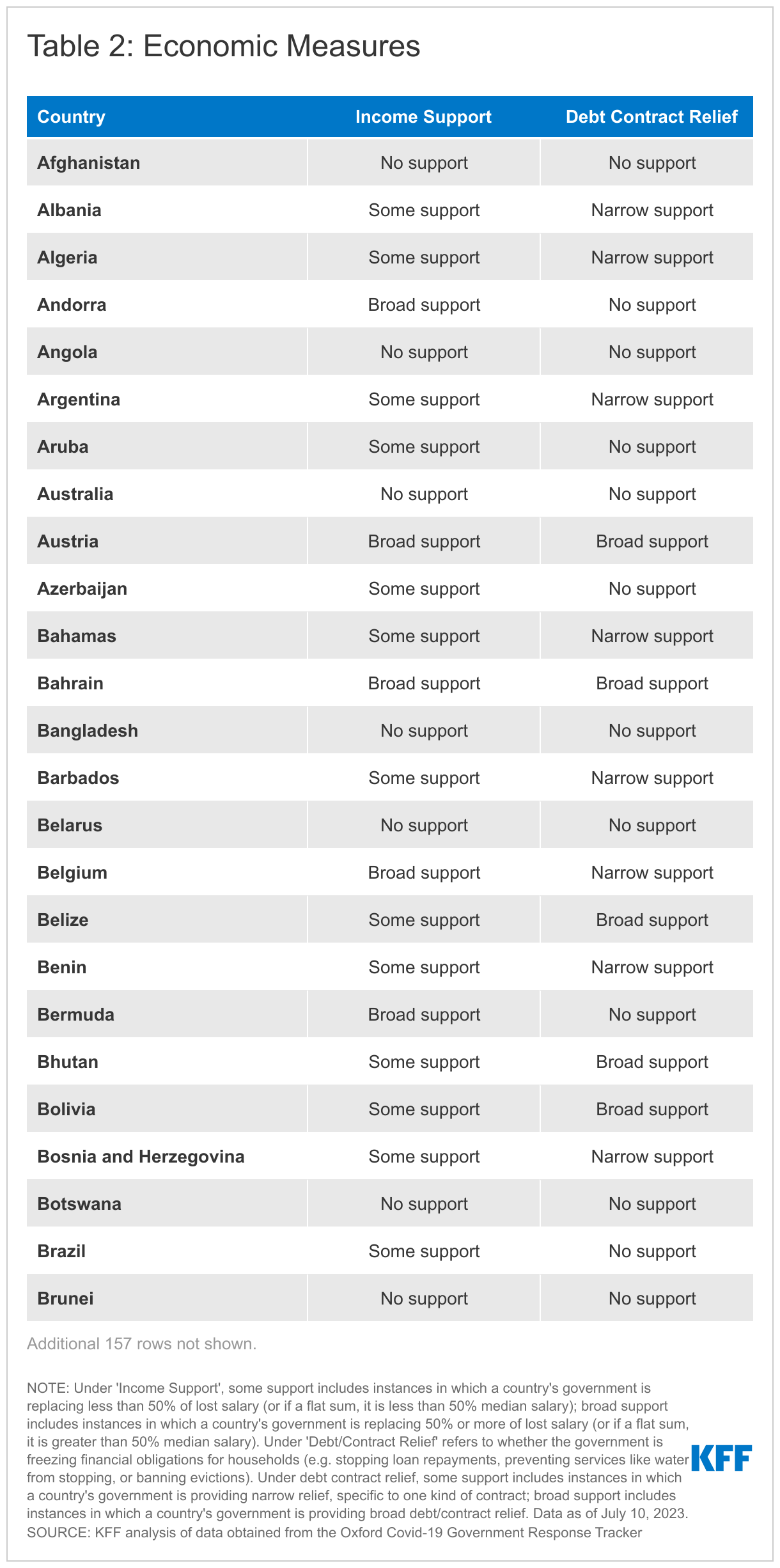
The COVID-19 pandemic delivered an unprecedented shock to global economies, necessitating swift and substantial governmental intervention to prevent widespread collapse and alleviate financial hardship for individuals and businesses. The tracker’s ‘Economic Measures’ section documented two critical categories: ‘Income Support’ and ‘Debt/Contract Relief.’ These policies were vital in providing a safety net for millions who faced job losses, reduced working hours, or business closures due to public health mandates.
‘Income Support’ measures were designed to replace lost wages or provide direct financial aid. The tracker distinguished between "narrow support," where governments replaced less than 50% of lost salary (or a flat sum less than 50% of the median salary), and "broad support," which entailed replacing 50% or more of lost salary or providing a flat sum exceeding 50% of the median salary. These interventions, ranging from expanded unemployment benefits to direct stimulus payments, played a crucial role in maintaining household solvency and preventing a more severe economic downturn. Many countries, particularly those with robust social safety nets, implemented broad income support schemes, while others with more limited fiscal capacity often opted for narrower, targeted assistance. The implementation of such programs often involved complex logistical challenges, but their perceived necessity was almost universal.
Parallel to income support, ‘Debt/Contract Relief’ measures aimed to ease financial burdens on individuals and businesses by postponing or reducing obligations. "Narrow support" in this category included specific relief tailored to particular types of contracts or limited sectors, such as mortgage payment holidays or rent freezes for certain tenants. More extensive relief packages, though not explicitly defined as "broad" in the same way as income support, often involved wider moratoriums on evictions, foreclosures, and loan repayments across multiple sectors. These measures were critical in preventing a cascade of bankruptcies and defaults, which would have further destabilized financial systems and prolonged economic recovery. The unprecedented nature of these economic interventions highlighted the depth of the crisis and governments’ willingness to employ extraordinary fiscal tools.
Bolstering Health Systems: A Critical Defense
Amidst the direct health crisis, bolstering and adapting health systems became paramount. The tracker’s ‘Health Systems Measures’ section detailed policies related to vaccine eligibility and facial coverings, two of the most significant public health interventions alongside social distancing. These measures were crucial for controlling the virus’s spread, reducing severe illness and death, and protecting healthcare capacity.
‘Vaccine Eligibility’ policies evolved significantly over the pandemic’s course, reflecting scientific advancements, vaccine availability, and strategic public health priorities. "Partial availability" typically meant vaccines were accessible to specific high-priority groups, such as key workers (healthcare professionals, essential service providers), non-elderly clinically vulnerable individuals, and elderly populations. As vaccine supplies increased, eligibility often expanded to include broader age groups or the general adult population. The global vaccination campaign represented an unparalleled scientific and logistical achievement, with billions of doses administered worldwide. The tracker’s documentation of these eligibility phases provides a timeline of each country’s vaccination strategy, illustrating the phased rollout designed to protect the most vulnerable and eventually achieve population-level immunity.
‘Facial Coverings’ emerged as a simple yet effective non-pharmaceutical intervention. Policies in this area ranged from governmental recommendations to partial or full requirements. "Recommend/partial requirement" included instances where governments advised wearing masks, mandated them in specific high-risk settings (e.g., public transport, healthcare facilities), or required them only when social distancing was not feasible. "Full requirement," in contrast, typically meant mandatory mask-wearing in most public indoor and often outdoor settings. The debate surrounding mask mandates highlighted varying cultural norms, public acceptance, and scientific interpretations, yet their widespread adoption in many regions contributed significantly to reducing community transmission. These health system measures, alongside enhanced testing and contact tracing capabilities, formed the core of the public health response aimed at managing the direct impact of the virus on individuals and healthcare infrastructure.
Methodological Rigor and Data Integrity
The credibility and utility of any global tracker hinge on its methodological rigor and the transparency of its data sources. For cases and deaths, the tracker explicitly states its reliance on the World Health Organization’s (WHO) Coronavirus (COVID-19) Dashboard since March 7, 2023. This ensures a consistent, internationally recognized source for epidemiological data. Prior to this, data was sourced from the Johns Hopkins University (JHU) Coronavirus Resource Center’s COVID-19 Map. Population data, crucial for calculating rates and understanding demographic impacts, are obtained from the United Nations World Population Prospects, specifically using 2021 total population estimates. Income-level classifications, which enable analysis of disparities, are drawn from the latest World Bank Country and Lending Groups, while regional classifications are aligned with those of the World Health Organization. This multi-source approach ensures that the contextual data supporting the core epidemiological figures are robust and derived from authoritative international bodies.
For policy actions, the data and detailed descriptions of government measures were provided by the Oxford Covid-19 Government Response Tracker (OxCGRT). The OxCGRT was a monumental undertaking, systematically collecting and categorizing policy responses from governments worldwide. The tracker provides direct links to the OxCGRT’s codebook and interpretation guide, offering full transparency into their data collection and methodology. This detailed documentation is crucial for researchers and analysts seeking to understand the precise definitions and nuances behind each policy indicator. For instance, the ‘Methods’ section clarifies what constituted "partial" versus "full" measures for school closings, workplace closings, income support, and other categories, acknowledging the varied implementation strategies observed globally. The explicit acknowledgment that policy actions data will no longer be updated due to the cessation of the OxCGRT’s tracking efforts is also a testament to the tracker’s commitment to transparency, informing users about the limitations of the historical policy dataset while preserving its immense value. The provision of the full dataset on GitHub further exemplifies this commitment, allowing researchers to delve into the raw data for in-depth analysis beyond the interactive interface.
The Evolving Narrative and Future Implications
The global COVID-19 data tracker stands as a testament to the unprecedented challenges and adaptive responses witnessed during one of humanity’s most significant public health crises. As the world gradually moves beyond the emergency phase of the pandemic, the role of such trackers evolves from real-time crisis monitoring to becoming invaluable historical archives. The shift in data sourcing for cases and deaths, the cessation of policy updates, and the continuous refinement of data representation (like the weekly versus daily average correction) reflect this dynamic evolution.
The legacy of COVID-19 data collection extends far beyond the immediate crisis. It has highlighted the critical importance of international collaboration, standardized data collection protocols, and transparent reporting for effective global health governance. The detailed policy actions recorded offer a rich repository for studying the efficacy and societal impact of various interventions, informing future strategies for managing infectious disease outbreaks, climate change-related health crises, or other large-scale societal disruptions. Researchers can analyze correlations between specific policy implementations and epidemiological outcomes, identify best practices, and understand the economic and social trade-offs inherent in different response strategies.
Moreover, the challenges encountered—such as data lags, inconsistencies across national reporting, and the sheer scale of information management—provide crucial lessons for strengthening global health intelligence systems. The ability to access full historical datasets via platforms like GitHub underscores a commitment to open science and empowers a broader community of researchers to draw insights. While the immediate intensity of tracking every new case and policy decision may have diminished, the fundamental need for robust, reliable, and accessible health data remains paramount. This tracker, therefore, serves not just as a historical record of the COVID-19 pandemic but as a foundational resource for understanding the complex interplay between epidemiology, public policy, and global society, shaping preparedness and response efforts for generations to come.
Related posts: