Digital Twins of Life: How Buck Institute Researchers Are Using Software to Decode Aging and Human Longevity


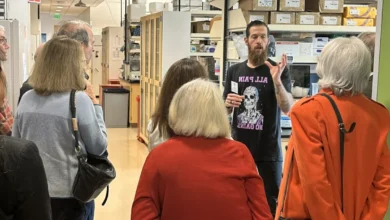
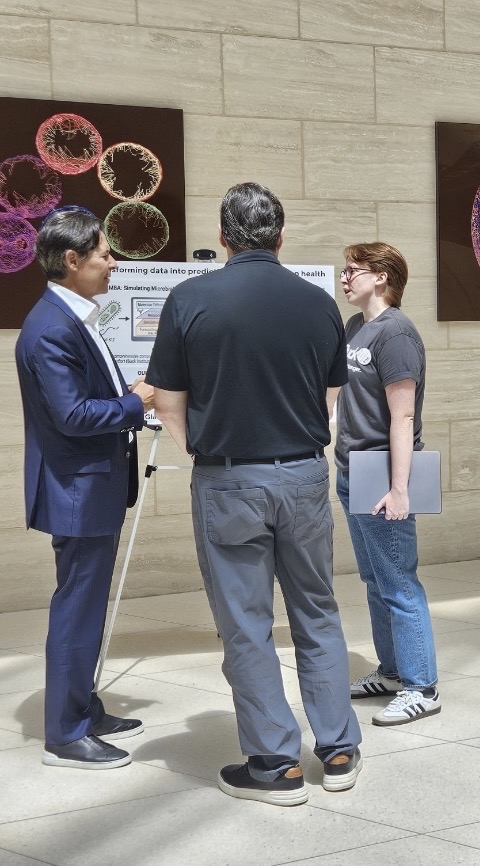
The pursuit of human longevity has long relied on trial-and-error laboratory experiments, physical testing, and decades of observational studies. However, a quiet revolution is underway at the intersection of computational mathematics and cellular biology. At the Buck Institute for Research on Aging, scientists are building the foundational software capable of simulating life itself. Through the lens of monthly spotlights such as the Institute’s Faces of Discovery series, the spotlight is increasingly falling on interdisciplinary researchers like Dr. Emma Glass, a research scientist in James Yurkovich’s laboratory. Glass, alongside her colleagues, is developing whole-cell simulation software and data analysis pipelines for critical initiatives, including the TIME clinical trial. By shifting the paradigm from physical observation to predictive digital modeling, the scientific community is moving closer to an era where human aging can be simulated, understood, and ultimately mitigated with mathematical precision.
Background and Institutional Context
The Buck Institute, recognized globally as the first independent research institution devoted entirely to addressing the connection between aging and chronic disease, has continually expanded its methodological toolkit. While traditional biogerontology focused primarily on genetic pathways, model organisms, and biochemical assays in wet laboratories, the modern frontier requires massive computational power. Artificial intelligence, machine learning, and big data analytics now occupy central roles in deciphering why biological systems degrade over time.

Dr. Emma Glass arrived at the Buck Institute after completing a robust academic trajectory. A native of Virginia, Glass earned her Bachelor of Science in Applied Mathematics from William & Mary before pursuing a Doctor of Philosophy in Biomedical Engineering at the University of Virginia. Her doctoral focus in computational microbiology provided an ideal bridge into the rigorous computational demands of aging research. When the opportunity arose to join the Yurkovich lab at the Buck Institute, Glass seized the chance to apply her mathematical background directly to the science of human healthspan.
The Core Science: Simulating E. Coli to Predict Complex Biology
At the heart of Glass’s current research is a high-stakes project funded by the Defense Advanced Research Projects Agency (DARPA). The initiative focuses on creating a comprehensive computational simulation capable of predicting the precise behavioral responses of Escherichia coli (E. coli) when exposed to changing environments.
Rather than relying solely on physical petri dishes to test how bacterial populations react to environmental stressors or antimicrobial agents, Glass and her team use computational models to simulate these dynamics. By inputting biochemical parameters into the software, the program can calculate the exact concentration of an antibiotic required to halt bacterial growth without physical experimentation.

While the immediate application centers on bacteriology and optimizing treatments for specific infections, the broader methodological implications align directly with the Buck Institute’s overarching mission. Simulating a bacterium serves as a crucial proof of concept and a technical blueprint. By mastering the intricate web of biochemical reactions in a single-celled organism, researchers are establishing the foundational architecture necessary to eventually simulate human cells, tissues, and complex organ systems.
Team Science and Collaborative Frameworks
The complexity of whole-cell modeling demands a departure from traditional, siloed academic research. At the Buck Institute, projects like the DARPA-funded initiative operate under a model of integrated "team science." This methodology divides complex biological questions into specialized yet interconnected streams, primarily categorized as "Measure and Inform" (the generation of rigorous empirical data) and "Simulate and Predict" (the development and refinement of predictive computational models).
This collaborative infrastructure relies heavily on internal synergy. Glass works alongside various faculty members across the Buck Institute to design and execute experiments that generate the massive datasets required to ground digital models in biological reality. Furthermore, these efforts are bolstered by external partnerships with industry leaders who supply specialized scaling expertise, allowing academic software prototypes to transition into robust, scalable platforms. This ecosystem enables researchers trained in applied mathematics and machine learning to collaborate seamlessly with traditional biologists, geneticists, and clinical researchers.
Economic and Healthcare Implications
The transition toward predictive computational modeling carries profound implications for both clinical medicine and the broader healthcare economy. Traditional drug discovery and optimization pipelines are notoriously expensive and protracted, often requiring billions of dollars and more than a decade to bring a single therapeutic intervention from bench to bedside.
By leveraging whole-cell simulators, the pharmaceutical and biotechnology sectors could dramatically accelerate the screening of candidate molecules. In the short term, infectious disease management could be revolutionized; clinicians could utilize predictive software to determine the most efficacious antibiotic regimen for an individual patient almost instantaneously, bypassing prolonged trial periods.
Over the long term, the economic and societal ramifications of extending human healthspan—the period of life spent free from chronic disease and disability—are staggering. Chronic conditions associated with aging, such as cardiovascular disease, neurodegeneration, and metabolic disorders, consume a vast majority of modern healthcare expenditures. If computational models can accurately forecast how human cells undergo senescence and functional decline, researchers can identify targeted pharmacological or lifestyle interventions long before clinical pathology manifests. This shifts modern medicine from a reactive treatment model to a proactive, preventative paradigm.
Chronology and Strategic Milestones
The integration of computational biology into mainstream aging research has accelerated rapidly over the past five years, driven by exponential increases in computing power and advancements in machine learning architectures.
- Foundational Phase: Early computational models of cellular metabolism were largely restricted to isolated metabolic networks, lacking the holistic view required to understand systemic cellular behavior.
- DARPA Engagement: Federal investments, including programs spearheaded by DARPA, catalyzed the development of whole-cell modeling by emphasizing the need for predictive software capable of forecasting biological responses under novel conditions.
- Buck Institute Expansion: The recruitment of interdisciplinary specialists like Dr. Emma Glass over recent years reflects a strategic push by the Buck Institute to institutionalize big-data methodologies within aging biology.
- Current Operations: Today, laboratories within the Institute are actively generating the empirical datasets required to validate bacterial simulators, setting the stage for subsequent scaling toward eukaryotic and human cell models.
Future Outlook: The Next Decade of Cellular Simulation
Looking ahead over the next five to ten years, researchers in computational biogerontology anticipate a massive leap in simulation complexity. Programs such as the DARPA-backed initiatives are projected to push system capacities significantly higher, targeting tenfold increases in modeled biological complexity.
For the scientific community at the Buck Institute, the ultimate horizon is the creation of high-fidelity digital models of human cells. Such a breakthrough would transform the study of biological aging from an observational science into an exact predictive discipline. Rather than merely documenting the physical deterioration associated with advanced age, scientists and eventually clinicians could run personalized longevity simulations. These virtual models would allow healthcare providers to test how specific dietary modifications, pharmacological agents, or lifestyle interventions impact an individual’s cellular health trajectory prior to real-world application.

As Dr. Glass and her colleagues continue to refine their software algorithms and expand the boundaries of the TIME clinical trial, the vision of personalized, mathematically precise healthspan management draws closer to reality. By decoding the language of the cell through mathematics and computer science, the Buck Institute remains at the vanguard of a movement redefining the human lifespan.