Digital Cell Simulations and the Future of Longevity: Inside the Buck Institute’s Quest to Predict Aging


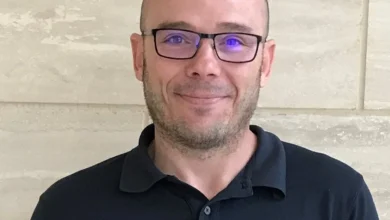
NOVATO, California — At the Buck Institute for Research on Aging, the future of human health is increasingly being written not just in petri dishes, but inside lines of computer code. As part of the institution’s ongoing Faces of Discovery series—a monthly editorial feature highlighting the researchers unraveling the biological mechanisms of aging—the spotlight turns to Dr. Emma Glass, a research scientist in the laboratory of James Yurkovich. Glass, who joined the Buck Institute just over a year ago, is spearheading computational software development and data analysis initiatives, most notably contributing to the TIME clinical trial and advanced whole-cell modeling funded by the Defense Advanced Research Projects Agency (DARPA).
The intersection of computational biology and biogerontology represents a paradigm shift in how researchers approach the deterioration of human physiological systems. Rather than relying solely on trial-and-error laboratory experimentation, scientists like Glass are building high-fidelity digital replicas of living organisms. By simulating biological processes at a molecular level, the Buck Institute aims to transition the field of aging research from a reactive science of observation to a proactive science of prediction and prevention.
From Applied Mathematics to Biomedical Engineering: The Journey of Dr. Emma Glass
Dr. Glass’s path to the forefront of longevity science is rooted in rigorous quantitative disciplines. A native of Virginia, she earned her Bachelor of Science degree in Applied Mathematics from the College of William and Mary, acquiring a strong foundational framework in mathematical modeling and data analytics. She subsequently pursued a Ph.D. in Biomedical Engineering at the University of Virginia, where her doctoral research centered on computational microbiology.

Seeking to apply her computational expertise to the pressing global challenge of human aging, Glass transitioned to the Buck Institute in late 2023. Her integration into the Yurkovich lab allowed her to merge her background in bacterial systems modeling with the institute’s overarching mission: extending human healthspan—the period of life spent free from chronic disease and debilitating physical decline. Outside of her computational work in the laboratory, Glass maintains an active lifestyle, engaging in nature exploration throughout the San Francisco Bay Area, reading, knitting, playing ultimate frisbee, and practicing pottery.
Decoding E. Coli to Build the Blueprint for Human Cellular Modeling
The core of Glass’s current research is anchored in a high-stakes project funded by DARPA, an agency historically known for supporting transformative, high-risk, high-reward technological breakthroughs. The initiative focuses on developing an advanced computational simulation capable of predicting the precise behavioral responses of Escherichia coli (E. coli) when exposed to varying environmental stressors, specifically antimicrobial agents.
Traditionally, determining the efficacy of an antibiotic requires thousands of physical iterations in a laboratory setting, involving culture growth, chemical application, and time-intensive incubation periods. Glass and her colleagues are bypassing physical bottlenecks by developing mathematical models that can accurately calculate the precise concentration of an antibiotic needed to halt bacterial growth entirely in silico—meaning within computer simulations without ever touching a physical petri dish.
While the immediate application of this technology lies in optimizing antimicrobial therapies and combating the escalating global threat of antibiotic-resistant pathogens, the broader scientific trajectory points toward human biology. The computational architecture required to simulate a single bacterial cell serves as a critical proof-of-concept. By mastering the intricate variables of a simpler organism, the research team is establishing a scalable blueprint designed to eventually simulate complex human cells, tissues, and organ systems.

The Mechanics of Team Science: Bridging Data Generation and Predictive Modeling
Tackling the staggering complexity of whole-cell simulation requires a multidisciplinary framework commonly referred to in modern laboratories as "team science." At the Buck Institute, Glass’s work operates at the intersection of two primary DARPA project thrusts: "Measure and Inform," which involves the generation of empirical biological datasets, and "Simulate and Predict," which focuses on translating those biological realities into functional computational models.
This workflow demands continuous, high-level collaboration. Glass works alongside internal Buck Institute faculty members to produce massive, high-resolution experimental datasets that ground theoretical models in biological fact. Simultaneously, the lab engages with external industry partners who provide specialized expertise in scaling computational infrastructure.
The convergence of biology, big data, and machine learning at the Buck Institute has created an optimal ecosystem for researchers trained at the quantitative-biological interface. By leveraging artificial intelligence and advanced data analytics, the institute is positioning itself at the vanguard of computational biogerontology.
Demystifying Whole-Cell Simulation for the Public
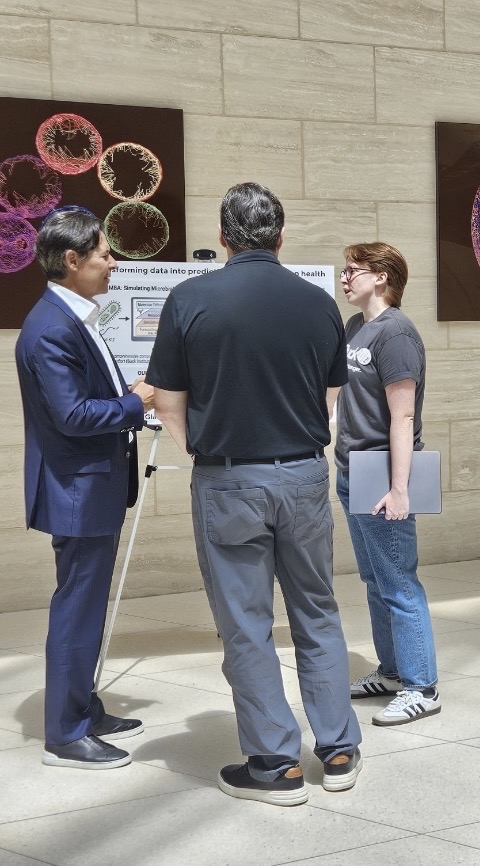
To conceptualize the implications of whole-cell modeling for a general audience, Glass compares the traditional scientific method to its digital alternative. Under conventional paradigms, evaluating how a cellular system reacts to a pharmaceutical intervention requires extensive physical experimentation—a process that is both capital-intensive and time-consuming.
By translating the biochemical properties of a cell into a digital environment, researchers can execute simulations instantaneously. Investigators can introduce virtual pharmaceutical compounds into the digital cell model and observe immediate outcomes: Does the synthetic cell proliferate? Does it experience metabolic stress? Does it undergo programmed cell death?
By refining these predictive models on bacterial frameworks today, scientists are laying the technical foundation to construct digital twins of human cells tomorrow. If researchers can accurately model how human cellular structures alter and degrade over time on a computer screen, they can systematically test interventions designed to arrest cellular damage, mitigate age-related pathology, and preserve physiological resilience.
Translational Impact: From Personalized Medicine to Healthspan Extension
The implications of this research extend along a dual timeline, offering both immediate clinical applications and long-term philosophical shifts in healthcare delivery. In the near term, whole-cell simulation software promises to revolutionize pharmacology by accelerating the identification of targeted antimicrobial treatments, offering precise predictive metrics for infection management.
However, the long-term potential of extensibility represents the true paradigm shift. As computational power and biological datasets expand, the framework developed for single-cell organisms can be scaled upward. In a future medical landscape informed by these technologies, clinicians could theoretically utilize personalized longevity simulations. Rather than relying on generalized population-level guidelines, healthcare providers could model how specific dietary adjustments, pharmacological interventions, or lifestyle modifications would impact an individual patient’s cellular aging trajectory at a molecular level.
This transition moves modern medicine away from a reactive, one-size-fits-all model toward a precision-guided framework focused on proactively optimizing human healthspan.
Looking Ahead: The Next Decade of Cellular and Systems Modeling
As the scientific community looks toward the next five to ten years, researchers at the Buck Institute anticipate monumental leaps in the scale and fidelity of biological simulations. Programs such as the DARPA-backed initiatives are serving as catalysts, pushing computational biographers to model systems of exponentially greater complexity.
Within the coming decade, experts project the emergence of the first high-resolution digital models of human cells. For the Buck Institute, reaching this milestone would mark a historic achievement, allowing researchers to probe the fundamental drivers of biological aging—such as genomic instability, epigenetic alterations, and cellular senescence—with unprecedented precision. By shifting the scientific focus from the observation of biological decline to its active prediction and prevention, Dr. Emma Glass and her colleagues are helping construct the computational bridge toward a healthier, longer human lifespan.