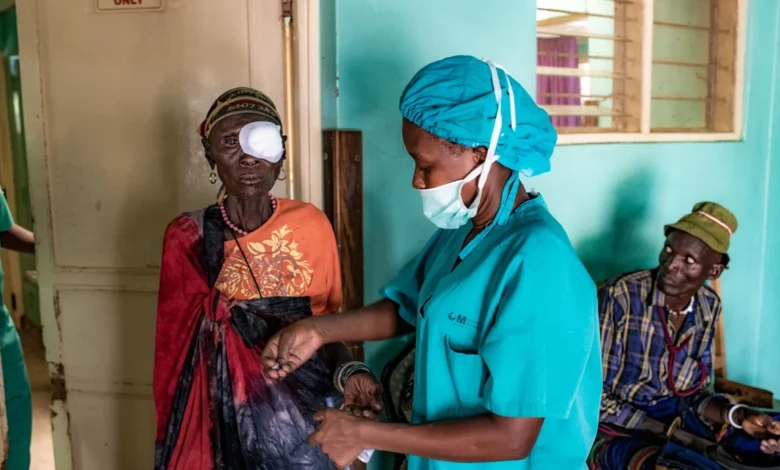
The clarion call comes in the wake of a significant new study published in The Lancet Global Health, which starkly illuminates the vast scale of the challenge: nearly half of all individuals worldwide suffering from cataract-related blindness continue to await the crucial surgical intervention that could restore their vision. This latest research, synthesizing reports from 68 country estimates for 2023 and 2024, paints a compelling picture of persistent inequities and systemic barriers hindering access to a procedure that offers immediate and profound transformation.
Cataracts, characterized by the progressive clouding of the eye’s natural lens, is a leading cause of blurred vision and, ultimately, blindness globally. It afflicts more than 94 million people, making it a pervasive public health concern. Despite its widespread prevalence, the solution – cataract surgery – is remarkably straightforward. Typically a quick 15-minute outpatient procedure, it is widely recognized as one of the most cost-effective medical interventions available, promising not only the restoration of sight but also a significant uplift in an individual’s quality of life, independence, and economic productivity.
A Global Health Imperative: Understanding Cataracts and the Burden of Disease
Cataracts primarily develop as a natural part of the aging process, where proteins in the eye’s lens clump together, causing opacification. While age is the predominant risk factor, other contributors can accelerate its onset and progression. These include prolonged exposure to ultraviolet-B (UV-B) radiation, particularly in equatorial regions or at high altitudes without adequate eye protection, as well as lifestyle factors such as tobacco use. Medical conditions like diabetes, which is rapidly increasing in prevalence worldwide, and the long-term use of corticosteroids, are also known to significantly increase the risk of cataract formation. Understanding these varied etiologies is crucial for both prevention strategies and targeted public health interventions.
The impact of untreated cataracts extends far beyond individual vision loss. For millions, it means a gradual descent into dependency, losing the ability to work, care for themselves, or engage in social activities. This profound personal toll aggregates into a substantial societal burden. The global economy incurs significant losses in productivity due to preventable blindness, with estimates suggesting billions of dollars in lost GDP annually. Moreover, the increased need for caregivers and the strain on social welfare systems further compound the economic costs. The WHO’s renewed emphasis underscores that addressing cataract blindness is not merely a humanitarian gesture but a shrewd investment in human capital and sustainable development.
Chronology of Commitment: WHO’s Enduring Fight Against Blindness
The World Health Organization has a long and distinguished history of advocating for global eye health. This latest call to action builds upon decades of concerted efforts to eliminate avoidable blindness worldwide.
The most seminal initiative in this regard was "VISION 2020: The Right to Sight," launched in 1999 in partnership with the International Agency for the Prevention of Blindness (IAPB). This ambitious global initiative aimed to eliminate avoidable blindness by the year 2020 through the establishment of sustainable eye care systems in developing countries. VISION 2020 focused on five priority eye diseases, with cataract being a central target due to its high prevalence and treatability. The strategy involved strengthening human resources for eye care, developing infrastructure, and increasing access to affordable technology.
Over its two-decade lifespan, VISION 2020 achieved significant successes, particularly in raising awareness, fostering international collaboration, and building capacity in many regions. Global coverage of cataract surgery, for instance, saw an increase of approximately 15% during this period. However, despite this progress, the sheer scale of the challenge, coupled with an aging global population and a rising incidence of chronic diseases like diabetes, meant that the demand for cataract surgery continued to outpace the rate of increase in service provision.
Recognizing the evolving landscape and the need for continued momentum, the global health community, led by the WHO, established new targets. The World Health Assembly (WHA), the decision-making body of the WHO, adopted a resolution in 2021 setting an ambitious new target: a 30% increase in the effective coverage of cataract surgery by 2030. This target is enshrined within the broader framework of the Global Eye Health Action Plan 2020-2030, which aims to make eye care an integral part of Universal Health Coverage (UHC). The current modeling predicts that, at the present rate, global coverage for cataract surgery is projected to rise by only about 8.4% by 2030 – a stark shortfall against the WHA’s ambitious 30% target. This significant gap underscores the urgency of the WHO’s current plea for accelerated action.
The Lancet Study: Unveiling Disparities and Deep-Rooted Inequities
The recent Lancet Global Health study provides critical, up-to-date data that validates the need for this acceleration. Analyzing comprehensive reports from 68 countries, the study offers a granular view of where the greatest needs and disparities lie. Its findings are particularly concerning for the African Region, which faces the most significant access gap globally. Here, a staggering three out of every four people who require cataract surgery remain untreated, highlighting a profound health equity crisis. This disproportionate burden in Africa can be attributed to a confluence of factors, including severe shortages of trained eye care professionals, rudimentary or non-existent surgical infrastructure, pervasive poverty limiting out-of-pocket payments, and geographical barriers that make reaching healthcare facilities an arduous task for many.
Beyond regional disparities, the study also meticulously documents persistent gender inequity in access to cataract care. Women across all regions consistently experience lower rates of access to surgery compared to men. This finding resonates with broader patterns observed in global health, where women often face unique social, cultural, and economic barriers to healthcare. These can include lower socioeconomic status, limited decision-making power within households, cultural norms that prioritize male family members’ health needs, and practical challenges such as lack of safe transportation or childcare responsibilities that prevent them from seeking treatment. Addressing these deeply entrenched gender-specific barriers is paramount for achieving equitable health outcomes.
Barriers to Access: A Multifaceted Challenge
The gaps identified by the Lancet study and reiterated by the WHO reflect long-standing structural impediments that permeate healthcare systems globally. These barriers are complex and interconnected, requiring multifaceted solutions.
One of the most critical challenges is the severe shortage and unequal distribution of trained eye-care professionals. Many low- and middle-income countries (LMICs) suffer from a critical deficit of ophthalmologists, ophthalmic nurses, optometrists, and other essential support staff. This scarcity is exacerbated by the maldistribution of existing professionals, who are often concentrated in urban centers, leaving vast rural and remote areas underserved. The extensive training required for these specialized roles, coupled with limited educational infrastructure and "brain drain" to wealthier nations, perpetuates this deficit.
Financial hurdles represent another formidable barrier. For millions, the high out-of-pocket costs associated with cataract surgery, including consultation fees, surgical expenses, medication, and transportation, are simply unaffordable. Even where services are available, the prospect of catastrophic health expenditures can deter individuals from seeking necessary care, pushing families further into poverty. The absence of comprehensive health insurance or robust public health financing mechanisms in many regions means that the burden of care falls directly on patients and their families.
Logistical and infrastructural challenges further complicate access. Many communities lack essential surgical infrastructure, including adequately equipped operating theatres, sterile environments, and reliable access to necessary surgical instruments and intraocular lenses. Long waiting times, sometimes stretching into years, are common in public health systems grappling with high demand and limited capacity, leading to avoidable prolonged blindness. Geographic access is also a significant issue, with many individuals living far from the nearest eye care facility, compounded by poor road networks and limited public transport.
Finally, limited awareness or demand for surgery, even where services exist, plays a role. Many individuals, particularly in underserved communities, may not be aware that their vision loss is treatable. Misinformation, fear of surgery, and cultural beliefs can also contribute to a reluctance to seek medical intervention. Community outreach and health education are vital to demystify the procedure and encourage timely treatment.
Solutions for Closing the Gap: A Roadmap to Vision
Ending unnecessary blindness from cataracts is not just a noble goal; it is an achievable one, provided there is sustained commitment and strategic investment. The WHO outlines several key pathways for countries to accelerate progress:
A fundamental solution lies in integrating vision screening and eye examinations into primary health care (PHC). By training community health workers, nurses, and general practitioners to conduct basic eye screenings, cataracts can be detected earlier at the community level. This decentralization of initial assessment allows for timely referrals to specialized eye care services, preventing progression to advanced blindness and reducing the burden on tertiary facilities. Such integration aligns with the broader goals of Universal Health Coverage and ensures that eye care is not an isolated service but a core component of overall health and well-being.
Investing in essential surgical infrastructure is equally critical. This includes not only building and equipping new eye care centers but also upgrading existing facilities to meet modern surgical standards. Innovations such as mobile eye camps and modular surgical units can extend services to remote populations. Furthermore, leveraging technology, such as advanced phacoemulsification machines and high-quality intraocular lenses, can improve surgical outcomes and efficiency.
Expanding and better distributing the eye-care workforce is paramount. This necessitates increased investment in training programs for ophthalmologists, ophthalmic nurses, and other allied eye health professionals. Strategies could include scholarships, incentives for working in rural and underserved areas, and task-shifting models where certain responsibilities are delegated to appropriately trained personnel to maximize efficiency. For instance, ophthalmic nurses can be trained to perform pre- and post-operative care, allowing ophthalmologists to focus on surgery.
Targeted efforts to prioritize women and marginalized communities will be essential to reduce persistent inequities. This requires developing gender-sensitive policies, implementing community outreach programs that specifically engage women, and removing financial and logistical barriers that disproportionately affect them. Addressing the social determinants of health that create and perpetuate these inequities is crucial for ensuring that gains in access truly benefit everyone. Public-private partnerships, involving non-governmental organizations (NGOs) like Sightsavers, Orbis, and the Fred Hollows Foundation, can also play a vital role in service delivery, training, and advocacy, complementing government efforts.
Official Responses and Broader Implications
The WHO’s call resonates deeply within the global health community. Devora Kestel, Director a.i. of the WHO Department of Noncommunicable Diseases and Mental Health, aptly articulates the profound impact: "Cataract surgery is one of the most powerful tools we have to restore vision and transform lives. When people regain their sight, they regain independence, dignity, and opportunity." This statement underscores the holistic benefits of the procedure, extending beyond mere physical restoration to encompass social and psychological well-being.
Beyond the WHO, leading ophthalmological societies worldwide, such as the International Council of Ophthalmology (ICO) and various national associations, are expected to echo these sentiments, emphasizing the medical feasibility and advocating for policy changes. Government health ministers, particularly in countries with significant access gaps, are implicitly urged to integrate eye health into national health plans and allocate adequate resources. Their commitment is vital for translating global targets into local action. Humanitarian organizations and philanthropic foundations also stand as key partners, often providing direct services and funding in areas where government capacity is limited.
The broader implications of achieving the 2030 target for cataract surgery coverage are immense. Economically, restoring the sight of millions means a significant boost to national workforces, reduced dependency ratios, and enhanced economic productivity. Individuals can return to their livelihoods, children whose parents regain sight can return to school instead of acting as caregivers, and communities can thrive. Socially, it means greater independence, dignity, and a reduction in social isolation for countless individuals. From a public health perspective, achieving this target contributes directly to the Sustainable Development Goal (SDG) 3: Good Health and Well-being, and reinforces the principle of Universal Health Coverage, ensuring that no one is left behind due to preventable blindness.
Technological advancements continue to make cataract surgery safer and more efficient. Modern techniques like phacoemulsification, which uses ultrasonic energy to break up the clouded lens, have revolutionized the procedure, making it minimally invasive with rapid recovery times. The ongoing development of innovative intraocular lenses and the potential for artificial intelligence (AI) in screening and diagnosis promise further improvements in accessibility and outcomes.
In conclusion, the World Health Organization’s renewed appeal for accelerated action on cataract surgery is a critical reminder of an urgent, yet solvable, global health challenge. With sustained political will, increased financial investment, a dedicated focus on equity, and collaborative action among governments, civil society, and international partners, cataract surgery can move from being an inaccessible intervention for millions to a universally available procedure. This collective commitment is not merely about restoring sight; it is about upholding human dignity, fostering economic growth, and building a more inclusive and healthy world, thereby helping to end avoidable blindness worldwide.
Related posts: