A Comprehensive Overview of the Rural Health Transformation Program and Its Implications Following the 2025 Budget Reconciliation Act

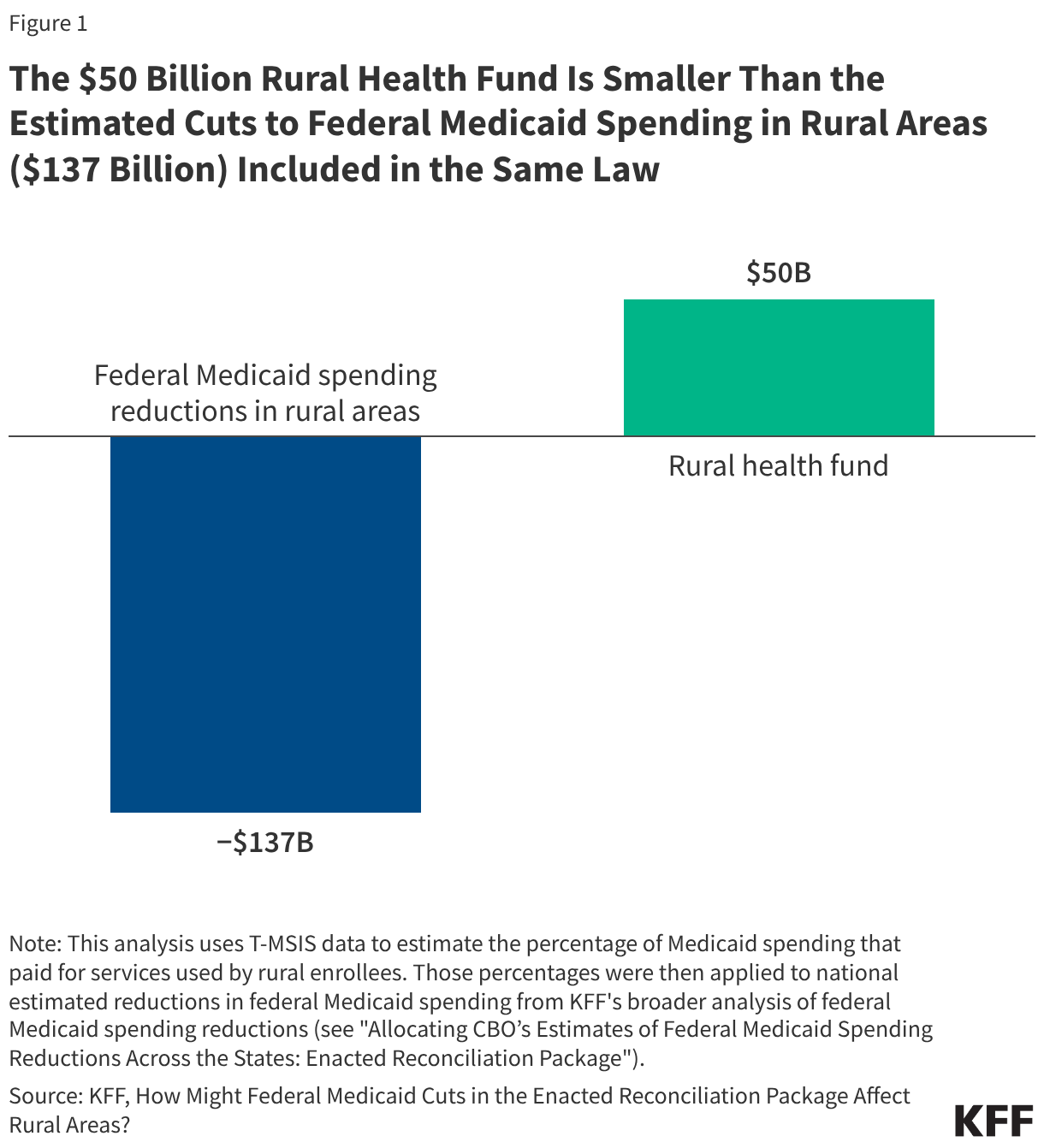
On July 4, 2025, President Trump signed a sweeping budget reconciliation bill—frequently dubbed the "One Big Beautiful Bill" during its legislative journey—into law, ushering in major structural changes to federal health care spending, taxation, and entitlement programs. Among its most contentious provisions, the legislation was projected by subsequent KFF analyses to reduce federal Medicaid spending by $911 billion over a ten-year horizon. Within that broader contraction, rural communities were estimated to bear roughly $137 billion in direct federal Medicaid reductions. To cushion the economic and clinical blow to America’s countryside, lawmakers inserted a late-stage political compromise into the package: the Rural Health Transformation Program. Commonly referred to as the rural health fund, this initiative provides $50 billion in competitive and baseline state grants spanning fiscal years 2026 through 2030. Administered by the Centers for Medicare & Medicaid Services (CMS) through its newly minted Office of Rural Health Transformation, the program attempts to overhaul rural care delivery. However, health policy experts, hospital administrators, and congressional leaders continue to debate whether the fund’s structure, scale, and timeline can successfully offset the sweeping financial pressures facing rural health care infrastructure.
Structuring the Rural Health Fund: Mechanics and Federal Oversight
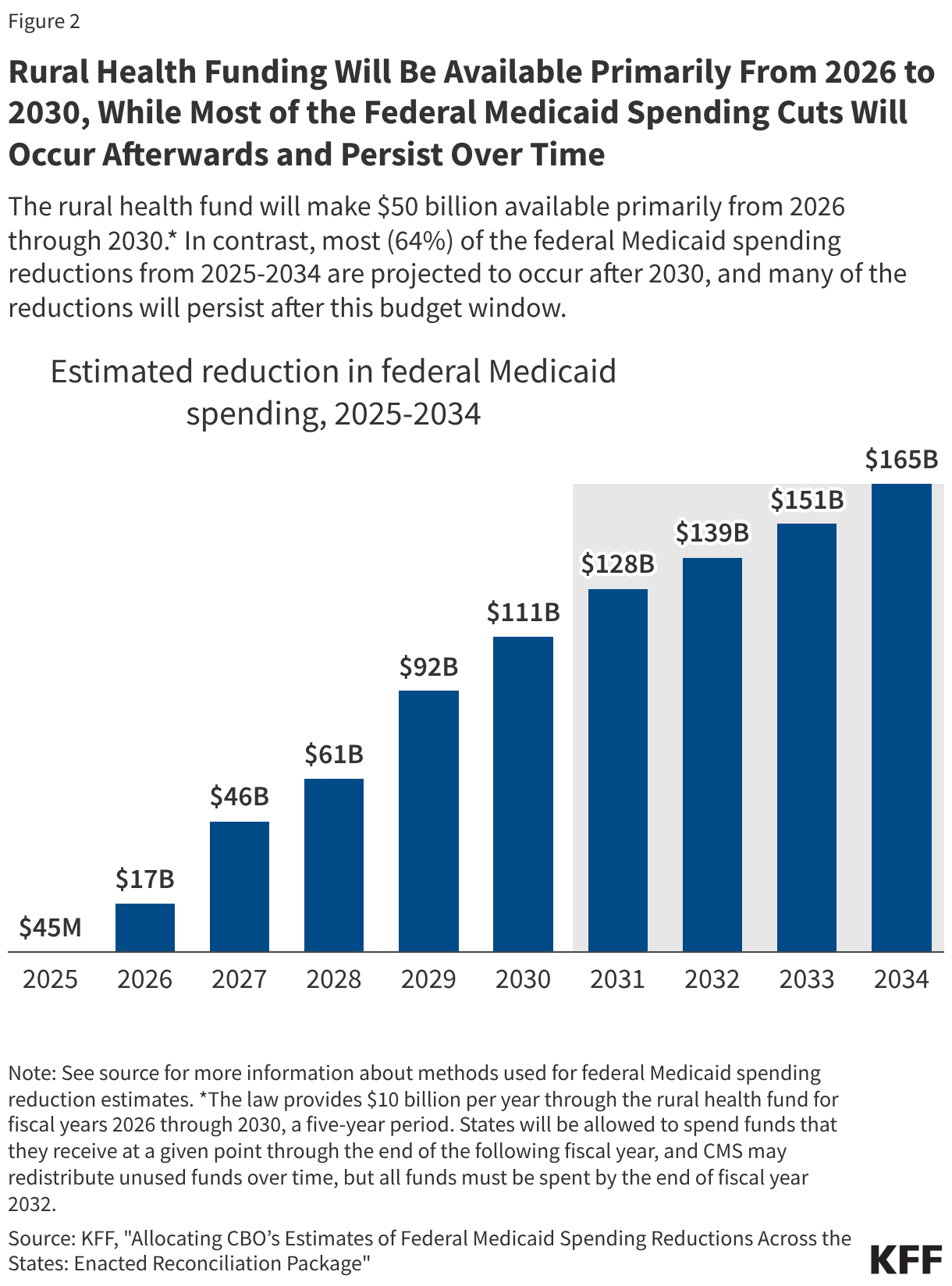
The rural health fund was conceived during intense Senate negotiations in late June 2025 as a direct legislative buffer to protect rural providers from looming budgetary cuts. Under the finalized statutory framework, CMS distributes $10 billion annually to approved states across a five-year window running from fiscal years 2026 to 2030. States are granted flexibility to expend allotted monies through the conclusion of the subsequent fiscal year, with all program funds required to be completely exhausted by the close of fiscal year 2032.
Unlike conventional block grants, the program operates through cooperative agreements. This administrative mechanism demands substantial, ongoing project involvement from CMS officials even after initial awards are disbursed. While all 50 states swiftly applied and secured approval during the initial one-time application window, participating jurisdictions face stringent federal oversight. CMS retains broad enforcement authority to withhold, reduce, eliminate, or claw back funding if a state fails to demonstrate continuous compliance, achieves unsatisfactory progress, or if federal administrators determine that continued funding is no longer in the government’s best interest. Critically, the legislation explicitly bars administrative or judicial review of these CMS funding decisions, placing immense power over state healthcare budgets squarely in the hands of federal regulators.
The rollout has adhered to a compressed timeline. Following the passage of the reconciliation act, CMS published its Notice of Funding Opportunity in September 2025, granting states less than two months to submit comprehensive applications that would dictate their funding scope for the life of the program. First-year awards were announced in December 2025, forcing state agencies to rapidly establish internal procurement protocols, review local sub-grantee proposals, obligate funds, and compile initial progress reports. Administrative capacity has varied dramatically across state lines, creating a fragmented landscape where some states deployed funds seamlessly while others struggled with administrative bottlenecks.
Permitted Uses, Strategic Goals, and Hospital Impacts
Intended to catalyze systemic transformation rather than serve as a temporary band-aid, the rural health fund mandates that states dedicate resources toward at least three of eleven statutory priority areas. CMS has outlined five overarching strategic goals: restoring health in rural populations, establishing sustainable healthcare access, driving workforce development, fostering innovative care delivery models, and advancing technological integration.
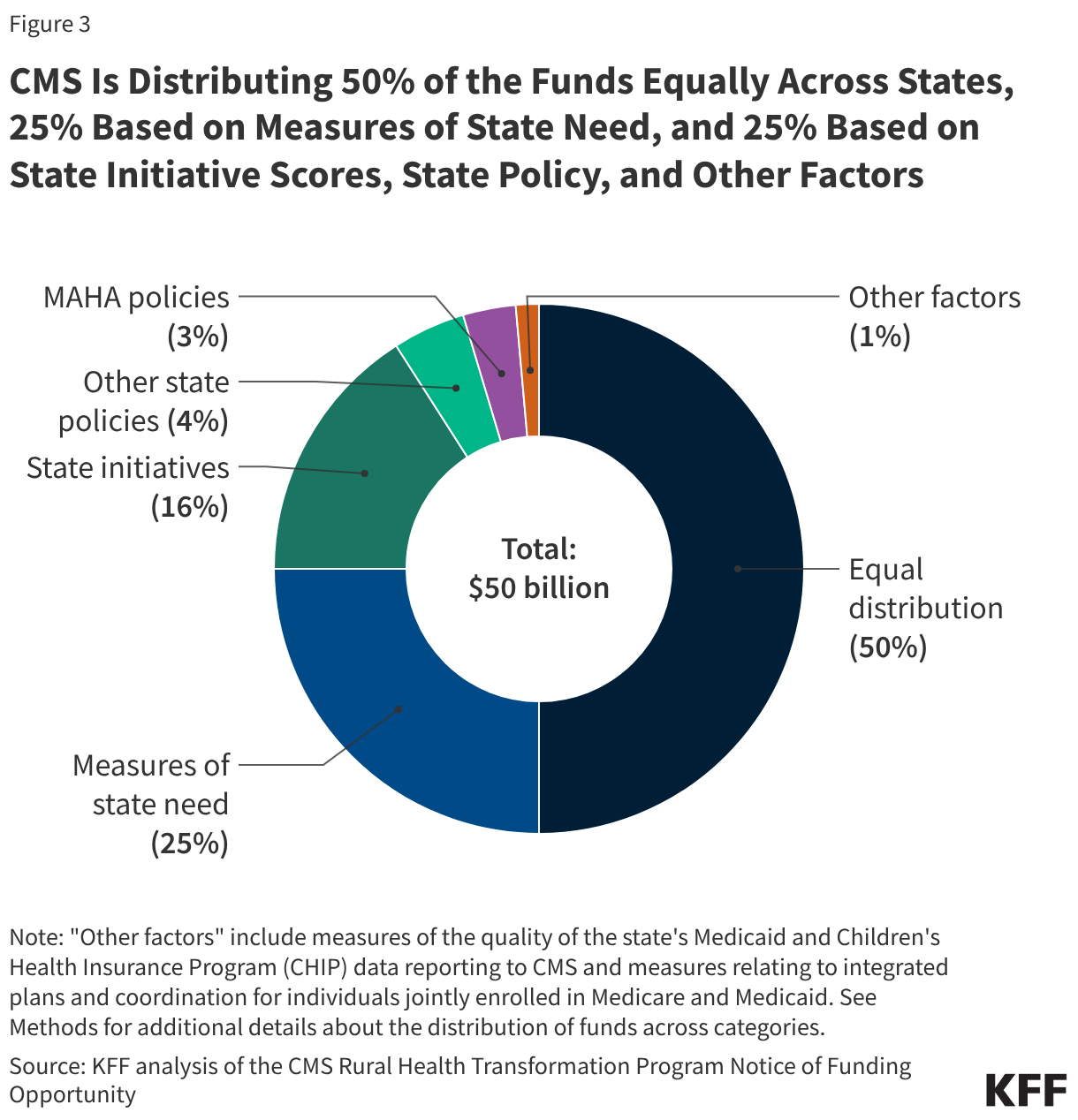
States are actively deploying these grants toward diverse interventions, including chronic disease management, administrative service consolidation among struggling rural facilities, regional health system partnerships, clinical recruitment incentives, telehealth expansion, artificial intelligence-driven diagnostic tools, and the adoption of value-based alternative payment models. Furthermore, states are permitted to allocate up to 10% of their total awards toward administrative overhead.
Despite the program’s origins in protecting rural hospitals from legislative spending cuts, the direct benefit to these institutions remains a subject of intense scrutiny. States retain total discretion over how funds are portioned out among various entities—including technical assistance vendors, academic institutions, urban health systems, and technology developers. Even among funds directed to hospitals, resources are not guaranteed to reach facilities facing the most severe financial distress. Moreover, while non-rural hospitals can receive funding provided the initiatives directly benefit rural populations, strict federal guardrails prohibit using the money for routine operating expenses, debt service, or supplanting existing state appropriations.
Chronology of Key Program Milestones
The lifecycle of the Rural Health Transformation Program is governed by a strict regulatory timeline designed to monitor state compliance and enforce performance standards:
- July 4, 2025: President Trump signs the budget reconciliation package into law, formally authorizing the $50 billion Rural Health Transformation Program.
- September 2025: CMS releases the official Notice of Funding Opportunity, opening the application window for state health departments.
- November–December 2025: States submit initial transformation plans, culminating in CMS’s announcement of first-year award allocations in December 2025.
- October 30, 2026: Mandatory deadline for states to fully obligate their first-year funding allocations to direct recipients and sub-grantees.
- November 29, 2026: First quarterly reporting deadline for states to submit detailed tracking data regarding fund distribution across downstream entities.
- Fiscal Years 2026–2030: Annual disbursement of $10 billion in federal grants across approved state programs.
- September 30, 2032: Ultimate statutory deadline for the complete liquidation and expenditure of all program funds.
Comparative Analysis: Scale, Timing, and Disparity in State Allocations
A central point of contention among policy analysts is the mathematical mismatch between the rural health fund and the broader cuts enacted in the 2025 reconciliation package. The $50 billion allocated to the rural health fund offsets only about 37% of the estimated $137 billion in ten-year federal Medicaid reductions expected to hit rural areas, and roughly 5% of the total $911 billion in nationwide Medicaid cuts. This calculation excludes additional revenue losses stemming from the expiration of enhanced Affordable Care Act (ACA) marketplace subsidies and rising uninsured rates.
Furthermore, a significant temporal disconnect complicates the program’s protective utility. The rural health fund is heavily front-loaded, distributing its entire $50 billion budget between 2026 and 2030. In stark contrast, nearly two-thirds (approximately 64%) of the ten-year federal Medicaid spending reductions are backloaded, taking full effect after 2030. While front-loading allows rural communities to invest in infrastructure before fiscal pressures peak, the temporary nature of the fund means rural providers will face ongoing Medicaid deficits long after the federal grants expire.
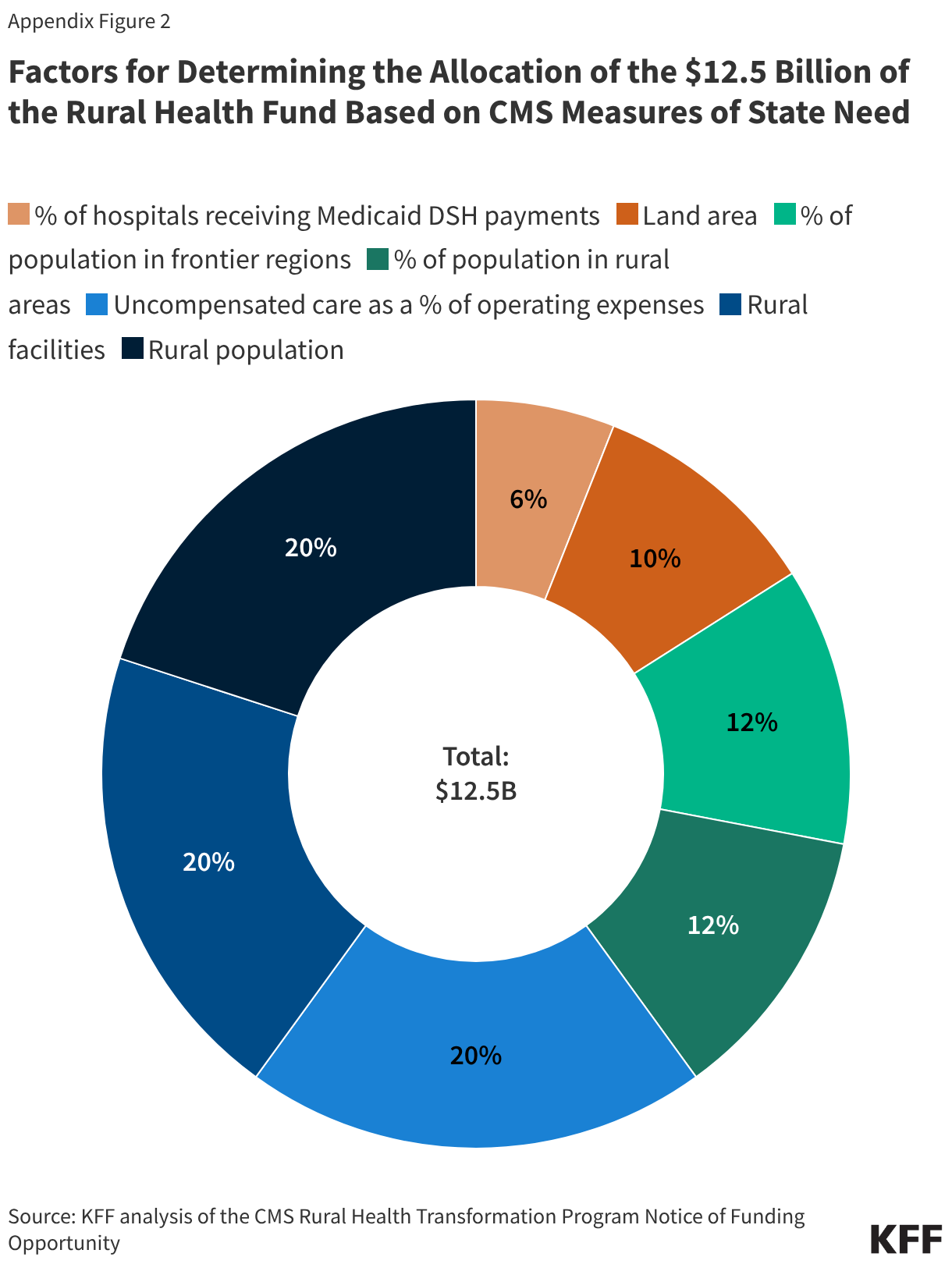
Distribution methodology further exacerbates debates over equity. CMS divides the $50 billion fund into two distinct pools: $25 billion in "baseline funding" distributed equally among all 50 states, and $25 billion in "workload funding" allocated based on 23 weighted metrics encompassing state need, policy actions, and initiative scores.
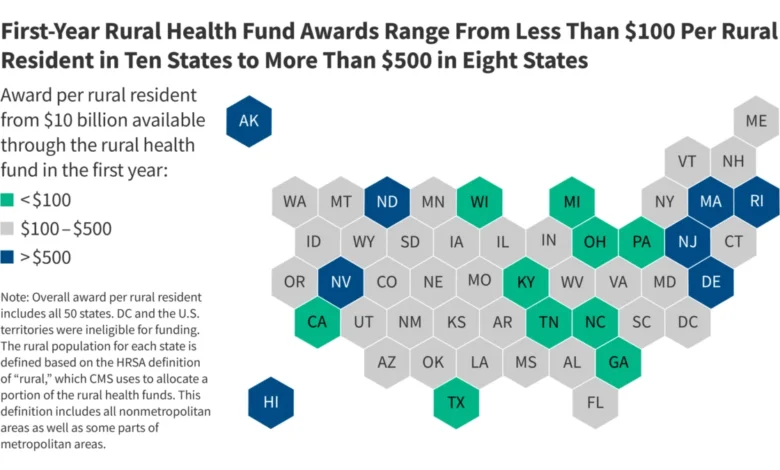
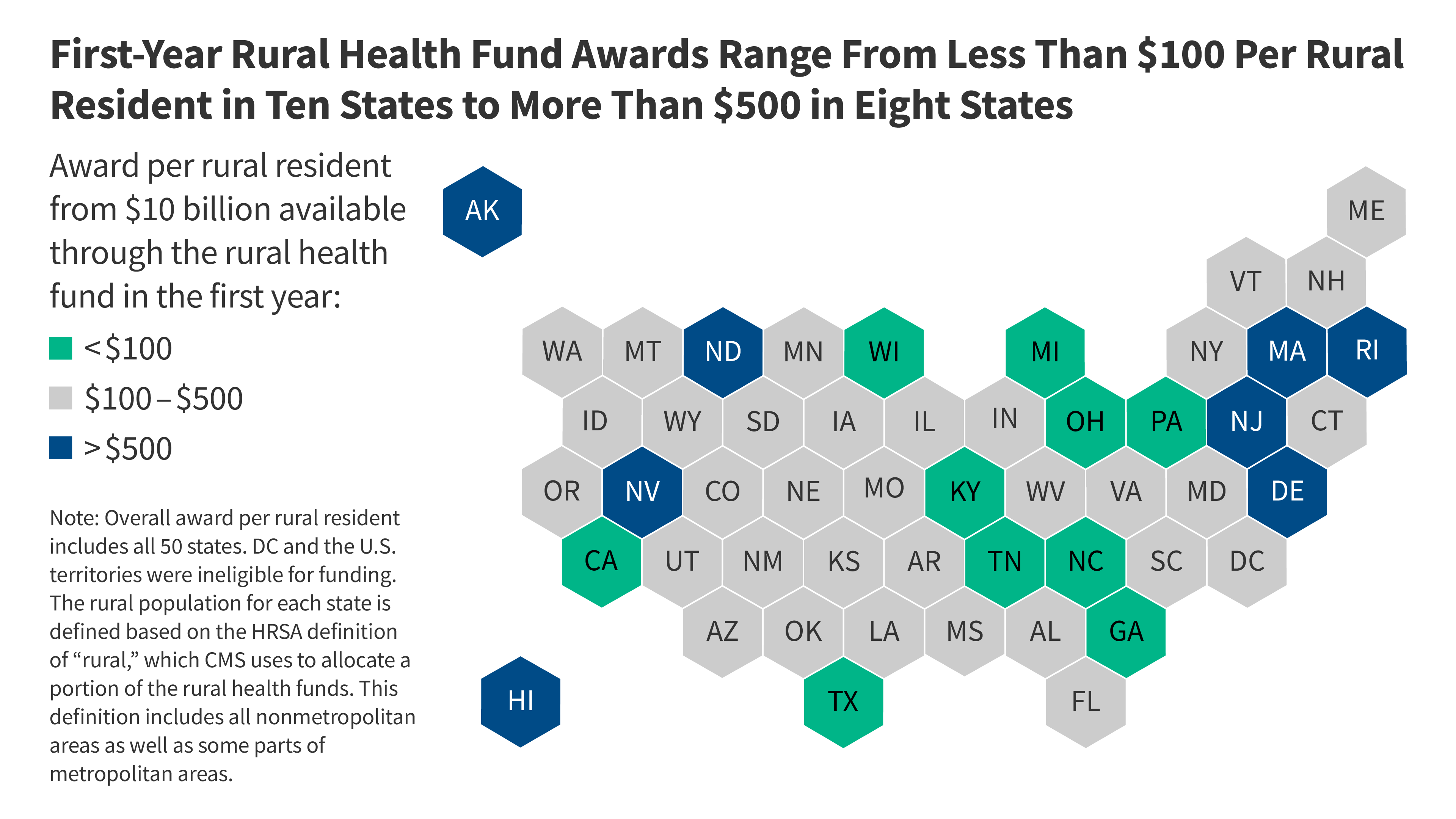
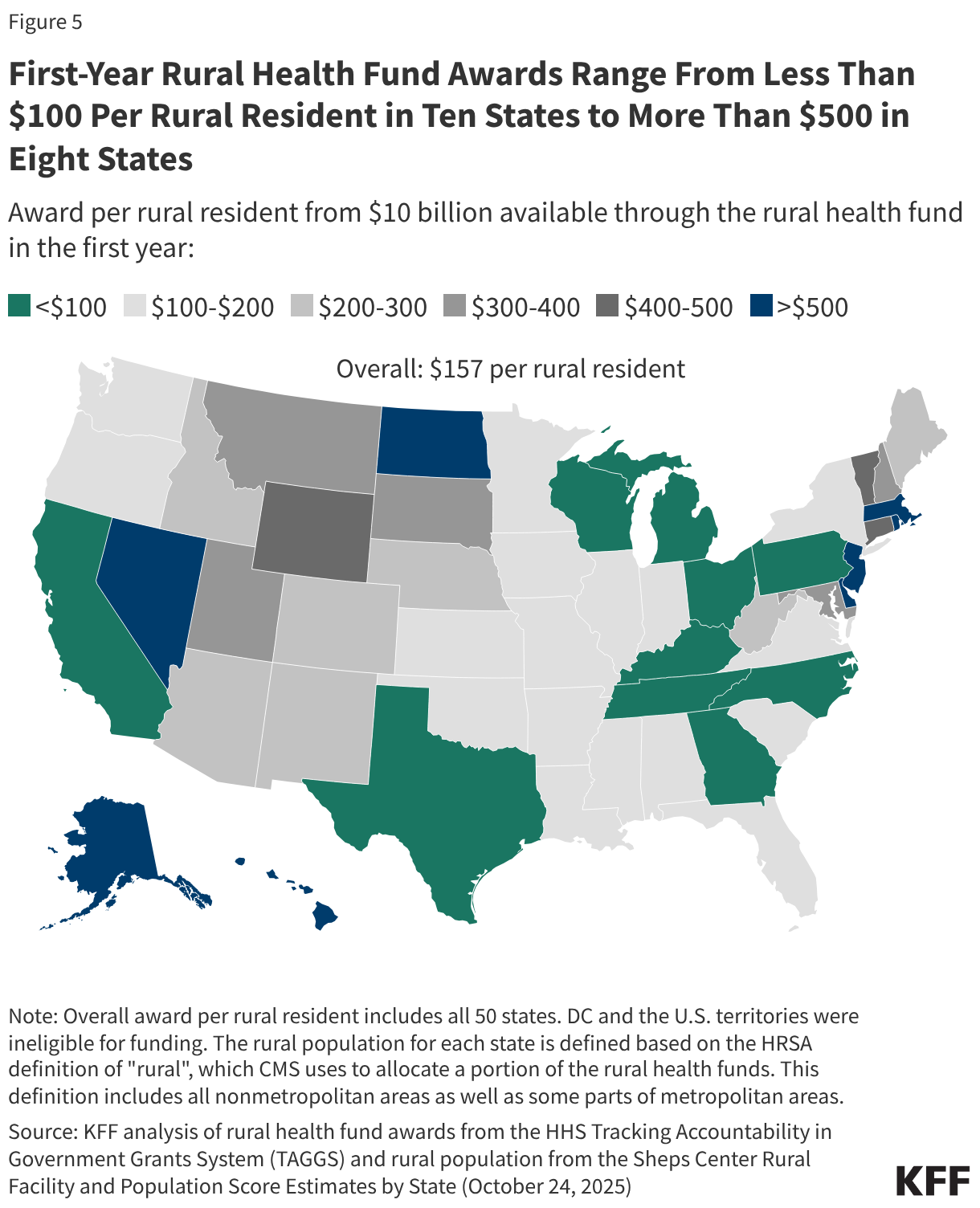
Because half of the total fund is distributed uniformly, first-year awards per rural resident vary wildly across the country. States with massive rural populations receive remarkably modest per-capita allocations. Texas, for instance, houses the nation’s largest rural population (approximately 4.3 million residents) and received the highest total first-year award at $281 million, translating to just $66 per rural resident. Conversely, smaller states with minimal rural populations saw massive per-capita payouts; Rhode Island received $6,305 per rural resident, while New Jersey and Alaska secured $1,069 and $990 per rural resident, respectively. Alaska’s substantial award was further amplified by statutory criteria favoring the five states with the largest land areas and high scores in state policy implementation.
Stakeholder Reactions and Broader Implications
The rollout of the Rural Health Transformation Program has elicited sharp feedback from major healthcare industry associations and congressional lawmakers. Hospital advocacy groups, including the American Hospital Association (AHA) and the Federation of American Hospitals (FAH), have consistently urged CMS to loosen restrictions on capital investments and provider payments, arguing that rural hospitals require direct, unrestricted financial stabilization to survive mounting uncompensated care burdens. A bipartisan group of U.S. Senators has similarly pressed federal regulators to grant greater operational flexibility, expressing concern that under-resourced rural clinics and independent hospitals struggle to compete against sophisticated healthcare systems for state-administered sub-grants.
Concurrently, transparency advocates such as the Bipartisan Policy Center have criticized CMS for relying on traditional Freedom of Information Act requests rather than establishing a centralized, public-facing online dashboard to track the flow of money. As researchers, journalists, and policymakers monitor the distribution of funds through quarterly federal reporting channels, the ultimate test of the Rural Health Transformation Program will rest on its measurable impact on patient outcomes, care access, and the long-term financial viability of America’s rural medical safety net.
Related posts: