Unifying the Chaos: Researchers Identify a Common Neural Signature Behind the Diverse Symptoms of Schizophrenia

Schizophrenia has long been characterized by its clinical heterogeneity—a sprawling, multifaceted condition that manifests through auditory hallucinations, disorganized speech, motor control deficits, and profound difficulties in sensory integration. For decades, clinicians and neuroscientists have treated these symptoms as disparate clinical entities, often requiring separate diagnostic focus. However, groundbreaking research published in the journal Science Advances has identified a singular, underlying brain mechanism that may serve as the "common thread" connecting these seemingly unrelated disruptions. By focusing on beta-band neural oscillations, an international team of researchers has proposed a unified model for understanding how the brain’s ability to process reality falters in those living with schizophrenia.
The study, a collaborative effort involving experts from McGill University, the McConnell Brain Imaging Centre, the University of Montreal, and the Douglas Research Centre, marks a significant shift in psychiatric research. By moving away from symptom-specific analysis and toward a circuit-based understanding of the disorder, the researchers have opened a new window into the neurobiological foundations of psychosis.
A New Framework for Neural Oscillations
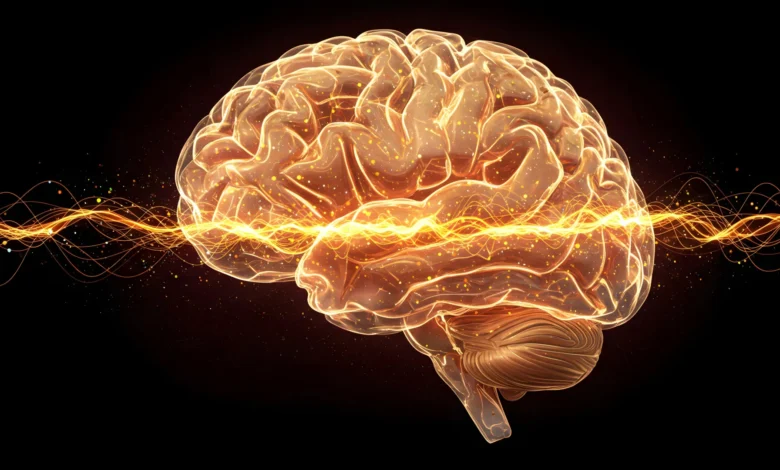
At the core of the research is the concept of beta-band activity—rhythmic, synchronized electrical discharges that fluctuate between 15 and 30 Hertz. In a healthy brain, these oscillations are critical for the temporal organization of information. They facilitate the "binding" of sensory input, allowing the brain to synchronize sights, sounds, and motor signals into a coherent, fluid experience of reality.
To determine whether these rhythms were compromised in schizophrenia, the research team utilized high-resolution magnetoencephalography (MEG) at the McConnell Brain Imaging Centre at The Neuro. MEG is a sophisticated imaging modality that detects the infinitesimally weak magnetic fields generated by neuronal firing, providing millisecond-level temporal resolution that functional MRI (fMRI) cannot match.
The study cohort consisted of 25 participants diagnosed with schizophrenia and 25 neurotypical control subjects. Participants were subjected to a series of tasks designed to challenge their sensory timing—such as distinguishing the sequence of rapid visual and auditory stimuli—while their neural signatures were mapped. The results were stark: the schizophrenia group exhibited beta-band activity that was not only significantly lower in amplitude but also slower in frequency compared to the control group. Crucially, the magnitude of these signal deficits correlated directly with the severity of the participants’ clinical symptoms, including the level of speech disorganization.
The Mechanism of Disrupted Reality
The brain does not merely record sensory information; it acts as a predictive engine, constantly generating a model of the world to anticipate incoming data. This "predictive processing" model suggests that schizophrenia may stem from an inability to update this internal model effectively. When the brain’s timing mechanism—the beta-band rhythm—is weakened, the synchronization between perception and action begins to break down.
"What struck us was that the same weakened brain signal kept showing up wherever we looked, whether patients were processing a sound, a sight, or completing a movement," noted Hsi (Tiana) Wei, the study’s lead author and a postdoctoral scholar at McGill’s Department of Psychiatry. This consistency suggests that the disorder is not merely a collection of isolated malfunctions but rather a fundamental flaw in the "clockwork" of neural processing. If the brain fails to synchronize its beta-band activity, the resulting degradation in temporal processing can explain why a patient might struggle with the nuances of fluid speech, the coordination of physical movement, or the integration of sensory inputs that typically form a stable reality.
Clinical Implications and the Path to Early Detection
The implications for psychiatric diagnostics are profound, particularly regarding the early detection of psychosis. Schizophrenia typically emerges during late adolescence or early adulthood, a period characterized by significant neurodevelopmental pruning and plasticity. However, the interval between the onset of prodromal symptoms—subtle changes in thinking and behavior—and the first full-blown psychotic episode is often long, during which time the condition can progress unchecked.
Dr. Lena Palaniyappan, the study’s senior author and a Professor of Psychiatry at McGill, emphasizes that if these findings hold true in larger, independent populations, they could revolutionize how mental health professionals screen at-risk youth. "The very first sign of schizophrenia begins in our adolescence, but this often gets missed for a long time," Palaniyappan stated. By establishing a quantifiable biological marker for the disorder, clinicians could eventually move toward a "biomarker-assisted" diagnostic approach, identifying individuals who require early intervention before the onset of chronic psychosis.
Contextualizing the Discovery: A Chronology of Progress
The search for a biological basis for schizophrenia has traversed a difficult path. In the early 20th century, the disorder was viewed primarily through a psychoanalytic lens. The 1950s saw the "dopamine hypothesis" take center stage, following the discovery of antipsychotic medications that modulated dopamine receptors. While the dopamine hypothesis remains a cornerstone of treatment, it has struggled to explain the cognitive and negative symptoms of the disease, such as social withdrawal and disorganized speech.
The current focus on neural oscillations and network connectivity represents the next wave of psychiatric research. By the late 2000s, studies on "neural synchrony" began to emerge, suggesting that the problem in schizophrenia was not necessarily the activity of individual neurons, but the way they communicated across long-range circuits. The current study at McGill serves as a bridge between these abstract theories and actionable clinical data, moving the field toward a quantifiable, network-level understanding of the disorder.
Limitations and Future Directions
Despite the optimism surrounding these findings, the research team maintains a rigorous stance on the limitations of their work. With a sample size of 50 participants, the study is categorized as a pilot or "first-step" investigation. The researchers are the first to acknowledge that before this brain signal can be used as a diagnostic tool, it must be validated across much larger, more diverse demographic groups.
"This is a first, modest-size study, and the associations with speech and clinical severity will need to be tested in larger independent samples before we can be confident in them," Wei stated. Furthermore, the question of causality remains open. While the weakened beta-band signal is clearly associated with the severity of schizophrenia, further research is required to determine whether this disruption is a primary driver of the disorder or a secondary symptom resulting from other pathological processes.
Broader Impact on Schizophrenia Research
Looking forward, the potential for beta-band activity as a therapeutic target is significant. If these rhythms are central to the cognitive and perceptual failures observed in schizophrenia, researchers may eventually develop interventions—such as non-invasive brain stimulation or specialized cognitive training—designed to "entrain" or reinforce these rhythmic signals.
This research aligns with a growing trend in global mental health to prioritize "precision psychiatry." Instead of relying solely on the Diagnostic and Statistical Manual of Mental Disorders (DSM-5) checklist of behaviors, which can be subjective and overlapping between conditions, researchers are increasingly looking toward the Research Domain Criteria (RDoC) framework. By focusing on fundamental neural circuits—like the beta-band timing mechanism—scientists hope to categorize psychiatric conditions by their biological causes, potentially leading to more targeted pharmacological and psychological treatments.
As the scientific community continues to digest these findings, the study stands as a testament to the power of advanced neuroimaging to demystify complex psychiatric states. While a definitive cure for schizophrenia remains elusive, identifying a common neural anchor for its diverse symptoms is a critical step toward transforming a once-mysterious disorder into a manageable condition. The road ahead will require extensive validation and further exploration, but for now, the discovery of a weakened beta-band signal provides a clear, objective focal point for future investigation, offering new hope for earlier intervention and better patient outcomes.