Katie Thurston uses viral social media moment to highlight critical breast cancer awareness and the power of medical research

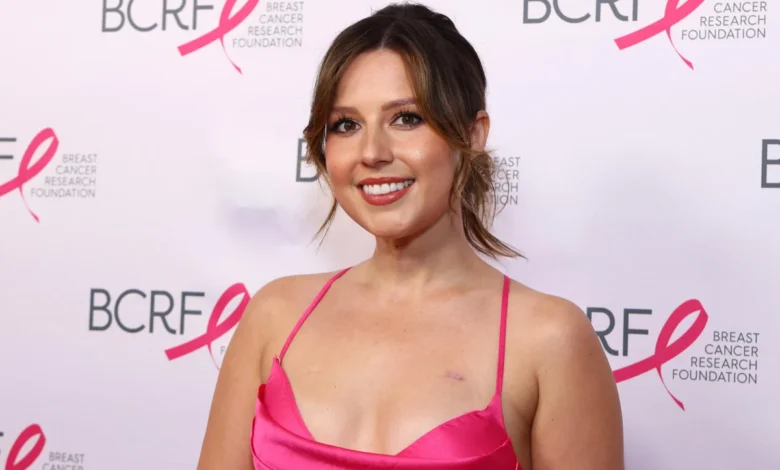
Former Bachelorette star Katie Thurston recently captured significant public attention with a viral Instagram post that served a dual purpose: demonstrating a curious side effect of breast reconstruction surgery and emphasizing the life-saving importance of early detection and cancer research. In a video shared on October 23, 2026, Thurston placed a flashlight against her chest, revealing a distinct, glowing effect caused by the light diffusing through her breast implants. Accompanied by the lighthearted caption, “Just your human jack-o’-lantern, checking in after a double mastectomy,” the post was timed to coincide with Breast Cancer Awareness Month, effectively using a whimsical visual to pivot toward a serious and urgent health message.
Thurston, who was diagnosed with stage 4 breast cancer in February 2025, has been transparent about her journey, including the double mastectomy she underwent in April 2026. Her public advocacy serves as a sobering reminder of the realities facing patients diagnosed with metastatic or advanced breast cancer, while simultaneously celebrating the medical advancements that have allowed her to currently report "no evidence of disease."
The Science Behind the Glow
The phenomenon exhibited in Thurston’s video is well-documented in the field of plastic surgery. Breast implants, whether filled with saline or silicone gel, are translucent materials. When a high-intensity light source is placed directly against the skin covering an implant, the light travels through the filler material. This effect, often called "transillumination," is a known property of prosthetic implants. While it may appear startling or humorous to the layperson, it is a routine physical characteristic of the materials used in reconstructive surgery following a mastectomy.
From a clinical perspective, the video serves as an entry point for deeper conversations about breast health. Thurston used the engagement generated by the clip to urge her followers—particularly those under the age of 40—to move beyond the traditional milestone of annual mammograms starting at age 40. She encouraged proactive monitoring, noting that personal awareness of one’s own body, including regular self-exams and noting any changes in tissue texture or appearance, remains a cornerstone of early detection.
A Chronology of a Public Health Journey
Thurston’s journey from reality television personality to cancer advocate has been rapid and public. The timeline of her diagnosis and treatment highlights the sudden nature of the disease:
- February 2025: Thurston receives a diagnosis of stage 4 breast cancer, a life-altering event that fundamentally shifted her personal priorities and long-term plans.
- Early 2026: Throughout the months following her diagnosis, Thurston documents her transition from a life of public-facing media engagements to the intense focus of oncology care.
- April 2026: Thurston undergoes a double mastectomy, a major surgical intervention that marked a turning point in her treatment plan.
- October 2026: During the annual Breast Cancer Research Foundation (BCRF) Symposium & Awards Luncheon, Thurston provides a poignant update on her recovery, sharing that she is currently showing no evidence of disease.
This timeline illustrates the emotional and physical toll of cancer treatment, particularly for individuals who are diagnosed at a young age. Thurston has spoken openly about the contrast between her expected life path—which included wedding planning with her husband, Jeff Arcuri—and the reality of navigating complex medical decisions and treatment protocols.
The Critical Role of Research
Thurston’s participation in the BCRF Symposium was not merely a personal appearance; it underscored the vital connection between scientific research and patient outcomes. Her statement, “I’m in this room today because of research,” highlights a broader trend in oncology: the shift toward personalized, targeted, and immunotherapy-based treatments that have significantly extended survival rates for stage 4 patients.

According to data from the American Cancer Society, while stage 4 breast cancer remains incurable for many, the five-year relative survival rate has improved steadily over the past two decades due to the development of new drug therapies and diagnostic tools. Research funding, such as that facilitated by the BCRF, is essential for translating laboratory discoveries into clinical applications that offer patients additional years of high-quality life.
Implications for Breast Cancer Awareness
The messaging behind Thurston’s "human jack-o’-lantern" campaign aligns with broader public health initiatives that seek to demystify breast health. Medical professionals have long advocated for a shift in the cultural narrative surrounding breast cancer, moving away from purely reactive screening and toward active, lifelong breast health education.
The implications of Thurston’s advocacy are multifaceted:
- De-stigmatization: By sharing images of her post-mastectomy reality, Thurston helps normalize the appearance of reconstructed breasts, reducing the stigma often associated with surgical scarring and prosthetic implants.
- Bridging the Age Gap: Cancer in younger women often presents more aggressively. By targeting her message at individuals who feel they are "too young" for cancer, Thurston is helping to reduce the diagnostic delays that can occur when symptoms are ignored in younger populations.
- The Importance of Medical Literacy: Thurston’s encouragement to "discuss any changes with your medical team" is a fundamental piece of advice. Medical experts emphasize that "breast density," "asymmetry," and "skin changes" are clinical terms that patients should be comfortable discussing with their primary care physicians long before they reach the age of routine screening.
Expert Perspectives and Broader Context
While Thurston’s specific post focused on the light-transmitting properties of implants, medical experts emphasize that the broader conversation should remain fixed on the advancements in treatment. The field of breast cancer care is currently focused on "precision medicine," where treatments are tailored to the specific genetic profile of the tumor.
Dr. Elena Rossi, an oncologist not involved in Thurston’s care but familiar with the current landscape of breast cancer research, notes that the success stories seen today are often the result of clinical trials initiated years prior. "When a patient says they are alive because of research, they are acknowledging the massive collective effort of clinical trials, genomic research, and pharmaceutical innovation," Rossi explains. "The public often sees the end result—the survivor—but the engine driving that survival is the continuous, often invisible, work of research foundations."
Conclusion: A Call to Action
Katie Thurston’s approach to her diagnosis—combining vulnerability with humor and a commitment to awareness—demonstrates the evolving role of public figures in health advocacy. By leveraging her social media platform to turn a personal medical detail into a teachable moment, she has effectively reached an audience that might otherwise ignore standard clinical warnings.
As October 2026 draws to a close, the lesson from Thurston’s experience is clear: cancer does not adhere to age-based milestones, and the efficacy of modern treatment is directly tied to the robustness of medical research. Her story serves as a reminder that the conversation around breast cancer must be continuous, inclusive, and, above all, proactive. Through her platform, Thurston has ensured that the "glowing" attention she received was redirected toward the substantive, life-saving work of cancer advocacy, proving that even a momentary trend can contribute to a lasting, positive impact on public health.