Doctor Doom vs. Thanos: A Comprehensive Analysis of Marvel Universe’s Most Formidable Villains Ahead of Avengers: Doomsday

The cinematic and literary landscape of the Marvel Universe is currently experiencing a profound shift in focus, driven largely by the anticipation surrounding one of its most complex and enduring antagonists: Victor von Doom, universally known as Doctor Doom. As Marvel enthusiasts eagerly count down the days to the theatrical release of Avengers: Doomsday, slated for December 18, the character’s cultural footprint has expanded exponentially. Beyond the silver screen, the monarch of Latveria continues to dominate comic book publications, with Marvel Comics scheduling the release of Doomquest issue number five (Doomquest #5) on October 21, 2026. This resurgence in popularity has naturally reignited one of fandom’s most passionate debates: how does Doctor Doom stack up against the Mad Titan, Thanos, widely regarded as one of the most powerful and destructive villains in comic book history?
To understand the weight of this comparison, one must first examine the foundational origins, capabilities, and psychological profiles of both characters. Victor von Doom is far more than a typical comic book villain; he is a masterclass in multidisciplinary brilliance and unyielding ambition. Born in the fictional Eastern European nation of Latveria to a traditional Romani mother with a background in the occult, Doom forged a path defined by a relentless pursuit of perfection. His iconic metallic mask and advanced suit of armor are not merely aesthetic choices or protective garments; they are marvels of engineering that grant him superhuman durability, enhanced physical strength, and an extensive array of built-in weaponry.
Throughout decades of Marvel storytelling, Doom has served as the central antagonist in monumental narrative arcs such as Time Runs Out, Secret Wars, and the contemporary event One World Under Doom. What sets Doctor Doom apart from contemporaries like Thanos is the sheer breadth of his power profile, which is uniquely derived from a triad of science, mysticism, and political influence. According to industry analyses and breakdowns from outlets like Collider, Doom is consistently ranked among the top five smartest characters in the entire Marvel Universe. His scientific acumen spans virtually every known discipline, including advanced engineering, robotics, biomechanics, neuroscience, and even reverse-engineered alien technology.
In addition to his intellectual dominance, Doom commands the arcane arts with terrifying proficiency. While his magical aptitude was initially inherited from his mother, he spent years refining his craft, even training under mystical powerhouses like Morgan Le Fay. Consequently, Doom is capable of casting ancient spells, manipulating black magic, performing astral projection, and tearing open dimensional portals into demonic realms. Yet, a frequently overlooked aspect of his threat level is his political influence. As the sovereign ruler of Latveria, Doom possesses absolute diplomatic immunity. This legal protection allows him to operate on a global scale with near-total impunity, manipulating international politics and corporate entities without facing direct legal repercussions from sovereign world governments.
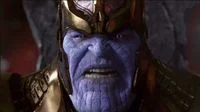
When placing Doctor Doom side-by-side with Thanos, the dynamics of power shift significantly. According to evaluations by comic literary critics and platforms like ScreenRant, Thanos holds a definitive advantage when evaluating raw, innate physical power. Born on Saturn’s moon Titan, Thanos possessed formidable strength, durability, and tactical brilliance from birth—attributes that existed long before he ever laid eyes on the Infinity Gauntlet or collected the six Infinity Stones. Cinematic evidence of this overwhelming physical dominance was displayed vividly in the opening sequence of Avengers: Infinity War (2018), where Thanos single-handedly overwhelmed and brutally defeated the Hulk in raw hand-to-hand combat without utilizing any cosmic artifacts.
Thanos is fundamentally a conqueror driven by a nihilistic philosophy, commanding vast interstellar armadas and mercilessly wiping out populations across galaxies planet by planet. By comparison, Doctor Doom rules with an iron fist as a dictator over a single nation, deploying massive resources and his formidable army of robotic duplicates known as Doombots. While Doom’s terrestrial empire and technological arsenals are staggering, his baseline physical attributes do not match the sheer, unadulterated might of Thanos’s biology.
However, raw physical strength does not paint the complete picture of a potential confrontation, particularly when factoring in Doctor Doom’s mastery of the mystic arts. Assuming a scenario where Thanos does not wield the Infinity Gauntlet, Doom’s proficiency in magic represents his most potent weapon against the Mad Titan. History within the Marvel Cinematic Universe demonstrates that magic and metaphysical manipulation are among Thanos’s most critical vulnerabilities. A prime cinematic parallel occurred during Avengers: Infinity War, when Doctor Strange nearly succeeded in subduing and binding the Mad Titan using complex Eldritch magic, forcing Thanos to rely on physical countermeasures and mystical constraints to break free before ultimately prevailing.
The ultimate intersection of these two titans’ power scales was explored definitively in the seminal 2015 comic book event Secret Wars, written by Jonathan Hickman with art by Esad Ribić. Within the narrative of Secret Wars, the multiverse suffers total collapse, and through the calculated machinations of Doctor Doom, the surviving remnants of reality are salvaged and fused together into a patchwork planet known as Battleworld. In this fractured reality, Doom ascends to omnipotence, ruling absolute as the God Emperor. In a shocking and brutally definitive moment within this storyline, Doctor Doom confronts and physically slays Thanos, ripping his spinal column and skull from his body with terrifying ease. While this victory occurred under highly specific contextual conditions where Doom wielded god-like reality-warping power, it stands as a testament to the heights Doom can achieve when his intellect, magic, and ambition align without restriction.
The broader implications of Doctor Doom’s current cultural renaissance extend far beyond comic book fan theories and box office projections. As Marvel Studios prepares to integrate the character more centrally into the overarching narrative arc leading up to Avengers: Doomsday, studio executives and creative teams face the challenge of translating Doom’s complex literary legacy into a cohesive cinematic experience. Unlike Thanos, whose motivation was tied to a warped ideological crusade of resource equilibrium, Doctor Doom’s motivations are deeply rooted in ego, a twisted sense of righteousness, and the belief that he alone is fit to govern humanity.
Industry analysts suggest that the introduction of a villain with Doom’s intellectual and magical pedigree will fundamentally alter the power dynamics of the Marvel Cinematic Universe. Moving away from cosmic-level threats reliant solely on brute force or universal artifacts, Doom introduces a psychological, political, and mystical antagonist who can challenge heroes on multiple planes of existence simultaneously. As production timelines for Avengers: Doomsday accelerate toward its December 2026 release date, public scrutiny and fan expectations will remain intensely focused on how the studio adapts the nuances of Victor von Doom’s character arc. Whether on the printed page in Doomquest #5 or on the silver screen later this year, Doctor Doom continues to solidify his status as one of the most compelling, dangerous, and enduring figures in modern pop culture history.