The Biology of Being: Antonio Damasio and the Physical Foundations of Consciousness

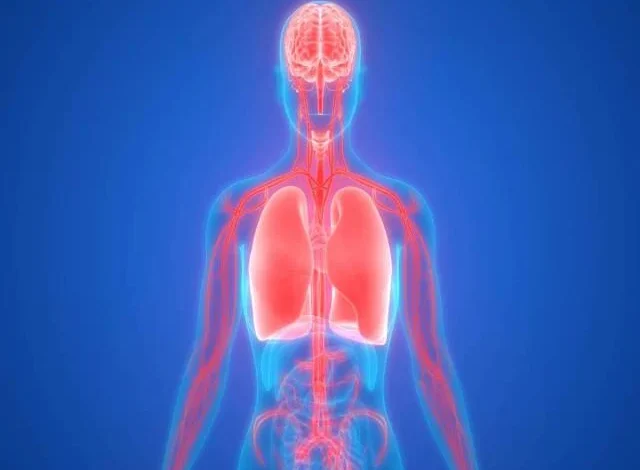
For centuries, defining and understanding consciousness has eluded neuroscientists, philosophers, and doctors. Is consciousness what it means to be alive? Is it knowing who we are, as individual people? How do we know if any being has consciousness or not? Now, with the dawn of generative artificial intelligence, what it means to be a conscious being ranks high among the most complex—and urgent—questions of our age.
This inquiry has been propelled back to the forefront of scientific discourse by Dr. Antonio Damasio, a distinguished professor of neuroscience, psychology, and philosophy at the University of Southern California. In his latest publication, Natural Intelligence & the Logic of Consciousness, Damasio challenges the long-held assumption that consciousness is a byproduct of high-level intellectual computation. Instead, he proposes a biological paradigm: consciousness is an evolutionary survival mechanism rooted in the physical body.
The Historical Dichotomy: Mind vs. Body
For much of the 20th century, the prevailing scientific consensus—championed by luminaries such as Francis Crick—posited that consciousness was the ultimate "hard problem," an emergent property of the most sophisticated neural networks within the cerebral cortex. This "top-down" view suggested that because humans possess unique linguistic and reasoning abilities, the seat of consciousness must reside in the most advanced architecture of the human brain.
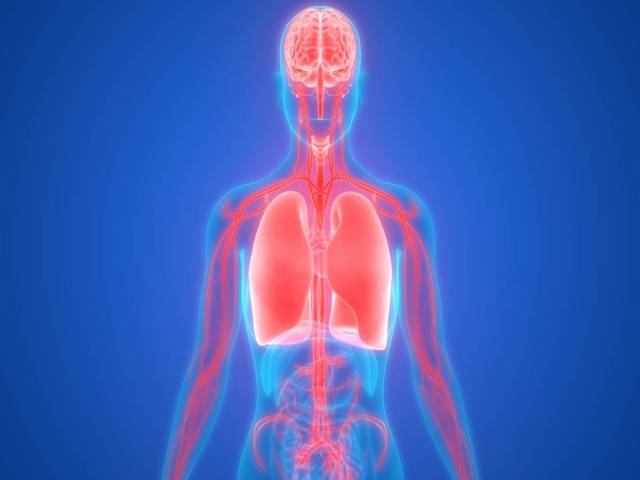
However, Damasio’s career, which spans nearly five decades of neurological research, has led him to a contrarian conclusion. By examining the physiological origins of consciousness, he argues that the process does not originate in the "glorious cerebral cortices" but rather in the foundational, ancient structures of the brainstem and hypothalamus. According to Damasio, consciousness is a partnership between the brain and the body, designed not for abstract thought, but for the fundamental preservation of life.
A Chronology of Discovery: From Clinical Strokes to Coma
The modern understanding of consciousness is deeply indebted to clinical observations made in the 1960s. During this era, neurologists observed that specific, localized lesions in the upper brainstem often resulted in a total, irreversible loss of consciousness—a state of coma—despite the cerebral cortex remaining structurally intact.
This was a pivotal revelation. It demonstrated that while the cortex is responsible for the "content" of our thoughts, the brainstem is the "switch" that enables the awareness of existence itself. Millions of nerve terminals—acting as biological probes—continuously transmit data from every square millimeter of the skin, viscera, and muscles to these central hubs. This "shower of signals" provides the brain with a constant stream of information regarding the state of the body, which the brain then translates into what Damasio terms "homeostatic feelings."
The Mechanism of Homeostasis: Feelings as Survival Sentinels
In Damasio’s framework, feelings are not merely emotional reactions; they are essential biological signals. Hunger, thirst, pain, and thermal regulation are the primary drivers of consciousness. These feelings act as "protective sentinels," informing the organism of its internal state.
This biological feedback loop serves a singular purpose: homeostasis. By maintaining the physical body within a viable range of conditions, the brain ensures survival. The spontaneity of these signals—the fact that we do not "choose" to feel thirst or pain, but rather perceive them as an inherent state of our existence—is the essence of being conscious. When the body’s integrity is threatened, the conscious mind is alerted, prompting the organism to take corrective action. This explains why, in cases of "locked-in" syndrome, an individual may retain full consciousness while being unable to move, yet they remain tethered to the reality of their body’s needs.
Artificial Intelligence and the Absence of Mortality
The emergence of generative artificial intelligence has forced a rigorous re-evaluation of these biological definitions. As AI systems demonstrate increasingly sophisticated patterns of "reasoning" and language synthesis, the question of whether these machines can achieve consciousness has shifted from the realm of science fiction to active academic debate.
Damasio remains skeptical of the equivalence between machine intelligence and biological consciousness. The critical distinction, he argues, lies in the absence of a perishable body. Biological organisms are driven by the necessity of avoiding death; their consciousness is an evolutionary response to the fragility of life. AI, conversely, is not "alive." It lacks the biological imperative to preserve its own existence through homeostatic regulation. While an AI may simulate the appearance of knowledge or intent, it does not feel the existential pressure of a body that requires fuel, temperature control, or physical protection.
Broader Implications for Public Health and Society
The implications of Damasio’s research extend beyond the laboratory and into the realm of public health. By framing consciousness as a body-centric process, his work underscores the physiological necessity of maintaining the "physical self." The modern focus on holistic health—incorporating diet, physical exercise, and mental well-being—is not merely a lifestyle trend but a scientific alignment with our biological nature.
Furthermore, the study of consciousness has profound implications for how we treat neurological disorders and manage the aging process. If the brainstem serves as the primary gateway for consciousness, medical advancements in neuro-protection and the treatment of brainstem-related trauma could fundamentally alter the prognosis for patients in comatose states.
Fact-Based Analysis of Current Directions
As of 2024, the field of neurobiology is increasingly shifting toward a "bottom-up" view of cognition. Research data consistently shows that the integration of interoceptive signals—information from inside the body—is critical for emotional regulation and decision-making.
- The Brain-Body Link: Studies have shown that individuals with diminished interoceptive awareness often struggle with decision-making and emotional stability, supporting Damasio’s hypothesis that the body provides the "ground truth" for the mind.
- AI Policy: With the rise of large language models, policymakers are grappling with the ethical status of machines. Damasio’s work suggests that we must avoid the "anthropomorphic trap"—the tendency to grant human-like status to systems that merely mimic the outputs of consciousness without the biological underpinnings that characterize living, feeling beings.
- The Future of Consciousness Studies: Future research is expected to focus on the mapping of the brainstem-cortex communication pathways. By understanding the precise "language" of homeostatic signaling, researchers hope to develop better interventions for conditions where the mind-body connection is disrupted, such as chronic pain syndromes and severe autonomic disorders.
Conclusion: The Wisdom of the Body
Antonio Damasio’s work serves as a sobering reminder of our origins. In an era obsessed with digital transformation and the virtualization of human experience, his research provides a grounded perspective: we are not merely "minds" inhabiting shells. We are integrated, biological entities whose every thought and experience is colored by the silent, persistent labor of our bodies to stay alive.
Consciousness, in this light, is not a grand, top-down accomplishment of our intelligence, but a bottom-up achievement of our biology. It is the spontaneous knowledge that we exist, provided to us by the very systems that sustain us. As we continue to develop technologies that mirror our own intelligence, the lessons provided by the biology of the body will remain the ultimate benchmark for understanding what it truly means to be conscious—and what it means to be alive.