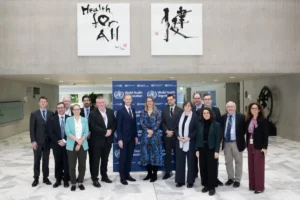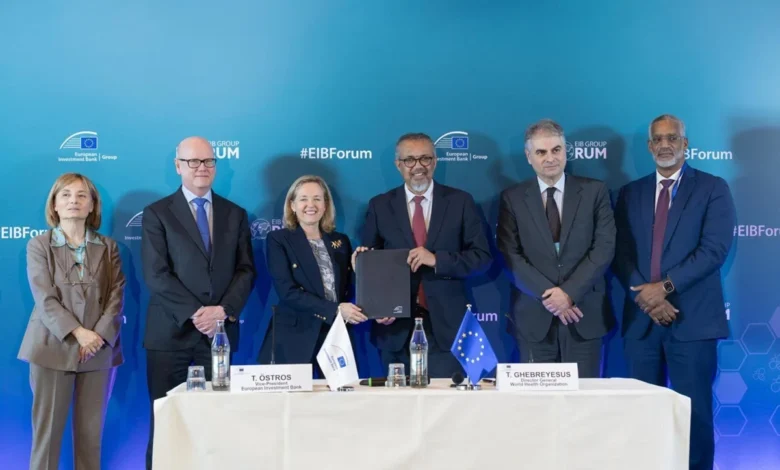
On March 6, 2025, a critical step toward stabilizing Lebanon’s fragile healthcare ecosystem was formalized in Luxembourg during the high-level European Investment Bank Group Forum. Dr. Tedros Adhanom Ghebreyesus, Director-General of the World Health Organization (WHO), and Thomas Östros, Vice-President of the European Investment Bank (EIB Global), formally signed a landmark agreement securing a €10 million grant dedicated to reinforcing public health systems across the Mediterranean nation. This strategic financial injection arrives at a pivotal juncture for Lebanon, a country grappling with years of severe economic collapse, political instability, institutional strain, and escalating regional conflicts that have collectively brought its medical infrastructure to the brink of systemic failure.
The newly established partnership focuses on two immediate, high-impact pillars: the comprehensive physical and technological re-establishment of Lebanon’s Central Public Health Laboratory, and the sustained procurement and distribution of essential medicines and specialized care. Through this targeted intervention, the initiative aims to directly safeguard the health and well-being of more than 50,000 vulnerable individuals suffering from severe chronic illnesses, including diabetes, cardiovascular conditions, and various forms of cancer. By addressing both the foundational diagnostic capabilities of the state and the acute treatment needs of its most at-risk citizens, the EIB Global and WHO collaboration seeks to bridge the widening gap in healthcare access and prevent preventable mortalities across the country.
Chronology of a Healthcare Collapse: The Path to the 2025 Agreement
To fully comprehend the significance of the €10 million grant, it is necessary to examine the cascading crises that have dismantled Lebanon’s once-robust medical sector over the past half-decade. Historically, Lebanon was widely regarded as the medical hub of the Middle East, boasting advanced private and public hospitals, highly trained medical professionals, and a thriving pharmaceutical importation network. However, the multifaceted collapse began in earnest in late 2019 with an unprecedented financial and banking crisis, which saw the local currency lose more than 90 percent of its value and plunged over 80 percent of the population into multidimensional poverty.
By 2020, the situation was severely compounded by the catastrophic August 4 Beirut Port explosion. The blast devastated vast swaths of the city, destroying or severely damaging multiple healthcare facilities—most notably the Karantina Hospital, which housed critical pediatric and pharmaceutical warehousing infrastructure. Just as health workers and international agencies sought to rebuild amidst the rubble, the COVID-19 pandemic struck, overwhelming intensive care units and exposing the severe vulnerabilities of a centralized health system reliant on foreign currency for imported medical goods.
The years 2021 through 2023 were characterized by perpetual shortages of basic medications, massive brain drains as thousands of physicians and nurses emigrated in search of stable livelihoods, and intermittent electricity and fuel blackouts that threatened the operation of life-support equipment, dialysis machines, and refrigerated vaccine storages. The Central Public Health Laboratory—the ultimate authority for epidemiological surveillance, food safety testing, water quality assurance, and disease outbreak detection—suffered from severe underfunding, infrastructural decay, and a lack of reagents and operational technology.
By late 2023 and throughout 2024, renewed cross-border hostilities in southern Lebanon added immense pressure to an already buckling system. Tens of thousands of individuals were displaced internally, straining local health clinics in host communities and stretching humanitarian supply chains to their absolute limits. It was against this grim backdrop of accumulated shocks that negotiations between EIB Global and the WHO intensified throughout late 2024, culminating in the formalization of the €10 million funding package at the EIB Group Forum in Luxembourg on March 6, 2025.
Data and Demographics: The Plight of Chronic Disease Patients in Lebanon
The targeting of over 50,000 individuals suffering from chronic non-communicable diseases (NCDs) is a deliberate and mathematically calculated strategy based on epidemiological data collected by the WHO and Lebanon’s Ministry of Public Health. In developing nations experiencing protracted crises, infectious disease outbreaks often capture immediate global media attention, yet chronic illnesses remain the silent killers responsible for the vast majority of mortalities.
Before the financial collapse, Lebanon’s Ministry of Public Health operated a subsidized medication program that provided expensive chronic disease and cancer treatments to uninsured citizens. When the central bank phased out subsidies on imported medicines due to rapidly depleting foreign currency reserves in 2021 and 2022, the cost of maintenance drugs skyrocketed beyond the purchasing power of the average citizen. A month’s supply of insulin, hypertension medications, or targeted chemotherapy agents frequently began to cost several times the average monthly minimum wage.
According to joint UN and health agency assessments conducted between 2023 and 2024, an estimated 40 percent of individuals with chronic conditions in Lebanon were forced to ration their doses, skip treatments entirely, or abandon therapies altogether. The consequences of this treatment discontinuation have been devastating: a sharp rise in emergency room admissions for stroke and myocardial infarction, irreversible kidney damage among unmanaged diabetics, and advanced-stage cancer presentations due to delayed diagnoses and unavailable therapeutic regimens.
The €10 million grant will establish a dedicated pipeline for these essential pharmaceuticals, bypassing traditional bureaucratic bottlenecks and ensuring transparent, accountable distribution directly to accredited primary healthcare centers and public clinics. By stabilizing the treatment regimens of these 50,000 patients, the initiative directly mitigates the risk of catastrophic out-of-pocket health expenditures that routinely push vulnerable families deeper into destitution.
Revitalizing Diagnostic Sovereignty: The Re-Establishment of the Central Public Health Laboratory
While the provision of medicines addresses immediate therapeutic needs, the structural centerpiece of the EIB Global and WHO agreement is the revitalization of Lebanon’s Central Public Health Laboratory. In any functional public health architecture, a national reference laboratory serves as the ultimate line of defense against biological threats, pathogen mutations, foodborne illnesses, and environmental contamination.
Prior to its degradation, the Central Public Health Laboratory was responsible for confirming outbreaks of infectious diseases ranging from cholera and measles to emerging zoonotic threats. However, consecutive years of power outages, lack of maintenance contracts for sophisticated diagnostic machinery, and a severe shortage of specialized laboratory technicians crippled its operations. During the COVID-19 pandemic and subsequent cholera resurgence in 2022, the laboratory operated at a fraction of its capacity, forcing the country to rely heavily on decentralized, private, or external facilities for critical genomic sequencing and epidemiological surveillance.
The infusion of funds from EIB Global will allow the WHO and Lebanese authorities to execute a comprehensive modernization plan. This includes:
- Procuring state-of-the-art diagnostic equipment, including advanced polymerase chain reaction (PCR) machines and genomic sequencing platforms.
- Upgrading physical infrastructure, including uninterrupted power supply (UPS) systems and solar-backed energy solutions to protect sensitive samples against Lebanon’s chronic electricity grid failures.
- Implementing rigorous digital data management systems to ensure rapid, secure reporting of epidemiological data to the Ministry of Public Health and international health bodies.
- Providing specialized technical training and capacity-building programs for Lebanese laboratory scientists, microbiologists, and technicians to international accreditation standards.
By restoring the operational sovereignty of the Central Public Health Laboratory, Lebanon will once again possess the domestic capability to independently detect, monitor, and respond to public health emergencies without relying entirely on ad-hoc international assistance during a crisis.
Official Responses and Institutional Perspectives
The signing ceremony in Luxembourg elicited strong statements from the leadership of both participating organizations, reflecting a shared commitment to building institutional resilience in regions impacted by compounding crises.
Dr. Tedros Adhanom Ghebreyesus, Director-General of the World Health Organization, emphasized the moral and practical imperative of sustaining healthcare access during times of systemic distress. In his remarks following the agreement, Dr. Tedros noted that health is a fundamental human right that must be fiercely protected, particularly for populations enduring prolonged economic and social hardship. He underscored that the partnership with EIB Global is a shining example of how international financial institutions and specialized health agencies can pool their unique strengths to deliver tangible, life-saving results on the ground. Dr. Tedros praised the resilience of Lebanese healthcare workers who, despite enduring years of unpaid salaries, fuel shortages, and immense stress, have continued to report to duty and care for their patients.
Echoing these sentiments, Thomas Östros, Vice-President of the European Investment Bank (EIB Global), highlighted the strategic role of European development finance in fostering long-term stability and human capital preservation in the European Union’s Southern Neighborhood. Mr. Östros stated that EIB Global is committed to going beyond traditional infrastructure financing to invest directly in the social fabric of partner countries. He noted that a robust public health system is the absolute bedrock of economic recovery and social cohesion. By supporting the restoration of Lebanon’s central laboratory and securing life-saving medicines for chronic disease patients, the European Union—through its investment arm—is offering a direct lifeline to the people of Lebanon, reaffirming solidarity in their hour of greatest need.
Local health advocates, civil society organizations, and medical syndicates in Beirut have also welcomed the announcement, though many have emphasized the necessity of strict transparency and rigorous monitoring mechanisms to ensure that the funds and medical supplies reach their intended recipients without falling prey to administrative inefficiencies or corruption.
Broader Economic, Social, and Geopolitical Implications
The €10 million initiative between EIB Global and the WHO carries profound implications that extend well beyond the immediate medical metrics of pharmaceutical delivery and laboratory repair.
From an economic perspective, healthcare expenditure in a crisis-hit nation is frequently viewed through a lens of humanitarian relief rather than economic investment. However, modern economic consensus increasingly recognizes health as a primary driver of productivity. When chronic disease patients are forced out of the workforce due to preventable complications, family incomes plummet, dependency ratios rise, and national GDP contracts further. By maintaining the health and workforce participation of over 50,000 individuals, the initiative directly supports household-level economic resilience.
Socially, the restoration of public health infrastructure helps to restore a degree of public trust in state institutions. In Lebanon, where decades of sectarian governance and institutional decay have severely eroded citizens’ faith in government service delivery, the visible return of functioning public health clinics and reliable medication distribution channels demonstrates that state-backed systems can still deliver essential services with international backing.
Geopolitically, the agreement underscores the European Union’s continued engagement as a stabilizing force in the Eastern Mediterranean. As regional tensions persist and traditional donor fatigue threatens to diminish international aid flows to Lebanon—which also hosts over 1.5 million displaced Syrians, adding immense strain to its public services—targeted multilateral funding models provide a sustainable blueprint for intervention. By combining the financial muscle and project appraisal rigor of the EIB with the technical expertise, local presence, and normative authority of the WHO, this partnership minimizes waste, maximizes accountability, and sets a high standard for future development interventions in fragile and conflict-affected states.
Conclusion and Outlook
As implementation gets underway following the March 2025 signing, the true measure of success for the €10 million EIB Global and WHO initiative will lie in its execution on the ground. The physical rehabilitation of the Central Public Health Laboratory and the uninterrupted pipeline of medications for Lebanon’s most vulnerable chronic disease sufferers represent critical building blocks in the long, arduous journey toward national recovery. While international grants alone cannot resolve Lebanon’s deep-seated structural and political challenges, this strategic intervention provides an indispensable safety net, ensuring that thousands of human lives are preserved while the broader foundations of public health are painstakingly rebuilt.
Related posts: