Navigating the Uncharted Territory: Regulation and Ethics of AI in Everyday Medicine Explored by KFF’s "The Business of Health"


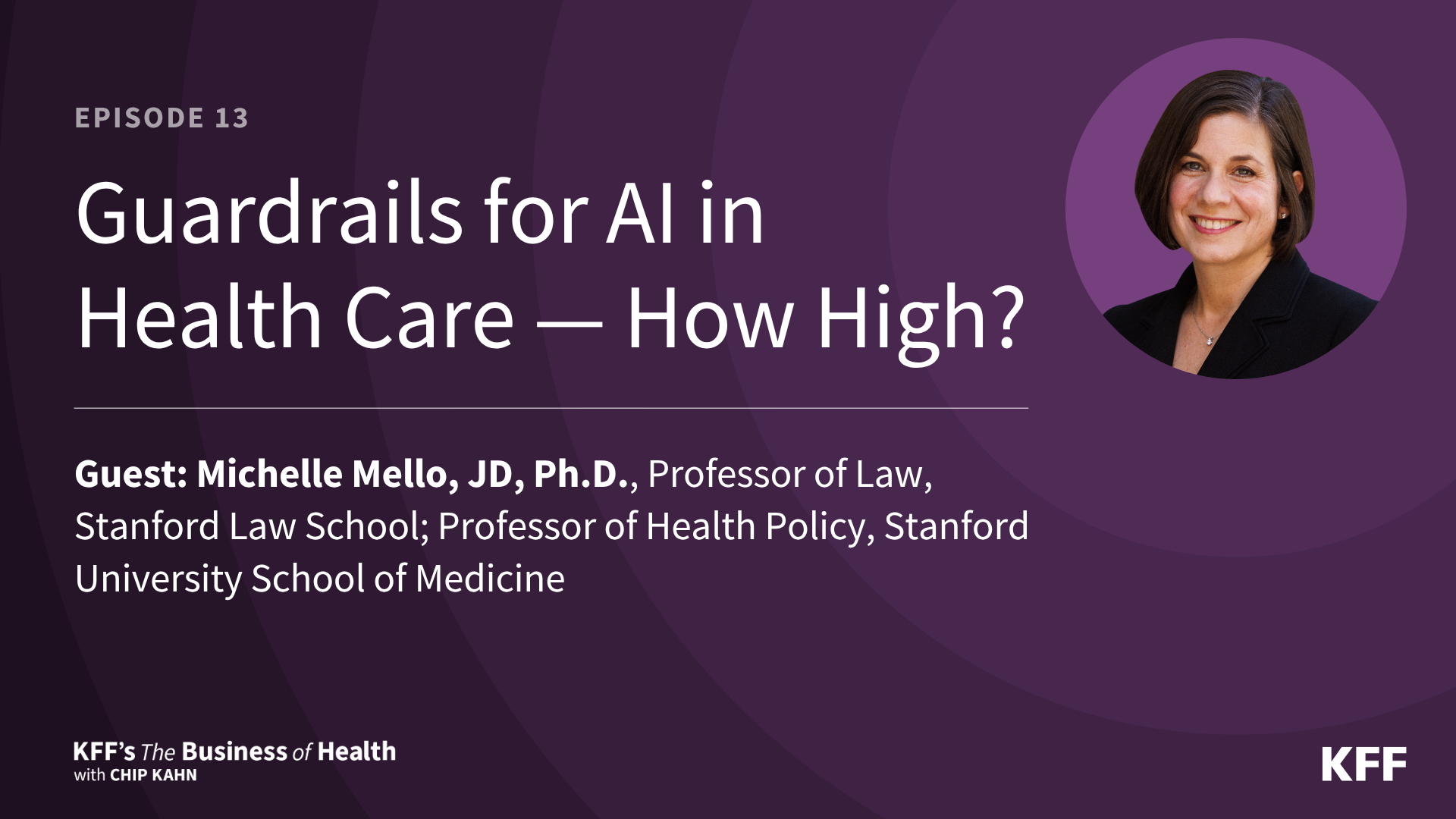
Washington D.C. (July 21, 2026) – As artificial intelligence continues its rapid integration into the fabric of everyday medicine, a critical dialogue on its governance, ethical implications, and accountability is more pressing than ever. This was the central focus of the latest installment of KFF’s insightful podcast series, "The Business of Health with Chip Kahn," specifically Episode 13 of its AI Series. The episode, released today, featured an illuminating discussion with Dr. Michelle Mello, a distinguished professor at both Stanford Law School and the School of Medicine, and co-leader of Stanford’s Healthcare Ethical Assessment Lab for AI (HEAL-AI). The conversation delved into the complex questions surrounding who sets the rules for this transformative technology, how its accuracy is ensured, and, crucially, who bears responsibility when AI-driven systems falter.
The episode underscores a pivotal moment in healthcare, where the promise of AI to revolutionize diagnostics, treatment, and patient care is tempered by significant concerns regarding its ethical deployment and legal oversight. Host Charles N. Kahn III, a senior visiting fellow at KFF and a prominent voice in health policy, guided the discussion through the intricate interplay between technological advancement, regulatory frameworks, and patient safety.
The Rapid Ascent of AI in Healthcare: A Landscape of Promise and Peril
The integration of artificial intelligence into healthcare has accelerated dramatically over the past decade, moving beyond theoretical discussions to tangible applications in clinics, hospitals, and research labs worldwide. AI algorithms are now assisting radiologists in detecting subtle anomalies in medical images, predicting patient deterioration in intensive care units, optimizing drug discovery processes, and personalizing treatment plans based on vast genomic and clinical datasets. The global market for AI in healthcare, valued at an estimated $10.4 billion in 2021, is projected to surge to over $187 billion by 2030, reflecting the immense potential and investment pouring into this sector.
This rapid expansion, while heralding unprecedented advancements, simultaneously introduces a host of complex challenges. The allure of enhanced efficiency, improved diagnostic accuracy, and novel therapeutic approaches often overshadows the underlying complexities of algorithmic bias, data privacy concerns, and the opaque nature of "black box" AI models. For instance, an AI trained predominantly on data from specific demographics might perform poorly or even dangerously when applied to diverse patient populations, exacerbating existing health disparities. Similarly, the reliance on vast quantities of patient data for AI training raises significant questions about consent, anonymization, and the potential for re-identification, challenging established privacy norms like HIPAA.
A Timeline of Innovation and Emerging Scrutiny
The journey of AI in medicine can be traced back to early expert systems in the 1970s and 80s, which offered rudimentary diagnostic support. However, the real inflection point arrived in the early 21st century with advancements in machine learning, particularly deep learning, fueled by increased computational power and the availability of massive datasets.
- Early 2000s: Initial applications in medical imaging analysis and clinical decision support begin to emerge in academic settings.
- 2010s: Deep learning revolutionizes image recognition, leading to breakthroughs in areas like ophthalmology (diabetic retinopathy detection) and pathology. Regulatory bodies like the U.S. Food and Drug Administration (FDA) begin to receive submissions for AI-powered medical devices.
- Mid-2010s: Increased investment from tech giants and startups, with a focus on drug discovery, personalized medicine, and predictive analytics. Ethical concerns regarding data bias and privacy gain prominence in academic discourse.
- Late 2010s: First FDA approvals for AI algorithms in diagnostics, such as for detecting stroke or atrial fibrillation. Discussions around AI accountability and liability intensify.
- Early 2020s: The COVID-19 pandemic accelerates AI adoption for vaccine development, diagnostic screening, and resource allocation, highlighting both its promise and its limitations. Calls for robust regulatory frameworks become more urgent from medical societies and policymakers.
- 2026 (Present Context): As discussed in the KFF podcast, AI is now "racing into everyday medicine." The focus has shifted from if AI will be adopted to how it can be governed responsibly and ethically in routine clinical practice, emphasizing the need for concrete "rules of the road."
The Regulatory Labyrinth: Defining the "Rules of the Road"
The rapid evolution of AI technology has consistently outpaced the development of comprehensive regulatory frameworks. Traditional medical device regulations, designed for static hardware and software, often struggle to accommodate the dynamic, learning capabilities of modern AI systems. An AI algorithm that continually learns and adapts from new data presents unique challenges for pre-market approval and post-market surveillance.
Currently, various government agencies and international bodies are grappling with how to effectively regulate AI in healthcare. In the United States, the FDA has taken a leading role, issuing guidance documents on "Software as a Medical Device" (SaMD) and developing a proposed framework for "predetermined change control plans" for AI/ML-based SaMDs, allowing for iterative updates without requiring entirely new regulatory reviews. However, these efforts are still evolving, and significant gaps remain. For instance, the distinction between AI used for administrative tasks (less regulated) and AI directly impacting clinical decisions (highly regulated) can be blurry, leading to inconsistent oversight.
Dr. Mello’s expertise, bridging law and medicine, is particularly pertinent to this challenge. She and other experts advocate for adaptive regulatory models that can keep pace with technological advancements while ensuring patient safety and promoting innovation. This includes developing clear standards for transparency in AI algorithms, requiring robust validation studies across diverse populations, and establishing mechanisms for auditing and monitoring AI performance in real-world clinical settings. The absence of clear guidelines creates a vacuum where developers might operate without sufficient oversight, and clinicians may lack confidence in deploying these tools.
Ethical Quandaries and the Imperative of Patient Safety
Beyond regulatory hurdles, the ethical implications of AI in medicine present profound questions. One of the most significant concerns is algorithmic bias. If AI models are trained on biased data – reflecting historical health disparities, for example – they can perpetuate and even amplify those biases, leading to inequitable care. An AI system designed to predict cardiac risk, if trained predominantly on data from white males, might misdiagnose or under-treat women or minority groups. Addressing this requires not only diverse datasets but also conscious efforts in algorithm design and rigorous testing to identify and mitigate bias.
Data privacy is another cornerstone of ethical AI deployment. The sheer volume of sensitive patient information required to train and validate robust AI models necessitates stringent data governance. While anonymization techniques exist, the potential for re-identification, especially with increasingly sophisticated AI, remains a concern. Patients need assurances that their health data will be used responsibly, securely, and with their informed consent.
Accountability is perhaps the most vexing question. When an AI system makes an error that leads to patient harm, who is legally responsible? Is it the developer who designed the algorithm, the clinician who used it, the hospital that implemented it, or a combination thereof? Current medical liability laws are ill-equipped to handle the distributed responsibility inherent in AI-driven healthcare. Dr. Mello’s work at Stanford’s HEAL-AI lab directly addresses this by conducting ethical assessments of AI tools before their deployment in Stanford Health Care facilities. This proactive approach aims to identify potential risks and establish safeguards, thereby mitigating future liability issues and ensuring patient well-being. The lab’s efforts represent a crucial step towards operationalizing ethical AI in clinical practice, moving beyond theoretical discussions to practical implementation.
The Host’s Vision: Charles N. Kahn III and "The Business of Health"
Charles N. Kahn III, the insightful host of "The Business of Health," brings a wealth of experience to these critical discussions. As a senior visiting fellow at KFF, the American Enterprise Institute, and the University of Southern California’s Schaeffer Center for Health Policy & Economics, Kahn possesses a unique vantage point on the intersection of healthcare economics, policy, and technological innovation. His role as co-chair of the international Future of Health collaborative further underscores his commitment to shaping the trajectory of healthcare globally.

The podcast series itself, a weekly endeavor, is designed to connect the dots between the complex business of healthcare, evolving policy landscapes, and their ultimate impact on patients. The current series on AI in health care is particularly timely, illuminating how this transformative technology is reshaping the industry. By featuring guests who are at the forefront of deploying AI, managing its consequences, and designing policy around it, Kahn facilitates a nuanced understanding of this rapidly evolving field. His ability to distill complex issues into accessible conversations makes "The Business of Health" an invaluable resource for policymakers, healthcare professionals, and the general public seeking to comprehend the profound changes underway.
Global Perspectives on AI Governance
The challenges of AI regulation are not confined to any single nation. International bodies and individual countries are also striving to develop frameworks for ethical AI. The European Union, for instance, has proposed comprehensive AI Act legislation, aiming to categorize AI systems by risk level and impose stringent requirements on high-risk applications, including those in healthcare. Similarly, the World Health Organization (WHO) has issued guidance on AI ethics and governance in health, emphasizing principles such as human autonomy, safety, fairness, and transparency.
These global efforts highlight a shared recognition of the need for international collaboration and harmonization in AI governance. As AI solutions are often developed and deployed across borders, a patchwork of conflicting regulations could impede innovation while failing to provide consistent patient protections. The "rules of the road" discussed by Kahn and Mello are thus not merely domestic concerns but part of a broader global conversation aimed at harnessing AI’s potential responsibly.
Looking Ahead: Charting the Future of AI in Medicine
The discussion on "The Business of Health" makes it clear that the journey of AI integration into medicine is still in its nascent stages, particularly concerning its ethical and regulatory maturity. The questions posed by Chip Kahn – who makes the rules, who ensures accuracy, and who answers for failures – encapsulate the monumental task ahead. The insights offered by Dr. Michelle Mello, drawing from her unique blend of legal and medical expertise and her practical work at HEAL-AI, provide a crucial roadmap.
The future of AI in healthcare hinges on a multi-stakeholder approach involving policymakers, technology developers, healthcare providers, ethicists, and patient advocates. This collaboration is essential to:
- Develop Agile Regulatory Frameworks: Creating regulations that are flexible enough to adapt to rapidly evolving AI technologies without stifling innovation.
- Promote Transparency and Explainability: Encouraging "white box" AI models where possible, or at least ensuring mechanisms for understanding and explaining AI decisions.
- Ensure Data Equity and Privacy: Implementing robust strategies for diverse data collection, bias mitigation, and secure patient data management.
- Establish Clear Accountability Pathways: Reforming legal frameworks to assign responsibility fairly when AI-driven systems contribute to adverse patient outcomes.
- Foster Ethical AI Literacy: Educating healthcare professionals, patients, and the public about the capabilities, limitations, and ethical considerations of AI in medicine.
As AI continues its race into everyday medicine, the foundational work of experts like Dr. Michelle Mello, amplified by platforms such as "The Business of Health with Chip Kahn," is indispensable. Their efforts are not just about managing technology; they are about safeguarding the future of patient care and upholding the core ethical principles that underpin medical practice in an increasingly digitized world. The podcast serves as a vital forum for navigating these complex issues, ensuring that as technology advances, humanity’s well-being remains at the forefront.
Related posts: