Global Hunger Declines for Third Consecutive Year Amidst Fragile Progress and Stark Regional Disparities, UN Report Reveals

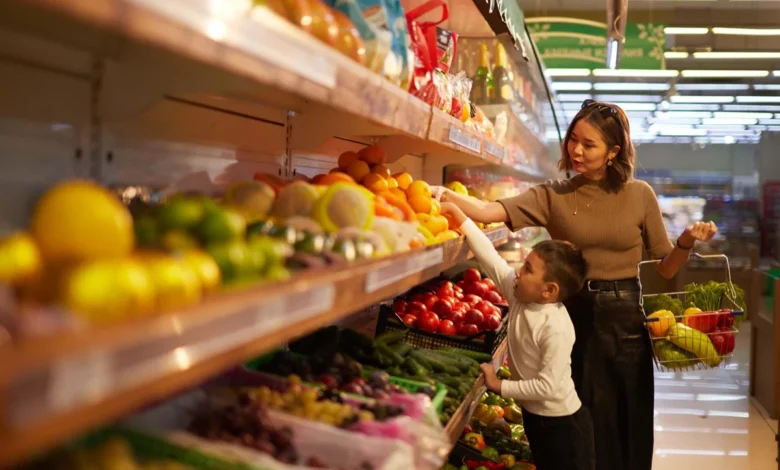
Global hunger experienced a third consecutive year of decline in 2025, a testament to concerted international efforts, yet the progress remains precarious, unevenly distributed, and insufficient to meet the ambitious Sustainable Development Goal (SDG) of Zero Hunger by 2030. This sobering assessment comes from The State of Food Security and Nutrition in the World 2026 (SOFI 2026) report, a flagship publication released on Tuesday by a consortium of five United Nations specialized agencies. The report paints a complex picture of cautious optimism tempered by persistent challenges, warning that recent geopolitical conflicts and climate change impacts threaten to unravel hard-won gains.
The SOFI 2026 report estimates that 7.8 percent of the global population, approximately 645 million people, faced hunger in 2025. This marks a sustained, albeit gradual, improvement from 8.1 percent in 2024 and 8.6 percent in 2022. The reduction translates to nearly 14 million fewer people experiencing hunger compared to 2024, and a more significant 43 million fewer than in 2022. While these figures indicate a positive trajectory, they underscore the immense scale of the challenge that still lies ahead for the international community.
Persistent Regional Disparities Mask Global Trends
Despite the encouraging global statistics, the recovery from the peak of hunger observed during the COVID-19 pandemic era remains acutely uneven across different regions of the world. Asia, a continent that has historically grappled with large numbers of undernourished individuals, has, alongside Latin America and the Caribbean, recorded steady improvements in recent years, demonstrating the effectiveness of targeted interventions and economic growth in certain areas.
However, the narrative is starkly different in Africa. The continent is now home to an estimated 309 million hungry people, a distressing figure that surpasses the 292 million recorded in Asia. While the report notes that Africa’s previously escalating trend is beginning to stabilize, with the share of its population facing hunger decreasing slightly from 20.3 percent in 2024 to 20.0 percent in 2025, its rapidly growing population means that the absolute number of hungry people continues to rise. This demographic reality poses a significant obstacle to achieving food security goals, demanding intensified efforts and innovative solutions tailored to the continent’s unique challenges.
Broader measures of food access echo this pattern of improvement alongside persistent disparities. In 2025, an estimated 25.8 percent of the global population, representing approximately 2.1 billion people, experienced moderate or severe food insecurity. This category includes individuals who were, at times, compelled to compromise on the quality or quantity of their food intake due to financial constraints or lack of access. This figure is a decrease from 27.1 percent in 2024 and 28.7 percent in 2020, equating to nearly 86 million fewer people than in 2024 and 135 million fewer than in 2020. Crucially, however, these numbers still remain above pre-pandemic levels, indicating that the world has not fully recovered from the widespread disruptions caused by the global health crisis.
The regional disparities in food insecurity are even more pronounced. Over half of Africa’s population, a staggering 56.6 percent, faced moderate or severe food insecurity in 2025. This stands in stark contrast to 20.3 percent in Asia, 22.9 percent in Latin America and the Caribbean, and a significantly lower 8.7 percent in Northern America and Europe. The report also highlights that food insecurity continues to be more prevalent in rural areas compared to peri-urban and urban settings, reflecting the challenges faced by smallholder farmers and remote communities. Furthermore, women continue to be disproportionately affected by food insecurity, though the report notes a marginal narrowing of the gender gap in 2025, suggesting that some interventions may be starting to yield results.
The SOFI Report: A Critical Barometer for Global Food Security
The State of Food Security and Nutrition in the World (SOFI) report is a cornerstone publication in the global effort to monitor and analyze progress towards ending hunger and malnutrition. Jointly authored by the Food and Agriculture Organization of the United Nations (FAO), the International Fund for Agricultural Development (IFAD), the United Nations Children’s Fund (UNICEF), the UN World Food Programme (WFP), and the World Health Organization (WHO), the report serves as an authoritative annual assessment. Its mandate is to provide comprehensive data, analysis, and policy recommendations to guide governments, international organizations, and civil society in their efforts to achieve SDG 2 (Zero Hunger) and other nutrition-related targets of the 2030 Agenda for Sustainable Development.
The agencies involved represent a broad spectrum of expertise, from agricultural development and humanitarian aid to public health and child welfare, ensuring a holistic perspective on the multifaceted challenges of food security and nutrition. The SOFI report not only tracks key indicators like undernourishment and food insecurity but also delves into the underlying drivers, such as economic shocks, climate change, conflicts, and the affordability of healthy diets, providing a critical framework for understanding the global food system.
Emerging Threats and Future Projections: A Looming Crisis
The SOFI 2026 report introduces updated hunger projections for the next five years, taking into account the significant impact of ongoing geopolitical events, particularly the conflict in the Middle East. The report warns that depending on the duration and intensity of the crisis’s impact on food inflation – which is primarily driven by elevated energy and fertilizer prices – between 510 and 520 million people may still be facing hunger in 2030. This figure represents an increase from the pre-conflict scenario’s lower projection of 503 million, indicating that the conflict is actively undermining the trajectory towards global hunger reduction. While the global number of undernourished people is still expected to decrease by 20 percent overall, the pace of this decline is significantly hindered by these external shocks.
Beyond the immediate impact of conflicts, the report highlights other potential disruptors that are not fully factored into these specific projections, yet could further compound the challenges. These include the effects of weather extremes, such as the anticipated El Niño events in 2026 and 2027, which typically bring devastating droughts and floods to various parts of the world, severely impacting agricultural yields and food supplies. Historically, El Niño cycles have led to widespread crop failures, livestock losses, and increased food prices, particularly in vulnerable regions like sub-Saharan Africa, Southeast Asia, and parts of Latin America.
Moreover, the report’s joint authors collectively issued a stern warning about the cumulative threat posed by the 2026 Middle East conflict, alongside these weather extremes and the worrying reductions in official development assistance (ODA) and humanitarian funding. These factors, they argue, are critically threatening to undermine the fragile progress made in the global fight to end hunger, potentially reversing years of dedicated efforts.
Slow Progress on Global Nutrition Targets: A Silent Crisis
Beyond the headline figures on hunger, the SOFI 2026 report sheds light on the equally critical and often overlooked issue of global nutrition. It highlights that progress on maternal and child nutrition remains woefully insufficient to meet international commitments, including the 2030 nutrition targets.
Indicators such as child stunting (impaired growth due to chronic malnutrition), wasting (low weight for height due to acute malnutrition), overweight, low birthweight, and exclusive breastfeeding show only marginal improvements. The pace of progress is simply too slow to meet the ambitious targets set for 2030. Alarmingly, anaemia among women aged 15 to 49 years is worsening in many regions, signaling a decline in overall maternal health and posing significant risks to pregnancy outcomes and child development. Concurrently, the prevalence of adult obesity continues its steady and concerning rise, increasing from 12.1 percent in 2012 to 16.2 percent in 2024, directly contradicting the target of halting its rise by 2025. This dual burden of undernutrition and overnutrition underscores the need for comprehensive food system reforms that promote healthy diets for all.
A stark statistic reveals that only 30.8 percent of children aged 6 to 23 months worldwide consume a minimally diverse diet, meaning the vast majority are not receiving the essential nutrients required for healthy growth and cognitive development. As a consequence, 150 million children under five years of age are still stunted, a condition with irreversible long-term consequences for their physical and intellectual potential.
Regional variations persist in nutrition outcomes as well. While the prevalence of child stunting is declining in Africa and is on track to meet the 2030 target in Asia, and exclusive breastfeeding rates are improving across all regions where data is available, significant challenges remain. Nearly all regions are experiencing widening gaps in addressing anaemia among women, indicating a systemic failure to address iron deficiencies. Furthermore, child overweight is increasing rapidly in Oceania, signaling the growing impact of dietary shifts towards processed foods and sedentary lifestyles in certain island nations.
The Rising Cost of a Healthy Diet: An Economic Barrier to Nutrition
This year’s SOFI report delves deeper into the economic dimensions of food security by taking a closer look at the cost of a healthy diet. Defined by FAO and WHO as a diet that is adequate, balanced, diverse, and moderate, a healthy diet represents the average minimum expenditure required to obtain locally available foods that meet essential energy and most nutrient requirements. The report unequivocally underscores that these costs remain a major constraint to achieving SDG 2 (Zero Hunger), emphasizing that while lowering such costs is crucial, it alone will not be sufficient to improve dietary quality and nutrition outcomes comprehensively.
In 2025, the average global cost of a healthy diet rose to 4.28 purchasing power parity (PPP) dollars per person per day. This marks a significant increase from 3.44 PPP dollars in 2021 and 2.94 PPP dollars in 2017, reflecting global inflationary pressures, supply chain disruptions, and changing market dynamics. Latin America and the Caribbean recorded the highest regional levels, with an average cost of 4.91 PPP dollars. While the number of people unable to afford a healthy diet has declined from 2.97 billion (37.4 percent of the global population) in 2021 to 2.69 billion (32.7 percent) in 2025, this positive trend masks profound regional disparities. In Africa, affordability worsened markedly, with a staggering 66.6 percent of the population unable to afford a healthy diet in 2025 – more than double the levels observed in Asia and in Latin America and the Caribbean, highlighting the continent’s profound economic vulnerability.
The report meticulously analyzes the components of healthy diet costs, revealing that animal source foods, fruits, and vegetables account for the largest share, while starchy staples contribute relatively little. The structural differences in agrifood systems across regions also play a significant role. For instance, animal source foods are the largest contributor to the cost of a healthy diet in Africa, reflecting supply limitations and high demand, whereas vegetables represent the largest share in Latin America and the Caribbean.
A key insight from the report is the critical role of food value chains in determining consumer prices. Post-farmgate activities, encompassing processing, logistics, and wholesale, account for a substantial 70 to 75 percent of what consumers pay. Up to 40 percent of total costs arise specifically in these processing, logistics, and wholesale segments. Therefore, improving efficiency and reducing waste in these segments is paramount, particularly for lowering the cost of perishable, nutrient-rich foods that are often subject to significant spoilage and transportation challenges.
Addressing the rising cost of a healthy diet requires context-specific policy responses that simultaneously expand the supply of nutritious foods and lower structural costs across agrifood value chains. This necessitates strategic investments in critical infrastructure, such as rural roads, storage facilities, and cold chains, to reduce post-harvest losses and improve market access. Furthermore, increased investment in agricultural research and development, improved irrigation systems, and reforms in subsidies, trade facilitation, and regulatory frameworks are essential. The report advocates for targeted interventions that can boost productivity, reduce losses, and promote sustainable practices, thereby simultaneously improving nutrition outcomes, strengthening resilience against shocks, and supporting climate goals.
Calls to Action from UN Leaders
The report concludes with urgent calls to action from the heads of the five collaborating UN agencies, each emphasizing different facets of the global challenge:
QU Dongyu, FAO Director-General, acknowledged the progress but stressed the imperative for accelerated action. "The report shows that progress is possible, but we must move faster. Ending hunger and making healthy diets affordable requires political commitment, sustained investment and enabling policies. Recent crises – from natural disasters like the COVID-19 pandemic to man-made disasters like hotspots of conflicts, the war in Ukraine, the Gaza crisis, and the recent Strait of Hormuz disruption – have demonstrated both the resilience of agrifood systems and the need to strengthen them further to better serve the world’s most vulnerable people, farmers and consumers."
Alvaro Lario, IFAD President, highlighted the affordability crisis. "SOFI tells us that the cost of a healthy diet continues to rise and that nearly 2.7 billion people may still be unable to afford a healthy diet. Resilient value chains must be a central part of the answer. Our task now is to turn the evidence SOFI provides into investment – and to do so through partnership. Together, we can build the value chains, market systems and rural economies that make healthy food affordable for all."
Catherine Russell, UNICEF Executive Director, underscored the impact on children. "Every child deserves the chance to grow and develop to their full potential, and this starts with access to nutritious, affordable food. This report is a stark reminder that food systems fail millions of children and families. Food, health, education and social protection must go hand in hand to protect the most vulnerable children and women from global shocks."
Carl Skau, WFP Acting Executive Director, brought a human dimension to the statistics. "Behind every number in this report is a family counting the cost of food. Conflict and climate shocks push them further beyond their means. We must continue working with partner agencies, governments and communities to build food systems that hold up under shock, so families can afford nutritious diets, even in times of crisis. We now need sustained investment to match the scale of the challenge."
Dr. Tedros Adhanom Ghebreyesus, WHO Director-General, focused on the health implications. "While we welcome the clear progress we have made in reducing hunger, a healthy diet still remains unaffordable for one in three people globally. Obesity is rising and progress on maternal and child nutrition is stalling. But we know what works: policies that make healthy food the easy choice, promoting breastfeeding, front-of-pack labelling, taxing unhealthy products, and protecting children from harmful marketing. Healthy diets are not a luxury – they are the foundation of health and must be within everyone’s reach."
The SOFI 2026 report serves as a critical annual reminder that while progress against hunger is possible, it is neither linear nor guaranteed. The interconnected challenges of conflict, climate change, economic instability, and deeply entrenched inequalities demand a renewed and intensified global commitment. The report’s concluding sentiment resonates profoundly: "The work that lies ahead over the years to 2030 is immense. However, a world in which a healthy diet is no longer out of reach for nearly one in three people is a world worth building." This vision calls for unprecedented collaboration, innovative policy frameworks, and sustained investment to transform global food systems and ensure food security and adequate nutrition for all.
Related posts: