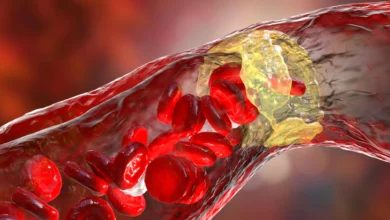
Scientific Discovery Links Artery Widening Rather Than Fatty Plaque to Lacunar Ischemic Stroke


A groundbreaking study led by researchers at the University of Edinburgh and the UK Dementia Research Institute has challenged decades of medical assumptions regarding the causes of lacunar ischemic stroke. For years, the medical community has operated under the premise that these strokes—which account for approximately 25% of all ischemic strokes—were primarily caused by the buildup of fatty plaques (atherosclerosis) within the brain’s arteries. However, the new findings suggest that the primary driver of this specific stroke subtype is not arterial narrowing, but rather a systemic dysfunction of the brain’s smallest blood vessels characterized by arterial widening and elongation.
This revelation provides a critical explanation for why standard preventive measures, such as the administration of aspirin and other antiplatelet medications, have frequently proven ineffective for patients prone to lacunar strokes. By shifting the focus from large-vessel atherosclerosis to small-vessel microvascular health, the research team has opened a new frontier in stroke prevention and cognitive health management.
Understanding the Lacunar Stroke Paradigm
A lacunar stroke occurs when one of the small, deep-penetrating arteries that provide blood to the inner structures of the brain becomes blocked. The term "lacunar" is derived from the Latin word "lacuna," meaning "hole" or "pit," referring to the small cavities left behind in the brain tissue after the damaged cells are cleared away. While these strokes are smaller in scale than "large-vessel" strokes that affect the brain’s surface, their impact is profound. They are a leading cause of vascular dementia, mobility issues, and long-term disability.
Historically, clinicians treated lacunar strokes using the same protocols as other ischemic strokes, focusing on reducing cholesterol and preventing blood clots through antiplatelet therapy. The Edinburgh study, however, demonstrates that the underlying pathology of Small Vessel Disease (SVD)—the condition that leads to lacunar strokes—is distinct. Instead of a mechanical blockage caused by external debris or localized plaque, the disease appears to stem from a failure of the blood vessel wall itself, leading to abnormal widening (ectasia) and a breakdown of the blood-brain barrier.
Methodology and Chronology of the Research
The investigation was a collaborative international effort involving scientists from the United Kingdom, China, and Mexico. The team recruited 229 participants who had recently experienced either a symptomatic lacunar stroke or a mild non-lacunar stroke. The study was designed to track the progression of vascular changes over a one-year period to identify which physiological markers best predicted future brain damage.
The research timeline began with a comprehensive clinical and cognitive baseline assessment for each participant. Shortly after their initial stroke, patients underwent high-resolution Magnetic Resonance Imaging (MRI) scans. These scans allowed researchers to meticulously map the state of the brain’s vasculature, distinguishing between "stenosis" (the narrowing of arteries due to plaque) and "ectasia" (the widening and lengthening of arteries).
One year later, the participants returned for follow-up MRI scans and cognitive evaluations. This longitudinal approach was essential for observing the development of new "silent" strokes—small areas of brain damage that do not produce immediate physical symptoms but contribute significantly to cognitive decline and the eventual onset of dementia.
Key Findings: The Link Between Artery Widening and Brain Injury
The results of the analysis, published in the prestigious journal Circulation, were stark. The researchers found no significant correlation between the narrowing of large arteries and the occurrence of lacunar strokes or the progression of Small Vessel Disease. While arterial narrowing was present in some patients, it did not serve as a reliable predictor for new brain lesions or cognitive deterioration.
In contrast, the widening and elongation of the brain’s arteries emerged as a powerful biomarker. The data revealed that:
- Increased Risk Profile: Patients exhibiting enlarged or widened arteries were more than four times as likely to have suffered a lacunar stroke compared to those with normal arterial dimensions.
- Severity of SVD: Artery widening was directly linked to more severe markers of Small Vessel Disease, including white matter hyperintensities—areas of the brain that appear bright on MRI scans and indicate damage to the "wiring" of the brain.
- Progression of Damage: Those with widened arteries showed a much faster progression of brain tissue damage over the 12-month study period.
- Silent Strokes: The study found that more than 25% of participants—one in four—developed new silent strokes during the year of observation. Crucially, these new injuries occurred despite the fact that patients were taking standard preventive medications like aspirin and statins.
These findings suggest that the current "one-size-fits-all" approach to stroke prevention is failing a significant portion of the population. If the problem is a structural failure of the small vessel walls rather than a blockage by plaque, then thinning the blood or lowering cholesterol may not address the root cause of the damage.
The Failure of Antiplatelet Therapy in Small Vessel Disease
The limited success of aspirin in preventing lacunar strokes has long been a source of frustration for neurologists. Aspirin works by preventing platelets from sticking together, thereby reducing the risk of a clot forming over a ruptured plaque. However, if the stroke is caused by the "leaking" or "stretching" of a small vessel wall—phenomena associated with endothelial dysfunction—antiplatelet drugs may do little to help. In some cases of Small Vessel Disease, antiplatelets might even increase the risk of microbleeds, another common feature of the condition.
Professor Joanna Wardlaw, a leading expert in brain imaging at the University of Edinburgh and a primary investigator in the study, emphasized the importance of this distinction. "Recognizing this distinction is crucial," Wardlaw stated. "It explains why conventional treatments like antiplatelet drugs are not as effective for this type of stroke and highlights the urgent need to develop new therapies that target the underlying microvascular damage."
The LACI-3 Trial: A New Direction for Treatment
The insights gained from this study are already being applied to clinical trials. The LACunar Intervention Trial 3 (LACI-3) is currently at the forefront of this shift in strategy. Instead of focusing on blood thinning, LACI-3 is investigating the efficacy of drugs that support the health of the endothelium—the thin layer of cells lining the blood vessels.
The trial is testing two specific medications:
- Cilostazol: A drug traditionally used to treat leg pain caused by poor circulation. It works by dilating arteries and improving the function of the vessel lining.
- Isosorbide Mononitrate: A medication typically used for chest pain (angina) that helps relax and protect blood vessels.
By focusing on "vascular protection" rather than just "clot prevention," researchers hope to stabilize the brain’s microvasculature, prevent the development of silent strokes, and ultimately reduce the risk of dementia and physical disability.
Broader Implications for Public Health and Dementia
The implications of this research extend far beyond stroke prevention. Because Small Vessel Disease is a primary driver of vascular dementia, understanding its mechanisms is vital for addressing the global dementia crisis. Silent strokes, as identified in the study, are often the "hidden" precursors to cognitive failure. By the time a patient presents with memory loss or gait instability, significant and often irreversible damage has already occurred in the brain’s deep structures.
The fact that one-fourth of the study participants developed new areas of brain damage within just one year—while under medical care—underscores the aggressive nature of SVD. It highlights a critical window of opportunity for intervention that is currently being missed. If clinicians can identify artery widening early through routine imaging, they may be able to implement microvascular-specific treatments before the cumulative damage leads to dementia.
Collaborative Efforts and Global Research
The study’s success was made possible through extensive international collaboration and diverse funding sources. Contributions from scientists in China and Mexico provided a broader demographic context, suggesting that these vascular changes are a universal human response to Small Vessel Disease rather than a localized phenomenon.
Funding was provided by a consortium of major health organizations, including the UK Dementia Research Institute (supported by the Medical Research Council, Alzheimer’s Society, and Alzheimer’s Research UK), the Leducq Foundation, the Stroke Association, and the British Heart Foundation. Additional support came from the Scottish Government’s Chief Scientist Office and the Row Fogo Charitable Trust.
This multi-agency backing reflects the growing recognition that stroke and dementia are inextricably linked. As the global population ages, the burden of microvascular brain disease is expected to rise, making the discovery of targeted therapies an urgent public health priority.
Conclusion: A New Era in Cerebrovascular Medicine
The Edinburgh study marks a definitive turning point in our understanding of lacunar stroke. By debunking the myth that fatty plaque is the primary culprit, researchers have provided a roadmap for a more nuanced and effective approach to brain health. The focus has now shifted to the integrity of the vessel wall and the complex biological processes that govern the brain’s smallest conduits of life-sustaining blood.
As the LACI-3 trial progresses, the medical community awaits further data that could formalize new clinical guidelines. For millions of people at risk of lacunar stroke and vascular dementia, this research offers a new sense of hope: the possibility of treatments that actually address the disease they have, rather than the one doctors previously assumed they had. The transition from "narrowing" to "widening" as a key diagnostic marker may well be the shift that finally brings the "silent" epidemic of small vessel disease into the light.