The Silent Thief of Memory: How Tau Protein and Disrupted Sleep Waves Reshape Our Understanding of Cognitive Decline

You walk out of the grocery store, ready to head home and make dinner, but as you scan the crowded parking lot, a familiar, sinking sensation takes hold. The location of your vehicle has vanished from your mind, replaced by a frustrating mental fog. While such moments are often dismissed as simple lapses in concentration, new research suggests these fleeting memory failures may be the outward ripples of a profound biological process occurring while we sleep.
Episodic memory—our ability to recall specific events, from the trivial act of parking a car to the emotional milestones of a childhood birthday—is the bedrock of our personal history. For decades, the gradual decline of this function has been viewed as an inevitable consequence of chronological aging. However, a groundbreaking study published in the journal Nature Neuroscience by researchers at the University of California, Berkeley, indicates that this decline is not merely a passive byproduct of time, but a tangible byproduct of molecular changes in the brain.
The Architecture of Memory Consolidation
To understand why our ability to recall the past weakens, we must look at what happens during our most restorative hours of rest. Sleep is not a uniform state; it is a complex architecture of stages, each serving a specific physiological purpose. While rapid eye movement (REM) sleep captures our attention through vivid dreaming, it is the deeper, non-REM (NREM) stage that acts as the brain’s primary archival system.
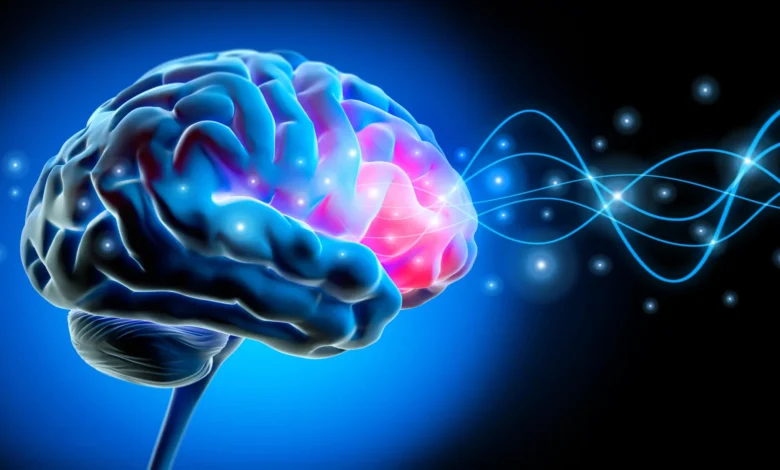
During deep sleep, the brain undergoes a synchronized performance. Vast populations of neurons switch off and on in a rhythmic, coordinated cascade, producing slow electrical waves that sweep across the cortex like a tide. These slow waves, which typically originate in the frontal cortex, are the mechanism by which the brain stabilizes and stores the information gathered throughout the day. When this synchronization is intact, memories are moved from short-term storage to long-term consolidation. When it is disrupted, the information is effectively lost before it can be permanently recorded.
The Role of Tau and the Emergence of Lonely Waves
The UC Berkeley research team, led by neuroscientist Omer Sharon under the guidance of renowned sleep expert Matthew Walker, has identified a critical antagonist in this process: the tau protein. Tau is a protein known to accumulate in the brains of individuals developing Alzheimer’s disease. While traditionally associated with the neurodegeneration seen in late-stage dementia, this study suggests that the influence of tau begins much earlier, often in individuals who are cognitively healthy.
Using high-resolution electroencephalograms (EEGs), the researchers monitored the electrical activity of young adults in their early 20s and older adults between the ages of 65 and 75. The findings were stark. In the younger cohort, slow waves moved in broad, sweeping, coordinated paths across the brain. In the older participants, these waves became fragmented. Instead of traveling across the scalp in wide, powerful arcs, they appeared as isolated, short-lived electrical pulses. The researchers have dubbed these disjointed signals "lonely waves."
The presence of these lonely waves was directly linked to the accumulation of tau in the frontal cortex, as verified through positron emission tomography (PET) scans. In a multi-layered analysis, the team confirmed that the more tau present in the frontal region, the more fragmented the sleep waves became, and consequently, the poorer the participants performed on overnight memory retention tests.
A Chronology of Discovery
The study’s methodology reflects a rigorous, multi-institutional effort to correlate sleep architecture with neurobiological markers:
- Initial Observational Phase: Researchers recorded sleep patterns in two distinct age groups, revealing the transition from coordinated "global" waves to isolated "lonely" waves.
- Imaging and Correlation: Utilizing PET scans, the team identified a correlation between tau protein density in the frontal cortex and the degree of wave disruption.
- Behavioral Testing: Participants were tasked with learning word associations before sleep; their ability to recall these pairs the next morning served as the benchmark for memory consolidation.
- Longitudinal Tracking: Over several years, a subset of participants was monitored to observe how escalating tau levels tracked with the further degradation of slow-wave synchronization.
- Cross-Validation: To confirm that the findings were not artifacts of imaging technology, the team collaborated with researchers at Washington University in St. Louis to analyze spinal fluid, finding that higher tau-to-amyloid ratios matched the electrical disturbances observed in the sleep lab.
Broader Implications for Alzheimer’s Research
The significance of these findings extends beyond the academic understanding of sleep. Because the study included participants who had not been diagnosed with Alzheimer’s, it provides a window into the "subclinical" phase of the disease—the period years or even decades before symptoms become debilitating.
"These people did not have Alzheimer’s," noted Omer Sharon. "They had tau in their brains, but with subclinical impacts. Their memory decline was within the normal range for their age." This is a pivotal realization for the field of neurology. It suggests that the cognitive "slowing" we associate with aging might actually be an early-warning system—a biological footprint of pathology that, if caught early enough, could one day be treated.
The research also helps settle a long-standing debate about the nature of sleep in the aging brain. For years, the scientific community has struggled to distinguish between the natural degradation of sleep due to age and the pathological degradation caused by neurodegenerative disease. By isolating the role of tau in the frontal cortex, the UC Berkeley team has provided a clear, quantifiable metric that links the two.
The Challenge of Causality
Despite the robust correlation between tau accumulation, disrupted brain waves, and memory loss, the researchers are cautious about claiming a direct causal link. A central, unresolved question remains: Does the buildup of tau cause the electrical waves to break down, or does the loss of these synchronized waves prevent the brain from clearing out proteins like tau, creating a vicious cycle?
"We can see tau and lonely waves rising together over time," Sharon said. "What we cannot yet say is which leads—and that question will shape how we design interventions."
If the breakdown of sleep waves is a primary driver of protein accumulation, then improving sleep quality could theoretically slow the progression of Alzheimer’s disease. Conversely, if tau buildup is the root cause, treatments might need to focus on pharmacological agents that target protein clearance long before sleep disturbances become apparent.
Future Directions and Clinical Potential
The findings offer a roadmap for future clinical trials. By using EEG as a non-invasive, cost-effective screening tool, doctors may eventually be able to identify individuals at risk of cognitive decline long before they experience significant memory impairment. While PET scans and spinal fluid taps are currently the gold standards for detecting Alzheimer’s-related proteins, they are expensive and invasive. The ability to use "lonely waves" as a biomarker could revolutionize early screening.
Furthermore, the study provides a potential target for therapeutic intervention. If the goal is to restore the "global" nature of slow waves, future treatments could focus on neuro-modulation techniques or pharmacological therapies that encourage synchronized neuronal firing during NREM sleep.
As the global population ages, the prevalence of Alzheimer’s and other forms of cognitive decline continues to rise, placing an unprecedented burden on healthcare systems. This study, supported by grants from the National Institute on Aging at the National Institutes of Health and fellowships from the Glenn Foundation for Medical Research and the Weill Neurohub, represents a significant step forward in shifting the focus from managing the end-stages of dementia to understanding the biological architecture of memory itself.
By identifying the specific, measurable ways in which the brain fails to store our experiences, researchers are moving closer to a time when a "senior moment" is not an accepted reality of aging, but a treatable, and perhaps even preventable, event. The quest to understand why we lose our memories in the grocery store parking lot has led, unexpectedly, to the very heart of how we maintain the integrity of our lives while we sleep.
Related posts: