Trump Shelves Plans for U.S. Airstrikes on Mexican Soil as Diplomatic Relations Stabilize

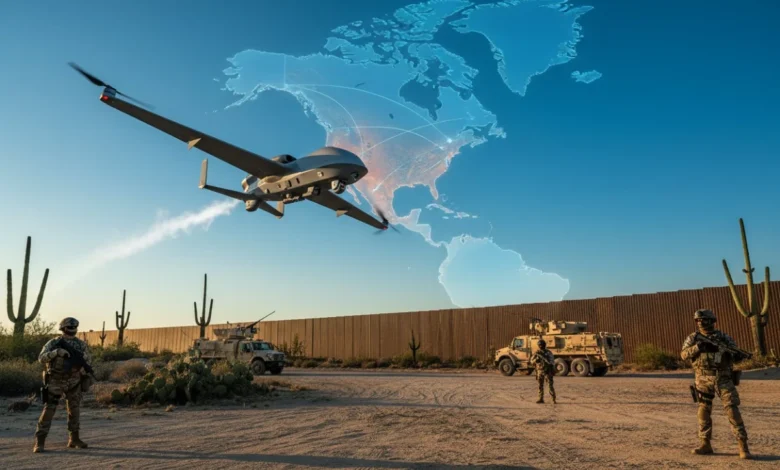
President Donald Trump has effectively shelved plans for U.S. airstrikes on Mexican soil for now, according to a report from The New York Times citing both U.S. and Mexican officials. The decision marks a significant tactical pivot for the administration, which had spent much of the past year posturing for potential kinetic operations against drug cartels operating south of the border. While the White House has not issued a formal confirmation, current intelligence and diplomatic assessments indicate that preparations for direct military intervention have been paused, as security cooperation between Washington and Mexico City has reached a new level of operational maturity.
This strategic shift follows months of intense pressure and public threats from the administration. In early 2026, President Trump signaled a move away from naval interdiction toward land-based strikes. In a January 2026 interview with Sean Hannity, Trump declared, "We knocked out 97 percent of the drugs coming in by water, and we are going to start now hitting land about the cartels." These comments echoed his rhetoric from November 2025, where he claimed the United States possessed detailed intelligence on the locations of every major drug lord and their smuggling routes, asserting he would be "proud" to authorize strikes to dismantle the infrastructure of organized crime.
The Evolution of the Pressure Campaign
The road to this potential military intervention began in earnest during the summer of 2025. In August of that year, the administration issued a classified directive tasking the Department of Defense with drafting comprehensive plans for lethal operations inside Mexico. These plans, aimed at targeting cartel leadership and logistics, were intended to be finalized by mid-September 2025.
The administration’s strategy combined legal, economic, and military pressures. A key component was the formal designation of major cartels as Foreign Terrorist Organizations (FTOs). In December 2024, prior to his inauguration, Trump placed a $15 million bounty on Nemesio Rubén Oseguera Cervantes, the leader of the Jalisco New Generation Cartel (CJNG). Throughout 2025 and 2026, the State Department expanded this designation to include the Juárez cartel and Los Viagras, effectively granting the U.S. government broader legal authority to apply counter-terrorism tactics to the drug war.
A Turning Point: The Death of El Mencho
The operational landscape changed significantly in February 2026, when Nemesio Oseguera Cervantes, known as "El Mencho," was killed in a shootout with Mexican forces. Reports suggest that U.S. intelligence played a pivotal role in locating the drug kingpin, providing the necessary data for Mexican special forces to launch the decisive raid.
The operation, however, carried a heavy human cost. More than 70 individuals were killed during the engagement, and El Mencho succumbed to his wounds shortly after his capture. The power vacuum left by his death triggered a wave of violence across Mexico, with the CJNG launching reprisal attacks that engulfed various municipalities in flames. These attacks notably threatened American tourist hubs, including Puerto Vallarta, forcing a temporary spike in travel advisories and a heightened sense of urgency in U.S.-Mexico security talks.
Despite the violence, the success of the mission served as a catalyst for deeper cooperation. The Trump administration publicly praised the Mexican government’s willingness to engage in high-stakes operations, viewing it as evidence that diplomatic pressure could achieve results without the need for unilateral U.S. military strikes.
Bilateral Cooperation and Tactical Integration
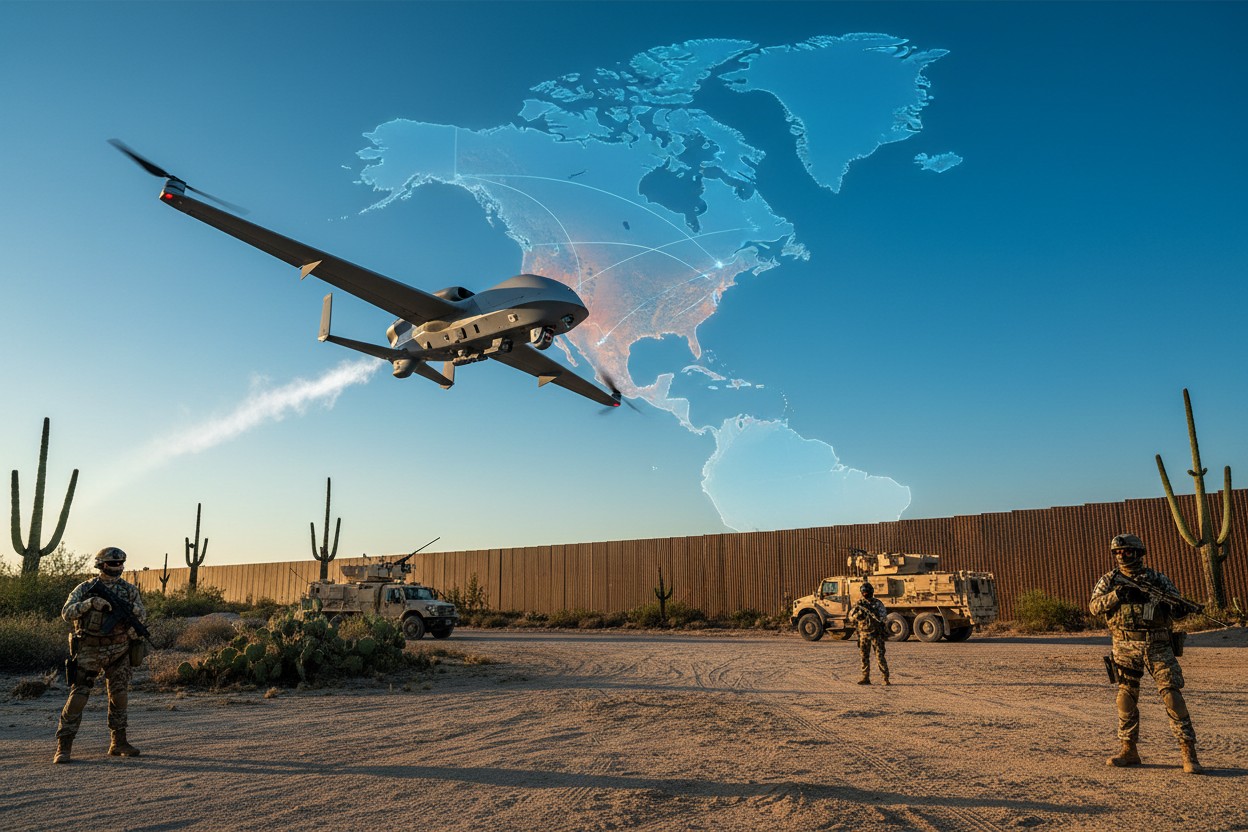
Recent months have seen a fundamental change in the security architecture between the two nations. Since mid-2026, the U.S. and Mexico have engaged in unprecedented joint operations. This includes "mirror" patrols along the border, where armed forces from both countries coordinate movements, utilize armored vehicles, and conduct specialized insertions to disrupt trafficking routes.
Beyond boots on the ground, the U.S. has expanded its technological footprint in the region. Reports indicate the use of CIA drone surveillance to monitor and identify fentanyl production labs deep within Mexican territory. Furthermore, the U.S. Navy has maintained a persistent presence with P-8 Poseidon reconnaissance aircraft off the coast of Tijuana. In August 2026, the North American Aerospace Defense Command (NORAD) and U.S. Northern Command confirmed the use of advanced laser systems to neutralize three cartel-operated drones near the southern Texas border, signaling that the U.S. is prioritizing technological containment over conventional airstrikes.
Economic Diplomacy and Trade Negotiations
The stabilization of the security relationship has been mirrored by progress on the trade front. Mexican President Claudia Sheinbaum has engaged in frequent direct communication with President Trump, resulting in what both sides describe as a "very close" trade agreement.
The economic pressure remains, however, as a tool for enforcement. The U.S. has targeted the financial lifeblood of the cartels, sanctioning more than 50 individuals and companies, ranging from traditional trafficking fronts to seemingly innocuous entities like tequila distillers and footwear manufacturers. The administration’s willingness to briefly suspend avocado inspections in Michoacan served as a warning to local industries that failing to ensure security for U.S. personnel would result in immediate economic consequences.
On a broader geopolitical scale, China has also been drawn into the dialogue. In September 2026, Beijing announced new permitting requirements for the export of drug-making chemical precursors to North America—a move analysts view as a direct result of the Trump administration’s leverage during pre-summit negotiations with President Xi Jinping.
Analysis: Implications of the Policy Shift
The decision to shelve airstrike plans suggests a pragmatic realization within the White House regarding the risks of kinetic intervention. Analysts have long warned that direct military action could trigger uncontrollable instability. Commentators, such as those at Brighteon.com, have previously highlighted the risk of a "quagmire," drawing historical parallels to conflicts that became protracted and resource-intensive without a clear end state.
From a geopolitical perspective, the move is likely intended to avoid a total breakdown in sovereignty that could cause a massive migration crisis or the collapse of the Mexican state. By opting for a strategy of intelligence-led, collaborative operations, the U.S. is attempting to maintain the benefits of its "tough on cartels" policy while mitigating the diplomatic fallout that would accompany a violation of Mexican territorial integrity.
Current Status and Future Outlook
As of September 2026, the administration appears focused on maintaining the momentum of the current diplomatic thaw. Officials emphasize that while airstrikes are off the table, the "threat" of military action remains a background reality, serving as a motivator for the Mexican government to remain vigilant against cartel resurgence.
The decline in illegal border crossings, combined with the new trade framework, has provided the Trump administration with a political win that allows for a de-escalation of rhetoric. However, the situation remains fluid. The cartels, while severely degraded by the loss of leaders like El Mencho, continue to adapt, and the U.S. security apparatus remains on high alert.
In the near term, the focus will likely remain on the implementation of the new trade deal and the continuation of joint border security patrols. The White House has successfully transitioned from a posture of threatened unilateral action to one of coordinated regional management, a shift that—for the time being—has prevented a significant escalation in continental conflict. Whether this fragile stability can hold against the entrenched power of the remaining cartels remains the central question for the remainder of the administration’s term.
The administration’s ability to balance the demands of domestic security and the complexities of international relations with its southern neighbor will likely define the success of its foreign policy in the Western Hemisphere for years to come. For now, the prospect of U.S. missiles hitting land in Mexico has been replaced by a policy of persistent, intelligence-heavy, and diplomatically negotiated pressure.