April 2026 Happiness Calendar Released by UC Berkeley’s Greater Good Science Center, Emphasizing "Expanding Your Circle of Care"

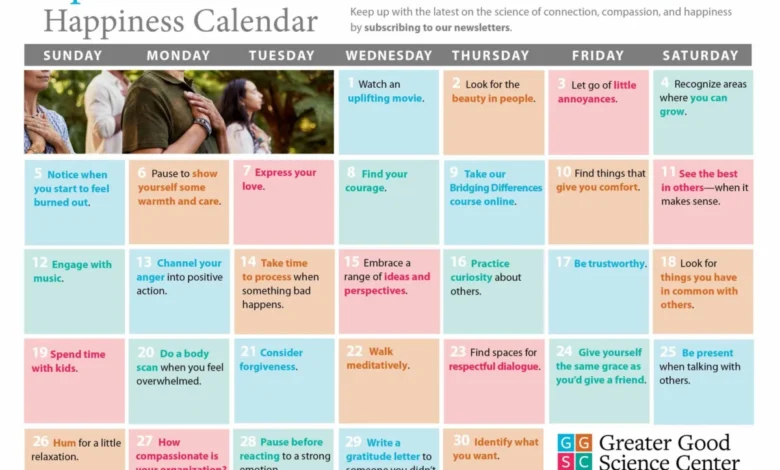
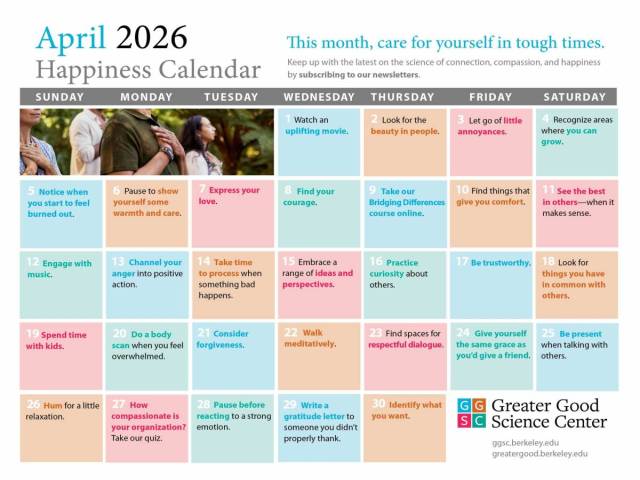
Berkeley, CA – The Greater Good Science Center (GGSC) at the University of California, Berkeley, has officially released its monthly Happiness Calendar for April 2026, marking another installment in its widely acclaimed series dedicated to promoting well-being. This month’s calendar, authored by Kira M. Newman, centers on the poignant theme of "expanding your circle of care," offering daily, scientifically-backed practices designed to foster compassion and connection beyond individual self-focus. The initiative underscores the GGSC’s commitment to translating groundbreaking research into accessible, actionable guidance for individuals seeking to cultivate a more meaningful and resilient life.
The Greater Good Science Center: A Beacon for Well-being Research
Established in 2001, the Greater Good Science Center at UC Berkeley stands as a pioneering institution dedicated to the scientific exploration of altruism, compassion, gratitude, mindfulness, and other pro-social emotions. Unlike many academic centers, the GGSC uniquely bridges the gap between rigorous scientific inquiry and public education, making complex psychological and neurological findings understandable and applicable to everyday life. Its mission extends beyond mere academic discourse, aiming to inspire individuals and communities to build a kinder, more compassionate, and happier society. Through its various initiatives, including research grants, conferences, online publications, and practical tools like the Happiness Calendar, the Center has become a leading voice in the burgeoning field of positive psychology and contemplative science.
The GGSC’s interdisciplinary approach draws from fields such as social psychology, developmental psychology, neuroscience, education, and sociology. Researchers associated with the center investigate topics ranging from the biological basis of empathy to the effects of gratitude on physical health and the role of mindfulness in reducing stress. This robust scientific foundation ensures that the recommendations offered through its public outreach, including the Happiness Calendar, are not merely anecdotal but are rooted in empirical evidence, providing a credible roadmap for personal growth and societal improvement.
Evolution and Impact of the Monthly Happiness Calendar Initiative
The concept of a monthly "Happiness Calendar" emerged from the GGSC’s broader strategy to democratize access to well-being practices. While the exact inception date of the calendar series is not publicly detailed, it has been a consistent and highly anticipated feature of the GGSC’s offerings for several years, becoming a cornerstone of its public engagement efforts. Each month, a new calendar is meticulously crafted, focusing on a distinct theme relevant to psychological well-being, such as gratitude, resilience, empathy, or self-compassion. The overarching goal is to provide a structured, day-by-day guide that encourages users to integrate small, manageable practices into their routines, thereby cultivating lasting habits that contribute to greater happiness and life satisfaction.
The calendars are designed as interactive, clickable PDF documents, allowing users to delve deeper into specific practices or related resources directly from the calendar interface. This digital format enhances accessibility, enabling a global audience to benefit from the GGSC’s expertise regardless of geographical location. The provision of troubleshooting tips for browser compatibility, such as those for Google Chrome users, further indicates the widespread adoption and technical considerations taken to ensure a seamless user experience. The option to subscribe to the calendar mailing list ensures that interested individuals receive timely notifications, fostering sustained engagement with the GGSC’s mission.
Over the years, the Happiness Calendar series has garnered significant traction, becoming a vital resource for individuals, educators, mental health professionals, and organizations seeking to promote positive mental health and community spirit. While specific subscriber numbers are not publicly disclosed, the consistent production and refinement of the calendar, along with its prominent placement on the GGSC website, attest to its popularity and perceived value among its audience. The initiative stands as a testament to the power of accessible, science-informed tools in fostering individual and collective flourishing.
April 2026 Theme: "Expanding Your Circle of Care"
For April 2026, the GGSC has chosen "expanding your circle of care" as its central theme, a particularly resonant message in the contemporary global landscape. This theme encourages individuals to move beyond conventional notions of self-care and extend compassion, empathy, and support to a wider array of relationships and entities. This includes not only immediate family and friends but also colleagues, neighbors, strangers, communities, and even the natural environment.
The concept is rooted in the understanding that human well-being is deeply interconnected. While personal self-care remains crucial, true flourishing often arises from a sense of belonging, purpose, and contribution to something larger than oneself. In an era marked by increasing social isolation, geopolitical tensions, and environmental challenges, the call to expand one’s circle of care serves as a powerful antidote, fostering solidarity and collective responsibility.
Daily practices suggested within the calendar are likely to include actionable steps such as:
- Active Listening: Deliberately engaging with others’ perspectives and experiences.
- Acts of Kindness: Performing small, unsolicited gestures of goodwill for acquaintances or strangers.
- Volunteering: Dedicating time to support community initiatives or charitable causes.
- Practicing Empathy: Actively trying to understand and share the feelings of others.
- Cultivating Forgiveness: Releasing resentment towards others, fostering inner peace.
- Mindful Connection: Engaging with loved ones without distraction, savoring shared moments.
- Environmental Stewardship: Taking steps to care for the planet, recognizing our interconnectedness with nature.
By encouraging these practices, the GGSC aims to cultivate a ripple effect, where individual acts of care contribute to a more compassionate and resilient society.
Scientific Underpinnings of Prosocial Behavior and Well-being
The theme of "expanding your circle of care" is robustly supported by decades of research in psychology, neuroscience, and sociology. Studies consistently demonstrate a strong correlation between prosocial behavior—actions intended to benefit others—and increased personal well-being. Engaging in acts of kindness, empathy, and altruism has been shown to:
- Boost Happiness and Life Satisfaction: Numerous studies indicate that giving to others activates the brain’s reward centers, leading to feelings of pleasure and contentment. This phenomenon is often referred to as the "helper’s high."
- Reduce Stress and Anxiety: Focusing on others can divert attention from personal worries, and the positive social interactions generated by prosocial behavior can act as a buffer against stress.
- Improve Physical Health: Research suggests that individuals who volunteer or regularly engage in compassionate acts tend to have lower blood pressure, stronger immune systems, and even longer lifespans.
- Strengthen Social Bonds: Acts of care and kindness are fundamental to building and maintaining strong relationships, fostering a sense of belonging and mutual support, which are critical determinants of mental health.
- Enhance Sense of Purpose and Meaning: Contributing to the well-being of others provides a sense of purpose and meaning, which are key components of eudaimonic well-being (a deeper, more sustainable form of happiness).
- Promote Emotional Regulation: Practicing empathy and compassion can enhance one’s ability to manage difficult emotions by fostering a broader perspective and reducing self-preoccupation.
Pioneers in positive psychology, such as Martin Seligman and Barbara Fredrickson, have extensively documented how positive emotions and character strengths like kindness and compassion are essential for human flourishing. Fredrickson’s Broaden-and-Build Theory, for instance, suggests that positive emotions broaden an individual’s momentary thought-action repertoire and build enduring personal resources. Prosocial acts are a prime example of behaviors that cultivate such positive emotions and resources.
Accessing the Calendar and User Experience
The April 2026 Happiness Calendar is designed for straightforward access. Users are directed to click on a prominent image on the GGSC’s website, which then opens the clickable PDF document. This interactive format allows users to click on specific days or linked resources, providing immediate access to further information or deeper dives into particular practices. The GGSC has also proactively addressed potential technical issues, specifically noting that users encountering difficulties with clicking calendar links in the Chrome browser might need to adjust their browser settings or consider using an alternative browser. This attention to user experience highlights the center’s dedication to making its resources as accessible as possible to a broad audience. The ability to subscribe for monthly updates further streamlines engagement, ensuring that individuals receive each new calendar directly, fostering consistent practice and connection with the GGSC’s mission.
Inferred Statements and Broader Implications
While no direct quotes from specific individuals were provided in the original announcement, the release of such a calendar by the GGSC inherently carries an institutional message. It can be logically inferred that a spokesperson for the Greater Good Science Center, or Kira M. Newman as the author, would emphasize the timeliness and critical importance of the "expanding your circle of care" theme. Such a statement might highlight that in an increasingly interconnected yet often fragmented world, fostering broader compassion is not just a personal virtue but a societal necessity. They would likely underscore that even small, daily acts of kindness and connection can collectively contribute to significant positive change, strengthening community bonds and fostering a more empathetic global citizenry.
The broader implications of such an initiative are multifaceted:
- Individual Mental Health: By encouraging prosocial behavior, the calendar offers a powerful tool for individuals to combat feelings of loneliness, isolation, and anxiety, which are prevalent mental health challenges. The act of giving and connecting can provide a sense of purpose and belonging, vital for psychological resilience.
- Community Building: As more individuals actively expand their circle of care, communities can become more cohesive, supportive, and resilient. This fosters a sense of collective responsibility and mutual aid, critical for addressing local and global challenges.
- Societal Transformation: On a larger scale, a society where individuals are actively engaged in expanding their care can lead to greater social justice, reduced polarization, and increased cooperation. The calendar, therefore, serves as a micro-level intervention with macro-level aspirations.
- Educational Outreach: The Happiness Calendar acts as an informal educational platform, disseminating complex scientific findings in an easy-to-digest format. It educates the public on the science of well-being, empowering individuals with knowledge and tools to improve their lives and the lives of those around them.
- Ethical Development: By promoting empathy and compassion, the calendar contributes to the ethical development of individuals, encouraging a moral framework that prioritizes the welfare of others and the planet.
The Digital Age and Well-being Promotion
The GGSC’s Happiness Calendar also exemplifies how digital platforms can be effectively leveraged for positive social impact. In an era often criticized for the isolating effects of technology, this initiative demonstrates how digital tools can be designed to foster connection, promote mindful engagement, and disseminate valuable resources to a global audience. The challenge lies in encouraging users to translate digital engagement into real-world actions, a bridge the GGSC attempts to build with its practical, daily suggestions. The calendar serves as a reminder that technology, when thoughtfully applied, can be a powerful ally in the pursuit of individual and collective well-being.
As the Greater Good Science Center continues its mission to explore and promote the science of a meaningful life, initiatives like the Happiness Calendar for April 2026 remain crucial. By focusing on "expanding your circle of care," the center not only provides practical guidance for personal well-being but also subtly advocates for a more compassionate and interconnected world, one daily practice at a time. The ongoing availability of "other calendars" further reinforces the GGSC’s continuous commitment to being a resource for sustained well-being practices.