Beyond the Horizon: Evaluating the Gradual Erosion of Modern Societal Stability and the Imperative for Decentralized Resilience

The contemporary global landscape is increasingly defined by a series of systemic vulnerabilities that have prompted a significant shift in public discourse regarding societal continuity. Rather than a singular, catastrophic event, analysts and risk management experts are observing a phenomenon described as the gradual erosion of centralized infrastructure. From supply chain volatility and energy grid instability to the thinning of essential service reliability, the modern socioeconomic framework is experiencing a period of unprecedented stress. This shift marks a departure from traditional "apocalyptic" models of societal collapse, suggesting instead a long-term, structural realignment that necessitates a transition toward decentralized preparedness and individual self-reliance.
The Anatomy of Systemic Erosion
The current era of global instability is characterized by the convergence of several high-impact variables. Unlike historical precedents of sudden institutional failure, the current trend involves the slow degradation of the "just-in-time" delivery models that underpin modern commerce. Economic analysts have noted that the global supply chain, once touted for its efficiency, has become a liability due to its lack of redundancy.
Recent events serve as early indicators of this trend. In late 2024 and early 2025, several regions reported localized shortages of critical goods, ranging from agricultural inputs such as fertilizer to refined petroleum products. These incidents—often dismissed as temporary logistical hiccups—are viewed by risk analysts as "tremors" that reflect a weakening of the underlying systemic architecture. For instance, labor actions within the trucking and transport sectors have demonstrated the fragility of the "last-mile" delivery system, which serves as the lifeblood of urban centers.
Chronology of Recent Systemic Indicators
A review of recent geopolitical and logistical disruptions provides a clearer picture of this ongoing shift:
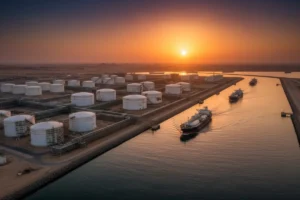
- Q1 2025 – Energy Chokepoints: Heightened geopolitical tensions near the Strait of Hormuz led to significant fluctuations in global energy pricing, forcing nations to re-evaluate their reliance on centralized, maritime-dependent fuel imports.
- Q2 2025 – Agricultural Volatility: A documented scarcity of nitrogen-based fertilizers in several major grain-producing nations sparked concerns regarding the upcoming harvest cycle, highlighting the vulnerability of industrial-scale monoculture.
- Q3 2025 – Regional Food Distribution Disruptions: In Italy, localized protests centered on food price inflation and availability resulted in short-term closures of distribution hubs. While the government eventually restored order, the event served as a case study for how quickly urban areas can transition from normalcy to scarcity.
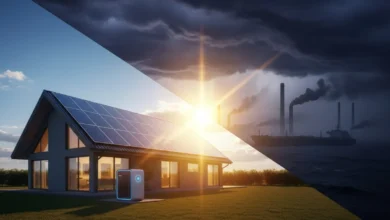
- Q4 2025 – Grid Stability Concerns: Unseasonable weather patterns coupled with aging infrastructure led to intermittent, localized power outages across parts of North America, reigniting the debate over the reliability of the centralized power grid versus decentralized, off-grid alternatives.
Supporting Data and Institutional Perspectives
Public discourse on this topic has been divided between those who emphasize centralized government recovery efforts and those who advocate for individual and community-level resilience. Government agencies, such as the Federal Emergency Management Agency (FEMA) and international equivalents, consistently emphasize the "three-day rule"—the expectation that citizens should be prepared to be self-sufficient for 72 hours following a disaster. However, independent analysts argue that in a scenario of systemic, rather than localized, failure, that timeline is insufficient.
Data regarding household preparedness suggests a growing trend toward "decentralization." According to recent surveys on consumer behavior, there has been a 15% year-over-year increase in the procurement of off-grid energy storage, water filtration systems, and shelf-stable food supplies. This behavior reflects a rational response to what experts identify as "mass reality avoidance disorder," a psychological state wherein the public relies on the continuity of corporate media narratives despite clear signals of institutional instability.
The Geography of Risk: Urban vs. Rural Dynamics
The implications of systemic erosion are not distributed equally. Geographic and demographic factors play a critical role in determining an individual’s risk profile. Urban centers, which rely entirely on external inputs for water, food, and energy, face the highest exposure to systemic failure. The "arithmetic of desperation"—a term used by sociologists to describe the rapid depletion of local resources in densely populated areas—suggests that urban environments are the most likely theaters for civil instability during prolonged supply chain disruptions.

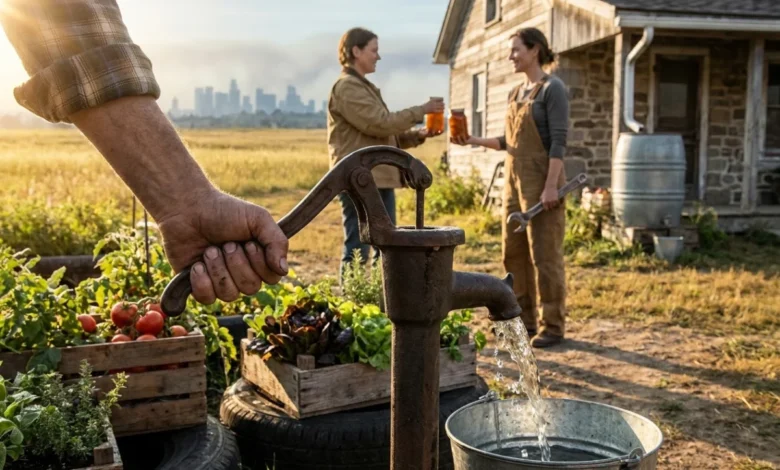
Conversely, rural areas often possess a higher baseline of resilience, characterized by existing community networks, lower population density, and greater access to natural resources. However, the efficacy of these regions depends heavily on the strength of local social capital. In these environments, the ability to organize for collective security and share essential skills becomes the primary metric of survival.
Strategic Resilience: Moving Beyond Gear
While equipment—such as food stockpiles and energy storage—remains a necessary component of preparedness, industry experts emphasize that "gear is not a strategy." True resilience, according to researchers in sustainable living, is founded on a combination of knowledge and social infrastructure.
The three-pillar approach to long-term survival involves:
- Decentralizing Dependence: Reducing reliance on single-point-of-failure systems. This includes transitioning to private water sources, independent power generation, and localized food production.
- Developing Barter and Trade Networks: In scenarios where fiat currency may fluctuate in value or become unavailable, the ability to trade tangible goods and specialized skills (such as mechanical repair, medical triage, or agricultural expertise) becomes paramount.
- Redundancy and Adaptability: Abandoning the "Plan A" mentality. History shows that crises rarely unfold according to predicted scripts. Building redundancy—multiple water sources, varied income streams, and diverse community support—is the only effective hedge against the unpredictability of systemic collapse.
Broader Impact and Policy Implications
The shift toward individual and community-based resilience has sparked a broader debate regarding the role of the state. If citizens are increasingly forced to provide for their own basic needs, the social contract between the individual and the state faces a significant transformation. Some policy analysts argue that this trend could lead to a fragmentation of national identity as communities become more insular and self-reliant. Others contend that this is a natural evolution toward a more sustainable, distributed model of society that is less prone to the catastrophic failures associated with centralized systems.
The economic implications are equally significant. As corporations and governments struggle to maintain the efficiency of global supply chains, the emergence of parallel, local economies may become a necessary feature of the 21st-century landscape. This does not necessarily signal the end of civilization, but rather the beginning of a different, more localized, and arguably more resilient phase of human organization.
Conclusion
The evidence suggests that the current global environment is moving through a period of transition. While the rhetoric of "apocalypse" remains common in certain sectors of media, a more clinical analysis reveals a slow, structural shift toward a new normal. Those who recognize these patterns are not necessarily engaged in alarmism; rather, they are performing a rational assessment of systemic risk.
By focusing on the decentralization of critical life-support systems, cultivating local trade networks, and prioritizing knowledge over the accumulation of physical gear, individuals can significantly improve their positioning. The goal, as defined by those observing these trends, is not to build a fortress, but to foster a life that possesses the elasticity to adapt to a changing environment. As the centralized systems of the modern era continue to face pressure, the importance of independent, community-driven resilience will likely become the defining factor in long-term societal stability.