The Hidden Link: New Research Distinguishes Between Dietary Nitrate and Nitrite in Colorectal Cancer Risk

A landmark longitudinal study conducted by researchers at the Karolinska Institutet has provided new, granular insights into the long-standing debate surrounding dietary nitrogen compounds and their impact on human health. By tracking 82,009 middle-aged and older adults across two comprehensive Swedish cohorts over a span of 24 years, the investigation has successfully disentangled the physiological effects of nitrates from those of nitrites. The findings, published following an extensive analysis of data collected between 1998 and 2022, suggest that while nitrates—largely found in vegetables—pose no statistically significant threat, nitrites—commonly used as preservatives in processed meats—are linked to a notable increase in colorectal cancer risk, particularly in men.
The Methodology and Scope of the Investigation
The study’s robust design was predicated on long-term observational data, allowing researchers to observe the progression of health outcomes over several decades. Throughout the follow-up period, 3,170 participants were diagnosed with colorectal cancer. By linking detailed dietary questionnaires with the Swedish National Cancer Register, the team was able to isolate the specific chemical intake of participants.
Unlike previous studies that often grouped all nitrogen-based compounds together, the Karolinska Institutet research team maintained a strict distinction between naturally occurring plant nitrates and synthetic or additive-derived nitrites. This methodological rigor is essential because while both compounds are chemically related, their biological pathways in the human gut diverge significantly based on the "matrix" in which they are delivered to the digestive system.
Understanding the Chemical Distinction: Nitrate vs. Nitrite
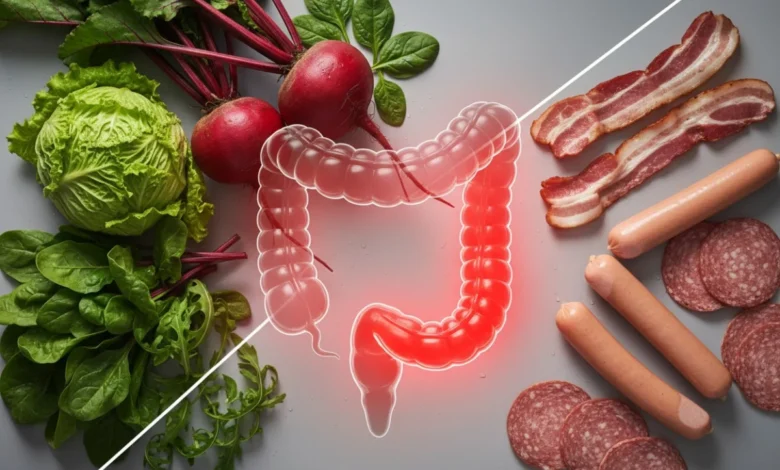
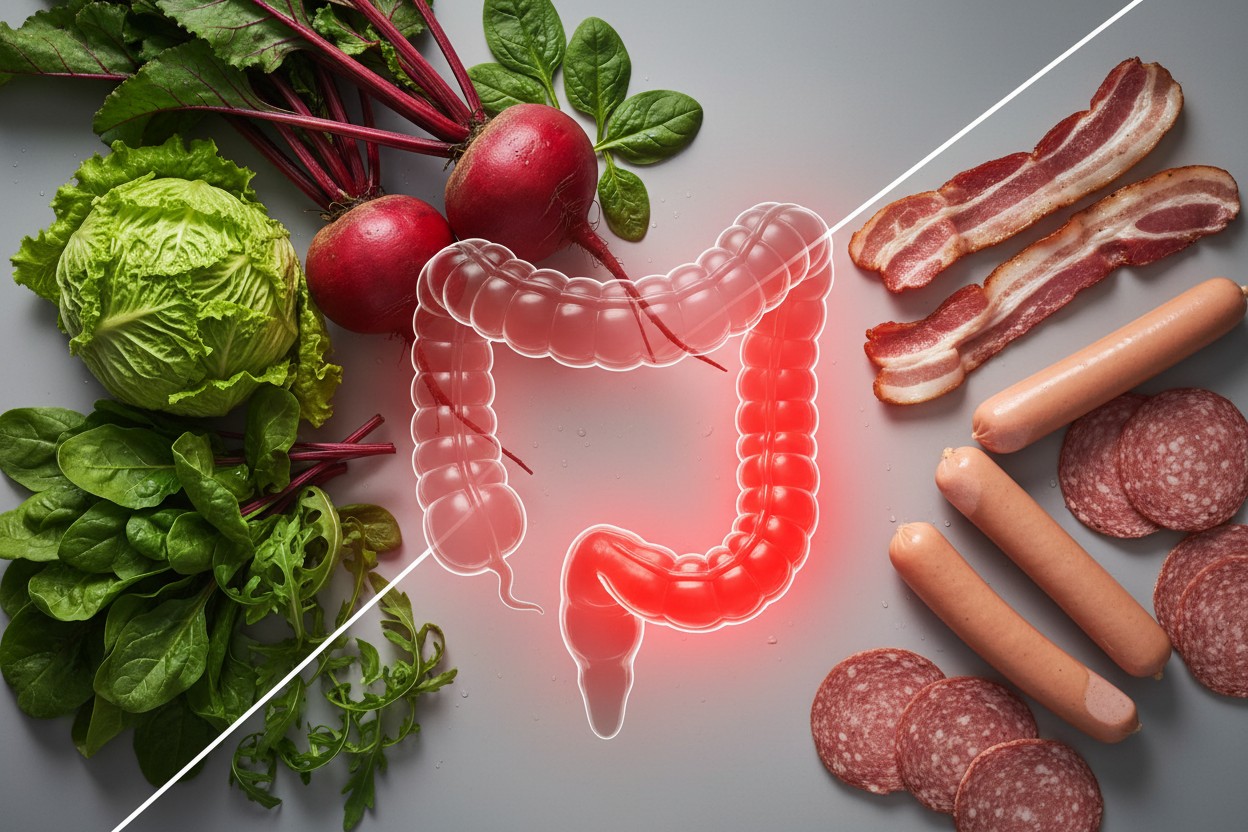
Nitrates (NO3-) are naturally occurring compounds found in high concentrations in soil, which plants absorb to fuel growth. Consequently, common dietary sources include leafy greens such as spinach, arugula, lettuce, and root vegetables like beets. When ingested as part of a vegetable-rich diet, nitrates are bundled with a synergistic array of fiber, polyphenols, and vitamin C.
In contrast, nitrites (NO2-) are primarily introduced into the modern diet as food additives. They are the chemical backbone of the curing process for bacon, ham, deli meats, and hot dogs, serving the dual purpose of inhibiting the growth of dangerous bacteria—such as Clostridium botulinum—and maintaining the vibrant, pink-red color consumers associate with fresh meat.
The danger lies in the formation of N-nitroso compounds (NOCs) within the gut. Toxicology literature has long established that nitrosamines, which result from the digestion of sodium nitrate and sodium nitrite, are potent carcinogens. However, the study suggests that the compounds found in vegetables are protected by the natural "matrix" of the plant. Fiber and vitamin C appear to act as inhibitors, preventing the chemical transformation of nitrates into harmful carcinogens during the digestion process. Processed meats, which lack these protective botanical compounds, do not offer this biological safeguard, leaving the gut vulnerable to the reactive, carcinogenic byproducts of the curing process.
Historical Context and the Rise of Processed Meat Concerns
The health concerns surrounding processed meats are not new. For decades, epidemiologists have noted a correlation between high consumption of cured meats and various gastrointestinal malignancies. In 2015, the International Agency for Research on Cancer (IARC), a branch of the World Health Organization (WHO), officially classified processed meats as "carcinogenic to humans" (Group 1).
The IARC’s meta-analysis concluded that the consumption of just 50 grams of processed meat per day—roughly equivalent to two slices of bacon or a single hot dog—increases the risk of colorectal cancer by approximately 18%. This historical data aligns with the findings from the Karolinska Institutet, which further clarifies that it is the nitrite-heavy curing process, rather than the meat protein itself, that serves as the primary mechanism for this increased risk. Furthermore, previous studies have suggested that these compounds may also play a role in bladder cancer development, with some data indicating a 30% increase in risk associated with high-nitrite exposure.
Gender-Specific Findings and Anatomical Localization
One of the most intriguing aspects of the recent study is the marked difference in risk profiles between men and women. The data revealed that men in the highest quintile of nitrite intake faced a 23% increased risk of colorectal cancer compared to those in the lowest quintile. Perhaps more concerningly, when the researchers focused specifically on the distal colon—the section of the large intestine closest to the rectum—the risk factor for men rose to 50%.
Women did not exhibit this same statistical pattern. While the researchers did not reach a definitive conclusion as to why this gender split exists, they proposed several hypotheses for further exploration. Differences in total processed meat consumption between the sexes, potential hormonal influences on how the gut metabolizes N-nitroso compounds, and variations in gut microbiome composition are currently under investigation.
The concentration of risk in the distal colon provides a vital clue regarding the mechanism of action. Because the risk is localized, it points toward a "local exposure effect," where the concentration of carcinogenic substances remains high as they pass through the lower regions of the digestive tract. This reinforces the theory that the physical presence of nitrosamines in the colon is a direct catalyst for tumor development in that specific region.
Broader Public Health Implications
The implications of this research are significant for both public policy and individual dietary choices. If processed meats are indeed the primary vector for nitrite-induced cancer risk, the food industry may face increased pressure to reformulate products. Some producers are already experimenting with plant-based alternatives that use celery powder—a natural source of nitrate—to achieve the same preservation effects. However, researchers warn that even "natural" nitrites can be converted into harmful compounds if the curing chemistry is not strictly controlled.
For the general public, the takeaway is clear: the focus should be on reducing the intake of processed meats while simultaneously increasing the intake of protective whole foods. Pairing meat products with vitamin C-rich fruits and vegetables has been suggested as a potential harm-reduction strategy. For instance, consuming a salad or a piece of citrus alongside a meal containing cured meat may theoretically help neutralize the nitrosation process, though experts maintain that limiting the frequency of consumption remains the most effective strategy.
Looking Toward Future Dietary Guidance
The scientific community has welcomed the precision offered by the Karolinska Institutet study. By separating the effects of plant-based nitrates from additive-based nitrites, the study provides a nuanced pathway forward for dietary guidelines. It effectively exonerates nitrate-rich vegetables from any culpability in cancer risk, potentially reversing the confusion that has led some consumers to avoid healthy vegetables due to misplaced concerns about nitrate content.
As the global burden of colorectal cancer continues to rise, the ability to identify modifiable risk factors is paramount. The study serves as a call to action for both consumers and regulatory bodies to re-evaluate the use of nitrites in food preservation. While the preservation of food safety is a critical priority for the meat industry, the long-term health of the population must remain at the forefront of public health strategy.
Moving forward, the research team at Karolinska suggests that more studies are needed to determine if specific gut bacteria play a role in why men seem to be more susceptible to the effects of nitrites. Until then, the evidence remains consistent with established medical consensus: moderation is key, and a diet rich in whole, unprocessed plants remains the most reliable defense against diet-related malignancies. By shifting away from processed, nitrite-heavy staples and toward a diet rich in fibers, polyphenols, and natural vitamins, individuals can take proactive steps to safeguard their long-term digestive health.