
Will Reeve Opens Up About His Recent Battle With Testicular Cancer and the Profound Connection to His Late Parents

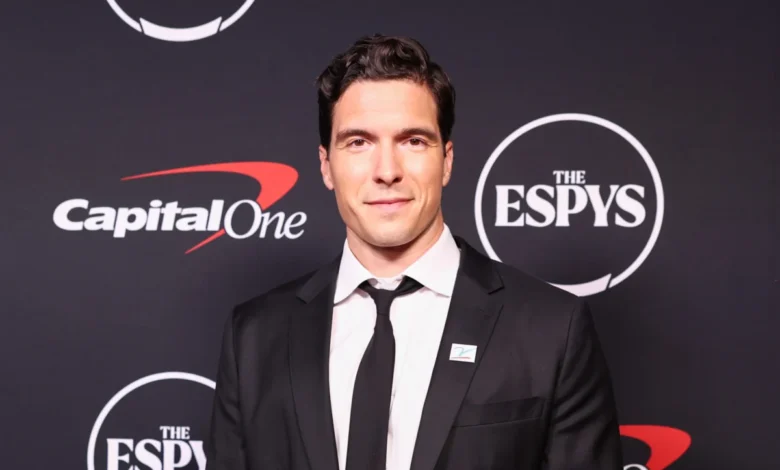
For months, Will Reeve, a prominent correspondent for ABC News and a familiar face on Good Morning America, navigated a deeply personal health crisis in near-total silence. The 34-year-old journalist, son of the late Superman icon Christopher Reeve and actress-activist Dana Reeve, recently chose to step into the public eye to disclose his diagnosis of testicular cancer. In a candid and wide-ranging interview with People magazine, Reeve detailed the sudden nature of his discovery, the medical path to recovery, and the poignant, often surreal ways in which his experience mirrored the health struggles of his parents, both of whom passed away prematurely after high-profile medical battles.
The diagnosis came earlier this spring when Reeve discovered a physical abnormality during a routine shower. Initially dismissing the tender lump as a minor or transient issue, he adhered to a common tendency among men to avoid medical intervention for symptoms they hope will simply resolve on their own. However, at the urging of his wife, Amanda Dubin Reeve, he sought professional medical advice, leading to an ultrasound that confirmed the presence of testicular cancer.
A Chronology of Care and Recovery
The progression of Reeve’s treatment was swift and aggressive. Following the initial diagnosis, medical imaging revealed that the cancer had spread to the lymph nodes in his abdomen, a common pathway for testicular cancer progression. In early May, Reeve underwent an orchiectomy, a surgical procedure to remove the affected testicle.
For Reeve, the surgery marked a significant milestone, as it was his first major medical operation since undergoing a tonsillectomy at age five. Reflecting on the period, he noted that the anxiety surrounding the "unknown" of the procedure significantly outweighed his fears regarding the permanent physical changes resulting from the surgery. Following the successful removal, Reeve embarked on a rigorous course of two rounds of chemotherapy.
Throughout this period, Reeve maintained his professional obligations at ABC News. In an effort to manage the side effects of chemotherapy, he utilized a cold-capping helmet—a specialized device designed to reduce hair loss by cooling the scalp during treatment. He described the device with a touch of characteristic humor as feeling like "the underside of a manta ray." Despite the grueling nature of his treatment regimen, which included bouts of bone pain and persistent 24-hour headaches, he continued to appear on air, effectively balancing his role as a public figure with his private journey toward health. By late July, he had completed his final round of chemotherapy and was declared cancer-free.
The Mirror of Memory: A Deeply Personal Parallel
The setting for Reeve’s treatment added a layer of emotional complexity to his recovery. He was treated at Memorial Sloan Kettering Cancer Center in New York City—the very institution where his mother, Dana Reeve, received treatment for lung cancer before her death in 2006.
"The irony is not lost on me that 20 years after my mom died of lung cancer at Memorial Sloan Kettering, there I was in the same building getting treated for cancer," Reeve stated. The experience provided him with a unique, firsthand perspective on his mother’s final months, allowing him to bridge the gap between his own struggle and the legacy of his parents.
Similarly, the support he received from his wife, Amanda, provided him with a new lens through which to view his father’s life. Christopher Reeve, who became a global symbol of resilience after being paralyzed in a horse-riding accident in 1995, relied heavily on his family, particularly Dana, for care during the final nine years of his life. Will Reeve noted that experiencing the vulnerability of being a patient, while being supported by a devoted partner, granted him a profound new empathy for the daily realities his father navigated after his injury. "I was learning more about what it was like to be my dad in the final nine years of his life, where he had my mom and our family taking care of him," he remarked.

Clinical Context and Public Health Implications
Testicular cancer remains a significant, though highly treatable, health concern for the demographic Reeve represents. According to data provided by the Cleveland Clinic and the American Cancer Society, testicular cancer is the most common form of cancer among men between the ages of 15 and 44. Despite the alarming nature of a cancer diagnosis, the disease is characterized by a high success rate in modern oncology; the five-year survival rate for testicular cancer is approximately 95%, provided the cancer is caught and treated in its early stages.
The primary implication of Reeve’s disclosure is the reinforcement of the importance of early detection. Medical experts consistently emphasize that testicular self-exams are essential for early diagnosis, as the cancer is often asymptomatic in its earliest stages, save for the presence of a painless or tender lump.
Reeve’s decision to share his story is driven by a desire to destigmatize the conversation around men’s health. He noted that he was raised with the belief that sharing one’s personal struggles is a civic responsibility if doing so helps others avoid similar pain. By speaking out, he aims to encourage other men to prioritize their health and overcome the hesitation that often leads to delayed diagnoses.
The Broader Impact: A Legacy of Resilience
Will Reeve’s journey highlights the intersection of private grief and public advocacy. The Reeve family has long been synonymous with health advocacy; after his father’s injury, the Christopher & Dana Reeve Foundation became a leading force in research and support for spinal cord injuries, while Dana Reeve’s own battle with lung cancer brought national attention to the disease.
For Will, his cancer journey has not only been a personal medical challenge but also a period of reflection on the endurance of his family legacy. By maintaining his work schedule during his recovery, he demonstrated a commitment to normalcy and purpose that echoes the work ethic his parents instilled in him.
The medical community has reacted positively to his transparency, noting that when high-profile individuals discuss their health battles, it frequently leads to a measurable uptick in screening appointments. Health professionals point to the "Angelina Jolie effect" or similar phenomena where public disclosure of medical procedures leads to increased awareness and preventative action among the general population.
Moving Forward: A Future of Vigilance
Now officially in remission, Reeve enters a phase of careful observation. His medical plan includes regular bloodwork and diagnostic scans to monitor for any signs of recurrence. While he has returned to his duties at ABC News, the experience has fundamentally altered his perspective on the pace of modern life.
"It’s easy to get caught up in the madness of modern life and forget what’s most important," Reeve told People. His message is a reminder of the fragility of health and the necessity of proactive care. As he continues his career, Reeve remains a symbol of the modern approach to recovery: one that is transparent, scientifically informed, and deeply cognizant of the emotional history one carries.
In the weeks since his story broke, the response from the public has been largely supportive, with many echoing his call for increased awareness of testicular cancer symptoms. As a correspondent, Reeve has spent his career reporting on the stories of others; in sharing his own, he has provided a narrative of resilience that may prove to be his most impactful report yet. His story serves as a poignant reminder that even in the face of a daunting diagnosis, the combination of modern medical science, familial support, and the courage to seek help can lead to a successful outcome.