Permanent Daylight Saving Time Could Add Billions of Dark School Commutes and Create Significant Safety Risks for American Children.

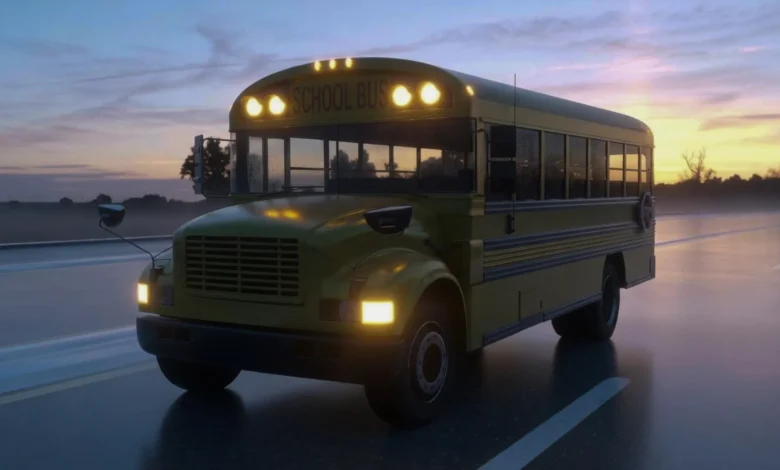
The push to permanently codify daylight saving time (DST) has emerged as one of the most contentious legislative debates in recent years, pitting the allure of sunnier winter evenings against a growing body of evidence regarding public safety and human biology. While proponents of the "Sunshine Protection Act" argue that an additional hour of evening light would boost the economy and improve general mood, new research from the University of Washington suggests that the policy could have severe, unintended consequences for the nation’s K-12 students. By shifting the clocks forward permanently, the United States risks forcing millions of children to navigate their morning commutes in total darkness, a change that researchers warn could compromise both student safety and long-term health.
The Legislative Landscape and the Road to Permanent DST
The quest to eliminate the ritual of "springing forward" and "falling back" has gained significant traction in Washington, D.C. For decades, the biannual clock change has been criticized for its disruption to sleep patterns and its potential to cause spikes in heart attacks and traffic accidents. In response to this public frustration, the U.S. House of Representatives took a decisive step this past summer, passing legislation that would effectively end the return to standard time.
The momentum for this change is not limited to federal halls. To date, 19 states—including Washington, California, and Florida—have passed individual state-level measures in support of permanent DST. These state laws are designed to trigger immediately upon the enactment of federal legislation. However, the bill currently sits in a legislative bottleneck in the Senate. As lawmakers weigh the potential benefits of extended evening sunlight, the conversation has increasingly turned toward the practical, logistical, and biological implications for the school-aged population.
Quantifying the Darkness: A Deep Dive into School Commutes
To understand the scope of this shift, researchers at the University of Washington conducted an exhaustive analysis of 14 of the 19 states that have already approved permanent DST measures. By synthesizing data from school enrollment records, specific start times for thousands of individual schools, and precise geographic coordinates, the team modeled how sunrise times would interact with school bus and pedestrian schedules.
The results of this study, published on October 29 in the journal Current Biology, are striking. The data indicates that under a permanent DST regime, the United States would see at least 2 billion additional trips to school occurring before sunrise during the winter months. The burden is not distributed equally; the impact is particularly acute in states where the sunrise is naturally later due to longitudinal positioning.
In Washington state alone, researchers project an increase of 35 million dark commutes. Even more alarming is the data for Georgia, where the shift could result in approximately 71 million additional journeys taken in the dark. These figures provide a granular look at a nationwide problem: the total number of children forced to walk, bike, or wait for the bus in low-visibility conditions would rise exponentially from November through March.
The Safety Imperative: Traffic Risks for Pedestrians
The core concern for many safety advocates is the established correlation between low-light conditions and pedestrian fatalities. An analysis of U.S. traffic collision records, referenced alongside the University of Washington study, reveals that fatal accidents involving school-aged pedestrians are twice as likely to occur during dark mornings compared to those that take place after the sun has risen.
Horacio de la Iglesia, a biology professor and senior author of the study, notes that the terminology surrounding the legislation is misleading. "It’s called the ‘Sunshine Protection Act’ because you get an extra hour of light at the end of the day," de la Iglesia explained. "But you will take that hour from the morning. You could call it the ‘Sunshine Destruction Act.’ These dark mornings will inequitably affect children who have to go to school at a certain time. It’s a very tangible metric that anybody from any state or socioeconomic background can relate to."
The safety risk is compounded by the fact that many schools offer early-morning programs, such as breakfast clubs or supervised study halls, which require students to arrive at school even earlier than the official bell time. In regions like Mississippi and Alabama, where the average school day starts before 8:00 a.m., the transition to permanent DST could see the number of dark commutes rise from 2 million to over 20 million per state.
Biological Implications: The Role of Morning Light
Beyond the immediate danger of traffic accidents, the researchers highlight the vital importance of morning sunlight in regulating the human circadian rhythm. The circadian clock is the body’s internal, 24-hour cycle that dictates sleep, appetite, hormone production, and mood. For developing children and adolescents, exposure to bright morning light is essential for synchronizing these rhythms.
When children are deprived of early-morning sunlight, their biological clocks can struggle to remain aligned with the world around them. This misalignment can lead to "social jetlag," a condition where an individual’s internal clock and external schedule are at odds. Lead author Guadalupe Rodríguez Ferrante, a postdoctoral researcher at the University of Washington, emphasizes that this is a matter of public health. "When we send kids to school in the dark, we are depriving them of an opportunity to get that morning daylight," she stated. "We wanted actual numbers, a real count of kids based on the geographic location of each school."
Challenges for Educational Reform
The study also complicates recent efforts by many school districts to improve adolescent sleep health by delaying high school start times. It is well-documented that teenagers experience a biological shift in their sleep-wake cycles, often making it difficult for them to fall asleep early and wake up refreshed for a 7:00 a.m. class. Many districts have been working to push start times later to accommodate this physiological reality.
However, if the federal government adopts permanent DST, the gains made by shifting start times later could be effectively canceled out. If a school delays its start time to accommodate student sleep, but that time shift occurs during a period where sunrise is pushed significantly later into the morning, the student is still walking to school in the dark. The unintended result is that the child’s commute remains dangerous, even if their sleep schedule has been improved.
The "Standard Time" Counter-Argument
Some proponents of permanent DST have suggested that if the clocks remain forward, schools could simply delay their start times even further to ensure that students arrive during daylight hours. However, researchers point out that this would lead to a "domino effect" of scheduling changes.
If schools delay their start times to accommodate the sun, parents will be forced to adjust their own work schedules, leading to later departures for work and, ultimately, later arrival times in the evening. As de la Iglesia argues, the logical conclusion of this chain of events is simply a return to the natural alignment of the sun. "If you do that, you will end up going to work later. And everything is going to get delayed," he noted. "You will get out of work an hour later, and you will miss the opportunity to enjoy your evening light. And essentially, we’re just going to be realigning everybody to solar time. That, by definition, is Standard Time."
Limitations and Future Outlook
The research team acknowledges that their estimate of 2 billion dark commutes is likely conservative. Because their nationwide model assumed a standard departure time of 8:00 a.m., they likely undercounted students who leave earlier for extracurricular activities or school-sponsored breakfast programs. Furthermore, the researchers highlighted that schools located on the western edges of time zones—where the sun rises last—will bear the brunt of the burden. A town like Forks, Washington, which already experiences late sunrises, would see a dramatic shift in its daily light exposure, potentially creating a new, hazardous reality for families in those regions.
As the debate continues in the Senate, the findings from the University of Washington provide a necessary, data-driven perspective on a policy that is often framed in terms of convenience and lifestyle, rather than safety and health. The study, which included contributions from a diverse team of researchers including undergraduates and high school students, underscores the need for a more nuanced approach to clock management.
Ultimately, the choice facing lawmakers is a complex trade-off. While the prospect of longer, sunnier evenings in the winter months has strong public appeal, it comes with a steep price: the erosion of safe morning travel for students and a disruption to the circadian rhythms that are vital for the health and development of the next generation. As the legislative process moves forward, the scientific community is urging policymakers to look beyond the convenience of evening daylight and consider the long-term impact on the safety and well-being of the children who will be most affected by these changes.