Voting machine malfunctions in Westchester County spark controversy and delays in critical 17th Congressional District race

Election Day in New York’s 17th Congressional District descended into chaos on Tuesday, November 3, as widespread failures of electronic voting machines prevented the tabulation of paper ballots, triggering long queues and heightened anxieties among voters. The malfunction, which affected multiple polling sites across Westchester County, cast a shadow over a pivotal contest between incumbent Republican Representative Mike Lawler and his Democratic challenger, Cait Conley. As a swing district widely viewed as a bellwether for the control of the House of Representatives, the technical failure has prompted intense scrutiny from election officials, political strategists, and a public already sensitive to the vulnerabilities of modern electoral infrastructure.
The disruption began shortly after polls opened, as voters reported that optical scan machines were repeatedly rejecting their ballots. Initially, local officials struggled to identify the root cause, leading to conflicting reports that confused the electorate. By mid-afternoon, the Westchester County Board of Elections had shifted its explanation from a supposed issue with ballot paper thickness to a confirmed programming error, a move that drew sharp criticism from state-level authorities.
A Chronology of Technical Failure and Response
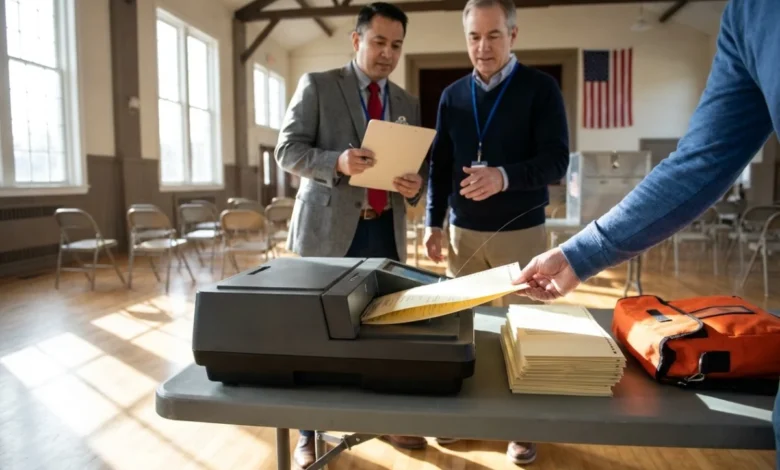
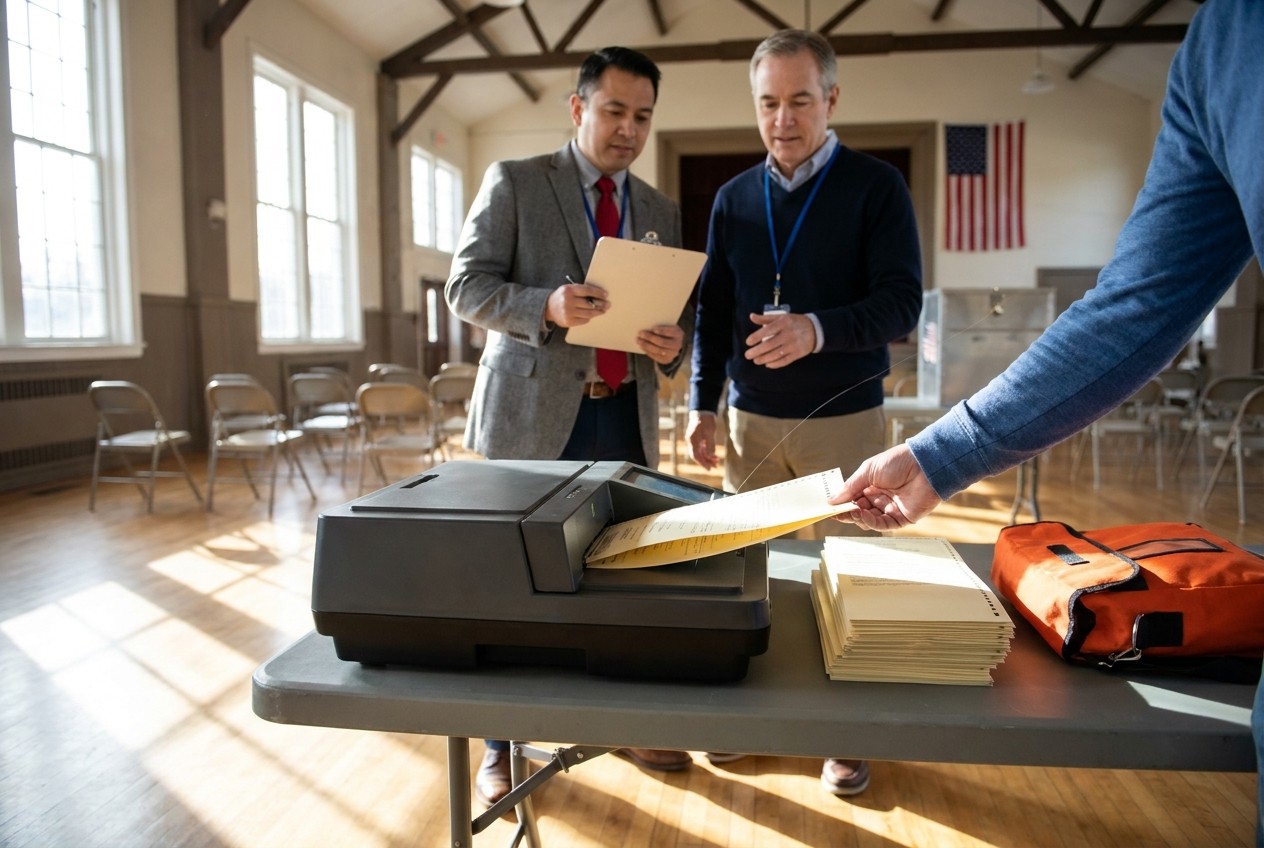
The sequence of events on Tuesday highlighted the fragile nature of election administration in a high-stakes environment. According to reports from the Westchester County Board of Elections, the initial response to the scanner errors was to invoke emergency protocols. Poll workers were instructed to collect completed ballots in secure, sealed orange emergency bags. These ballots were intended for later tabulation at the central Board of Elections office in White Plains.
The transition to this emergency protocol was not seamless. By early evening, reports of long lines and voter frustration were mounting. The confusion was compounded by the shifting narrative provided by county officials. While the Board of Elections initially suggested that the ballots were physically incompatible with the scanners, the New York State Board of Elections later clarified that the machines had functioned perfectly during pre-election logic and accuracy testing. The failure occurred because a software update was pushed to the county’s tabulation programming after these tests had been finalized, creating a mismatch between the scanners’ configuration and the physical ballot design.
By 9 p.m., the cutoff for standard reporting, the scale of the backlog became apparent. A judicial intervention was required to stabilize the situation; a judge authorized the use of alternate machines compliant with the Americans with Disabilities Act (ADA), which had been properly updated with the correct system. This allowed for a more expedited, though still delayed, counting process. Throughout the night, these emergency ballots were processed under the watchful eyes of bipartisan legal teams and campaign observers to maintain the chain of custody.
Official Responses and the Quest for Accountability
The handling of the malfunction drew immediate reactions from both sides of the aisle. Congressman Mike Lawler, appearing before the press as the situation unfolded, sought to maintain a tone of calm and transparency. "Every vote is going to be counted, and it’s going to be counted tonight," Lawler stated, emphasizing that the process would proceed with rigorous bipartisan oversight to ensure the integrity of the results. His opponent, Cait Conley, echoed the necessity of patience, posting on social media that the democratic process was underway and that supporters should remain composed as the backlog was processed.
The political establishment in New York moved quickly to project unity. Jay Jacobs, Chairman of the New York State Democratic Party, noted the high level of cooperation between Republican and Democratic observers at the counting facilities. "Democrats and Republicans are working well together to make sure everyone’s vote gets counted," Jacobs stated, attempting to temper fears of partisan bias. However, Westchester County Executive Ken Jenkins took a more assertive stance, demanding a formal, comprehensive investigation into how such a significant programming error could occur on the most critical day of the election cycle.
The 17th District: A National Bellwether
The stakes in the 17th Congressional District cannot be overstated. Comprising parts of Westchester, Putnam, Rockland, and Dutchess counties, the district has emerged as one of the most closely watched battlegrounds in the United States. In 2024, the district served as a unique case study, having voted for the Democratic presidential ticket while simultaneously electing a Republican to the House—a split-ticket phenomenon that marks it as a key indicator for the 2026 midterm cycle.
National political committees have identified this seat as one of four critical races that could determine which party holds the majority in the House of Representatives. Because the margin between Lawler and Conley is expected to be razor-thin, the technical glitches have opened the door for potential legal challenges. Under New York election law, narrow margins can trigger automatic recounts or permit campaigns to file for judicial intervention to challenge the handling of specific batches of ballots. Political strategists on both sides have suggested that this incident will likely provide the losing side with legal grounds to contest the final tally, potentially extending the resolution of the race for weeks.
Broader Implications for Election Technology
The Westchester episode is part of a larger, ongoing debate regarding the reliability of electronic voting infrastructure. In her book Electoral Dysfunction, Victoria Bassetti argues that optical scan systems are frequently vulnerable to inconsistent voter behavior—such as stray marks or improper folds—but are equally susceptible to human error and, in extreme cases, administrative negligence. The Government Accountability Office (GAO) has documented the variability of election administration since the early 2000s, noting that the decentralization of voting technology often leads to inconsistent standards across jurisdictions.
The incident has also provided fodder for concerns regarding the security of legacy systems. Reports have circulated regarding the potential for "vote duplication" and other vulnerabilities inherent in outdated equipment that lacks modern cryptographic safeguards. While local officials have insisted that the Westchester issue was strictly a technical and programming-related failure—and not the result of malicious cyber-interference—the event has nonetheless shaken public confidence.
The proliferation of unverified claims on social media served to complicate the efforts of election officials to provide accurate information. As rumors of "tampering" gained traction online throughout the evening, authorities were forced to divert resources to debunking conspiracy theories, further slowing the communication of legitimate updates.
Future Challenges and Looking Ahead
As the counting process continues, the focus has shifted toward the long-term ramifications of the November 3 malfunction. The necessity of a formal, independent audit of the Westchester County Board of Elections’ procedures is becoming a consensus demand. Such an audit would likely focus on the protocols surrounding software updates and the failure of internal review processes to catch the programming error before the machines were deployed to polling stations.
For the voters of the 17th District, the experience has been a sobering reminder of the complexities of modern democracy. The reliance on digital scanners has, in theory, accelerated the count, but as Tuesday demonstrated, it has also introduced a layer of fragility that can be disrupted by a single line of incorrect code.
As of late Wednesday, the final outcome remains uncertain. Election officials have reiterated their commitment to transparency, noting that every valid ballot—including those stored in the emergency orange bags—will be subject to the same rigorous validation and tabulation standards. However, the path to a final declaration of a winner remains precarious. With the possibility of litigation looming, the 17th District race may well be decided not just at the ballot box, but in the courtroom.
The events of November 3 serve as a stark case study for future election cycles. As the nation prepares for upcoming midterms, the need for robust, redundant, and transparent voting systems—supported by a clear, pre-tested communication strategy—has never been more evident. The integrity of the process, in the eyes of the electorate, depends not only on the accuracy of the final count but on the speed and clarity with which officials address the inevitable failures of the machines that underpin the democratic process.
Related posts: