Comprehensive Review of Global COVID-19 Data Trackers and Government Policy Metrics Highlights Historic Public Health Efforts

The COVID-19 pandemic reshaped global health security, economic policy, and international mobility on an unprecedented scale. In the years following the initial outbreak declared by the World Health Organization in early 2020, public health institutions, academic researchers, and policy analysts raced to capture the fluid landscape of infection rates, mortality figures, and governmental interventions. Among the most critical resources developed during this era were comprehensive digital tracking dashboards designed to aggregate disparate national reporting into standardized, accessible datasets.
As the acute phase of the global health emergency receded and institutional priorities shifted toward post-pandemic recovery, key tracking infrastructure reached the end of its operational lifecycle. The conclusion of these tracking initiatives marks a definitive milestone in how the global community documents and analyzes public health crises. By examining the methodology, data sources, historical transitions, and policy metrics utilized by these prominent trackers, researchers retain a vital archive of governmental responses to the SARS-CoV-2 virus.
Evolution of Global Epidemiological Data Sources
Tracking the daily toll of COVID-19 required unprecedented international cooperation and rapid data harmonization. In the early weeks and months of the pandemic, the global scientific community relied heavily on academic institutions to bridge the gap in real-time public health reporting. For nearly three years, the Johns Hopkins University (JHU) Coronavirus Resource Center served as the definitive global clearinghouse for confirmed cases and deaths. Utilizing an interactive map and meticulously maintained open-source datasets, the JHU tracker provided researchers, journalists, and policymakers with daily updates that illuminated the spread of the virus across diverse geographic regions and income brackets.
However, as national reporting structures matured and many governments transitioned from universal testing to sentinel surveillance, the management of global health data underwent structural shifts. On March 7, 2023, primary data collection for major tracking repositories transitioned to the World Health Organization’s (WHO) Coronavirus Dashboard. This shift coincided with the formal conclusion of the JHU Coronavirus Resource Center’s mapping operations on March 10, 2023.

The WHO dashboard became the primary baseline for cumulative figures and daily incidence rates for confirmed cases and deaths, categorized globally, regionally, and by World Bank income classifications. To maintain high performance and prevent slow load times, public-facing interfaces typically limited visible data points to the preceding 200 days, while comprehensive historical archives remained accessible through dedicated open-source platforms such as GitHub. Furthermore, historical data curation involved continuous refinement; notable corrections implemented in early 2024 clarified that specific weekly reporting aggregates represented total new cases and deaths over a full seven-day period rather than moving daily averages.
Taxonomy of Policy Actions and Government Interventions
Beyond tracking epidemiological outcomes, understanding the efficacy of non-pharmaceutical interventions required systematic documentation of government policies. The Oxford Covid-19 Government Response Tracker (OxCGRT) emerged as the gold standard for quantifying the stringency and breadth of state responses. These policy actions were broadly segmented into three primary domains: social distancing and closure measures, economic support mechanisms, and health systems initiatives.
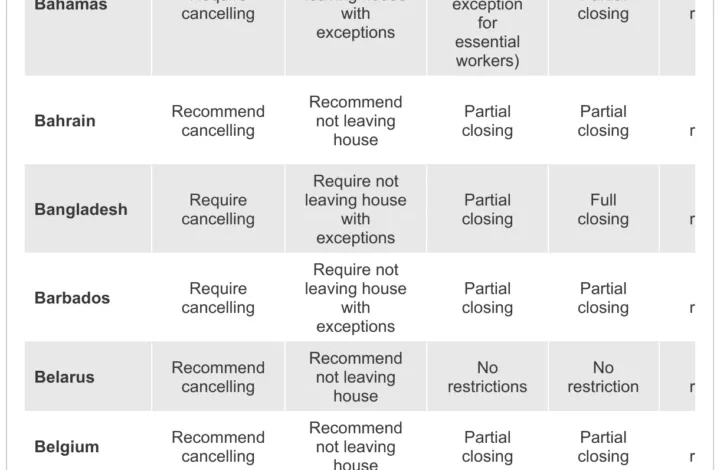
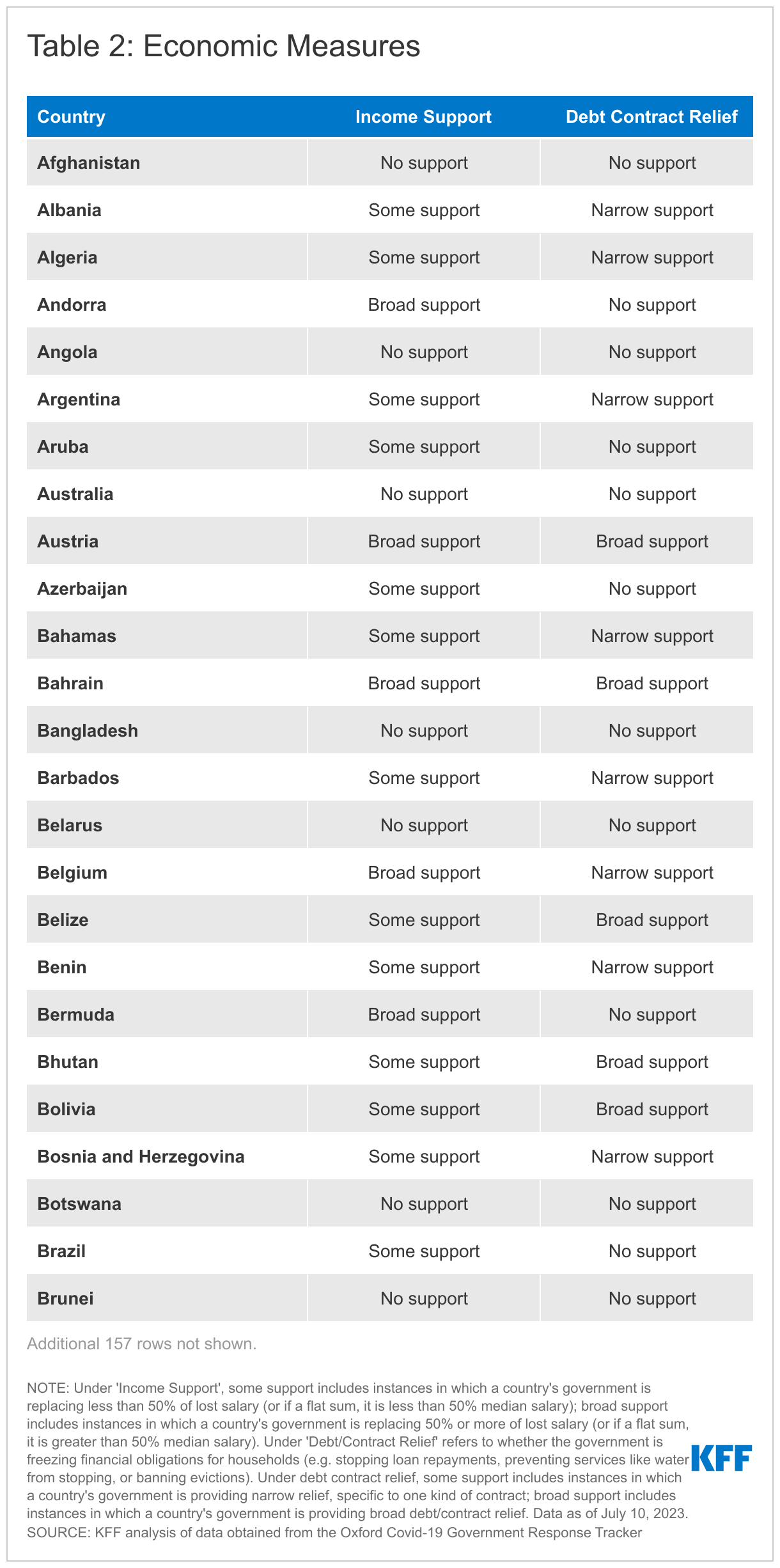
Social distancing and closure measures represented the most visible and disruptive interventions enacted by governments worldwide. Under the category of stay-at-home requirements, states implemented varied restrictions ranging from absolute lockdowns—permitting egress only under strict, infrequent conditions—to flexible guidelines allowing daily exercise and essential grocery procurement. Workplace closures similarly spanned a continuum, encompassing total shutdowns of non-essential sectors, mandatory transitions to remote work environments, or targeted operational adjustments. School closures exhibited comparable nuance, with tracking parameters differentiating between total campus shutdowns, partial closures affecting specific grade levels or geographic regions, and shifts toward mandatory virtual instruction while physical facilities remained technically open.
Public gatherings and international mobility were subjected to intense regulatory scrutiny. Restrictions on gatherings were categorized based on numerical thresholds, distinguishing between partial limits on assemblies exceeding ten individuals and stringent bans on groups of ten or fewer. International travel controls incorporated varying degrees of border closures, mandatory pre-departure testing, screening protocols, and post-arrival quarantine requirements. Additionally, policies regarding public events and the mandate or recommendation of facial coverings formed an essential component of the epidemiological defense framework.
Economic Mitigation and Financial Relief Frameworks
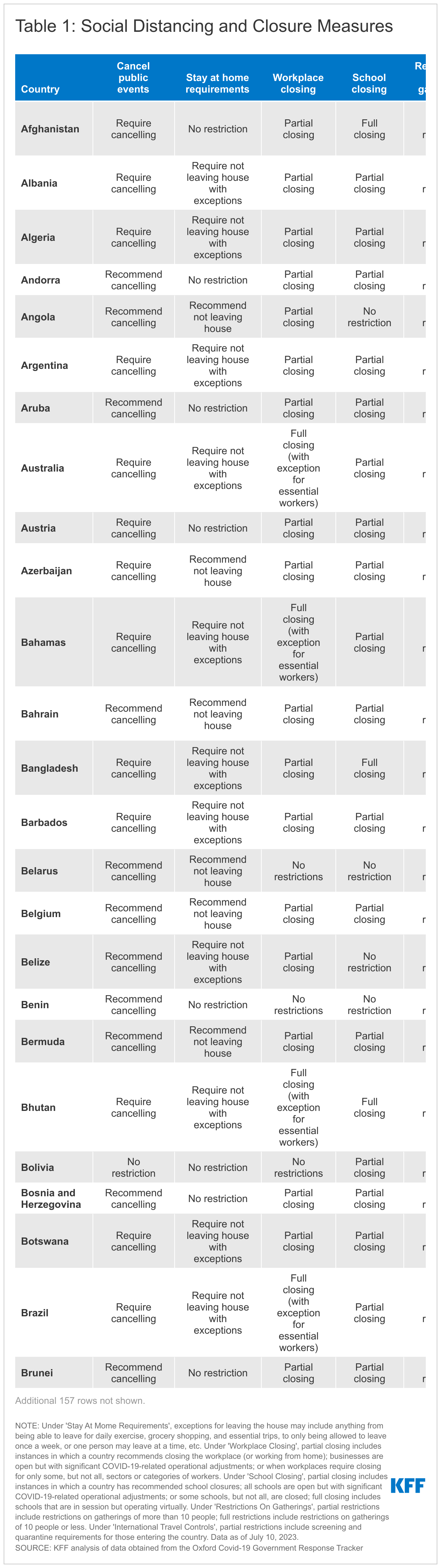
The imposition of sweeping public health mandates placed an extraordinary strain on global and domestic economies, necessitating aggressive fiscal interventions by national governments. Policy tracking initiatives closely monitored income support measures and debt relief frameworks to evaluate how states cushioned populations against income shocks.
Income support metrics evaluated the extent to which governments replaced lost salaries or provided flat-sum subsidies. Narrow support was characterized by state interventions replacing less than 50 percent of an individual’s lost wages, or providing flat sums falling below 50 percent of the median national salary. Conversely, broad support encompassed robust fiscal packages where state transfers replaced 50 percent or more of lost earnings. Similarly, debt and contract relief measures tracked the suspension of mortgage payments, tenant eviction moratoriums, and targeted debt relief for vulnerable commercial and residential sectors, illustrating the profound intersection of public health policy and macroeconomic stabilization.
Health Systems Measures and Vaccine Deployment
Strengthening healthcare infrastructure and managing clinical capacity formed the third pillar of tracked government responses. Health systems measures monitored surge capacity adjustments, testing policies, contact tracing protocols, and the critical rollout of vaccination campaigns.
Vaccine eligibility criteria served as a dynamic indicator of public health prioritization. Tracking frameworks noted the phased expansion of immunization access, beginning with high-risk elderly populations and frontline healthcare workers before extending to clinically vulnerable non-elderly groups, essential workers, and eventually the broader general public across diverse age cohorts. Facial covering policies were similarly codified to reflect the evolution of scientific consensus, categorizing government directives that ranged from universal mandates in all public spaces to localized requirements enforced specifically when social distancing proved impracticable.
Methodological Frameworks and Data Limitations
The integrity of global health dashboards relies heavily on transparent methodologies and standardized classification systems. Population denominators utilized in per-capita calculations were derived from United Nations World Population Prospects using standardized 2021 demographic estimates. Economic tier classifications adhered strictly to World Bank country and lending group definitions, while regional groupings followed official WHO designations.
Despite rigorous standardization, analyzing longitudinal pandemic data involves inherent challenges. Reporting lags—often spanning up to two weeks between local diagnosis and centralized database entry—meant that real-time situational awareness was frequently subject to retrospective revision. Furthermore, disparities in national testing capacities, changes in diagnostic strategies over time, and varying definitions of COVID-19-associated mortality introduced complexities that researchers must account for when conducting cross-national comparative analyses.
Implications for Future Pandemic Preparedness
The formal conclusion of dedicated government response trackers, such as the Oxford policy actions repository, underscores a broader transition in global health governance. While daily policy trackers have wound down operations as acute emergency measures expired, the extensive datasets archived on platforms like GitHub provide an invaluable empirical foundation for future epidemiological and economic research.
Public health historians, economists, and policy analysts are leveraging these repositories to evaluate the long-term trade-offs associated with stringent non-pharmaceutical interventions. By correlating specific closure mandates, economic relief packages, and health system adaptations with infection curves and economic indicators, the global scientific community aims to build more resilient response frameworks. These insights will prove critical in shaping future pandemic preparedness strategies, ensuring that policymakers are better equipped to balance public health protection with socioeconomic continuity when confronting future global health threats.