Trump Administration Marks Strategic Shift as First Shipment of Venezuelan Crude Arrives in Corpus Christi

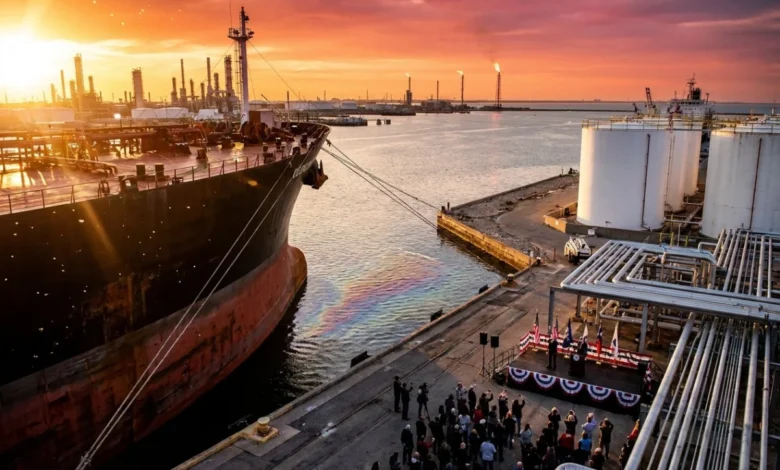
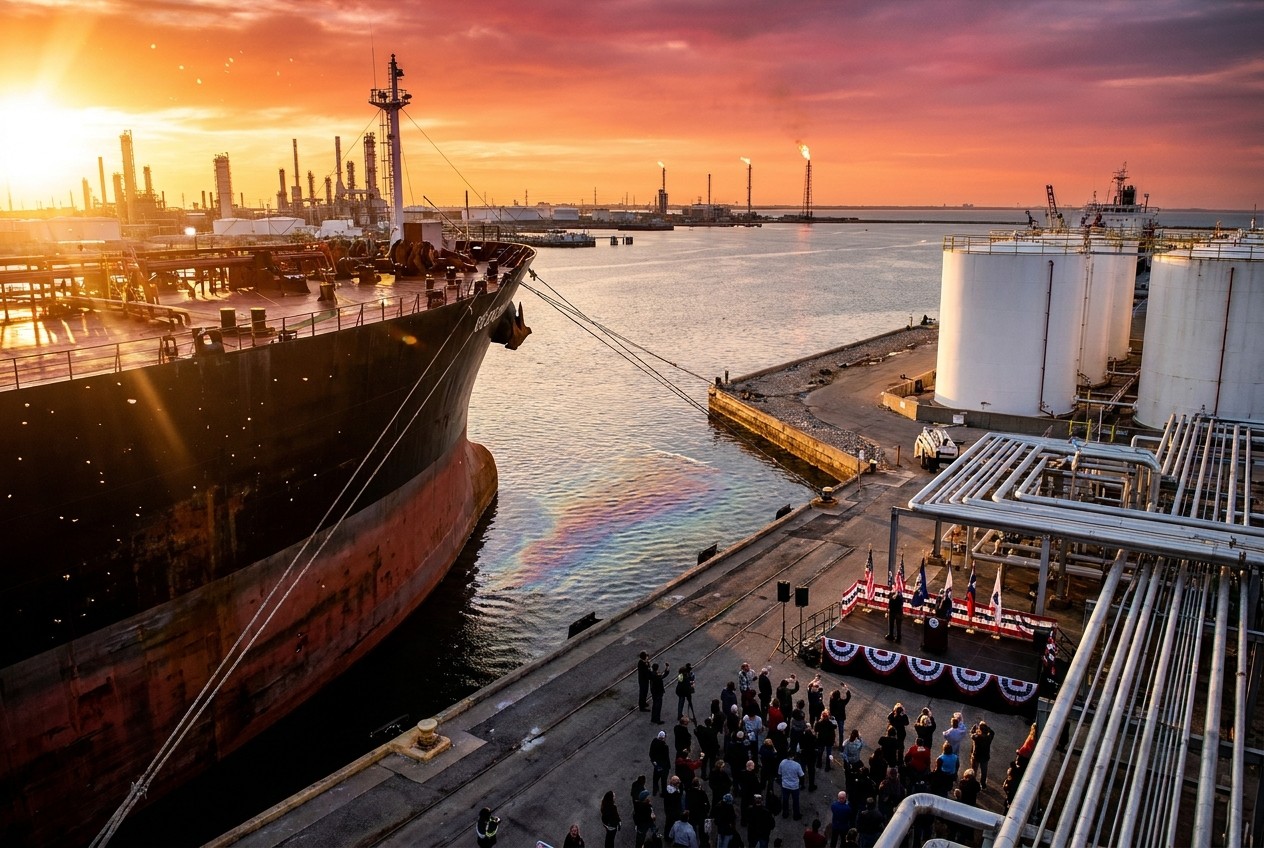
The arrival of one million barrels of Venezuelan crude oil at the Port of Corpus Christi, Texas, on October 27, represents a significant milestone in the Trump administration’s evolving energy and foreign policy strategies. President Donald Trump, speaking from a warehouse overlooking the harbor, highlighted the tanker Angerona as a tangible symbol of a controversial partnership that seeks to fundamentally alter the flow of global energy resources. This shipment, facilitated by North American Blue Energy Partners (NABEP), serves as the inaugural delivery under an ambitious August agreement that ostensibly grants the United States access to 65 billion barrels of proven reserves in Venezuela.
The timing of the arrival, occurring just one week before the November 3 midterm elections, underscores the intersection of energy policy and domestic political campaigning. President Trump used the backdrop of the Corpus Christi harbor to rally support for Republican Senate candidate Ken Paxton, attempting to leverage the perceived economic benefits of the deal to address voter concerns regarding record-high fuel costs. With national average diesel prices hovering above $6 per gallon—a 60% increase year-over-year—the administration is under significant pressure to provide relief to consumers and industries burdened by energy inflation.
A Chronology of the Venezuelan Energy Pivot
The roots of this arrangement trace back to the shifting political landscape in Caracas earlier this year. The catalyst for the current policy was the January 3 capture and subsequent extradition of former Venezuelan leader Nicolas Maduro by U.S. forces. Maduro, who was taken from Caracas to New York to face federal charges of narco-terrorism and drug trafficking, left a power vacuum that facilitated the rise of an interim government led by Delcy Rodriguez.
Following the transition in Caracas, the U.S. government issued an ultimatum in January: Venezuela was to sever all economic and strategic ties with Russia, China, Iran, and Cuba. In exchange, the U.S. offered market access and an exclusive partnership with American firms to manage the extraction and export of the country’s vast, albeit underutilized, oil reserves. By August, the administration formalized this partnership, framing it as a geopolitical coup that would stabilize American energy supplies and weaken the influence of adversarial nations in the Western Hemisphere.
Technical and Economic Realities of Heavy Crude
While the political rhetoric surrounding the deal has been optimistic, energy analysts have offered a more measured assessment of the logistical hurdles involved. Venezuelan oil is characterized as "heavy sour" crude, which contains high levels of sulfur and requires specific, high-complexity refining configurations to process into gasoline and diesel.
Industry experts, including analysts at BrightVideos.com, have noted that the U.S. refining sector—particularly along the Gulf Coast—is primarily optimized for lighter crude or specific grades of imports. Integrating large volumes of heavy Venezuelan crude into the current infrastructure is not a plug-and-play process. To accommodate this feedstock, refineries may be required to shut down other production inputs, potentially causing temporary disruptions in the output of refined products like gasoline.
The economic implications are equally complex. Although President Trump has stated on social media that the deal will "more than double American oil reserves" and lead to a substantial decrease in gas prices, market realities suggest a longer timeline. Independent energy economists have cautioned that even under optimal circumstances, the logistical integration of this oil will not provide immediate price relief for the average American motorist. In fact, global crude prices experienced a marginal increase in the days following the initial August announcement, reflecting market skepticism regarding the speed at which this new supply could reach the pump.
The Political Landscape and Midterm Stakes
The arrival of the Angerona comes at a volatile moment in the 2024 midterm cycle. Republicans have faced significant headwinds, particularly in states like Florida and Texas, where inflation and energy costs have become the primary drivers of voter sentiment. The administration’s focus on the Port of Corpus Christi is a strategic choice, as Texas remains the heartbeat of the American energy industry.
The political stakes are compounded by an ongoing, eight-month-long conflict with Iran, which has kept global oil prices consistently above $100 per barrel. This persistent pressure on the energy market has forced the administration to explore emergency authorities to expand domestic refining capacity and secure stable, long-term supply lines. By tying the Venezuelan deal to the promise of cheaper gas, the White House is attempting to frame its foreign policy as a direct benefit to the household budgets of working-class voters.
Furthermore, the administration has signaled that this is part of a broader, more aggressive regional strategy. There are reports that Louisiana is being positioned as a second gateway for the influx of heavy crude, as the government pushes to maximize production capacity in the region. This strategy aligns with the president’s broader "America First" energy doctrine, which has previously suggested that the U.S. should maintain a presence in conflict zones to secure resources—a philosophy he has applied to both the Iran and Venezuela situations.
Official Responses and Transparency Concerns
The White House issued a formal confirmation on October 28, verifying the arrival of the first one million barrels and characterizing the deal as a success for both American energy security and the restoration of stability in South America. However, the lack of public access to the full text of the agreement has led to scrutiny from legal and policy watchdogs.
The involvement of private entities like North American Blue Energy Partners (NABEP) has raised questions regarding the transparency of the deal. Critics and independent analysts have pointed out that the specific financial terms, the nature of the partnership with the interim Venezuelan government, and the long-term commitments made by American firms remain largely opaque. Questions persist about how the revenue from these sales is being managed and whether it is reaching the Venezuelan population or remaining siloed within the private partnerships.
For his part, President Trump has remained steadfast in his defense of the policy, often comparing it to his broader strategy of utilizing oil revenues to offset the costs of international operations. "The revenue from this has paid for the war many times over," the President remarked in a recent interview, referring to the administration’s strategic presence abroad.
Broader Implications for Global Energy Markets
The long-term impact of this deal on the global oil market remains to be seen. By effectively bringing Venezuelan production under the umbrella of U.S. influence, the administration has fundamentally challenged the influence of OPEC+ and other major oil-producing nations that have historically dictated supply levels.
If the administration succeeds in ramping up production and efficiently integrating this supply into the U.S. refinery system, it could lead to a structural shift in global energy prices. However, if the technical challenges of refining heavy crude and the geopolitical instability in the region persist, the project may struggle to meet the high expectations set by the White House.
As the midterm elections approach, the success of the Corpus Christi shipment will likely be judged by two distinct metrics: the technical efficiency of the supply chain and the political impact on gas prices. For now, the Angerona serves as a focal point for a government betting heavily on the idea that foreign energy policy can be a potent tool for domestic economic rejuvenation. Whether this bet pays off for voters, however, remains a point of intense debate among energy analysts and political observers alike.
Looking Ahead: The Challenges of Implementation
Looking beyond the immediate election cycle, the administration faces the daunting task of scaling this operation. Moving from a single shipment of one million barrels to a consistent, high-volume flow will require massive investment in infrastructure, port upgrades, and maritime logistics. The involvement of major oil companies, many of which are based in Texas, suggests that the private sector is prepared to capitalize on the opportunity, provided that the legal and regulatory framework remains stable.
However, the international legal community continues to monitor the situation closely. The capture of Nicolas Maduro, which remains a point of contention in international law, combined with the new energy partnership, has created a complex web of legal liabilities for any corporation involved. Analysts suggest that the potential for future litigation or shifts in international policy toward Venezuela could introduce an element of risk that may temper the enthusiasm of some institutional investors.
Ultimately, the events in Corpus Christi are a snapshot of a larger, ongoing effort by the United States to secure its energy future by reshaping the geopolitical landscape of the Americas. While the arrival of the oil is a verifiable fact, its status as a solution to the nation’s energy challenges is still being written. The coming months will be critical in determining whether this strategy provides the relief that the administration has promised, or if it represents a high-stakes gamble with significant geopolitical and economic consequences.
Related posts: