Timor-Leste Officially Certified Malaria-Free by the World Health Organization Following Historic Public Health Triumph

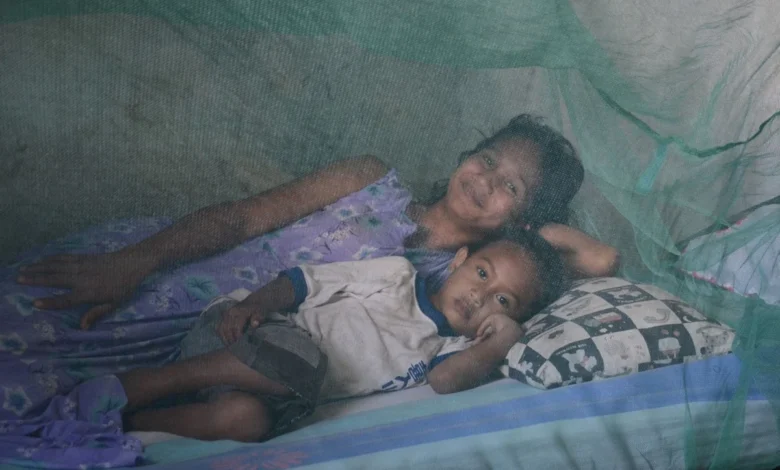
The World Health Organization has officially certified Timor-Leste as a malaria-free nation, marking a monumental public health victory for a sovereign state that was forced to build its healthcare infrastructure from the ground up following its independence in 2002. This distinction places the young Southeast Asian nation into an elite global echelon. With this announcement, Timor-Leste becomes the 47th country and the first territory outside of the conventional Western paradigms—and crucially, only the third country in the WHO South-East Asia region—to successfully eradicate the parasite within its borders. It joins the Maldives and Sri Lanka, which achieved the coveted status in 2015 and 2016, respectively.
To secure WHO malaria-free certification, a country must prove beyond any reasonable doubt that the continuous chain of indigenous malaria transmission has been thoroughly and uninterruptedly broken nationwide for at least the preceding three consecutive years. For Timor-Leste, this milestone is the culmination of nearly two decades of unrelenting strategic intervention, targeted domestic spending, astute international partnerships, and the tireless boots-on-the-ground execution carried out by dedicated local healthcare professionals.
The journey from a hyper-endemic public health crisis to a certified malaria-free landscape underscores a masterclass in modern epidemiological management. It demonstrates unequivocally that even nations emerging from severe conflict and acute economic deprivation can dismantle persistent vector-borne diseases when political will, scientific rigor, and community mobilization align harmoniously.
A Chronology of Resilience: From Independence to Eradication
The history of public health in Timor-Leste is inextricably linked to its geopolitical birth. When the nation gained its formal independence in 2002, its foundational institutions were largely devastated, and its healthcare systems were virtually non-existent. Among the myriad challenges facing the newly formed government, vector-borne illnesses—chiefly malaria—loomed as a silent, devastating threat to human capital and national development.
In the immediate wake of independence, the scale of the crisis began to emerge with terrifying clarity. Epidemiological data from the mid-2000s revealed an alarming public health burden. In 2006 alone, the country recorded a staggering peak of more than 223,000 clinically diagnosed cases of malaria. In a nation with a relatively small population, this infection rate paralyzed local economies, overburdened fledgling medical facilities, and claimed the lives of countless vulnerable citizens, particularly young children and pregnant women.
Recognizing that the disease threatened the very viability of the new state, the Ministry of Health of Timor-Leste took swift, decisive action in 2003 by establishing the National Malaria Programme (NMP). Initially operating with a skeletal crew of just two full-time officers, the NMP was tasked with laying the strategic foundation for nationwide planning, implementation, and continuous monitoring. Despite severe logistical constraints, these early pioneers established robust technical leadership and an acute attention to detail that would pay dividends for years to come.
As the decade progressed, the strategy shifted from containment to aggressive intervention. In the mid-2000s, Timor-Leste updated its National Malaria Treatment Guidelines, integrating cutting-edge tools such as rapid diagnostic tests (RDTs) and artemisinin-based combination therapies (ACTs)—the global gold standard for treating uncomplicated Plasmodium falciparum malaria. Concurrently, the government began distributing free long-lasting insecticide-treated nets (LLINs) to communities deemed most at risk.
A pivotal turning point arrived in 2009. Bolstered by substantial financial and technical support from the Global Fund to Fight AIDS, Tuberculosis and Malaria, Timor-Leste dramatically scaled up its vector control initiatives. The country launched sweeping nationwide distributions of LLINs and executed targeted indoor residual spraying (IRS) campaigns in high-risk zones. Simultaneously, diagnostic capabilities were decentralized. Microscopy and RDTs were expanded to the point of care across every local health post in the country, ensuring that suspected cases could be diagnosed and treated within hours of symptom onset.
These cumulative efforts yielded a dramatic epidemiological descent. Year over year, incidence rates plummeted. By 2021, the nation achieved a historic threshold, recording zero indigenous cases of malaria—a status that the country successfully maintained through 2022, 2023, and into the certification assessment window.
Structural Transformation of the Healthcare System
Timor-Leste’s triumph over malaria cannot be viewed in isolation from its broader healthcare infrastructure development. Facing a severe, structural shortage of trained physicians and medical specialists, the government adopted a systematic approach to healthcare delivery, designing a resilient three-tier health system.
This architecture comprises national hospitals, reference hospitals, community health centers (CHCs), and grassroots health posts strategically positioned across the rugged terrain. The overarching objective of this network was geographic accessibility, ensuring that the vast majority of residents could access professional medical care within an hour’s walk of their homes.
Crucially, the government codified a policy of free universal healthcare at the point of service, removing financial barriers that traditionally prevent marginalized populations from seeking timely treatment. To bridge the geographic divide in remote, mountainous regions, the Ministry of Health deployed monthly mobile clinics and comprehensive community outreach programs. These initiatives ensured that surveillance, screening, and treatment reached the most isolated populations, leaving no geographic blind spots for the malaria parasite to survive.
Furthermore, the integration of a real-time, case-based surveillance system transformed how health authorities tracked the disease. This digital and paper-integrated network enabled rapid data collection, immediate case investigation, and a synchronized public health response. Trained community health workers became the eyes and ears of the system, ensuring meticulous screening at porous international borders and swift containment of any imported cases that threatened to reignite local transmission.
Global and Domestic Reactions to the Milestone
The international public health community was quick to laud Timor-Leste for its historic achievement, framing the certification as an inspiration for other endemic nations navigating complex socio-economic landscapes.
Dr. Tedros Adhanom Ghebreyesus, Director-General of the World Health Organization, offered personal congratulations to the nation’s leadership and citizenry.
"WHO congratulates the people and government of Timor-Leste on this significant milestone," Dr. Tedros stated. "Timor-Leste’s success proves that malaria can be stopped in its tracks when strong political will, smart interventions, sustained domestic and external investment, and dedicated health workers unite."
Locally, the emotional resonance of the achievement was palpable among those who had spent decades on the front lines of the epidemiological war. Dr. Élia António de Araújo dos Reis Amaral, Minister of Health for the Government of Timor-Leste, reflected on the arduous path from crisis to eradication.
"We did it. Malaria has been one of our most relentless enemies—silent, persistent, and deadly. We lost too many lives to a disease that should be preventable," Dr. Amaral said. "Our health workers never gave up, our communities held strong, and our partners, like WHO, walked beside us. From 223,000 cases to zero—this elimination honours every life lost and every life now saved. We must safeguard this victory with continued vigilance and community action to prevent malaria’s re-entry."
Dr. Arvind Mathur, WHO Representative to Timor-Leste, emphasized the grit and determination required to maintain zero transmission in a young nation.
"Timor-Leste’s malaria-free certification is a defining national triumph—driven by bold leadership, tireless efforts of health workers, and the resolve of its people," Dr. Mathur noted. "As a young nation, Timor-Leste stayed focused—testing, treating, and investigating swiftly. Ending transmission and maintaining zero deaths takes more than science; it takes grit. This victory protects generations, present and future, and shows what a determined country can achieve."
Broader Implications and the Imperative of Post-Elimination Vigilance
The certification of Timor-Leste carries profound implications for global health security, particularly within the Southeast Asian geopolitical sphere. It signals that regional elimination goals—championed by the WHO’s E-2025 initiative, which aims to halt malaria transmission in a group of selected countries by 2025—are entirely viable when technical strategies are matched by unwavering domestic ownership.
However, public health experts emphasize that achieving malaria-free status is not the end of the journey, but rather the beginning of a high-stakes maintenance phase. In a globally interconnected world, the risk of imported malaria cases remains a constant threat. Individuals traveling from neighboring hyper-endemic countries or regions can reintroduce the Plasmodium parasite into local mosquito populations, potentially triggering a resurgence if surveillance systems falter.
To counter this, Timor-Leste’s health authorities have committed to maintaining heightened border screening, robust entomological monitoring, and active community-based reporting. The country’s integrated surveillance network remains on permanent standby, ensuring that any imported case is detected, isolated, and treated before local vector-borne transmission can re-establish itself.
As the international community reflects on this milestone, Timor-Leste stands as a beacon of hope and a practical blueprint for disease eradication. By transforming a decentralized, war-torn medical landscape into a streamlined, universal healthcare system, the nation has proven that perseverance, community solidarity, and scientific precision can permanently alter the course of public health history.
Related posts: