WHO Chief Praises Jordan’s Humanitarian Leadership and Health System Resilience During High-Level State Visit

The Hashemite Kingdom of Jordan has long stood as a pillar of regional stability, resilience, and compassion in a turbulent geopolitical landscape. This vital role took center stage as Dr. Tedros Adhanom Ghebreyesus, Director-General of the World Health Organization (WHO), concluded the first day of a landmark two-day State visit to Amman. The high-profile mission served to underscore the robust, multifaceted partnership between the global health agency and the Jordanian government, shining a spotlight on critical areas such as universal health coverage (UHC), comprehensive mental health frameworks, and decisive humanitarian health action amid intersecting regional crises.
A Central Royal Audience and Strategic Bilateral Dialogue
The cornerstone of the visit’s opening day was a high-level audience with His Majesty King Abdullah II. This crucial meeting underscored the paramount importance of Jordan’s continuous leadership in elevating public health as both a national imperative and a global strategic priority. Discussions between the monarch and the WHO chief centered on fortifying fragile health systems, radically expanding access to quality healthcare for marginalized populations, and sustaining long-term international support for emergency health responses across the Middle East.
Particular emphasis was placed on the immense pressures facing Jordan’s health infrastructure due to protracted regional conflicts. These include the delivery of urgent medical care to the Palestinian people, the treatment of critically ill and injured patients evacuated directly from Gaza, and the sustained hosting of millions of refugees who have sought safety within the kingdom’s borders over past decades.
Dr. Tedros expressed profound gratitude for the monarch’s unwavering dedication to progressive health policies. "I wish to express my appreciation to His Majesty King Abdullah II for his commitment to advancing universal health coverage," Dr. Tedros stated during the proceedings. "I also extend my thanks to His Majesty and the people of Jordan for their solidarity and generosity in providing health services to more than three million refugees, primarily from Gaza and Syria, who are living in the country."
The WHO Director-General further praised Jordan’s overarching humanitarian footprint, specifically highlighting the visionary Medical Corridor initiative spearheaded by King Abdullah II. This vital logistics and clinical pipeline facilitates the seamless transfer and treatment of ill and injured children from the besieged Gaza Strip, saving young lives that might otherwise be lost to collapsing local medical infrastructure. "Jordan continues to show the world what it truly means to put health and humanity first," Dr. Tedros added.
On-the-Ground Realities: Visiting Evacuated Children from Gaza
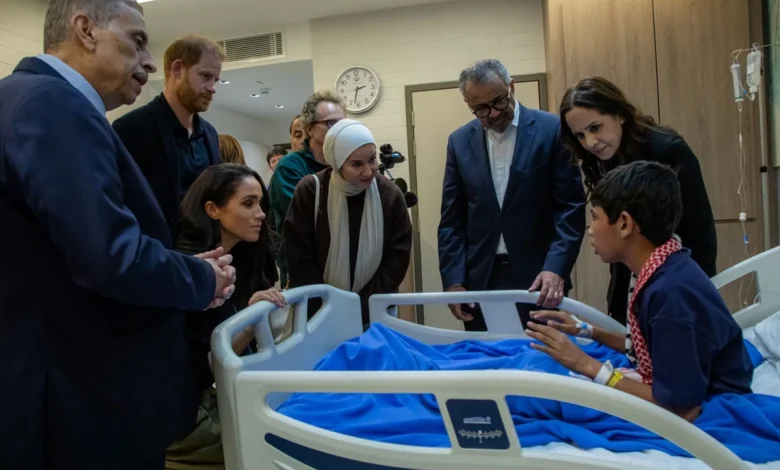
Moving beyond diplomatic chambers, Dr. Tedros transitioned from high-level meetings to direct field engagement, visiting a specialized, WHO-supported hospital facility in Jordan that provides advanced pediatric care to children evacuated from Gaza. During the hospital tour, the WHO chief walked the wards, interacting directly with young patients, their families, and the resilient frontline healthcare workers who are laboring around the clock to deliver life-saving treatments for severe trauma, pediatric cancers, and other complex, life-threatening conditions.
This visit served to amplify the critical operational importance of the medical evacuation corridor operating through Jordan. Public health experts note that as local health systems in conflict zones fracture, specialized corridors become lifelines of last resort. Dr. Tedros emphasized that sustained, predictable international funding and diplomatic facilitation are mandatory to ensure that children and other vulnerable patients can continue traversing these corridors to reach essential, definitive care.
High-Level Partnership and Donor Mobilization
Addressing the broader fiscal and structural challenges of regional healthcare, Dr. Tedros convened a high-level strategic roundtable. The gathering brought together key health partners, donor governments, United Nations agencies, and prominent philanthropic organizations to strategize on financing priorities.
The agenda focused on two interconnected pillars: securing long-term investments for Jordan’s domestic health system fortification, and scaling up regional humanitarian health operations. Particular attention was devoted to expanding specialized mental health services—an area severely strained by cumulative regional trauma—and ensuring that host countries bearing the heavy socioeconomic and infrastructural costs of large refugee populations receive equitable international burden-sharing support. Dr. Tedros welcomed the concrete pledges and collaborative spirit demonstrated by international partners, noting that investments in Jordan’s health infrastructure yield dividends for regional security and stability.
Advancing Universal Health Coverage and Mental Health Integration
Earlier in the day, Dr. Tedros engaged in comprehensive bilateral talks with Jordan’s Minister of Health. The discussions drilled down into specific domestic health reforms aimed at deepening Jordan’s progress toward universal health coverage.
Jordan has consistently earned international acclaim for pioneering a robust primary healthcare approach designed to achieve UHC. Notably, the kingdom has integrated mental health services directly into routine primary care clinics, dismantling historical stigmas and ensuring that psychological support is treated as an inseparable component of overall physical wellbeing. This pioneering integration aligns closely with the WHO Director-General’s Special Initiative for Mental Health, positioning Jordan as a regional laboratory for innovative, people-centered health service delivery.
Global Philanthropic Allies Join the Mission
A notable dimension of the State visit was the active participation of Prince Harry, Duke of Sussex, and Meghan, Duchess of Sussex, who accompanied the WHO delegation in their capacities as founders of Archewell Philanthropies. The Duke and Duchess are long-standing institutional supporters of the WHO’s global health missions, having previously collaborated on initiatives spanning equitable vaccine distribution during the COVID-19 pandemic, medical evacuation logistics, and global mental health advocacy.
Throughout the engagements, Prince Harry participated as a vocal ally of WHO’s mental health agenda. He emphasized the urgent necessity of prioritizing mental health investments across all community levels, with a targeted focus on vulnerable demographics, including men, adolescents, and children caught in the crosshairs of conflict and protracted displacement.
Reflecting on the collaborative mission, Dr. Tedros remarked, "I want to thank our partners, including Prince Harry, Duke of Sussex and Meghan, Duchess of Sussex, whose commitment to mental health and humanitarian action has helped bring visibility, resources and hope to some of the world’s most vulnerable communities. Their collaboration is helping to advance WHO’s mission to ensure health for all."
Prince Harry echoed these sentiments, underscoring the deep synergy between humanitarian relief and psychological healing. "It is an honour to join the Director-General of the World Health Organization in Jordan, a country that is leading by example in compassion, resilience and innovation," the Duke of Sussex said. "Through our work with Archewell Philanthropies, my wife and I have seen first-hand the impact of WHO’s efforts to support mental health and deliver life-saving care in emergencies. We remain deeply committed to advancing awareness, reducing stigma and expanding access to mental health support for all those affected by conflict and crisis. Mental health is fundamental to recovery, dignity and long-term peace, and we are proud to stand with WHO and partners around the world to make it a global priority."
Looking Ahead: Day Two Itinerary and Strategic Implications
As the state visit transitions into its second and final day, Dr. Tedros maintains a rigorous itinerary designed to explore diverse facets of Jordan’s health ecosystem. The schedule includes a high-profile visit to Jordan’s National Center for Rehabilitation of Addicts. Supported extensively by the WHO, this specialized institution provides comprehensive, integrated medical, psychological, and social rehabilitation services, serving as a regional model for evidence-based substance use treatment.
Additionally, the WHO chief is slated to meet with prominent community leaders and grassroots women’s groups, including representatives from the Jordanian Hashemite Fund for Human Development (JOHUD), to evaluate community-led health initiatives and gender-responsive development frameworks. The day will also feature a strategic visit to the renowned King Hussein Cancer Center (KHCC), where discussions will center on cutting-edge advancements in oncology care, clinical research, and transnational medical partnerships across the Middle East.
The State visit is scheduled to conclude with targeted consultations involving international humanitarian operations partners. These final discussions are designed to solidify Jordan’s enduring strategic position as an indispensable regional hub for medical evacuations, rapid emergency response, and resilient health system architecture—proving that even amid profound regional instability, proactive governance and international solidarity can preserve the fundamental right to health for all.
Related posts: