Connecting on Campus: Stories of Courage, Curiosity, and Empathy at Dickinson College

In an era defined by deep political polarization and the rapid erosion of civil discourse, a recent initiative at Dickinson College in Pennsylvania has emerged as a focal point for researchers and educators studying the mechanics of bridge-building. As part of the Greater Good Science Center’s ongoing "Connecting on Campus" series, the institution served as a laboratory for testing whether students with diametrically opposed worldviews can engage in meaningful, non-adversarial dialogue. The project highlights a growing movement within higher education to prioritize emotional intelligence and empathy-based communication as essential tools for preserving democratic norms in an increasingly fractured society.
The Challenge of Political Polarization in Higher Education
The modern American university campus has become a microcosm of the national political divide. According to data from the Pew Research Center, the gap between Republican and Democratic voters has reached historic proportions, with nearly 80% of partisans viewing the opposition not merely as wrong, but as a threat to the nation’s well-being. This phenomenon, often termed "affective polarization," transcends policy disagreements, moving into the realm of personal moral character.
At Dickinson College, administrators recognized that this climate of hostility was stifling academic inquiry and community cohesion. By facilitating workshops centered on active listening and perspective-taking, the college sought to address the "villainization" of the "other." The core objective was not to change political affiliations, but to mitigate the reflexive urge to demean those with whom students strongly disagree. The program relies on the principle that curiosity—the desire to understand the "why" behind a viewpoint—is the primary antidote to the defensive postures that typically derail conversations.
A Chronology of the Initiative
The development of the "Connecting on Campus" program at Dickinson College followed a structured timeline of engagement aimed at fostering sustainable change:
- Early 2025: Initial assessment of campus climate reveals that students feel increasingly isolated from peers who hold different political, social, and economic views.
- Spring 2025: The Greater Good Science Center begins a partnership with faculty and student leaders at Dickinson to design a pilot series of workshops focusing on "empathetic listening."
- Summer 2025: Facilitators undergo specialized training in conflict transformation and non-violent communication techniques adapted for university settings.
- September 2025: The formal series of workshops launches, bringing together students from diverse backgrounds, including active members of College Republican and College Democrat organizations.
- September 24, 2026: Documentation of the project is finalized and released, providing a roadmap for other institutions to implement similar empathy-based dialogue models.
Data-Driven Approaches to Empathy
The success of the Dickinson model is predicated on psychological research regarding social cohesion. Studies by the Greater Good Science Center indicate that "perspective-taking"—the cognitive process of imagining another person’s subjective experience—significantly lowers physiological stress responses during conflict.
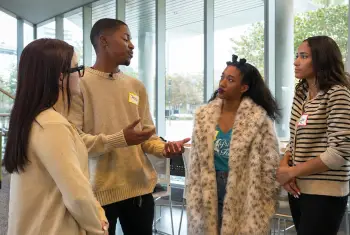
Quantitative feedback from participants in the Dickinson workshops showed that 72% of students reported a higher degree of comfort in engaging with peers of differing political views post-intervention. Furthermore, there was a statistically significant reduction in "othering" language during recorded group discussions. These metrics suggest that when individuals are provided with a structured environment to practice empathy, the instinct to categorize the opposition as an enemy is partially tempered.
Official Perspectives and Pedagogical Goals
The leadership at the Greater Good Science Center has emphasized that the goal of these initiatives is not to enforce political neutrality or silence advocacy. Instead, the focus is on "emotional literacy." By teaching students how to identify their own emotional triggers when faced with challenging information, the program allows for a more controlled and thoughtful response.
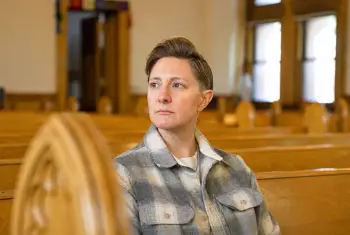
"The work at Dickinson College isn’t about compromising values; it’s about expanding the capacity to hold multiple truths," said a spokesperson for the project. "When we strip away the performative nature of political debate, we find that most students are searching for common ground in their daily lives, even if they remain divided on national policy."
For the students, the experience was transformative. Many reported that the most difficult part of the process was "staying in the room" when values collided. The practice of active listening—which involves summarizing the other person’s position to their satisfaction before introducing one’s own—served as a vital mechanism for cooling down heated exchanges.

Broader Implications for Democracy
The implications of the Dickinson College project extend far beyond the campus quad. As the nation faces increasing difficulty in managing partisan gridlock, the ability to engage in civil discourse is being cited by political scientists as a "civic competency." If higher education institutions can successfully integrate these communication models into the student experience, it could lead to a generation of graduates better equipped to function in diverse professional and civic environments.
However, critics of such programs often point to the risk of "false equivalence," arguing that not all political positions carry equal weight in terms of ethics or human rights. Educators involved in the Dickinson project address this by clarifying that the goal is not to validate all positions, but to humanize the individual behind the position. The nuance here is critical: empathy is viewed as a tool for communication, not a form of endorsement.

The Role of Related Institutions
The Dickinson initiative is part of a larger, national effort. Similar projects have been documented at Bowie State University, the University of Maryland, and the Iliff School of Theology. Each of these locations has experimented with different facets of connection: some focusing on racial and socioeconomic bridging, others on theological or ideological differences. Collectively, these efforts represent a concerted push to prevent the total breakdown of communal trust.
The "Connecting on Campus" series provides a library of resources, including video tutorials and facilitator guides, intended to empower other colleges to replicate these results. The emphasis remains on the "science" of the meaningful life—an approach that blends rigorous psychological observation with practical, real-world application.

Looking Toward the Future
As the 2026 academic year progresses, the focus at Dickinson and other institutions is shifting toward the sustainability of these programs. The challenge remains to scale these efforts so they are not merely "one-off" workshops but are woven into the fabric of the campus culture. This includes faculty training, the integration of dialogue-based curricula, and the creation of permanent, neutral spaces for student engagement.
Ultimately, the experiment at Dickinson College serves as a reminder that polarization is not an inevitable state of affairs, but a dynamic that can be managed through intentional, courageous action. By prioritizing curiosity over contempt, the students and faculty involved have provided a blueprint for navigating the complexities of modern American life. The movement is gaining momentum, signaling that perhaps the most important skill for the future of the republic is the ability to listen—especially when it is most difficult.