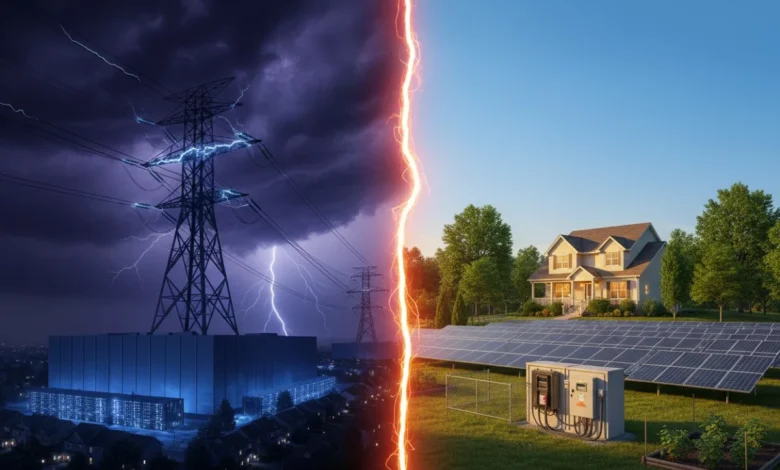
The stability of the North American electrical grid is facing a critical inflection point as the convergence of rapid data center expansion, aging infrastructure, and shifting regulatory priorities threatens to outpace current generation capacity. Industry analysts, grid operators, and federal regulators are increasingly sounding alarms regarding the narrowing safety margins across the three primary interconnections that power the United States: the Eastern Interconnect, the Western Interconnect, and the Electric Reliability Council of Texas (ERCOT).
The Current State of Grid Reliability
The PJM Interconnection, which oversees the flow of electricity across 13 states and the District of Columbia, serves approximately 76 million people. In its most recent capacity auction, the organization secured 149,182 megawatts of supply—a figure that falls 6.8 gigawatts short of the threshold required to meet its one-event-in-10-year reliability standard. This represents the third consecutive year that PJM has failed to reach its internal reliability benchmarks.
The primary catalyst for this supply-demand imbalance is the unprecedented surge in electricity demand from large-scale hyperscale data centers. These facilities, designed to support the massive computational requirements of artificial intelligence and machine learning models, operate at a constant, high-load capacity that differs significantly from traditional residential or commercial energy usage.
A Chronology of Declining Margins
The trajectory toward potential rolling blackouts has been marked by several key developments over the last several years:
- 2021: The Texas power grid experienced a catastrophic failure during Winter Storm Uri, exposing systemic vulnerabilities in weatherization and interconnection planning. This event served as a wake-up call regarding the fragility of isolated grids.
- 2022–2023: Grid operators began issuing warnings that spare generation capacity was plummeting. PJM identified a trend where the retirement of aging fossil fuel and nuclear plants was occurring faster than the interconnection of new, intermittent renewable energy projects.
- 2024: Federal agencies, including the Department of Energy (DOE) and the North American Electric Reliability Corporation (NERC), issued reports warning that large sections of the North American grid face a heightened risk of blackouts during peak seasons. NERC’s long-term reliability assessments consistently highlight that the retirement of dispatchable thermal generation is currently outpacing the deployment of replacement capacity.
The National Security Dimension
The federal government has increasingly framed the development of AI infrastructure as a national security imperative, positioning the race for technological dominance against international rivals as a priority that outweighs standard grid management. This shift in policy creates a regulatory environment where data centers are being prioritized as critical national security assets.
Under the Federal Power Act, the Secretary of Energy possesses the authority to issue emergency orders in situations where grid reliability is compromised. Recent actions have seen the Department of Energy authorize grid operators to bypass standard environmental regulations and operational limits to maintain power flow during high-demand periods. For the average residential consumer, this creates a hierarchy of load-shedding: when demand exceeds supply, data centers integrated into the grid as national security assets are effectively shielded from the rolling blackouts that are deployed to balance the remaining load.
Economic and Regulatory Constraints
The crisis is further compounded by state-level policies that restrict the construction of new base-load power plants. In New York, for example, the Climate Leadership and Community Protection Act sets aggressive goals for decarbonization that have effectively halted the development of new natural gas facilities. While these policies aim to transition the grid toward renewable sources, the lag time between the retirement of existing, reliable thermal plants and the commissioning of sufficient grid-scale battery storage and transmission infrastructure has created a widening supply gap.
Simultaneously, the supply chain for renewable energy technology is facing new volatility. Recent trade policy adjustments, including Section 232 executive orders, have introduced tariffs on polysilicon derivatives and solar components. These tariffs are projected by market analysts to significantly increase the cost of solar deployment for both residential and industrial users over the next three years, potentially delaying the transition to decentralized energy systems for many households.
The Shift Toward Decentralized Power
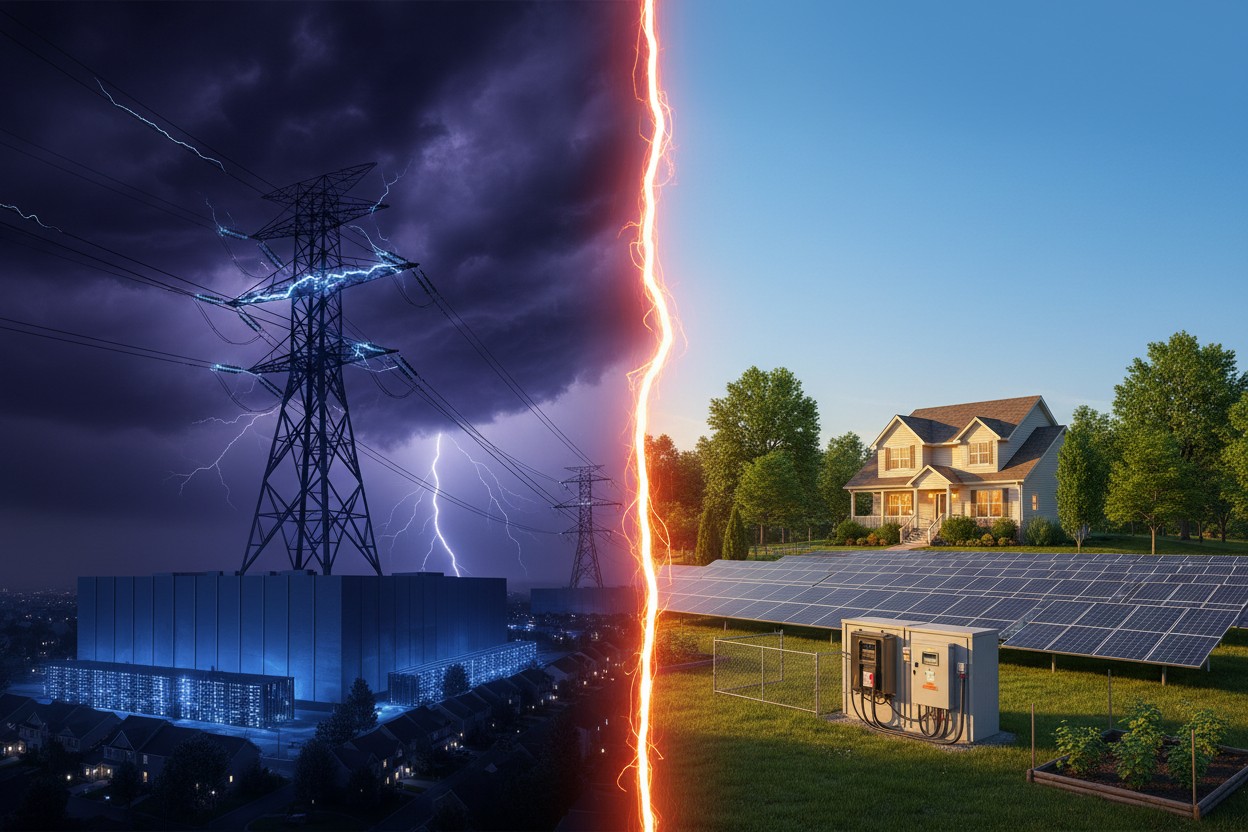
As grid-tied reliability becomes less certain, there is a measurable uptick in interest regarding independent energy systems. Traditional grid-tie solar systems are governed by regulatory requirements that necessitate an automatic shutdown when the utility grid loses power. This safety feature, designed to protect electrical line workers from "backfeed," means that most solar-equipped homes are equally susceptible to blackouts as those without solar.
To achieve true energy autonomy, residential consumers are increasingly turning to off-grid or hybrid microgrid systems. These systems utilize dedicated battery storage, such as lithium iron phosphate (LiFePO4) or emerging sodium-ion technology, to maintain power regardless of the state of the public grid.
The technical requirements for such independence include:
- Energy Storage: Utilizing chemical battery storage to capture energy during peak production hours for use during peak consumption hours or grid outages.
- Ground-Mount Solar: While rooftop installations are common, ground-mounted arrays offer superior long-term performance, including easier maintenance, optimal orientation, and the ability to tilt panels seasonally to maximize output during winter months.
- Advanced Monitoring: Modern battery management systems (BMS) now allow for granular control over voltage, temperature, and charge cycles, significantly extending the lifespan and safety of off-grid energy banks.
The Emerging Power Divide
Economic analysts warn that the current trajectory of the energy sector is leading toward a "power divide." Households with the capital to invest in independent energy systems will likely be shielded from the economic and social disruptions caused by frequent power outages. Conversely, lower-income households and those in areas serviced by aging, over-capacity infrastructure will bear the brunt of the grid’s failure.
This trend is already visible in specific regions. For example, utilities in parts of the Western United States have faced intense criticism for decisions to prioritize energy supply for commercial and industrial zones—specifically those housing data centers—while residential neighborhoods face localized outages. This represents a fundamental shift in how public utilities fulfill their mandate to provide universal service.
Implications for Future Infrastructure
The long-term solution to this crisis would require a massive expansion of the national high-voltage transmission network and a re-evaluation of how grid capacity is allocated. However, the regulatory hurdles associated with building long-distance transmission lines often result in project timelines spanning a decade or more.
In the interim, the reliance on emergency orders and the prioritization of data centers suggests that rolling blackouts will move from being rare emergency occurrences to a standard operational reality by 2029. The inability of the current market structure to incentivize the rapid construction of dispatchable, base-load power generation means that the responsibility for energy security is increasingly shifting from the utility provider to the individual consumer.
As households and small businesses prepare for this new era of energy uncertainty, the focus has shifted toward building resilience. For many, the decision to invest in off-grid capabilities is no longer viewed as an environmental choice, but as a pragmatic measure to ensure the continuity of basic services, including heating, refrigeration, and communication, in an environment where the public grid can no longer guarantee consistent delivery.
Ultimately, the future of the American power grid depends on the ability of regulators and private entities to reconcile the massive energy demands of modern technological infrastructure with the basic energy requirements of the population. Until such a balance is struck, the trend toward decentralization and individual energy independence appears set to accelerate, fundamentally altering the relationship between the consumer and the utility provider.