A Comprehensive Analysis of the Rural Health Transformation Program and Its Impact on American Healthcare Infrastructure

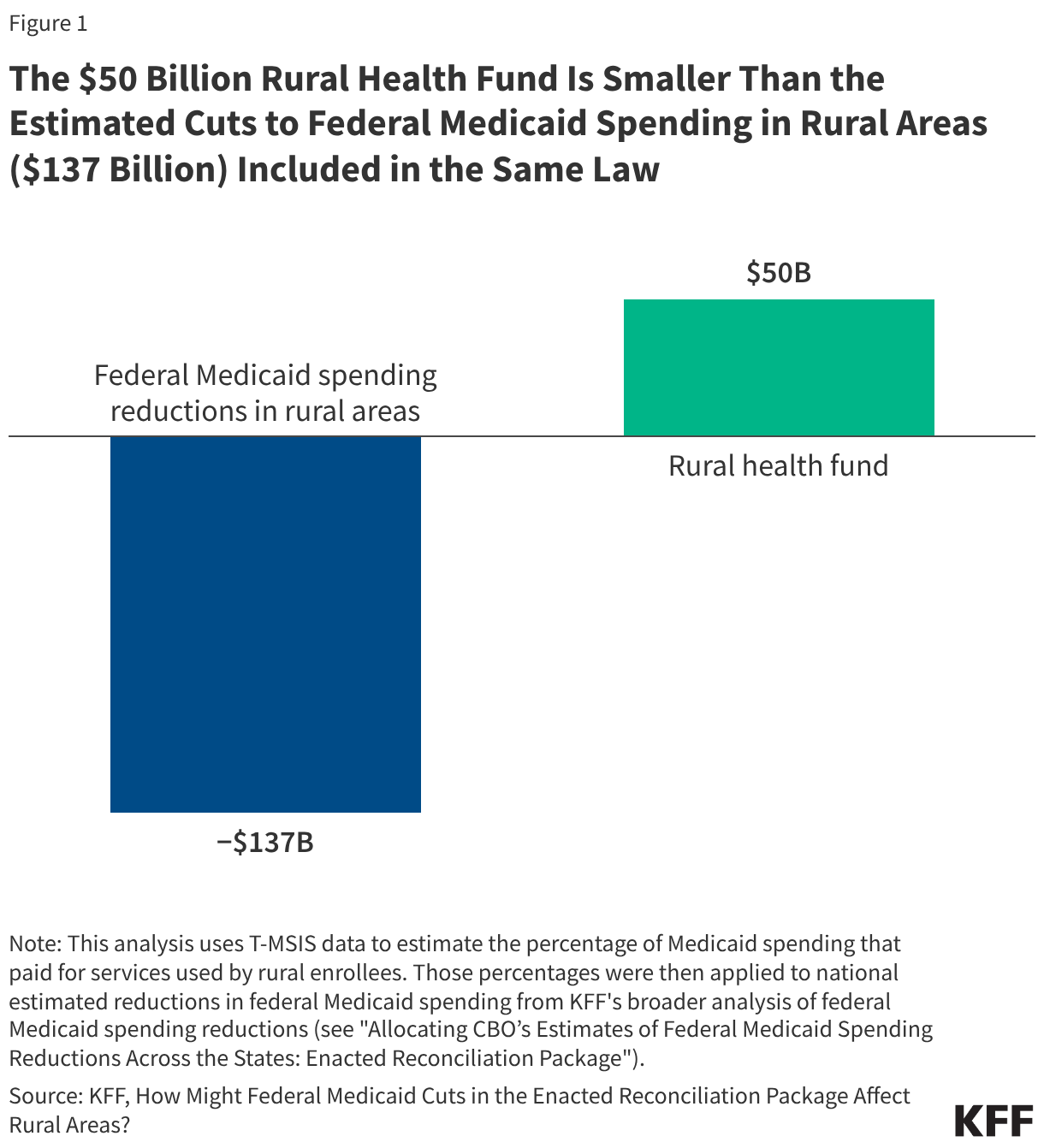
The signing of the federal budget reconciliation bill on July 4, 2025, enacted sweeping legislative updates that altered the landscape of American healthcare funding, notable for implementing significant reductions in federal health care spending alongside expansive tax cuts. Originally championed through political discourse as "One Big Beautiful Bill," the package projected an estimated reduction in federal Medicaid spending of $911 billion over a ten-year span. Independent policy analyses, including detailed evaluations by KFF, revealed that these cuts would disproportionately impact vulnerable populations, projecting approximately $137 billion in federal Medicaid spending reductions directly within rural geographic areas.
To counteract severe bipartisan pushback and mitigate the immediate fallout for regional medical centers, lawmakers introduced a last-minute political compromise into the reconciliation text: the Rural Health Transformation Program. Commonly referred to as the rural health fund, this initiative established a $50 billion pool of federal grants distributed to states over a five-year period from fiscal years 2026 through 2030. Administered through the newly established Office of Rural Health Transformation under the Centers for Medicare & Medicaid Services (CMS), the program aims to overhaul healthcare delivery across the American countryside. However, healthcare analysts, policy researchers, and regional hospital administrators continue to debate whether the fund’s structure, magnitude, and operational guidelines are sufficient to offset the compounding financial pressures introduced by the broader reconciliation package.
Chronology and Legislative Timeline
The genesis and execution of the Rural Health Transformation Program followed an aggressively accelerated timeline, placing substantial administrative burdens on state agencies.
During Senate negotiations in June 2025, Republican lawmakers surfaced a targeted fund to shield rural hospitals from impending budgetary reductions. By July 4, 2025, President Trump formally signed the reconciliation package into law, locking in the statutory framework for the $50 billion program. Following enactment, CMS initiated the rollout by releasing its official Notice of Funding Opportunity in September 2025, providing state governments with a compressed two-month window to formulate and submit their comprehensive funding applications.
By December 2025, CMS announced the official first-year awards for fiscal year 2026, granting states access to an initial $10 billion tranche. Throughout 2026, states faced tight deadlines to negotiate final operational plans with federal overseers, establish sub-grantee application processes, and obligate initial funds. Per federal program requirements, all first-year funds must be fully obligated by October 30, 2026, with the first mandatory quarterly reporting obligations due on November 29, 2026. The program is structured to distribute $10 billion annually through fiscal year 2030, with a final program wind-down and expenditure deadline set for the conclusion of fiscal year 2032.
Structural Design and Distribution Methodology
The operational framework of the Rural Health Transformation Program blends statutory mandates with extensive administrative discretion granted to CMS. The funding mechanism relies on "cooperative agreements," a federal grant classification that mandates substantial, ongoing project involvement from CMS personnel post-award, moving beyond standard hands-off grant administration.
All 50 states successfully applied during the one-time application window and secured initial approval, making them provisionally eligible for all five years of funding. Nevertheless, federal oversight remains stringent. CMS retains explicit authority to withhold, reduce, eliminate, or claw back funding if a state fails to demonstrate satisfactory programmatic progress, breaches administrative rules, or if federal leadership determines continued funding no longer serves the government’s best interest. Crucially, the legislation explicitly bars administrative or judicial review of these CMS funding decisions.
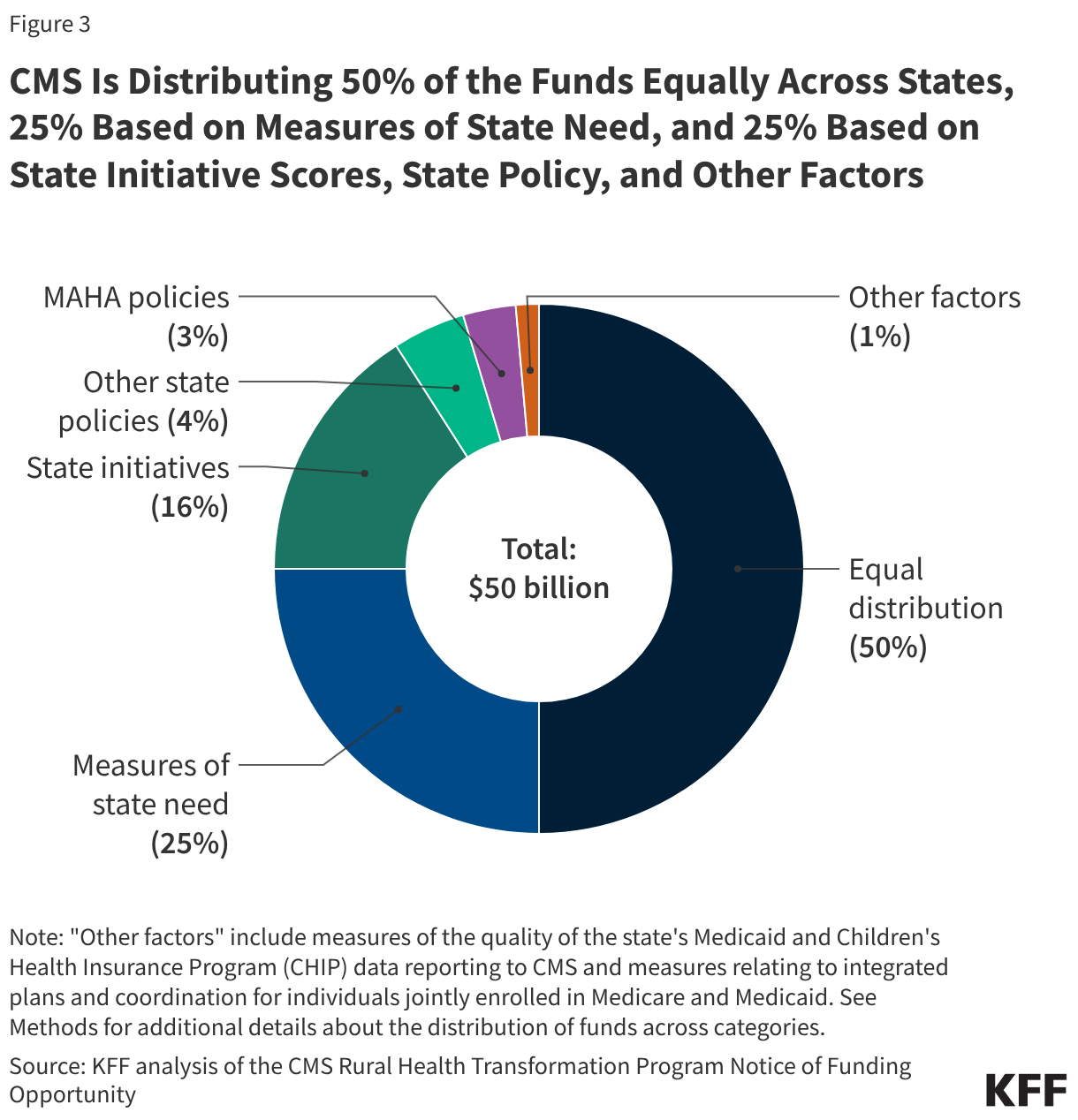
The distribution of the $50 billion fund is divided into two distinct halves:
- Baseline Funding ($25 billion): Exactly half of the total program resources are distributed equally among all approved states, ensuring every participating state receives a uniform allocation regardless of geographic size or rural population density. For the 2026 fiscal year, this baseline equals $100 million per state.
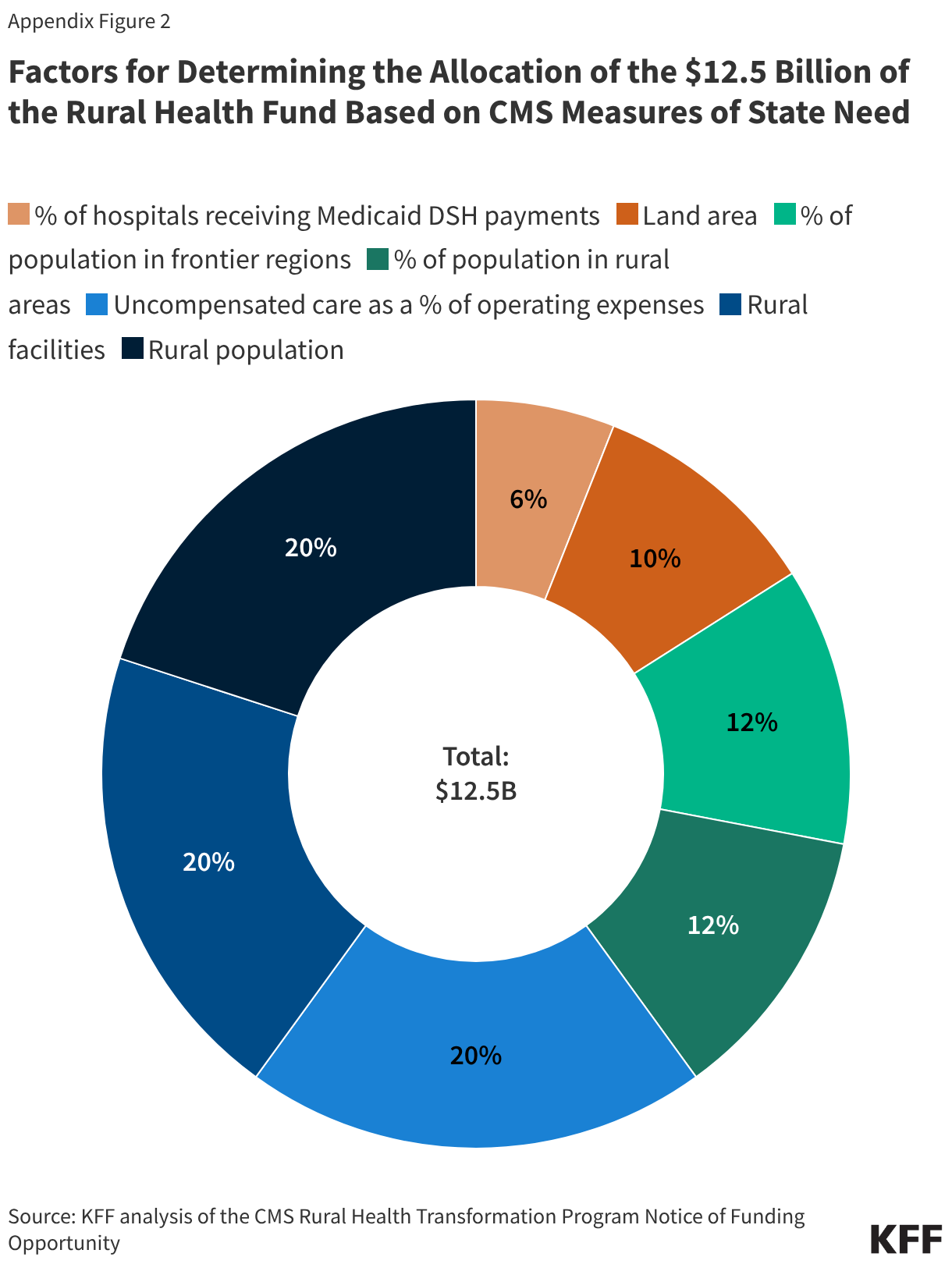
- Workload Funding ($25 billion): The remaining half is distributed based on 23 distinct, weighted factors determined by CMS. These criteria are split into measures of state need—often termed rural facility and population factors—and scores tied to state-level health initiatives, legislative policies, and data infrastructure.
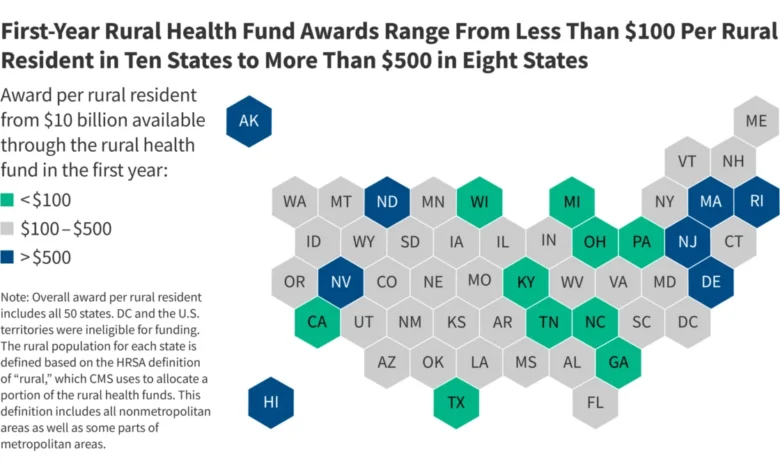
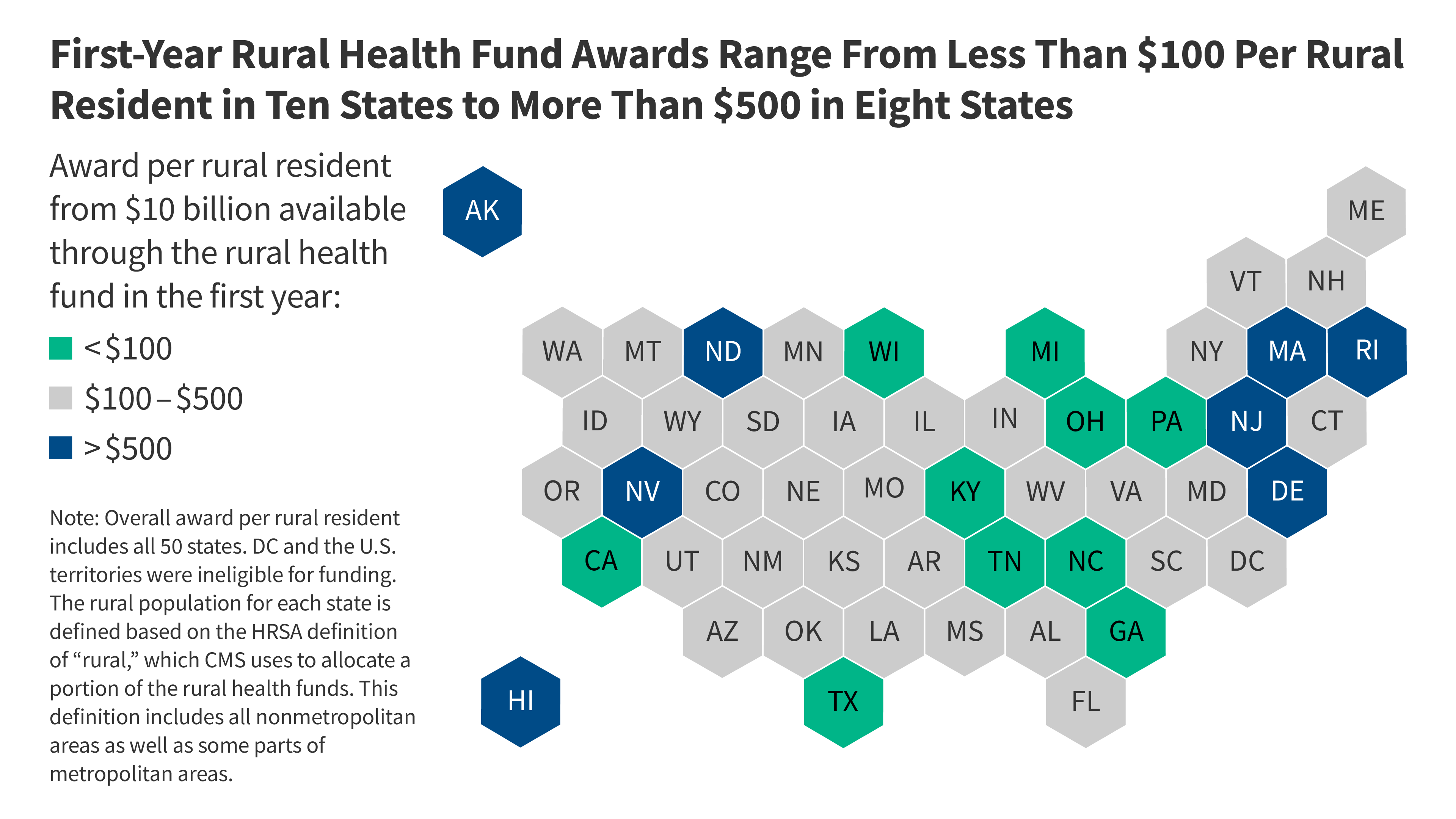
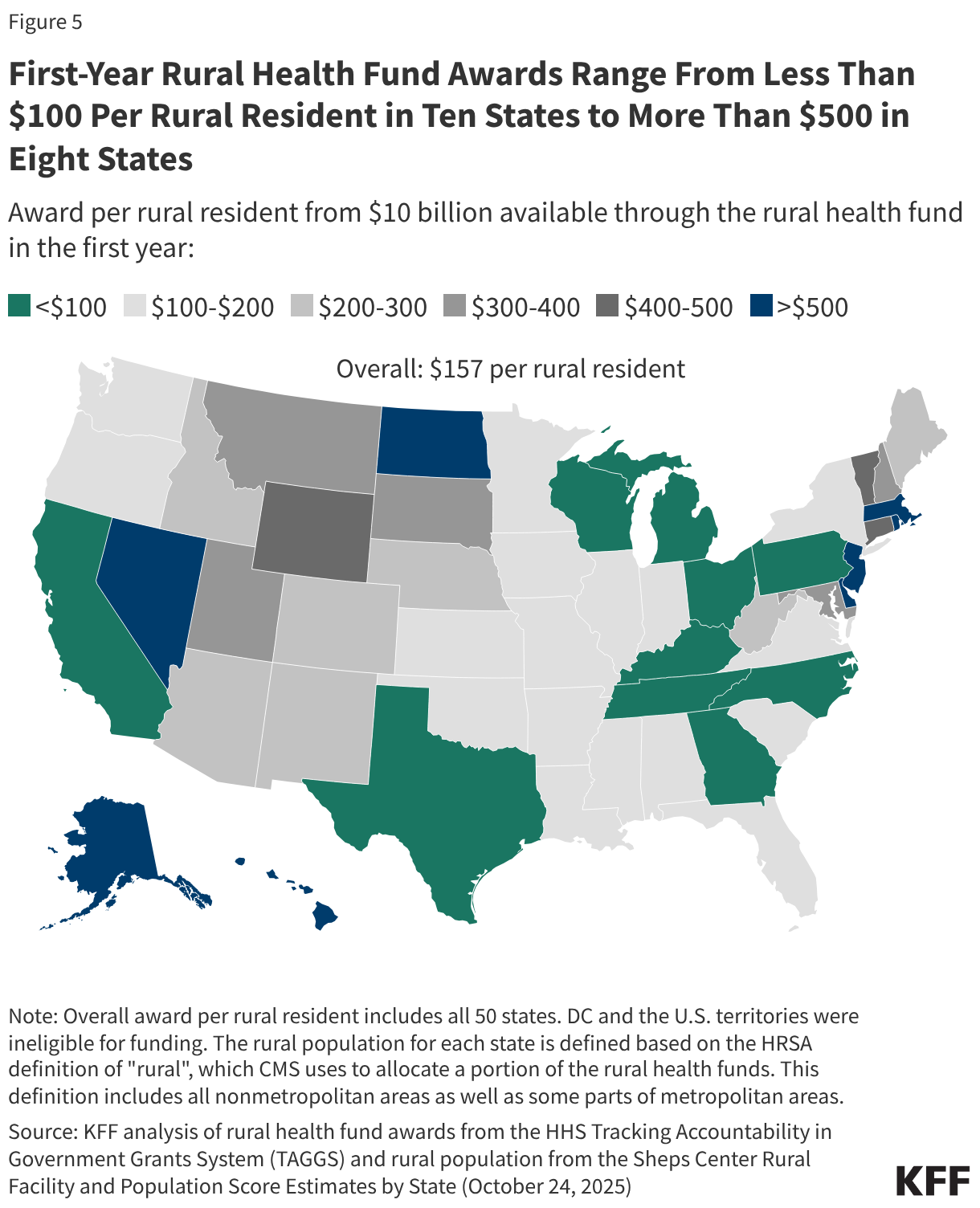
Because 50% of the aggregate fund is distributed evenly across all states, total first-year awards display relatively modest variance when compared to the vast disparities in actual rural populations. First-year state awards for fiscal year 2026 average $200 million, ranging from a low of $147 million in New Jersey to a high of $281 million in Texas. When evaluated on a per-rural-resident basis, these allocations diverge sharply. States with massive rural populations, such as Texas, received smaller per-capita amounts—approximately $66 per rural resident in 2026. Conversely, smaller states with minimal rural populations, such as Rhode Island and New Jersey, yielded much higher per-capita distributions due to the weight of the flat baseline allocation.
Permitted Uses and Strategic Goals
The Rural Health Transformation Program is not a direct operational subsidy for hospitals, nor is it restricted solely to inpatient medical facilities. Instead, the initiative is designed to drive systemic healthcare transformation across rural communities, targeting long-term sustainability rather than temporary financial bandages.
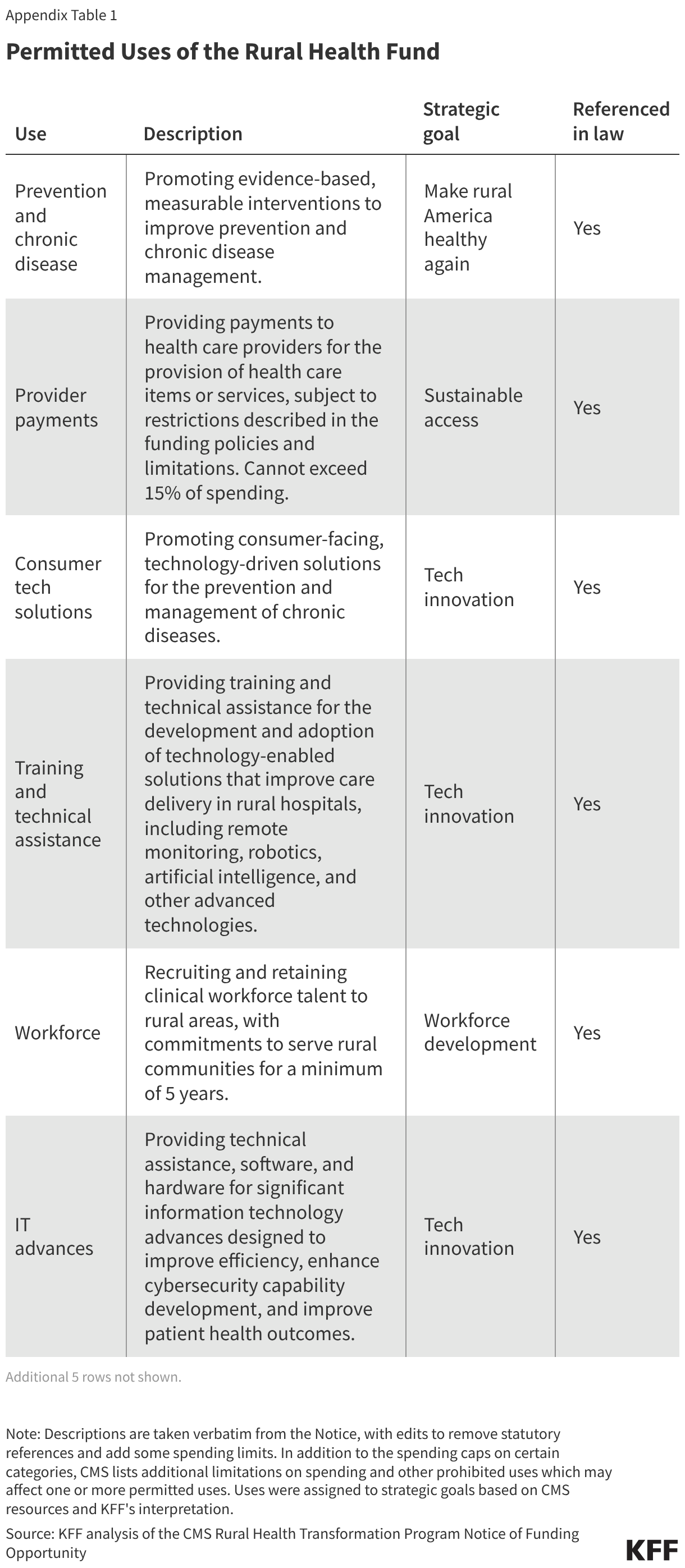
CMS established five overarching strategic goals for the program: making rural America healthy again, ensuring sustainable healthcare access, driving workforce development, fostering innovative care delivery, and advancing technological infrastructure. To achieve these goals, states are directed to select from eleven statutorily permitted uses. These include promoting chronic disease management and preventative interventions, facilitating administrative and clinical collaboration among rural providers, recruiting medical professionals to underserved regions, expanding telehealth and artificial intelligence diagnostic capabilities, investing in physical facility infrastructure, and supporting the adoption of value-based care reimbursement models.
States also retain the flexibility to allocate up to 10 percent of their annual awards toward administrative oversight. However, strict federal guardrails prohibit using these funds for direct patient care cost-sharing subsidies, general operational deficits unrelated to approved transformation plans, or capital investments that violate specific CMS facility caps.
Reactions and Industry Perspectives
The hospital industry and key legislative figures have voiced complex reactions to the rollout and parameters of the Rural Health Transformation Program. Major trade organizations, including the American Hospital Association (AHA) and the Federation of American Hospitals (FAH), submitted formal comments urging federal regulators to grant greater flexibility for capital investments and provider payments. Industry stakeholders have argued that without prioritizing direct financial relief for distressed rural hospitals, facilities facing imminent closure may not survive long enough to benefit from long-term systemic transformations.
Concurrently, a bipartisan coalition of senators, led by figures such as Senator Michael Bennet, formally petitioned CMS to loosen restrictions and ensure that smaller, independent rural providers are not systematically disadvantaged when competing against large, well-resourced regional health systems for sub-awards. Concerns persist that administrative complexities and procurement hurdles at the state level could delay the infusion of capital into communities experiencing acute financial distress.
Furthermore, transparency advocates, including the Bipartisan Policy Center, have criticized the initial reporting framework. Because CMS does not proactively publish granular sub-recipient data on a public-facing dashboard, tracking the precise downstream flow of dollars—from state agencies to regional contractors, healthcare networks, and individual clinics—requires navigating protracted public records requests.
Implications: Offsetting Medicaid Cuts or Dropping Short?
A central economic debate surrounding the Rural Health Transformation Program involves its scale relative to the broader health spending reductions enacted in the 2025 reconciliation package. While the rural health fund injects $50 billion into rural healthcare systems over five years, it is substantially smaller than the estimated $137 billion in federal Medicaid spending cuts projected to impact rural areas over a ten-year horizon.
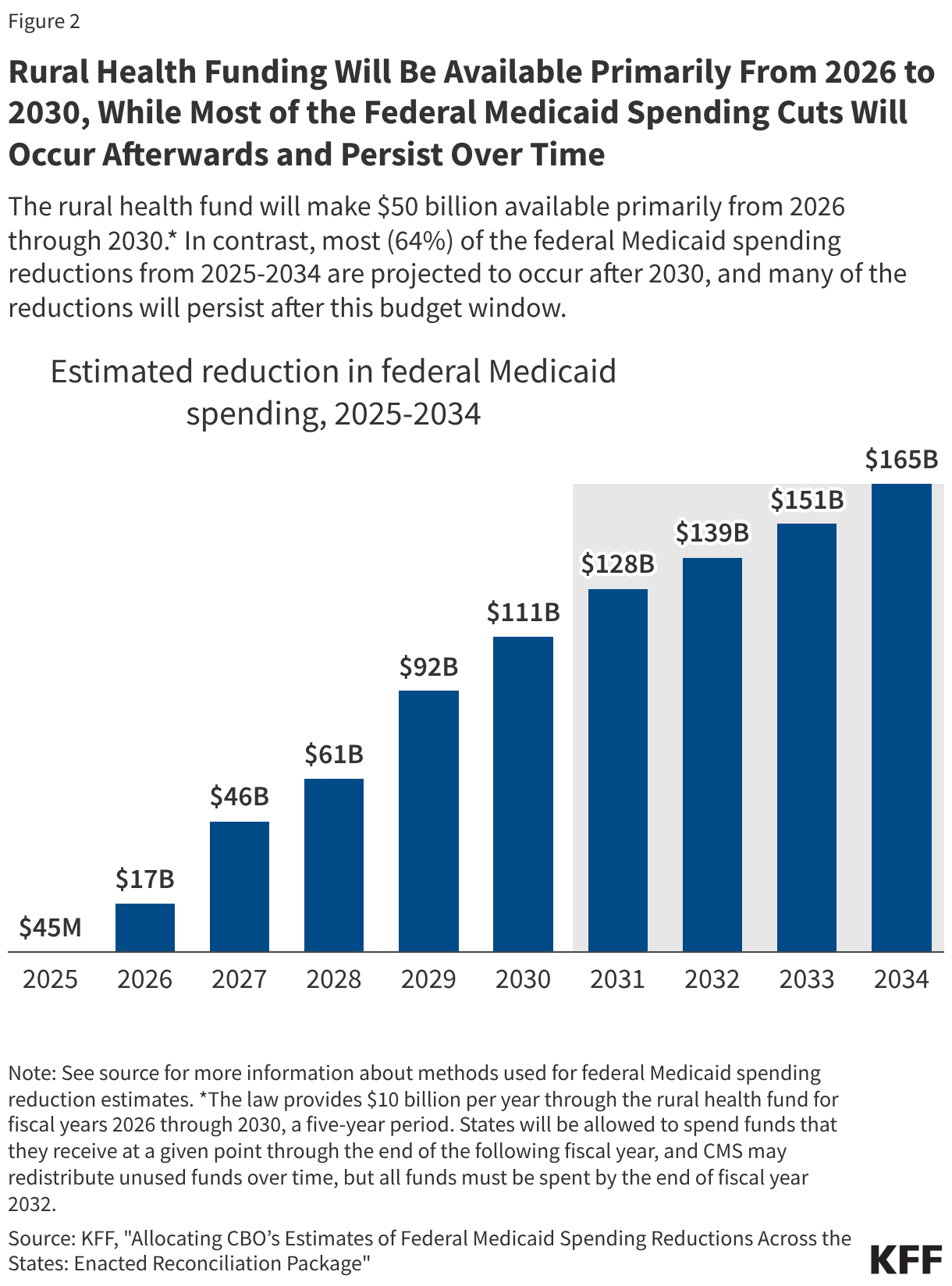
The $50 billion allocation offsets roughly 37 percent of rural Medicaid cuts, or approximately 5 percent of the $911 billion in total federal Medicaid reductions. Moreover, a temporal mismatch complicates the fiscal outlook: the rural health fund is heavily front-loaded between 2026 and 2030, whereas nearly two-thirds of the reconciliation package’s ten-year spending reductions are backloaded to occur after fiscal year 2030 and persist indefinitely.
As states continue obligating their initial tranches of funding, policymakers, researchers, and healthcare providers will closely monitor whether the program’s structural investments can successfully modernize rural care delivery before the expiration of federal funds and the full realization of long-term Medicaid reductions.
Related posts: