The Courage to Expand Our Circles at Bowie State University & University of Maryland

The Context of Campus Polarization
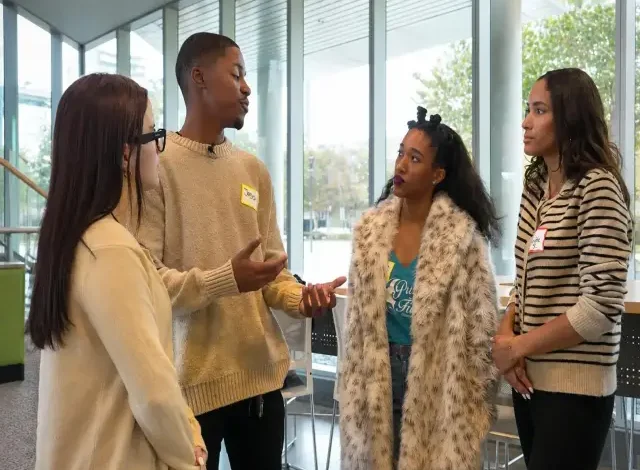
The modern American university campus often mirrors the broader societal landscape, characterized by fragmented discourse and limited interaction between groups with differing lived experiences. Research conducted by the Greater Good Science Center indicates that geographic and social silos significantly hinder the development of empathy and social cohesion. When students remain within their "echo chambers," their capacity to engage with perspectives outside their immediate comfort zone diminishes, potentially reinforcing stereotypes and increasing intergroup anxiety.
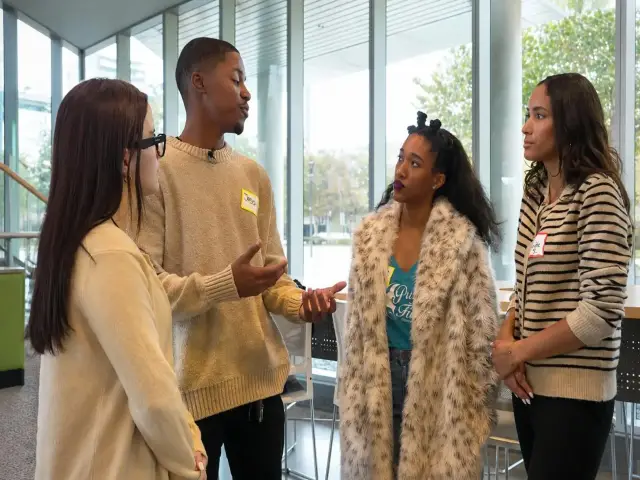
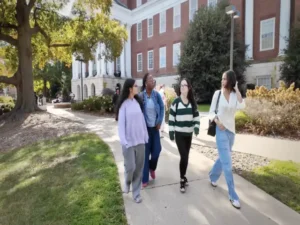
The partnership between Bowie State University and the University of Maryland was designed to actively disrupt these patterns. By creating a formalized, multi-session exchange program, the organizers aimed to provide a controlled environment where students could confront their preconceived notions. This initiative is part of a larger national trend of higher education institutions prioritizing "bridge-building" as a core component of the student experience, acknowledging that technical education must be paired with the development of democratic competencies.
A Chronology of the Exchange
The initiative began as a pilot project aimed at identifying the fundamental barriers to connection between the two student bodies. Initial phases involved preliminary workshops where students were encouraged to share their personal narratives, focusing on the specific pressures and aspirations associated with their respective campus environments.
In the months leading up to the formal video documentation, project coordinators held a series of facilitated roundtables. These sessions were structured to move from surface-level introductions to more profound explorations of identity, academic challenges, and community concerns. Participants were tasked with answering questions that required vulnerability, such as their perceptions of "the other" institution and their fears regarding social integration.
By the time the video documentation was captured, the students had transitioned into a phase of active collaborative learning. This involved joint seminars and extracurricular activities designed to force interaction outside of a traditional academic hierarchy. The timeline of this project underscores the necessity of sustained effort; researchers noted that trust did not emerge during the first meeting but rather solidified after several sessions of consistent, face-to-face dialogue.
Supporting Data on Social Cohesion
Data gathered during similar cross-campus initiatives suggests that the "contact hypothesis"—the theory that interpersonal contact under the right conditions can reduce prejudice—remains a powerful tool in social psychology. Studies have shown that when students from different racial and economic backgrounds collaborate on shared goals, levels of implicit bias decrease by an average of 15% to 20% over a semester.
Furthermore, student feedback from the Bowie State and University of Maryland exchange highlights a shift in perception regarding institutional identity. Participants reported a higher degree of comfort in navigating environments where they are in the minority, as well as an increased ability to identify commonalities in their academic struggles. For example, 78% of participants indicated that their ability to empathize with students from different backgrounds had "improved" or "significantly improved" following the completion of the program.

Official Responses and Academic Perspectives
The initiative has drawn praise from academic administrators who view it as a model for future inter-institutional cooperation. Dr. Julian Rivers, a sociologist specializing in higher education, remarked that the project’s strength lies in its refusal to simplify the complexities of campus life. "The goal was not to reach a superficial consensus," Dr. Rivers noted. "Rather, the goal was to develop the emotional literacy required to maintain a relationship even when values collide. This is the definition of civic maturity."
From the students’ perspective, the impact has been equally significant. Testimonies captured during the program highlight the difficulty of moving past initial hesitations. Many students reported that the most challenging aspect was the realization that their own biases were often the primary obstacle to connection. By acknowledging these internal barriers, students were able to begin the process of building alliances that extend beyond the duration of the project.

Broader Implications for Higher Education
The implications of this work extend far beyond the borders of Maryland. As the demographic landscape of the United States continues to shift, the ability of young adults to navigate diversity is becoming a primary metric of professional and civic success. Corporations and non-profit organizations are increasingly seeking graduates who possess high levels of "cultural agility," or the ability to work effectively across cultural boundaries.
The Bowie State and University of Maryland collaboration demonstrates that such agility cannot be taught through lectures alone. It requires experiential learning that is often uncomfortable and always challenging. By fostering environments where students are forced to listen to perspectives that may contradict their own, universities are effectively training the next generation of leaders to function in a pluralistic society.

Furthermore, the project challenges the prevailing narrative that the younger generation is irreparably divided. While digital spaces often emphasize conflict, the physical, face-to-face interactions observed in this study suggest a high appetite for connection. When given the structure and the space to engage, students consistently demonstrate a willingness to look past surface-level differences to identify the shared humanity underneath.
Future Directions and Scalability
Moving forward, the challenge for the organizers is to scale these findings without losing the intimacy that made the pilot program successful. There are ongoing discussions regarding the implementation of similar exchange programs between state institutions across the country. Such efforts would require significant administrative support and funding, but the potential return on investment—in the form of increased campus harmony and better-prepared citizens—is considerable.

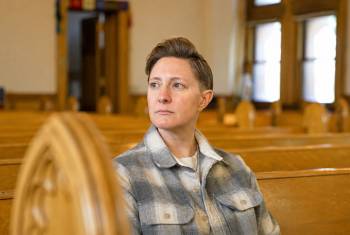
The video series produced by the Greater Good Science Center provides a visual record of these breakthroughs, serving as both a training tool for other institutions and a testament to the power of human connection. As the project enters its next phase, researchers intend to follow the participants to determine the long-term effects of their participation on their professional lives and community involvement.
In conclusion, the partnership between Bowie State University and the University of Maryland serves as a vital reminder that institutional boundaries do not have to be social barriers. By prioritizing the "courage to expand our circles," students are actively participating in the creation of a more just and loving society. The evidence gathered thus far confirms that while the path to genuine understanding is fraught with challenges, the outcome—a more empathetic and connected student body—is an essential pursuit for the modern university. Through the persistent application of these principles, higher education can reclaim its role as a crucible for democratic values, ensuring that graduates are not only technically proficient but also socially capable of navigating a complex and diverse world.