Navigating the Regulatory Frontier: FDA Frameworks, Artificial Intelligence, and the Future of Patient Safety in Healthcare

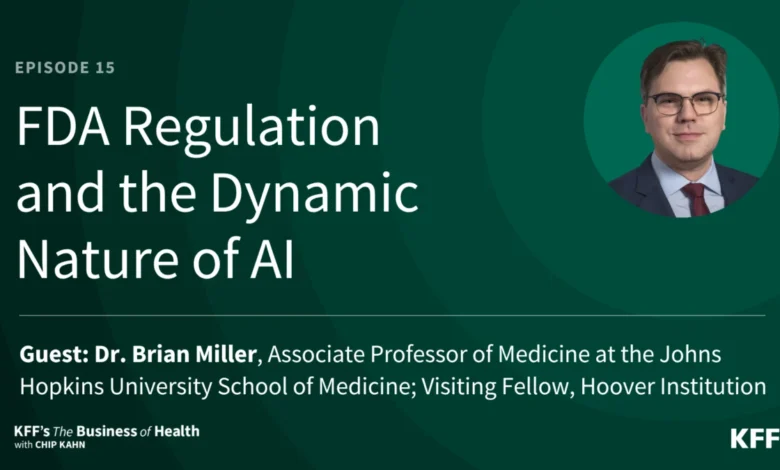
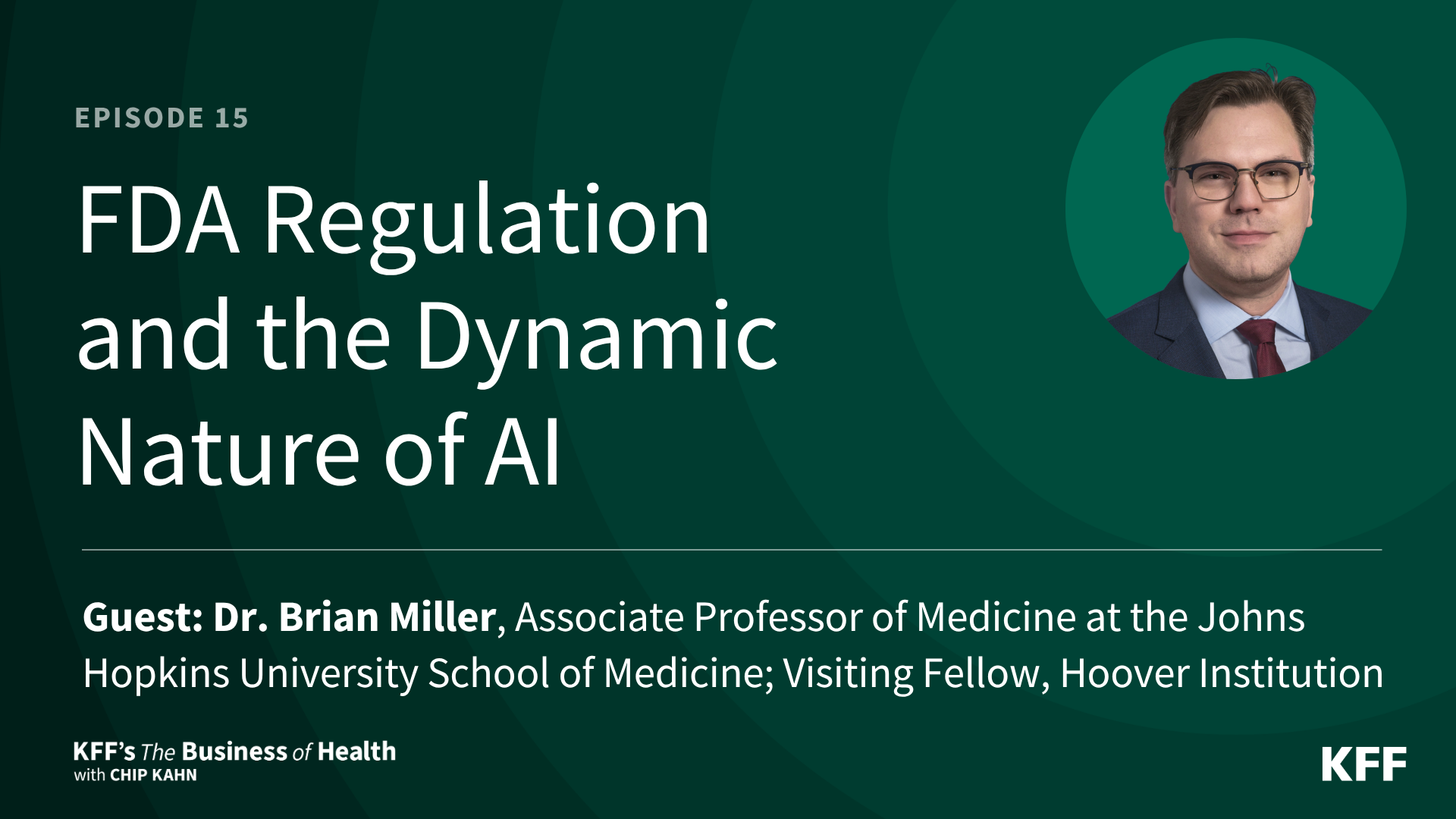
The intersection of artificial intelligence and modern medicine represents one of the most transformative yet contentious frontiers in contemporary healthcare policy. As machine learning algorithms, natural language processing tools, and autonomous diagnostic systems permeate clinical workflows, regulatory bodies face the monumental task of overseeing technologies that inherently evolve over time. This challenge forms the core of a recent installment of The Business of Health with Chip Kahn, a prominent weekly podcast series that bridges the often-disconnected worlds of healthcare commerce, public policy, and direct patient care. In Episode 15 of the podcast’s dedicated artificial intelligence series, host Charles N. “Chip” Kahn III sat down with Dr. Brian Miller—a practicing hospitalist, former regulatory official, and associate professor at the Johns Hopkins University School of Medicine—to dissect the profound friction that occurs when twenty-first-century artificial intelligence is governed by mid-twentieth-century regulatory statutes.
The conversation ventured deep into the mechanics of medical device oversight, shedding light on a reality that frequently surprises both policymakers and the public: the traditional, manual system of medicine currently practiced across the United States is already significantly less safe and far more variable than prevailing assumptions suggest. Rather than viewing the rapid deployment of artificial intelligence as an unmitigated threat to clinical safety, Dr. Miller argued that the most pressing peril facing the healthcare sector is the risk of over-regulation driven by institutional fear. Such restrictive guardrails, he warned, could inadvertently stifle innovation and deprive patients and clinicians of opportunities to drastically improve outcomes.
The Structural Mismatch: Applying 1976 Frameworks to 2026 Technology
To understand the regulatory dilemma facing the U.S. Food and Drug Administration (FDA), one must examine the foundational statute governing medical devices. The Medical Device Amendments of 1976 established the modern statutory framework that empowers the FDA to oversee products ranging from simple tongue depressors to complex diagnostic imaging machines and implantable pacemakers. Crafted during an era defined by hardware, mechanical engineering, and static manufacturing processes, this framework was designed to evaluate products that remain largely unchanged from the moment they leave the factory floor until they are retired from clinical use.
Artificial intelligence, however, shatters this static paradigm. Advanced software algorithms are dynamic entities. Machine learning models continuously ingest new clinical data, adapt their internal parameters, and refine their outputs over time to improve diagnostic accuracy or predictive capabilities. Under a strict interpretation of the 1976 framework, every iterative update or self-learning adjustment an AI model undergoes could theoretically require a new premarket notification or formal FDA clearance. This creates an impossible logistical bottleneck for federal regulators and imposes crippling delays on technology developers seeking to deploy life-saving tools in fast-paced clinical environments.
During their discussion, Kahn and Miller explored how the FDA has attempted to adapt its historic authorities to software-based medical devices over the past decade. The agency has increasingly relied on concepts such as Predetermined Change Control Plans (PCCPs), which allow manufacturers to outline anticipated modifications to an algorithm and their associated verification methodologies in advance. However, the broader challenge remains: how to maintain rigorous safety standards without forcing dynamic algorithms into a rigid, manual regulatory structure that fundamentally misaligns with their computational nature.
Challenging the Status Quo of Manual Healthcare Safety
One of the most provocative themes emerging from Dr. Miller’s analysis is the necessity of re-evaluating the baseline safety and consistency of contemporary medical practice. Public discourse surrounding healthcare regulation frequently operates under the romanticized assumption that human-driven, manual medicine is inherently safe, consistent, and standardized, while software-driven automation introduces unacceptable, novel risks. Dr. Miller challenges this premise directly, drawing upon his extensive clinical experience as a hospitalist at the Johns Hopkins Hospital.
Data consistently highlight the vulnerabilities inherent in human-dominated clinical workflows. According to landmark reports from the Institute of Medicine (now the National Academy of Medicine), medical errors account for tens of thousands of deaths annually in the United States, driven by factors such as physician fatigue, cognitive overload, communication breakdowns, and inherent variability in clinical decision-making. Furthermore, diagnostic errors remain a persistent challenge across outpatient and inpatient settings, with millions of Americans experiencing misdiagnoses or delayed diagnoses each year.
By contrasting these well-documented vulnerabilities with the capabilities of well-validated artificial intelligence systems, the dialogue on The Business of Health reframes the regulatory debate. AI does not operate within a theoretical vacuum of absolute perfection; rather, it must be evaluated against the flawed, highly variable human baseline it seeks to augment. Algorithms do not suffer from fatigue at the end of a grueling thirty-six-hour shift, nor do they overlook subtle patterns in complex radiological scans or laboratory trends that may escape the notice of an overburdened clinician. Consequently, regulatory delay or excessive caution does not preserve a pristine state of zero risk; instead, it prolongs the exposure of patients to the known, quantifiable hazards of manual medical error.
Regulatory Evolution: A Chronology of FDA Engagement with AI
The dialogue between Kahn and Miller was recorded during a critical juncture in health policy, arriving shortly before the FDA released a highly anticipated discussion paper outlining potential regulatory pathways for adaptive artificial intelligence and inviting comprehensive stakeholder feedback. To contextualize this development, it is helpful to review the chronology of the FDA’s engagement with digital health and artificial intelligence:
- 2010–2015: The proliferation of mobile medical applications prompts the FDA to issue initial guidance documents distinguishing between software intended for general wellness and software that meets the statutory definition of a medical device.
- 2017–2019: The FDA launches its Digital Health Software Precertification (Pre-Cert) Pilot Program, aiming to establish a streamlined, “Software-First” regulatory model focusing on the quality and organizational excellence of the software developer rather than reviewing every individual product update.
- 2021: The FDA releases its Action Plan for Artificial Intelligence/Machine Learning (AI/ML)-Enabled Medical Devices, outlining commitments to Good Machine Learning Practice (GMLP) development, patient-centered transparency, and frameworks for modifications to AI-based software.
- 2023–2025: Regulatory agencies globally, including the FDA, the European Medicines Agency, and Health Canada, issue joint guiding principles on transparency, algorithmic bias, and real-world performance monitoring for machine learning-enabled medical devices.
- 2026: Amid surging deployment of generative AI and large language models in clinical administration and decision support, the FDA issues updated discussion papers soliciting public input on adaptive algorithm oversight, aligning closely with the policy debates highlighted in the KFF podcast series.
This timeline illustrates a deliberate, if gradual, institutional shift. Regulatory agencies are actively attempting to transition from a retrospective, gatekeeping model of product approval to a continuous lifecycle oversight model that monitors algorithm performance, drift, and safety in real-world clinical settings long after initial deployment.
Host and Guest Profiles: Expertise at the Intersection of Policy and Practice
The depth of the analysis in Episode 15 is rooted in the extensive backgrounds of both the host and the featured guest, whose collective careers span clinical medicine, federal administration, economic research, and health policy formulation.
Host Charles N. “Chip” Kahn III brings decades of leadership experience to the discussion. Serving as a senior visiting fellow at KFF—a prominent, independent source for health policy research, polling, and journalism—Kahn is also a visiting senior fellow at the American Enterprise Institute and a nonresident senior scholar at the University of Southern California’s Schaeffer Center for Health Policy & Economics. Furthermore, he serves as co-chair of the international Future of Health collaborative. His career includes extensive leadership roles representing major healthcare institutions, giving him a unique vantage point on the economic and operational realities facing the U.S. health system.
Dr. Brian Miller, MD, MBA, MPH, provides the clinical and regulatory foundation for the episode. In addition to maintaining an active clinical practice as a hospitalist at the Johns Hopkins Hospital, Dr. Miller serves as an Associate Professor of Medicine and Business at Johns Hopkins University and a Visiting Fellow at the Hoover Institution. His academic footprint includes directing a multidisciplinary, twenty-person research group dedicated to analyzing market-driven solutions within FDA regulatory policy and Medicare payment policy.

Dr. Miller’s perspective is further enriched by his hands-on experience across multiple federal regulatory agencies, including the Centers for Medicare & Medicaid Services (CMS), the Federal Trade Commission (FTC), the Federal Communications Commission (FCC), and the FDA itself. His public service extends to high-level advisory roles, including serving as a Commissioner on the Medicare Payment Advisory Commission (MedPAC)—which advises Congress on the operations and financing of the $1 trillion Medicare program—and as a Trustee for the North Carolina State Health Plan, overseeing healthcare coverage for more than 750,000 state employees, dependents, and retirees.
Broader Economic and Clinical Implications
The implications of how the United States chooses to regulate artificial intelligence in healthcare extend far beyond administrative compliance; they directly influence clinical innovation, healthcare expenditures, and health equity.
From an economic perspective, excessive regulatory friction or prolonged approval timelines can erect insurmountable barriers to entry for startup companies and smaller technology developers, potentially concentrating market power among a handful of large, well-resourced technology conglomerates. Conversely, inadequate oversight risks the widespread adoption of biased, unvalidated, or unsafe algorithms that could exacerbate health disparities or cause direct patient harm. Algorithms trained on non-representative patient populations have been shown in academic studies to perform suboptimally when applied to minority or underserved demographics, underscoring the necessity of rigorous, inclusive validation standards enforced by regulatory bodies.
Furthermore, the intersection of AI regulation and reimbursement policy remains a critical battleground. Medicare and private commercial insurers must determine how to structure payment codes to incentivize the clinical adoption of validated, high-value AI diagnostic and therapeutic tools. Without alignment between FDA clearance and Medicare coverage pathways—a domain where Dr. Miller’s expertise as a MedPAC commissioner is particularly salient—even the most innovative algorithms may languish unutilized in clinical practice due to a lack of sustainable financing mechanisms.
As the healthcare sector continues to grapple with workforce shortages, rising administrative burdens, and persistent clinical burnout, the integration of artificial intelligence offers a powerful mechanism to streamline operations and enhance diagnostic precision. However, as emphasized in The Business of Health podcast series, realizing this potential requires a fundamental modernization of regulatory philosophies. Policymakers must move beyond the static, mechanical assumptions of 1976 and embrace adaptive, lifecycle-based oversight models that acknowledge the realities of machine learning. Only by striking a delicate balance between patient protection and innovation enablement can the healthcare system successfully harness the promise of artificial intelligence without succumbing to the paralysis of fear-driven governance.