
Beyond the Premium: How Hospital Consolidation and Rising Healthcare Costs Drive the U.S. Insurance Crisis

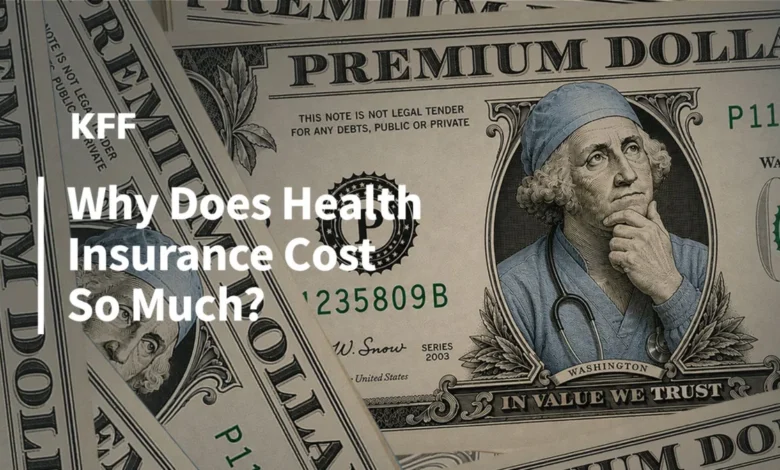
Skyrocketing health insurance premiums continue to squeeze American families and corporate balance sheets alike, fueling a fierce political debate over who bears the responsibility for the nation’s mounting medical expenses. While politicians from across the political spectrum frequently target health insurance companies, blaming them for corporate greed, high administrative overhead, and frustrating bureaucratic hurdles like prior authorizations, a closer examination reveals a more complex economic reality. According to policy experts and recent analyses from organizations like KFF, the true engine of escalating health costs lies not within insurance boardrooms, but in the soaring prices of underlying medical care—particularly the cost of hospital services driven by aggressive industry consolidation.
The debate over the root causes of American healthcare inflation has long occupied the center stage of U.S. domestic policy. Insurers find themselves caught in a political crossfire, facing pressure from both Republican and Democratic leaders who promise voters relief from high costs. However, economists emphasize that while insurers certainly pass these financial burdens onto consumers in the form of steeper premiums and higher deductibles, their ability to act as effective cost-containment agents is severely constrained by market dynamics, corporate demands, and a lack of systemic competition among healthcare providers.
The Political Crossfire: Blaming the Insurers
For years, policymakers have seized upon the unpopularity of health insurance companies to score political points, framing insurers as the primary antagonists in the American healthcare drama. This bipartisan frustration manifests in vastly different policy proposals, yet both sides frequently converge on the narrative of corporate villainy.
On the conservative side, critics of the existing market framework often point to the structural changes brought about by legislation like the Affordable Care Act (ACA). Former President Donald Trump has repeatedly asserted that the ACA enriched large insurance conglomerates at the expense of everyday citizens. His proposed remedies have historically involved dismantling federal subsidies to insurers and redirecting those funds straight to consumers, empowering individuals to navigate the open market independently.
Conversely, progressive lawmakers view the insurance industry through a lens of unrestrained profiteering. Prominent Senate Democrats have regularly rolled out legislative agendas aimed at curbing corporate excess. Their policy blueprints pledge to rein in what they characterize as shameless profiteering by corporate insurance entities, simplify the complex process of obtaining and utilizing coverage, and establish stricter federal oversight to drive down out-of-pocket costs.
Yet, policy analysts argue that focusing exclusively on insurance companies misdiagnoses the disease. While insurers undeniably add administrative overhead and implement restrictive practices—such as claim denials and narrow provider networks—to manage their financial risk, these mechanisms are largely reactive responses to underlying inflation within the medical sector. Insurers collect premiums to pay claims; when the cost of medical care surges, those increased costs must inevitably be passed along to employers and policyholders, or insurers risk insolvency.
The Macroeconomic Reality: A $5.3 Trillion Healthcare Ecosystem
To understand why health insurance premiums feel increasingly unaffordable, one must look at the broader trajectory of national health expenditures. Over the past several decades, U.S. healthcare spending has grown at a pace that vastly outstrips general inflation, culminating in a staggering $5.3 trillion spent nationally in 2024.
This immense figure is driven by several distinct pillars of the healthcare delivery system, including physician and clinical services, retail prescription drugs, medical devices, and institutional care. Among these, hospital care commands the largest single share of national health expenditures and has served as the primary accelerator of cost growth. Recent economic data indicates that hospital services alone have accounted for roughly 40 percent of overall health spending growth in recent years. While expenditures on prescription drugs and outpatient physician services continue to climb steadily, their relative impact on total cost acceleration remains secondary to inpatient and institutional hospital care.
This continuous upward trajectory forces insurance companies into a difficult bind. Because insurers function primarily as financial intermediaries, they must pay out claims to hospitals, doctors, and pharmaceutical manufacturers. When these entities raise their prices, insurers face a simple mathematical ultimatum: increase premiums to cover the balance, absorb unsustainable losses, or exit the market entirely.

Hospital Consolidation: The Unchecked Driver of Prices
Insurers frequently point the finger at hospital consolidation as the primary catalyst behind rising medical prices, and economic research largely supports this claim. Over the last two decades, the American hospital landscape has undergone a massive wave of mergers, acquisitions, and health system integrations. Independent community hospitals have been swallowed by massive, regional health conglomerates, creating local monopolies and oligopolies that face virtually no competitive pressure.
The market power wielded by these consolidated health systems is immense. According to health market data from 2024, just one or two major health systems controlled the entirety of inpatient hospital care in nearly half of all metropolitan statistical areas across the United States. Without local competitors to keep prices in check, these dominant systems possess unilateral pricing power. When a hospital system is the only game in town for miles around, it can demand exorbitant reimbursement rates from insurance companies during annual contract negotiations.
Faced with such market concentration, insurers theoretically possess the leverage to walk away from negotiations, excluding high-priced hospitals from their provider networks to protect consumers from runaway costs. However, in practice, this leverage is severely blunted by the demands of the ultimate purchasers of health coverage: American employers.
The Employer Dilemma and the Myth of Broad Networks
The majority of working Americans receive their health insurance through employer-sponsored plans. Consequently, corporations and businesses act as the primary drivers of plan design and network configuration. For decades, human resources departments and corporate executives have operated under a specific set of assumptions regarding employee satisfaction and talent retention.
Employers overwhelmingly demand broad provider networks. They want their workers to have access to every prestigious hospital, specialist, and medical center in their geographic region without restriction. Corporate buyers fear that offering a "narrow network" plan—which excludes certain high-cost hospitals in exchange for lower overall premiums—will trigger employee backlash, complaints, and recruitment difficulties.
This corporate insistence on broad access effectively strips insurers of their most potent economic weapon. If an insurer cannot walk away from a dominant hospital system without alienating its corporate clients, the hospital system holds all the leverage. The hospital can dictate its terms, secure inflated reimbursement rates, and pass the financial burden down the line. The insurer dutifully incorporates these higher costs into the following year’s premium calculations, leaving accountability diffuse and difficult to pin on any single actor.
Implications for the Future of American Healthcare
This complex web of hospital consolidation, corporate preferences, and rising underlying medical expenditures creates a deeply frustrating status quo for the American public. Costs remain punishingly high, transparency is frequently obscured by complex billing practices, and patients are left to shoulder an ever-growing share of the financial burden through high deductibles and coinsurance.
Furthermore, this dynamic forces a fundamental reckoning regarding the structural utility of the modern insurance industry. If private insurers are primarily serving as passive tollbooths that simply aggregate risk and pass along escalating medical costs from consolidated health systems to businesses and consumers, policymakers and economists are increasingly asking what fundamental value they provide.
Addressing the core affordability crisis in American healthcare will require moving beyond populist rhetoric that targets insurers alone. Meaningful reform must confront the underlying drivers of spending, tackle anticompetitive hospital consolidation through aggressive antitrust enforcement, and rethink the design of employer-sponsored plans to encourage greater price sensitivity and network efficiency. Until the structural drivers of hospital inflation are directly addressed, health insurance premiums will almost certainly continue their upward march, maintaining the financial squeeze on businesses, families, and the broader U.S. economy.
Related posts: