Unveiling the State of U.S. Nursing Homes: An In-Depth Look at Quality Oversight, Deficiencies, and Resident Safety

The American long-term care system, a critical lifeline for approximately 1.2 million older adults and younger individuals with disabilities residing in 14,700 nursing homes across the U.S., continues to grapple with persistent quality of care challenges, spotlighted and intensified by the devastating mortality rates experienced during the COVID-19 pandemic. Data from the Department of Health and Human Services (HHS) indicates that over one-third of adults will require some form of nursing home care after age 65, whether for long-term residential support or post-acute skilled nursing services. A recent analysis by KFF, utilizing detailed deficiency data from the publicly available Nursing Home Compare dataset, sheds light on the intricacies of the nursing home inspection process and the alarming prevalence and nature of identified deficiencies, reinforcing calls for enhanced regulatory vigilance and accountability.
The Enduring Challenge of Nursing Home Quality
Concerns over the quality of care in nursing facilities are far from new, predating the recent global health crisis. Decades of reports from governmental bodies and independent organizations, including the National Academies, have consistently highlighted systemic issues ranging from inadequate staffing and insufficient training to lapses in infection control and resident abuse. However, the unprecedented scale of the COVID-19 pandemic, which claimed the lives of over 200,000 residents and staff in long-term care facilities, served as a stark and tragic amplification of these underlying vulnerabilities. The pandemic exposed critical gaps in preparedness, operational transparency, and the fundamental ability of many facilities to safeguard their most vulnerable populations, leading to a renewed, urgent focus on regulatory reform and oversight effectiveness.
Navigating a Shifting Regulatory Landscape: The Trump Administration’s Influence
The period leading up to and during the pandemic saw significant shifts in federal oversight policies concerning nursing homes, particularly under the Trump administration. These changes, widely viewed by advocates as a weakening of regulatory safeguards, included several key actions that reshaped the inspection environment. Notably, the administration opted to ease various compliance requirements, in some instances rescinding previous directives or postponing their implementation. While the original text ambiguously mentions "rescinding the nursing home staffing rule issued by the Biden administration" in the context of Trump-era changes, it’s crucial to clarify that the Trump administration generally relaxed or reversed stricter federal oversight. For instance, it did not implement or enforce more stringent staffing requirements, a stark contrast to the Biden administration’s later proposals for a federal minimum staffing rule. Furthermore, the Trump administration explicitly prioritized complaint-triggered inspections over routine, comprehensive surveys, a shift that critics argued could allow systemic issues to fester undetected. Compounding these changes, a suspension of the deadline for nursing homes to report detailed ownership information raised concerns about transparency, making it more challenging to trace accountability and identify potential conflicts of interest within the fragmented and often complex ownership structures of nursing home chains. These regulatory adjustments created an environment where the already challenging task of ensuring high-quality care became even more precarious, setting the stage for increased scrutiny in the post-pandemic era.
The Federal-State Partnership in Oversight: A Deep Dive into Inspections
At the heart of ensuring nursing home compliance with health and safety standards lies a critical federal-state partnership. For facilities to receive funding from the vital Medicare and Medicaid programs, they must adhere to specific "conditions of participation" established by the Centers for Medicare & Medicaid Services (CMS). To enforce these conditions, state agencies, in collaboration with CMS, conduct unannounced, on-site inspections known as "standard surveys." These comprehensive evaluations are designed to identify "deficiencies"—failures by nursing homes to meet federal requirements. While facilities can be cited for issues related to fire safety and emergency preparedness, the KFF analysis, consistent with previous research and state-level data, specifically focuses on "health deficiencies," which encompass critical aspects of clinical care, medical treatment, and the daily living conditions directly impacting residents’ well-being.
CMS maintains an oversight role, conducting "Federal Monitoring Surveys," often referred to as "validation inspections," to verify the accuracy and thoroughness of state agency inspections. These federal checks come in two primary forms: comparative inspections, where CMS independently surveys a facility within 60 days of a state inspection to compare findings, and "Resource and Support" inspections, where CMS personnel accompany state surveyors to offer assistance and observe the process. However, the consistency of these vital federal checks has faced challenges. CMS guidance from May 2026 indicated a reduction in federal validation inspections for Fiscal Year 2026, largely attributed to the 2025 federal government shutdown, raising concerns about potential impacts on oversight quality and the consistency of enforcement across states.
Inspection Frequency and the Growing Burden of Backlogs
Federal law mandates that all nursing homes undergo a standard survey at least once every nine to fifteen months. This periodicity is designed to ensure regular assessment of compliance. In practice, however, adherence to this timeline can be inconsistent. State agencies, often grappling with their own staffing shortages and, at times, relaxed oversight directives, may experience delays. While a majority (87%) of nursing homes did receive at least one standard survey between March 2025 and May 2026, the data reveals significant gaps. Approximately ten percent of facilities were surveyed between January 2024 and February 2025, meaning they narrowly met or slightly exceeded the 15-month window. More concerning is the three percent of nursing homes that had not undergone a standard survey since prior to January 2024, indicating a substantial delay that could leave critical quality issues unaddressed for extended periods. The COVID-19 pandemic further exacerbated these backlogs, with many states suspending or significantly delaying routine inspections to focus on urgent pandemic response, creating a substantial accumulation of overdue surveys that continues to impact the timely assessment of facility quality. States do retain flexibility to conduct more frequent inspections for facilities with a history of quality issues and less frequent ones for those with consistently strong performance, but widespread delays undermine the foundational principle of regular oversight.
The Role of Complaint-Driven Investigations: A Vital Safety Net
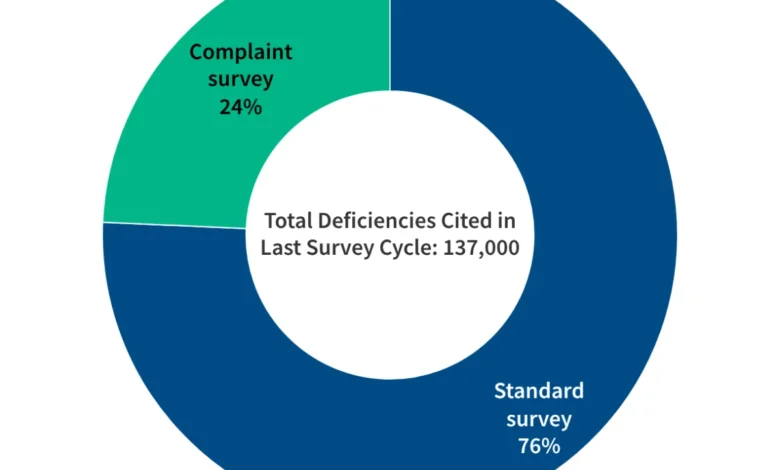
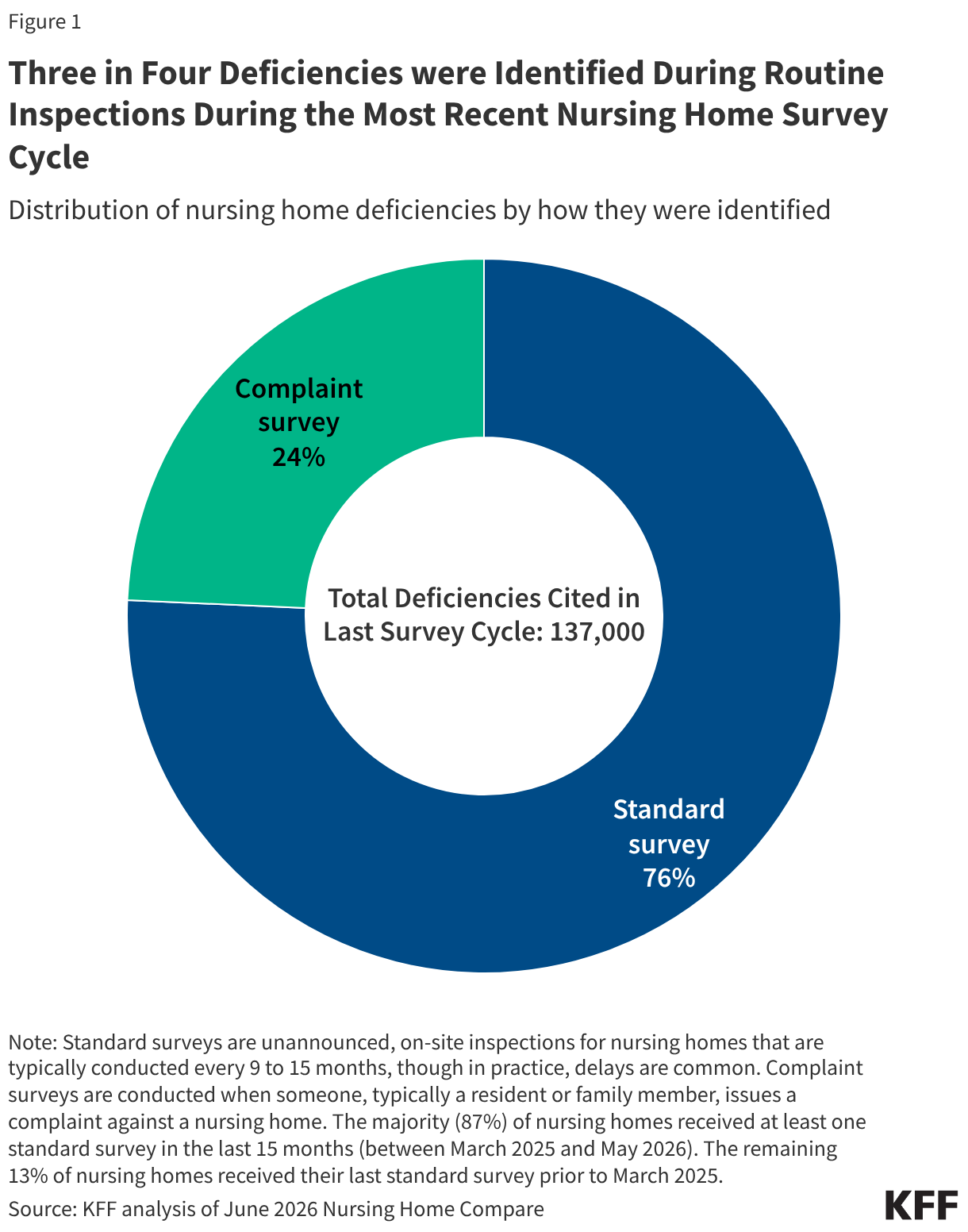
Beyond routine standard surveys, nursing homes also undergo "complaint surveys," which play an indispensable role in the oversight ecosystem. These inspections are initiated when an individual—typically a resident, a family member, or a concerned staff member—files a complaint alleging potential noncompliance with federal requirements that protect the health, safety, and welfare of residents. The KFF analysis highlights the significance of these complaint-driven investigations, revealing that one in four nursing home deficiencies identified in the most recent survey cycle originated from a complaint survey. The remaining three-quarters were discovered during standard surveys. This statistic underscores the crucial function of complaint mechanisms as a responsive safety net, enabling immediate investigation into alleged malpractices or safety hazards that might otherwise go unnoticed until the next scheduled routine inspection. They serve as a direct channel for residents and their advocates to trigger regulatory intervention, ensuring that specific concerns about care quality, abuse, or neglect are promptly addressed.
Decoding Deficiencies: Scope and Severity
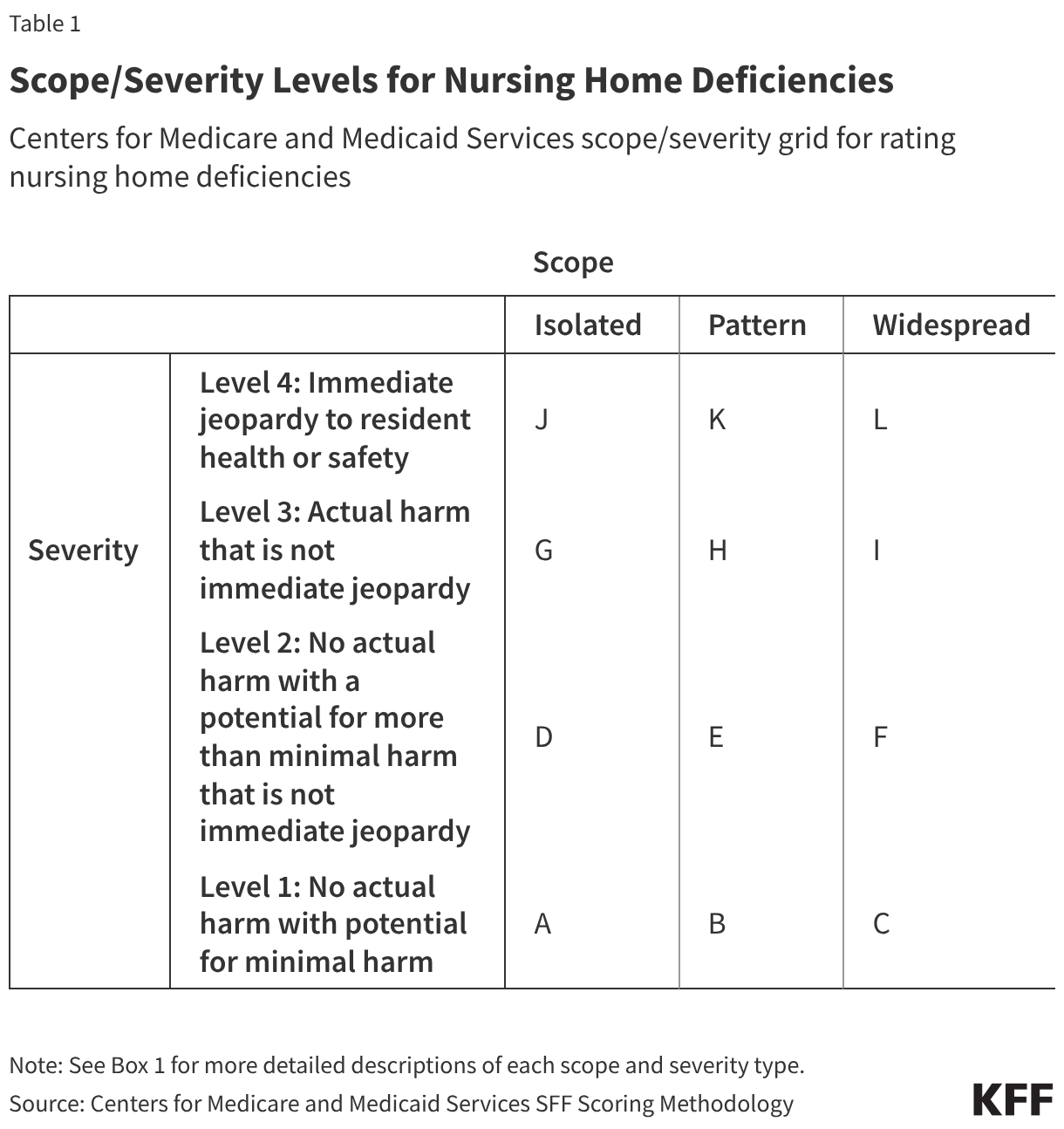
To provide a nuanced understanding of quality failures, CMS employs a sophisticated system to evaluate deficiencies based on their "scope" and "severity." This framework assigns each deficiency a Scope/Severity score, represented by letters A through L, with A being the least serious and L the most. This detailed classification enables policymakers, residents, and families to gauge the gravity of problems within a nursing home.
-
Scope Levels:
- Isolated: The deficiency affects only one or a very limited number of residents or employees, and/or is confined to a very limited area or few locations within the facility.
- Pattern: More than a very limited number of residents or employees are affected, or the situation has occurred in more than a limited number of locations, though not dispersed throughout the entire facility.
- Widespread: Problems causing the deficiency are pervasive throughout the facility, representing a systemic failure that has affected, or has the potential to affect, a large portion or all residents or employees.
-
Severity Levels:
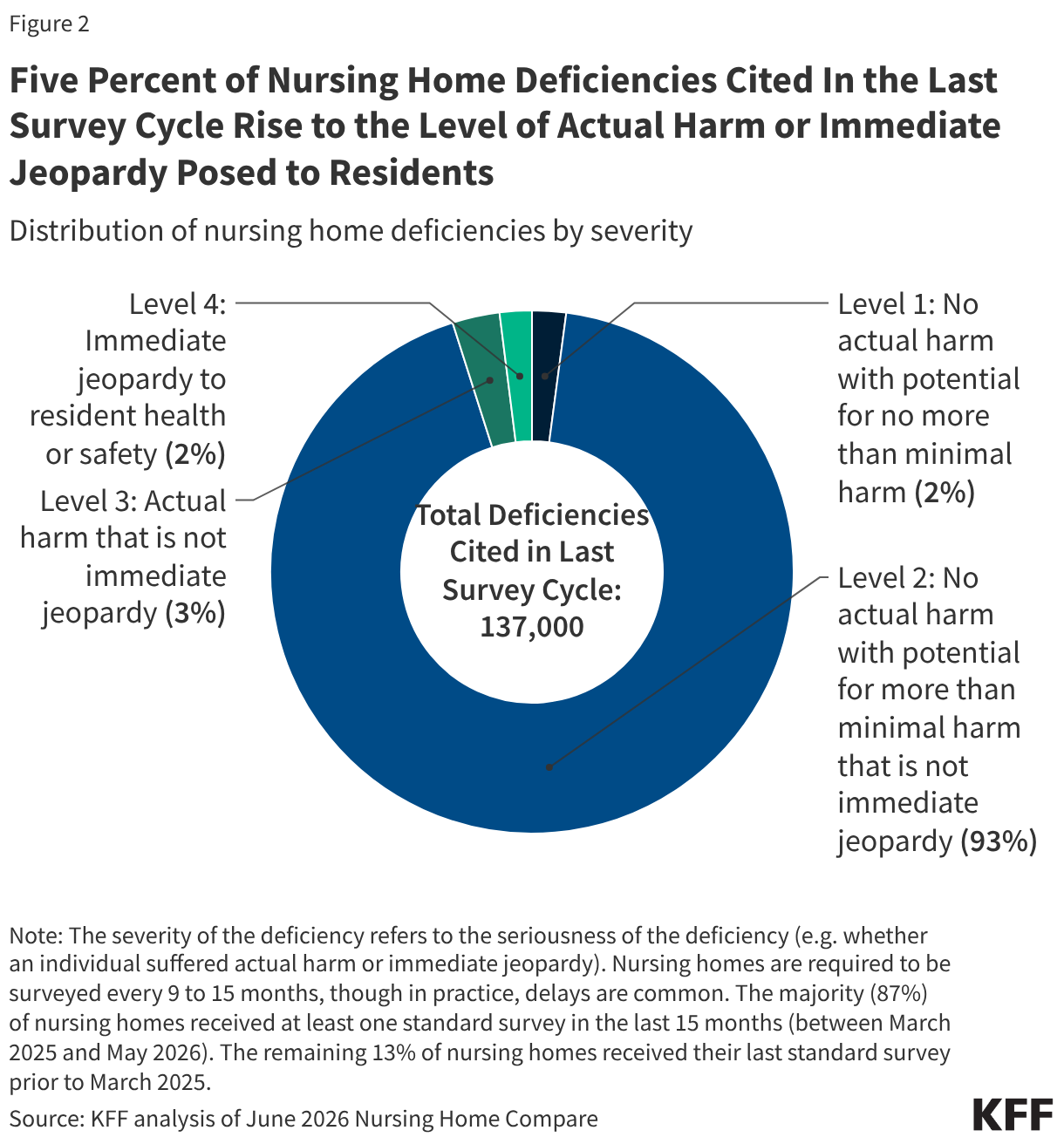
- Level 1 (No actual harm with potential for minimal harm): A deficiency posing no more than a minor negative impact on the resident.
- Level 2 (No actual harm with a potential for more than minimal harm that is not immediate jeopardy): Noncompliance resulting in minimal discomfort to the resident and/or having the potential to compromise their ability to maintain or reach their highest practicable well-being.
- Level 3 (Actual harm that is not immediate jeopardy): Noncompliance resulting in a negative outcome that has compromised the resident’s ability to maintain or reach their practicable well-being.
- Level 4 (Immediate jeopardy to resident health or safety): A critical situation requiring immediate corrective action, as the facility’s noncompliance has caused, or is highly likely to cause, serious injury, harm, impairment, or death to a resident.
Analysis of Deficiency Data: A Glimpse into Quality Gaps
The KFF analysis reveals a sobering reality regarding the nature of deficiencies found in U.S. nursing homes. While all deficiencies represent a failure to meet federal standards, their potential impact on residents varies significantly.
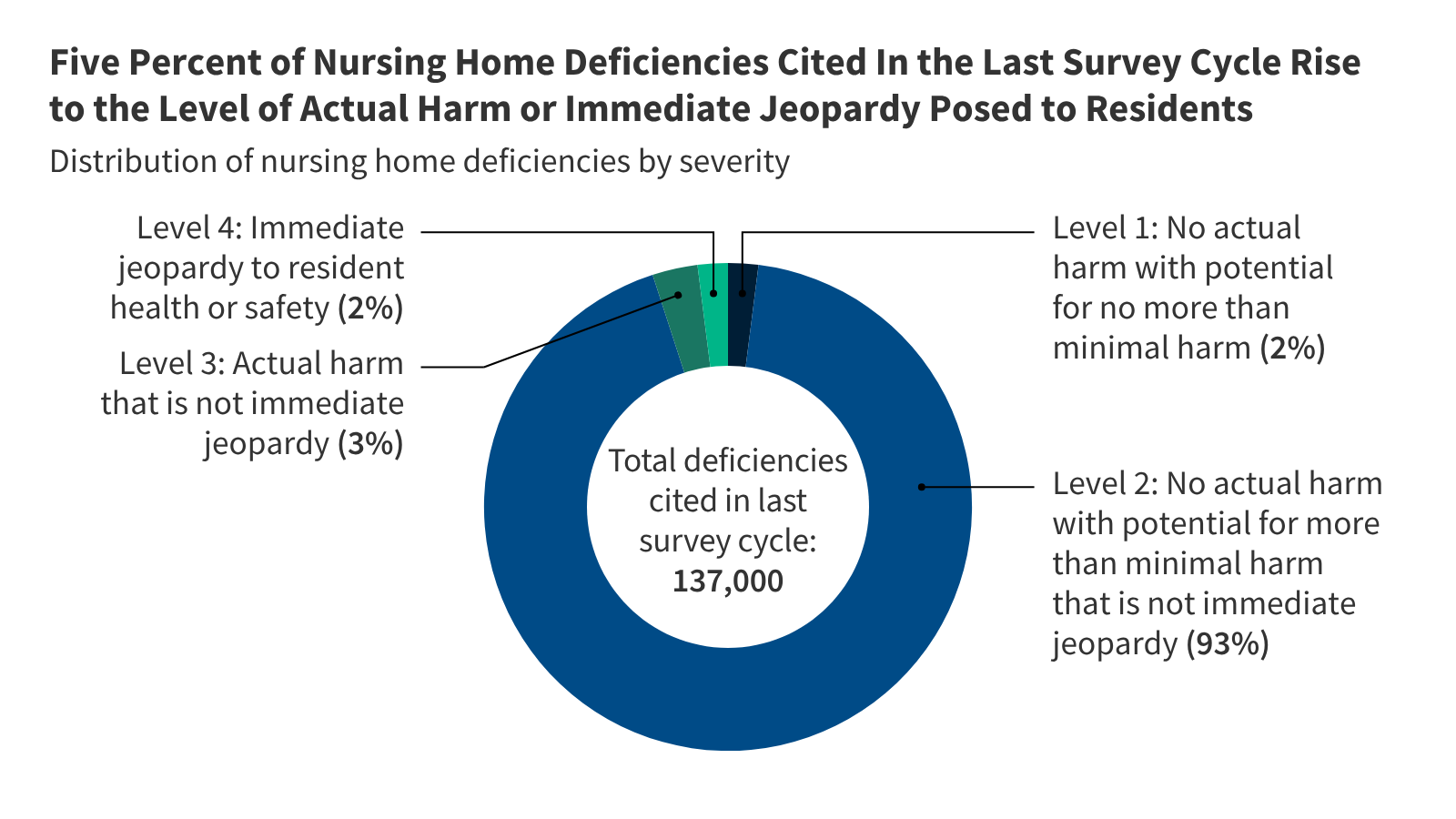
A small but critical segment, approximately five percent of all deficiencies cited in the last survey cycle, falls into the most severe categories: Level 3 (actual harm) or Level 4 (immediate jeopardy to resident health or safety). These are the most egregious failures, indicating situations that have either directly caused serious injury, harm, impairment, or death, or possess a high likelihood of doing so. In 2026, about 28% of all nursing homes reported at least one of these highly concerning deficiencies. The vast majority of these severe deficiencies (5,900 out of 6,700 total Level 3/4 deficiencies) were categorized as having an isolated scope (codes G and J), suggesting that while the harm was severe, it might not have been widespread across the entire facility, though still utterly unacceptable for the affected residents.
Examples of these critical deficiencies include:
-
Deficiencies with Code G (Level 3 severity, Isolated):
- "Facility failed to ensure a resident’s bedside rail was raised up while the resident was in bed. This failure resulted in the resident falling out of bed and sustaining a fracture through the right femur." This example illustrates a direct failure in safety protocols leading to significant physical harm.
- "Facility failed to ensure care and services were provided in accordance with professional standards of practice for a resident who was experiencing a change in condition. This failure resulted in a resident’s unnecessarily prolonged physical distress and anxiety lasting until the resident made arrangements to be taken to the hospital, where they were diagnosed with pneumonia and influenza." This points to a failure in clinical judgment and timely medical intervention, causing preventable suffering.
- "Facility failed to ensure a cognitively impaired resident was fed with nectar thick liquid, liquid thickened with an agent for a nectar like consistency, to prevent aspiration (accidental breathing in of fluid or food into the lungs)." A clear breach of dietary safety protocols for a vulnerable resident, risking life-threatening aspiration.
-
Deficiencies with Code J (Level 4 severity, Isolated):
- "Facility failed to provide a credentialed certified respiratory staff, as required by state law, to perform respiratory assessment, treatment, and monitoring for residents requiring respiratory care." This indicates a systemic failure in staffing for specialized medical care, putting residents with respiratory needs in immediate peril.
- "Facility failed to ensure residents maintained acceptable parameters of nutritional status, obtain admission weights, monitor weights, accurately assess residents for weight loss, and implement and monitor nutritional interventions." A fundamental breakdown in nutritional care, which can lead to severe health deterioration and even death.
While these severe deficiencies represent a smaller proportion, the overwhelming majority—over nine in ten (93%)—of nursing home deficiencies cited were categorized with a Level 2 severity. These indicate situations where no actual harm occurred, but there was a significant potential for more than minimal harm. Nearly seven in ten (69%) of these Level 2 deficiencies were isolated in scope. This category encompasses a broad spectrum of issues that, while not immediately life-threatening, can significantly compromise a resident’s well-being and quality of life if left unaddressed.
Examples of these pervasive, potentially harmful deficiencies include:
-
Deficiencies with Code D (Level 2 severity, Isolated):
- "Facility failed to attend to and answer calls bells in a timely manner for dependent residents." This common complaint highlights inadequate responsiveness, leading to distress and potential neglect.
- "Facility failed to ensure medication was delivered from the pharmacy in a timely manner for one of 24 sampled residents." A critical lapse in medication management, risking adverse health outcomes.
- "Facility failed to ensure resident to resident altercations were thoroughly investigated and reviewed for abuse investigations. This failure placed the residents at risk for repeated incidents, unidentified abuse, and inappropriate corrective actions." A serious failure in resident safety protocols and abuse prevention.
-
Deficiencies with Code E (Level 2 severity, Pattern):
- "Facility staff failed to ensure residents were free from accidents by failing to properly educate staff on how to operate a Hoyer lift, and by failing to maintain supervision of residents from the locked dementia unit." This indicates a pattern of inadequate staff training and supervision, leading to recurring safety risks.
- "Facility failed to ensure residents received current food menus and/or alternative menus that meet their needs, including fresh fruits and vegetables for 5 of 6 residents reviewed for dining services." A systemic issue in nutritional provision, impacting multiple residents.
-
Deficiencies with Code F (Level 2 severity, Widespread):
- "Facility failed to ensure medications were stored appropriately and failed to discard expired medications." A widespread breakdown in medication safety protocols.
- "Facility failed to store food in accordance with professional standards for food safety when expired food items were not discarded." A widespread failure in basic food safety and hygiene.
The Critical Link: Staffing Levels and Quality Outcomes
One of the most profound insights from the KFF analysis underscores the undeniable link between staffing levels and the severity and prevalence of deficiencies. The data unequivocally demonstrates that nursing homes with low staffing levels are significantly more likely to report more severe and/or widespread deficiencies compared to facilities with high staffing levels. Specifically, a higher share of low-staffing facilities reported Level 3 or 4 severity deficiencies (32% vs. 18% for Level 3; 27% vs. 10% for Level 4). This correlation extends to the scope of deficiencies as well, with low-staffing homes reporting a greater likelihood of widespread or pattern deficiencies (67% vs. 38% for widespread; 82% vs. 65% for pattern).
This finding is not merely correlational; it speaks to the fundamental operational capacity of a nursing home. Insufficient staffing directly impacts the ability of facilities to provide adequate direct care, monitor residents effectively, maintain hygiene standards, prevent accidents, and respond promptly to changing resident needs. When staff are stretched thin, the risk of errors, neglect, and systemic failures dramatically increases. This evidence provides robust support for long-standing calls from resident advocates and policymakers, including the Biden administration, for the implementation of federal minimum staffing standards, recognizing that adequate staffing is not merely a cost factor but a foundational prerequisite for ensuring resident safety and quality of life.
Methodology and Data Integrity
The insights presented in this analysis are drawn from Nursing Home Compare, a publicly available dataset maintained by CMS, offering a comprehensive snapshot of approximately 14,600 Medicare and/or Medicaid-certified nursing homes. The data used for this KFF analysis, downloaded in June 2026, specifically focused on health deficiencies from the most recent survey cycle. After filtering from an initial list of 418,000 deficiencies, the analysis concentrated on approximately 137,000 deficiencies identified in the most recent surveys, predominantly conducted between January 2024 and May 2026. To provide concrete illustrations, KFF reviewed a random sample of 70 survey reports from various states to identify specific examples of cited deficiencies. The term "nursing home" is used consistently to align with the dataset’s terminology, encompassing both Medicare skilled nursing facilities and Medicaid nursing facilities.
Broader Implications and the Path Forward
The findings from this detailed analysis underscore the persistent vulnerabilities within the U.S. nursing home sector and the critical need for sustained, robust oversight. The correlation between low staffing and severe deficiencies highlights a fundamental operational weakness that demands policy intervention, such as federal minimum staffing mandates, increased funding for recruitment and training, and improved wages for direct care workers.
The ongoing prevalence of deficiencies, particularly those indicating actual harm or immediate jeopardy, necessitates a renewed commitment to comprehensive and timely inspections. The reported reduction in federal validation inspections due to budget constraints is a concerning trend that must be reversed to ensure the integrity of state-level oversight. Furthermore, enhancing transparency around nursing home ownership and financial structures, as advocated by many, could help hold facilities and their corporate owners more accountable for care quality.
Ultimately, ensuring that the 1.2 million residents in U.S. nursing homes receive the high-quality, safe, and dignified care they deserve requires a multi-faceted approach. This includes strengthening regulatory frameworks, increasing resources for oversight agencies, addressing chronic staffing shortages, and empowering residents and their families through robust complaint mechanisms and accessible data. The objective, factual analysis of deficiency data serves as a vital tool, not just for identifying problems, but for guiding informed policy decisions that can transform the future of long-term care in America.
Related posts: