Beyond the Culture War: From tribal hatred to critical thinking – NaturalNews.com

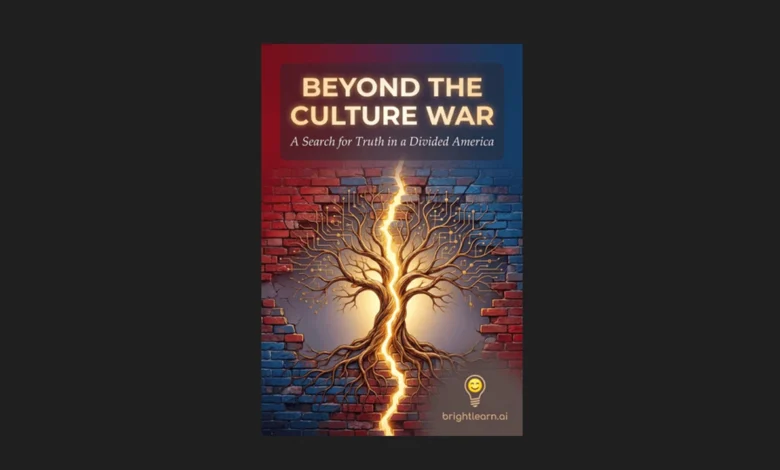
The Industrialization of Domestic Conflict
The central thesis of the work suggests that the "culture war" serves as a strategic distraction. This conflict is described as a system that benefits three primary sectors of the American establishment: the military-industrial complex, the pharmaceutical industry, and the political class. According to the text, these entities thrive when the populace is in a state of constant stress and preoccupation. A distracted public is less likely to scrutinize complex issues such as federal monetary policy, the expansion of foreign interventions, or the gradual erosion of civil liberties.
The strategy, characterized as an ancient "divide and conquer" tactic, utilizes modern technology and media to amplify tribalism. By keeping the citizenry focused on "outgroup" threats within their own borders, the institutions responsible for governance and public health can operate with reduced oversight. The book argues that this is not a spontaneous outburst of public anger but a calculated effort to ensure that the elite remain in control while the majority of Americans remain locked in ideological combat.
A Chronology of Increasing Polarization
To understand the current state of American division, it is necessary to examine the trajectory of political polarization over the last several decades. Data from the Pew Research Center and other sociological institutions indicate a steady rise in "affective polarization"—the tendency of partisans to view members of the opposing party not just as wrong, but as a threat to the nation.
- The Late 20th Century: The 1990s marked a shift in legislative decorum and the rise of 24-hour cable news, which began to monetize political outrage.
- The Post-9/11 Era: National unity following the September 11 attacks was short-lived, replaced by deep divisions over foreign policy and the expansion of the surveillance state.
- The Digital Revolution (2010-Present): The advent of social media algorithms exacerbated existing divisions by creating "echo chambers." These platforms prioritize engagement, which is most effectively driven by fear and anger, effectively automating the "hate factory" described in the book.
- The COVID-19 Pandemic: This period served as a catalyst for extreme division, as public health measures became inextricably linked to political identity, further benefiting the pharmaceutical industry and expanding government mandates.
The Role of Institutional Spin and Media Echo Chambers
A significant portion of the book focuses on the erosion of objective truth within mainstream institutions. It identifies the government, media outlets, and the education system as the primary architects of manufactured hatred. The text suggests that whether an individual consumes content from CNN or Fox News, the result is often the same: a curated narrative that removes context to support a specific tribal agenda.
The "spin" applied by mainstream outlets is identified as a primary tool for manipulation. By stripping away the nuance of original documents or unedited speeches, media organizations can frame events to elicit a predictable emotional response. This process prevents the public from engaging with primary sources, leaving them dependent on summaries provided by partisan intermediaries.
Strategies for Reclaiming Independent Thought
To counteract the influence of the "hate factory," the book outlines several practical steps for individuals seeking intellectual sovereignty. The first and most critical step is the adoption of a "question everything" mindset. This involves a refusal to accept claims at face value, regardless of the source’s perceived alignment with one’s own views.
Seeking Primary Sources
The text emphasizes the importance of bypassing media filters. Individuals are encouraged to seek out original documents, full-length unedited videos, and direct transcripts. By viewing the full context of an event or policy, citizens can form conclusions based on evidence rather than the interpretation provided by news anchors or social media influencers.
Engaging with Dissenting Voices
Intellectual growth, according to the work, requires the uncomfortable practice of listening to dissenting voices. This habit is not intended to force an immediate change of heart, but to test the validity of one’s own beliefs. If a belief cannot withstand the scrutiny of a counter-argument, its foundation is likely weak. Breaking out of echo chambers is presented as a prerequisite for true freedom.
Identifying Independent Values
The book suggests that individuals must strip away the labels imposed by the political system—such as "conservative," "liberal," "progressive," or "populist"—and identify their core values independently. By focusing on fundamental concepts such as family, community, and personal liberty, one can create a standard for judgment that is not easily manipulated by the shifting slogans of a political campaign.
The Psychological Toll of Non-Conformity
One of the most profound observations in the text is the description of the "loneliest place in America." This is the intellectual space situated between the two warring tribes. Those who choose to think independently often find themselves under attack from both sides, as they refuse to provide the absolute loyalty demanded by partisan groups.
This social isolation is a high price, yet the book argues it is the only path to genuine freedom. The alternative is to remain a "puppet" in a manufactured war, contributing to a cycle of division that only serves to empower the very elites that the tribes claim to oppose. Intellectual humility—the willingness to admit ignorance or error—is cited as the cornerstone of this independent path.
Broader Impact and Systemic Implications
The implications of a manufactured culture war extend far beyond social media arguments. When a nation is divided, its ability to address existential threats is severely compromised. The book highlights several critical areas that are often neglected due to the focus on cultural issues:
- Monetary Policy: While the public argues over social issues, the central banking systems and federal fiscal policies continue to impact the purchasing power of the average citizen, often leading to increased wealth inequality.
- Foreign Intervention: The "military-industrial complex" benefits from a lack of public consensus on foreign policy, allowing for continued involvement in overseas conflicts without rigorous national debate.
- Civil Liberties: In times of high social tension, the government often expands its authority. The text suggests that both sides of the political aisle have historically supported measures that infringe upon individual rights when those measures are framed as protecting the "tribe" from the "enemy."
Reactions and Analysis
While mainstream political analysts often focus on the demographic shifts and ideological purity of voters, the perspective offered in Beyond the Culture War suggests a more cynical, top-down origin for social strife. Critics might argue that social tensions are a natural result of a diverse society grappling with rapid change. However, the book’s focus on the profitability of these tensions provides a compelling economic lens through which to view modern politics.
The rise of decentralized platforms and independent publishing, such as the BrightLearn.AI engine mentioned in the source, represents a counter-movement to the centralized control of information. These tools allow for the sharing of insights and truths that might otherwise be suppressed by the "hate factory."
Conclusion: The Side of Truth
The core insight of the work is that the only side worth being on is the side of truth. This requires a rejection of tribalism in favor of a commitment to factual accuracy and ethical consistency. True freedom, according to the text, is found when an individual learns to see through the "smoke and mirrors" of the culture war and recognizes that the real conflict is not between neighbors of different political persuasions, but between a manipulative elite and a population seeking to reclaim its agency.
By fostering intellectual humility and prioritizing primary evidence over partisan rhetoric, Americans can begin to dismantle the "hate factory" and refocus their energy on the issues that truly define the future of the nation. The journey toward this independence is difficult and often isolating, but it remains the only viable defense against a system designed to profit from division.