The United States’ Extensive Global Health Commitment: A Deep Dive into FY 2024 Programs and Beyond

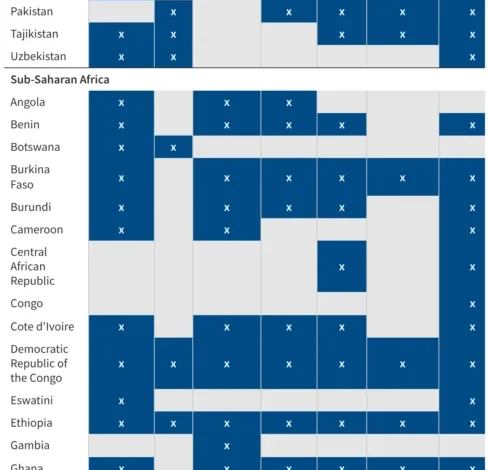
The United States maintains a robust and far-reaching commitment to global health, actively supporting programs in over 80 countries worldwide, with its influence extending further through regional initiatives and significant contributions to multilateral organizations. This comprehensive engagement, as reflected in the latest FY 2024 data, underscores a strategic imperative that intertwines humanitarian values with national security and economic stability. The breadth of U.S. programs is remarkable, often operating across multiple critical health areas within each partner nation, addressing challenges ranging from infectious diseases to maternal and child well-being and bolstering global health security. Key programmatic pillars include the President’s Emergency Plan for AIDS Relief (PEPFAR), Tuberculosis (TB) prevention and treatment, the President’s Malaria Initiative (PMI), Family Planning and Reproductive Health (FP/RH), Maternal and Child Health (MCH), Nutrition, and Global Health Security. A newly released tracker provides an invaluable overview of these bilateral global health programs by country and region, offering unprecedented transparency into the operational footprint of U.S. efforts for the current fiscal year.
A Legacy of Global Health Leadership: Historical Context and Evolution
The United States’ engagement in global health is not a recent phenomenon but rather a cornerstone of its foreign policy that has evolved significantly over decades. While early efforts following World War II saw the establishment of agencies like the U.S. Agency for International Development (USAID) focusing on development assistance, including health infrastructure and basic medical services, a more targeted and expansive approach began to crystallize in the late 20th and early 21st centuries.
The late 1980s and 1990s witnessed a growing awareness of the devastating impact of infectious diseases, particularly the burgeoning HIV/AIDS epidemic. This crisis served as a powerful catalyst, prompting a re-evaluation of how the U.S. could leverage its scientific prowess and financial resources to address global health threats. The turning point arrived with the launch of the President’s Emergency Plan for AIDS Relief (PEPFAR) in 2003. This landmark initiative, unparalleled in scale and ambition, revolutionized the global fight against HIV/AIDS by providing comprehensive prevention, treatment, and care services to millions in affected countries, primarily in Africa. PEPFAR not only saved countless lives but also established a new paradigm for U.S. global health diplomacy, demonstrating the power of sustained, targeted investment.
Following PEPFAR’s success, the U.S. expanded its focus to other high-burden diseases. The President’s Malaria Initiative (PMI) was launched in 2005, aiming to dramatically reduce malaria-related deaths, particularly among pregnant women and young children. Simultaneously, efforts against Tuberculosis were intensified, recognizing its co-epidemic relationship with HIV/AIDS and its standalone threat. The scope broadened further to include fundamental health areas such as Maternal and Child Health (MCH), recognizing that healthy mothers and children are the bedrock of prosperous societies, and Family Planning and Reproductive Health (FP/RH), which empowers individuals and communities. The importance of Nutrition also gained prominence as a foundational element impacting all other health outcomes.
In recent years, the concept of Global Health Security (GHS) has risen to the forefront, particularly in the wake of outbreaks like Ebola and the COVID-19 pandemic. This shift reflects a critical understanding that health threats anywhere can rapidly become health threats everywhere. U.S. global health programs have thus increasingly integrated efforts to strengthen partner countries’ capacities for disease surveillance, rapid response, and public health emergency preparedness, recognizing that robust national health systems are the first line of defense against global pandemics. This historical trajectory illustrates a consistent, albeit evolving, commitment, moving from generalized aid to highly strategic and integrated interventions.
Scope and Reach: A Global Footprint
The U.S. global health enterprise represents a vast network of partnerships and programs. Directly operating in over 80 countries, predominantly in sub-Saharan Africa, Asia, and Latin America, the U.S. ensures that its resources are deployed where the need is most acute and where strategic impact can be maximized. Beyond these direct bilateral engagements, the U.S. extends its reach through significant financial contributions to multilateral organizations such as the Global Fund to Fight AIDS, Tuberculosis and Malaria, the World Health Organization (WHO), and Gavi, the Vaccine Alliance. These contributions amplify U.S. impact by pooling resources with other donors and leveraging the specialized expertise and global coordination mechanisms of these international bodies.
Furthermore, regional initiatives play a crucial role, addressing health challenges that transcend national borders, such as cross-border disease surveillance, regional supply chain management for health commodities, and training programs that benefit multiple countries. This multi-pronged approach — bilateral, multilateral, and regional — ensures a comprehensive and adaptable response to the diverse and dynamic landscape of global health challenges. The U.S. stands as the largest donor to global health, with its contributions often forming the backbone of health systems and disease control efforts in many low- and middle-income countries.
Detailed Examination of Key Program Areas
The FY 2024 data highlights the diverse portfolio of U.S. global health programs, each designed to tackle specific health challenges with evidence-based interventions:
-
President’s Emergency Plan for AIDS Relief (PEPFAR): As the largest commitment by any nation to address a single disease, PEPFAR has fundamentally altered the course of the HIV/AIDS epidemic. Since its inception, it has provided antiretroviral treatment to millions, prevented millions of new infections, and supported orphans and vulnerable children. Its current strategy emphasizes achieving epidemic control by supporting equitable access to prevention, treatment, and care, strengthening health systems, and ensuring sustainable national responses. PEPFAR’s success is a testament to sustained political will, scientific innovation, and robust partnerships with host governments and civil society.
-
Tuberculosis (TB): Despite being preventable and curable, TB remains a leading infectious killer globally. U.S. programs focus on accelerating diagnosis, expanding access to effective treatment regimens, including those for drug-resistant TB, and strengthening laboratory capacity. Efforts are also directed at preventing TB among vulnerable populations, such as those living with HIV, and improving data surveillance to track the epidemic and inform targeted interventions.
-
President’s Malaria Initiative (PMI): PMI has been instrumental in dramatically reducing malaria mortality and morbidity in target countries. Its strategy is built on a foundation of proven, cost-effective interventions: distribution of insecticide-treated bed nets, indoor residual spraying, prompt diagnostic testing, and administration of artemisinin-based combination therapies (ACTs). PMI also invests in strengthening health worker training, surveillance systems, and supply chain management to ensure these interventions reach those who need them most.
-
Family Planning and Reproductive Health (FP/RH): U.S. support for FP/RH programs is crucial for improving maternal and child health outcomes, empowering women, and fostering economic development. These programs provide access to a range of contraceptive methods, counseling services, and information on reproductive health, enabling individuals to make informed decisions about family size and spacing. This investment contributes to fewer unintended pregnancies, reduced maternal mortality, and improved health for women and their children.
-
Maternal and Child Health (MCH): U.MCH programs are comprehensive, addressing the health needs of women, infants, and children across the continuum of care. This includes promoting antenatal care, safe delivery practices, postnatal care for mothers and newborns, childhood immunizations, and integrated management of childhood illnesses. By focusing on critical interventions during pregnancy, childbirth, and early childhood, these programs aim to drastically reduce preventable maternal and child deaths.
-
Nutrition: Often seen as a cross-cutting issue, U.S. nutrition programs are vital for enhancing the effectiveness of other health interventions. Addressing malnutrition, especially in the first 1,000 days of life, is critical for preventing stunting, improving cognitive development, strengthening immunity, and reducing susceptibility to infectious diseases. Programs include promoting breastfeeding, providing micronutrient supplementation, and supporting community-based nutrition education.
-
Global Health Security (GHS): The GHS agenda represents a proactive investment in preventing, detecting, and responding to infectious disease threats. U.S. support helps countries build core capacities required by the International Health Regulations (IHR), including robust surveillance systems, well-equipped laboratories, trained rapid response teams, and effective emergency operations centers. This area also involves strengthening zoonotic disease control and promoting biosafety and biosecurity to mitigate risks from high-threat pathogens.
Transparency and Data: The FY 2024 Tracker
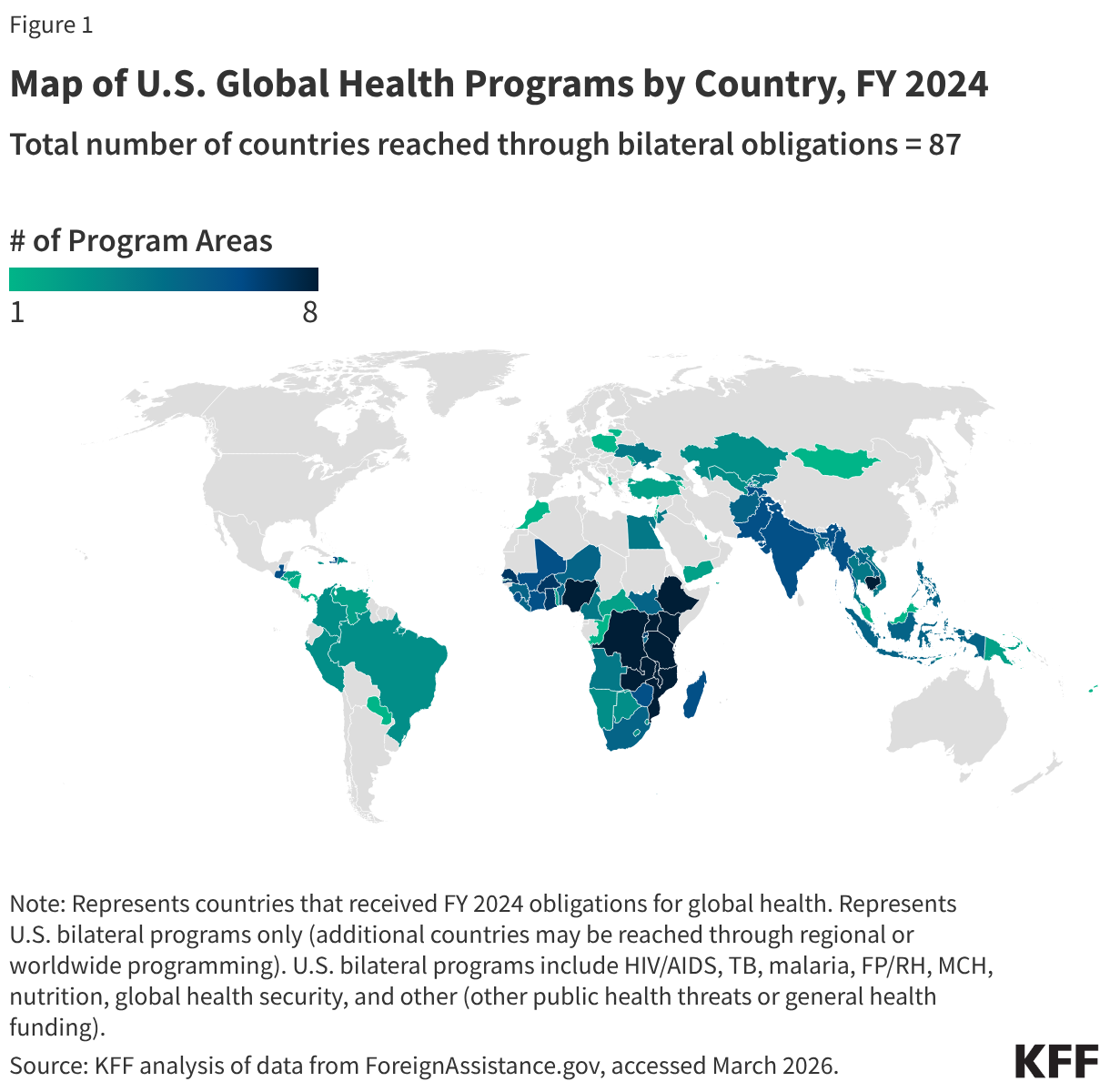
The introduction of the U.S. bilateral global health programs tracker for FY 2024 marks a significant step towards enhanced transparency and accountability. This tool provides a clear, accessible overview of where U.S. health investments are being made and in which specific programmatic areas. By reflecting the current fiscal year’s data, the tracker offers a timely snapshot of U.S. priorities and operational presence. While the tracker itself focuses on the presence of programs by country and region, it complements other resources like the KFF U.S. global health country-level funding tracker, which provides detailed financial allocations. The tracker’s utility is underscored by its visual components, which typically include:
- A choropleth map illustrating the geographical distribution of U.S. global health programs, highlighting the countries where the U.S. maintains a direct programmatic presence.
- A detailed table breaking down U.S. bilateral global health programs by specific program area and country, allowing users to see which health interventions are active in each partner nation.
- A summary table presenting the number of countries where the U.S. operates global health programs, categorized by program area and region, providing a high-level overview of regional strategic focus.
This commitment to publicly available, updated data is crucial for policymakers, implementing partners, researchers, and the public to understand the scope and impact of U.S. global health engagement.
Statements and Perspectives from Related Parties
The extensive nature of U.S. global health programs naturally elicits reactions and statements from a broad spectrum of stakeholders.
U.S. Government Officials consistently articulate the dual benefits of these investments. High-ranking officials from the Department of State and USAID frequently emphasize that global health initiatives are not merely humanitarian gestures but strategic investments in American prosperity and security. A spokesperson from USAID might state, "Our global health programs are a testament to American generosity and a smart investment in our collective future. By strengthening health systems abroad, we protect ourselves from emerging threats, foster stable societies, and open new avenues for economic partnership." Similarly, an official from the Department of Health and Human Services (HHS) could highlight the scientific collaboration inherent in these programs, noting, "Working hand-in-hand with international partners, we are advancing medical science, developing new interventions, and building a global network of health expertise that benefits everyone."
International Partners and Non-Governmental Organizations (NGOs) typically express profound appreciation for U.S. leadership and financial commitment. Dr. Tedros Adhanom Ghebreyesus, Director-General of the WHO, has often acknowledged the indispensable role of U.S. funding in global health efforts. Implementing partners on the ground, such as Doctors Without Borders or various local health organizations, would likely echo this sentiment. A representative from a major NGO working in sub-Saharan Africa might comment, "U.S. support, especially through initiatives like PEPFAR and PMI, has been absolutely transformative. It allows us to reach remote communities, provide life-saving treatments, and build sustainable health capacity that would otherwise be impossible."
Beneficiary Countries often voice gratitude for the tangible improvements in public health outcomes. Ministers of Health in countries receiving U.S. assistance frequently point to declining rates of HIV/AIDS, malaria, and child mortality as direct results of these partnerships. A health minister from a partner nation might declare, "The partnership with the United States has been fundamental to our nation’s health progress. Their consistent support has enabled us to train our healthcare workers, equip our clinics, and protect our most vulnerable citizens, truly changing the trajectory of our public health."

Implications and Future Outlook
The U.S. global health commitment carries profound implications across multiple dimensions:
Impact on Global Health Outcomes: The most direct implication is the demonstrable improvement in health metrics worldwide. Millions of lives have been saved from HIV/AIDS, malaria, and TB. Maternal and child mortality rates have significantly decreased in many regions. Immunization coverage has expanded, and access to essential health services has grown. These interventions not only prevent suffering but also contribute to longer, healthier, and more productive lives, breaking cycles of poverty and disease.
U.S. Soft Power and Diplomacy: Global health initiatives are powerful tools of U.S. soft power. By assisting countries in addressing their most pressing health challenges, the U.S. fosters goodwill, builds stronger diplomatic ties, and enhances its reputation as a reliable and compassionate global leader. This engagement creates shared values and common objectives, strengthening alliances and promoting stability in regions critical to U.S. interests.
Economic Benefits: Healthy populations are more productive populations. By investing in global health, the U.S. indirectly contributes to economic development in partner countries. Reduced disease burden means fewer days lost to illness, a stronger workforce, and less strain on national health budgets. Furthermore, preventing global pandemics protects the U.S. economy from the massive disruptions and costs associated with widespread disease outbreaks, as vividly demonstrated by the COVID-19 pandemic.
Challenges and Future Directions: Despite significant progress, the landscape of global health is constantly evolving. Future challenges include the emergence of new infectious diseases, the growing threat of antimicrobial resistance, the impact of climate change on health (e.g., vector-borne diseases, food insecurity), and the rise of non-communicable diseases in low-income settings. Ensuring the sustainability of programs, transitioning leadership to partner countries, and leveraging new technologies like artificial intelligence and genomics will be crucial. The commitment to equitable access, particularly for marginalized populations, will remain a guiding principle.
The Role of Data and Evaluation: The emphasis on trackers and data-driven approaches, as highlighted by the FY 2024 tracker, signals a continued commitment to evidence-based policymaking and accountability. Robust monitoring and evaluation are essential to ensure that investments are effective, programs are adaptable, and resources are utilized efficiently to achieve maximum impact.
In conclusion, the United States’ extensive global health programs, as evidenced by the FY 2024 data, represent a multifaceted and enduring commitment to improving health outcomes worldwide. This commitment is driven by a blend of humanitarian values, national security interests, and the recognition of global interconnectedness. Through strategic investments, strong partnerships, and a continuous adaptation to evolving challenges, the U.S. remains a pivotal force in shaping a healthier, more secure future for all.
Related posts: