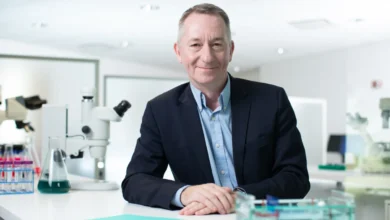
Faces of Discovery: Dr. Parminder Singh Unravels the Complex Interplay of Inter-Organ Communication and Aging


The Buck Institute for Research on Aging is a leading institution dedicated to understanding the fundamental biology of aging and developing interventions that promote longer, healthier lives. At the heart of its groundbreaking work are the dedicated scientists who tirelessly pursue these ambitious goals. Through its monthly "Faces of Discovery" series, the Buck Blog introduces these remarkable individuals, shedding light on their research and the profound impact it holds for humanity. This month, we feature Dr. Parminder Singh, a Postdoctoral Research Fellow whose work delves into the intricate communication networks between organs and their crucial role in shaping the aging process.
A Serendipitous Path to Biological Inquiry
Dr. Parminder Singh’s journey into the realm of biological research was not a direct one. Initially drawn to the precise logic of physics and mathematics during his high school years, he harbored reservations about pursuing biology. However, a pivotal intervention by his school principal, who recognized a latent aptitude in young Parminder, led to his enrollment in biology as an additional subject. This seemingly minor academic adjustment proved to be a watershed moment, quietly redirecting the course of his academic and professional life.
"It’s a bit ironic that I almost did not study biology in high school," Dr. Singh recounts. "At that time, I was far more drawn to physics and mathematics and had seriously considered skipping biology altogether. What changed that path was my school principal, who persuaded my parents to have me take biology as an additional subject because he believed I had a natural aptitude for it. That decision quietly shaped everything that followed."
Once immersed in the subject, Dr. Singh found himself captivated not only by the scientific principles but also by the compelling narratives of discovery. The history of biological breakthroughs, the tenacious researchers behind them, and the unwavering curiosity that fueled their progress resonated deeply with him. This fascination evolved into a natural inclination for understanding and articulating complex biological concepts, a skill he now views as a form of storytelling.
"Over time, I realized that understanding core concepts and explaining them to others came naturally to me," he explains. "Teaching, discussing, and simplifying complex ideas felt less like work and more like storytelling. Today, I see myself less as someone who just runs experiments and more as a storyteller of biology, trying to uncover new narratives about how our bodies age, adapt, and sometimes fail." This intrinsic motivation to unravel and share stories of biological processes continues to drive his research endeavors.
Deconstructing the Aging Conversation: Inter-Organ Communication as a Key
The central question that drives Dr. Singh’s research at the Buck Institute, under the guidance of Dr. Pankaj Kapahi, is a fundamental yet complex one: how does the continuous dialogue between our body’s organs influence the aging process? While decades of scientific advancement have provided a comprehensive understanding of individual organ functions in isolation, the intricate communication pathways between these organs—mediated by hormones, metabolites, neural signals, and immune responses—remain a frontier of exploration, particularly as they relate to aging.
"Over the past few decades, science has made enormous progress in understanding what individual organs do and how they function in isolation," Dr. Singh states. "We also know that organs constantly communicate with one another through hormones, metabolites, nerves, and immune signals. What remains far less understood is how disruptions in this interorgan communication reshape the aging process itself. In other words, we know the parts, but we still do not fully understand the conversation between them, especially how that conversation changes with age."
This research is particularly critical because disruptions in inter-organ communication are not uniform. Internal and external factors can disturb these vital signals, and the way individuals respond to these disturbances varies significantly. A key aspect of Dr. Singh’s work is investigating these variations, with a significant focus on sex-specific differences.
The Critical Role of Sex-Specific Aging
A significant and often overlooked aspect of aging research is the divergence in how biological processes and disease progression manifest between males and females. This is particularly evident during major life transitions, such as menopause. Dr. Singh’s research highlights that inter-organ communication patterns differ between sexes, and these differences can have profound implications for health and disease.
"Importantly, inter-organ communication differs between males and females, particularly during major life transitions such as menopause," Dr. Singh emphasizes. "These sex-specific differences are often overlooked in biomedical research, yet they may explain why diseases emerge differently in men and women. By understanding how and why these communication networks break down, we may be able to design more precise, sex-specific therapies that target aging at its root rather than treating its consequences."
This emphasis on sex-specific aging is crucial. Historically, much of biomedical research has been conducted with a male-centric approach, potentially leading to a deficit in understanding the unique biological trajectories of women as they age. The implications of this oversight are significant, impacting the development of effective diagnostic tools and therapeutic interventions.
Unpacking the Biological Ramifications of Menopause and Sugar Metabolism
Dr. Singh’s research delves into two interconnected areas that significantly influence aging: the biological effects of menopause and the impact of excess sugar on the body.
The Impact of Ovarian Function Loss on Aging
Menopause, a natural life stage for women, is characterized by the gradual cessation of ovarian function, leading to reduced production of hormones and signaling molecules. While often discussed in the context of reproductive health, the impact of menopause extends far beyond fertility. The ovaries play a vital role in communicating with numerous organs throughout the body, including the brain, and are instrumental in regulating various aspects of metabolism and overall health.

The research also considers surgical menopause, which can occur following bilateral oophorectomy (the surgical removal of both ovaries). This procedure, historically performed on hundreds of thousands of women annually worldwide, can result in an abrupt loss of ovarian signaling, especially when performed before the natural age of menopause. This abrupt transition can have stark biological consequences compared to the gradual onset of natural menopause.
To investigate these effects, Dr. Singh’s team utilizes a laboratory model involving bilateral ovariectomy (OVX) in animal subjects, which mimics the surgical removal of ovaries. This model allows for a detailed examination of how the disruption of ovarian communication with other organs influences aging and health.
"Our research suggests that the hypothalamus is particularly sensitive to the loss of ovarian signals," Dr. Singh explains. "The hypothalamus is a small but essential region of the brain that helps regulate sleep, metabolism, appetite, body temperature, energy balance, and hormonal activity. When communication between the ovaries and the brain is disrupted, certain neurons in the hypothalamus may become less functional, while nearby support cells can become more reactive. These changes may help us understand why symptoms and health risks such as sleep disturbances, metabolic dysfunction, fatigue, and cognitive changes can become more common after menopause or surgical removal of the ovaries."
These findings have significant implications for understanding the complex constellation of symptoms and health challenges that can emerge post-menopause, offering a potential pathway to developing targeted interventions.
The Accelerating Effects of Excess Sugar on Cellular Aging
The second pillar of Dr. Singh’s research examines how excessive sugar consumption and impaired sugar metabolism can accelerate the aging process. Over time, high sugar intake can lead to the formation of harmful molecules known as advanced glycation end products (AGEs). AGEs are generated when sugars react with proteins, fats, or other cellular components, a process that can significantly interfere with the normal function of cells and tissues.
"Our research suggests that the buildup of these harmful molecules may promote cellular aging and damage in multiple organs, including the brain, blood vessels, and eyes," Dr. Singh notes. "For example, glycation can make blood vessels stiffer, increase cellular stress, and contribute to inflammation. These changes may raise the risk of age-related conditions such as cardiovascular disease, metabolic disorders, and cognitive decline."
The implications of this research are far-reaching, given the global epidemic of type 2 diabetes and obesity, both strongly linked to high sugar consumption. Understanding the cellular mechanisms by which AGEs contribute to aging can pave the way for dietary interventions and therapeutic strategies to mitigate their harmful effects.

The Interconnectedness of Reproductive Aging and Metabolic Health
Crucially, Dr. Singh’s research highlights the intricate connection between these two areas of study. Menopause can alter an individual’s metabolism and diminish the body’s capacity to cope with metabolic stress. Consequently, the detrimental effects of excess sugar may become amplified after menopause, potentially accelerating specific aspects of the aging process.
"Importantly, these two areas of research may be closely connected," Dr. Singh states. "Menopause can alter metabolism and reduce the body’s ability to cope with metabolic stress. As a result, the harmful effects of excess sugar may become more pronounced after menopause, potentially accelerating certain aspects of aging."
By investigating the interplay between reproductive aging and metabolic health, Dr. Singh’s work aims to identify novel strategies for promoting healthier aging and reducing the incidence of age-related diseases later in life. This holistic approach recognizes that aging is not a monolithic process but rather a complex interplay of various biological factors.
Simplifying Complex Science for a Broader Audience
Dr. Singh’s ability to distill complex scientific concepts into understandable narratives is a testament to his passion for science communication. When explaining his research to a curious grandmother with limited biology background, he employs an analogy that vividly illustrates the core of his work.
"I often explain my research like this," he says. "The organs in your body are like members of a family that are constantly talking to each other. The brain acts as the head of the family, keeping everyone organized and calm, while the ovaries send important messages that help guide those decisions. During menopause, those ovarian messages naturally fade, and the brain, suddenly has less information to work with. When that happens, the brain can go into a kind of panic mode. Like a family leader under stress, it starts sending confused or rushed signals, and that anxiety spreads to the rest of the family, meaning other organs such as the liver, as well as fat tissues and muscles."
He continues, "At the same time, our everyday habits, like eating lots of sugary foods, create sticky byproducts in the body that slowly interfere with how cells do their jobs, almost like dust clogging up machinery. When menopause and these metabolic stresses happen together, certain parts of the brain become more sensitive and start aging faster than others. My work is about figuring out why this happens and how we can support the brain so it stays healthier and more resilient as we grow older."
This relatable analogy effectively conveys the central themes of inter-organ communication, the hormonal shifts during menopause, and the detrimental effects of metabolic dysregulation on brain health and overall aging.

The Promise of Prevention: A Paradigm Shift in Aging Care
The ultimate goal of Dr. Singh’s research is to fundamentally improve our understanding of aging, with a particular focus on women’s health. Many age-related diseases develop insidiously over time, influenced by biological changes that begin long before any symptoms manifest. By identifying how menopause and metabolic stress impact brain function at early stages, Dr. Singh’s work opens up unprecedented opportunities for preventive interventions rather than solely relying on late-stage treatments.
"My work aims to improve how we understand aging, particularly in women," Dr. Singh states. "Many age-associated diseases develop gradually, shaped by biological changes that begin long before symptoms appear. By identifying how menopause and metabolic stress affect brain function early, this research opens opportunities for prevention rather than late-stage treatment."
Furthermore, his research underscores the critical need for sex-specific approaches to health and aging. Recognizing and addressing the biological differences between sexes can lead to the development of more precise strategies for preserving brain and metabolic health, ultimately contributing to a higher quality of life as individuals age. This could translate into personalized health plans that account for individual biological profiles, leading to more effective and targeted interventions.
The Dawn of a New Era in Aging Research
Looking ahead, Dr. Singh expresses profound optimism about the trajectory of aging research. The next decade, he believes, is poised to be a transformative period, driven by rapid advancements in artificial intelligence, high-throughput screening technologies, and the analysis of large-scale biological datasets. These innovations are empowering researchers to move beyond single-insight discoveries and to rapidly identify new therapeutic targets and test existing drugs at an unprecedented pace.
"The next decade feels destined to be a defining era for research on aging," Dr. Singh exclaims. "With advances in artificial intelligence, high throughput screening, and large-scale data, we are no longer limited to finding one insight at a time. We can identify new therapeutic targets and rapidly test thousands of existing drugs against them, turning ideas into action at an unprecedented speed."
This accelerating pace of discovery is particularly invigorating for Dr. Singh, who views the field as a constantly unfolding landscape of new knowledge. "What makes this especially exciting for me is the feeling that the field is constantly unfolding in front of us," he shares. "I am learning every day, watching new patterns emerge, and hoping to uncover my own discoveries along the way. At its heart, this work is still about stories, uncovering how biology works, where it breaks, and how it adapts. I look forward to finding those stories and sharing them with all of you as they continue to unfold."
Dr. Parminder Singh’s dedication to unraveling the complexities of aging, with a keen focus on inter-organ communication and sex-specific biology, exemplifies the innovative spirit and profound commitment to improving human health that defines the Buck Institute for Research on Aging. His work promises not only to deepen our scientific understanding but also to pave the way for more effective, personalized, and preventative strategies for healthier aging.
Related posts: