The Shadow Civilization: A provocative case against the modern world – NaturalNews.com

The Five Pillars of the Shadow Civilization
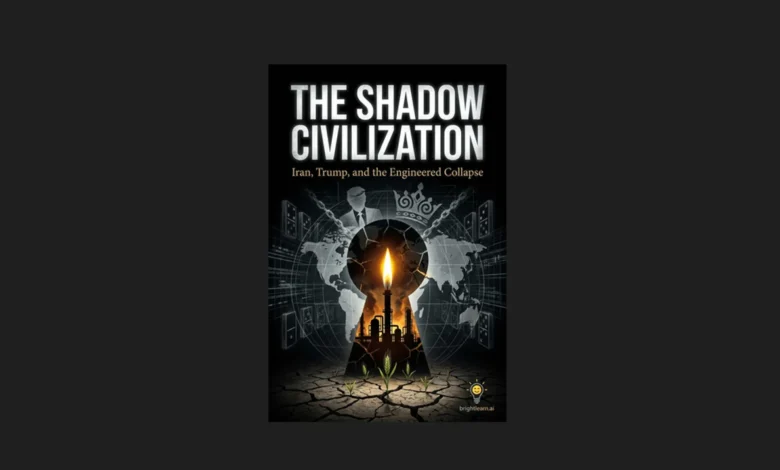
The framework of the book is built upon five distinct layers of societal control, which Adams identifies as the "Shadow Pillars." Each pillar represents a fundamental human need—sustenance, trade, health, governance, and truth—that has allegedly been subverted by industrial and political interests.
1. The Transformation of Food into Petrochemicals
The "Shadow Food" layer examines the modern industrial agricultural complex. Adams argues that contemporary food production has shifted from a biological process to a chemical one. Since the early 20th century, specifically following the commercialization of the Haber-Bosch process in 1913, the world’s ability to feed its growing population has become inextricably linked to fossil fuels. This process, which synthesizes ammonia from natural gas to create nitrogen fertilizer, currently supports approximately 50 percent of the global population.
The book asserts that this reliance has resulted in "shadow food"—calories that lack the nutrient density of traditional crops. Supporting data from the United States Department of Agriculture (USDA) over the last several decades indicates a measurable decline in the mineral content of fruits and vegetables. Adams posits that this nutrient depletion is not an accidental byproduct of efficiency but a systemic design that facilitates the growth of the "Shadow Medicine" sector by fostering a population with chronic health deficiencies.
2. The Architecture of Shadow Money
The economic analysis focuses on the transition of the global financial system in 1971, when President Richard Nixon ended the direct convertibility of the U.S. dollar to gold. This event, often referred to as the "Nixon Shock," birthed the petrodollar system. By establishing an agreement with Saudi Arabia to price oil exclusively in dollars, the United States created a permanent global demand for its currency, regardless of domestic productivity.
Adams describes "Shadow Money" as a system of fractional reserve banking where currency is generated through debt rather than tangible wealth. He argues that this inflationary model serves as a hidden tax, eroding the purchasing power of the working class while enriching the financial institutions that manage the debt. The book advocates for a return to "sound money"—gold and silver—as a defensive measure against what it characterizes as the inevitable devaluation of fiat currencies.
3. The Capture of Medical Institutions
In the "Shadow Medicine" section, the narrative explores the "pharmaceutical industrial complex." Adams details how regulatory agencies, such as the Food and Drug Administration (FDA) and the Centers for Disease Control and Prevention (CDC), have allegedly been captured by the industries they are tasked with overseeing. The book cites the high percentage of agency budgets funded by industry fees as evidence of a conflict of interest.
The text posits that the medical system prioritizes high-revenue, patentable treatments over low-cost natural remedies. It further characterizes the global response to the COVID-19 pandemic as a "test run" for societal compliance, utilizing mandates and censorship to suppress dissenting scientific opinions.
4. The Illusion of Political Choice
"Shadow Elections" addresses the concept of the "uni-party," suggesting that the traditional divide between Democrats and Republicans is largely superficial. According to Adams, both parties serve a broader globalist agenda focused on expansionist foreign policy and centralized economic control.
The presidency of Donald Trump is presented as a disruption to this system. The book argues that the intense institutional opposition to Trump’s administration was not based on partisan politics but on his status as an outsider who threatened the established "shadow" bureaucracy. This section analyzes the mechanics of political theater and the ways in which public discourse is steered to maintain the status quo.
5. The Corruption of Scientific Inquiry
Finally, "Shadow Science" examines the politicization of the scientific method. Adams highlights how climate modeling, vaccine safety studies, and even diagnostic tools like the Polymerase Chain Reaction (PCR) tests have been manipulated to support specific policy goals. The book argues that "consensus science" has replaced the traditional scientific method of rigorous questioning and replication, leading to a loss of public trust in foundational institutions like the National Institutes of Health (NIH) and the World Health Organization (WHO).
Geopolitics and the Energy-Food Nexus
A significant portion of the work is dedicated to the volatile relationship between energy security and global stability, with a specific focus on Iran and the Middle East. Adams provides a detailed analysis of the Strait of Hormuz, a narrow waterway between the Persian Gulf and the Gulf of Oman. At its narrowest point, the strait is only 21 miles wide, yet it serves as the transit point for approximately 21 million barrels of oil per day—roughly one-fifth of global petroleum consumption.
The book explains that a disruption in this region would have immediate and catastrophic effects on the global food supply. Because natural gas is the primary feedstock for nitrogen fertilizer, an energy blockade or a spike in prices would lead to a direct reduction in crop yields. Adams refers to this as the "geopolitics of starvation," noting that the most vulnerable nations—such as Yemen, Ethiopia, and Bangladesh—would face immediate famine.
The Case Study of India
Adams highlights India as a primary example of the "subsidy trap." The Indian government provides massive subsidies for electricity and fertilizer to support its agricultural sector, which feeds over 1.4 billion people. However, this system has led to soil degradation and the depletion of groundwater. When global energy prices rise, the cost of maintaining these subsidies becomes unsustainable, threatening the country’s internal stability and food security.
Chronology of the Engineered Collapse
To provide context, the book outlines a timeline of events that have led to the current global state:
- 1913: The establishment of the Federal Reserve and the commercialization of the Haber-Bosch process.
- 1944: The Bretton Woods Agreement establishes the U.S. dollar as the world’s reserve currency.
- 1971: The Nixon Shock decouples the dollar from gold, leading to the petrodollar era.
- 2008: The global financial crisis leads to "quantitative easing," further expanding the debt-based money supply.
- 2020: The COVID-19 pandemic introduces mass lockdowns, digital surveillance, and unprecedented central bank intervention.
- Present: The shift toward "Net Zero" policies and "Energy Lockdowns," which Adams argues are designed to centralize control over energy and food.
Broader Impact and Implications
The "engineered collapse" described in the book is not viewed as a random occurrence but as a managed transition. Adams suggests that the same strategies used during the pandemic—fear-based messaging, censorship of dissent, and the centralization of authority—are now being applied to the "climate crisis."
The text warns of a developing infrastructure for domestic control, including the expansion of detention centers and the implementation of digital IDs. It references "Project Red Horse," a long-standing FEMA contingency plan for civil unrest, as a framework that could be repurposed for American citizens during a period of systemic collapse.
Reactions and Counter-Perspectives
While the book’s assertions are supported by a segment of the alternative media and proponents of decentralization, mainstream analysts often view such narratives as speculative. Critics argue that the complexities of global trade and the interdependence of nations make a "managed collapse" unlikely, as it would be detrimental to the interests of the elites themselves. However, supporters of Adams’ work point to the increasing frequency of supply chain disruptions and the rising cost of living as empirical evidence that the current system is reaching its breaking point.
Conclusion: The Path to Resilience
Despite the dire nature of the "Shadow Civilization," Adams concludes with a message of strategic preparation. He argues that the collapse of hollow, centralized systems provides an opportunity for the resurgence of authentic, localized communities.
The book emphasizes several key areas for individual and community action:
- Economic Independence: Moving assets into physical gold, silver, and decentralized currencies.
- Food Sovereignty: Investing in home gardening, seed saving, and local agricultural networks to bypass the petrochemical food chain.
- Health Autonomy: Learning natural medicine and reducing dependence on the pharmaceutical industry.
- Information Integrity: Utilizing decentralized communication platforms to circumvent institutional censorship.
The Shadow Civilization: Iran, Trump, and the Engineered Collapse posits that while the "shadows of empire" are long, they are ultimately unsustainable. The work serves as a call for a return to foundational principles—truth in science, value in money, and nutrition in food—as the only viable path forward in an era of increasing systemic volatility.