Tracking Medicaid and CHIP Enrollment and Post-Pandemic Renewal Outcomes: A Comprehensive Analysis

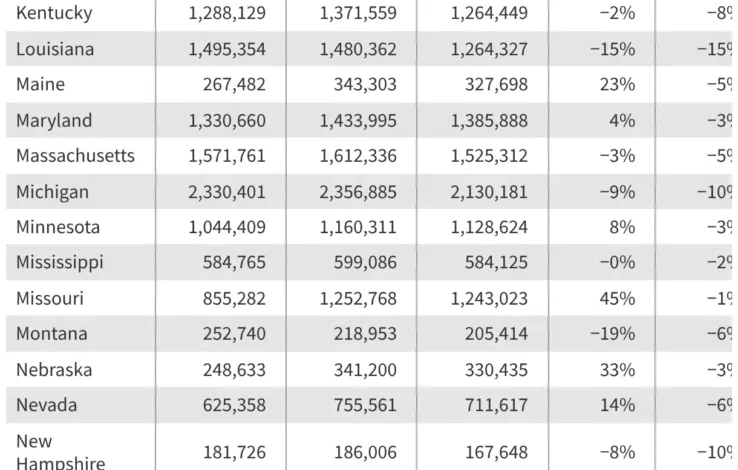
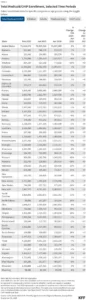
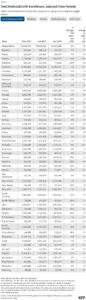
The landscape of public healthcare coverage in the United States has undergone unprecedented shifts over the past several years, transitioning from pandemic-era continuous enrollment protections to a complex period of administrative restructuring known as the "unwinding." According to the latest monthly Medicaid and Children’s Health Insurance Program (CHIP) enrollment data reported by the Centers for Medicare & Medicaid Services (CMS) through the Performance Indicator Project, tracking these metrics remains essential for understanding population health coverage trends. While the data capture full-benefit enrollees and offer critical visibility into nationwide trends, they exclude individuals receiving limited benefits—such as family planning services only—and do not isolate specific eligibility pathways like the Medicaid expansion group.
This data tracking assumes even greater significance in light of legislative adjustments. The 2025 federal budget reconciliation law introduced sweeping changes to the Medicaid program, most notably mandating that adults in the expansion group and certain 1115 waiver programs meet strict work and reporting requirements beginning in January 2027. Policy analysts project that these new stipulations will systematically reduce Medicaid enrollment over the coming decade compared to projections under prior law. Consequently, continuous oversight of enrollment shifts, state-level redetermination outcomes, and compliance metrics is vital for policymakers, healthcare providers, and advocacy groups alike.
Historical Enrollment Trends and the Pre-Pandemic Baseline
To contextualize current numbers, analysts frequently point to February 2020 as a crucial pre-pandemic baseline. This was the month immediately preceding the implementation of the Families First Coronavirus Response Act’s continuous enrollment provision, which prohibited states from disenrolling most Medicaid beneficiaries during the federal public health emergency. Under these protections, national Medicaid and CHIP enrollment swelled to historic highs as millions of Americans maintained continuous coverage regardless of shifts in their income or employment status.
However, this era of continuous enrollment came to an end following the passage of the Consolidated Appropriations Act of 2023, which delinked the continuous enrollment requirement from the formal expiration of the COVID-19 public health emergency. This triggered the massive administrative undertaking known as the unwinding. States were permitted to resume regular eligibility redeterminations starting in spring 2023, a process that required state agencies to re-evaluate the eligibility of tens of millions of enrollees within a compressed timeframe.
Current Enrollment Trends and Post-Unwinding Metrics
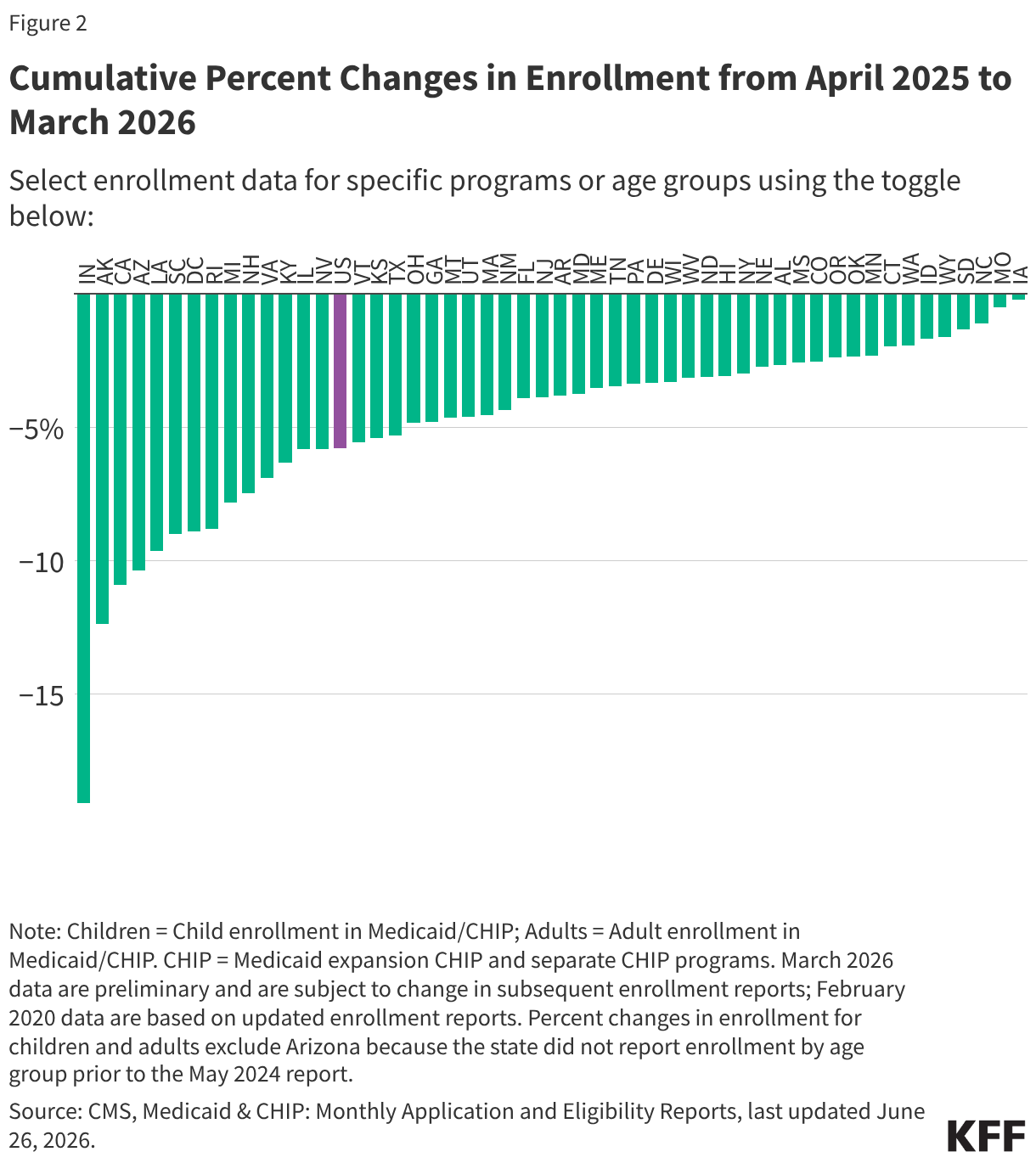
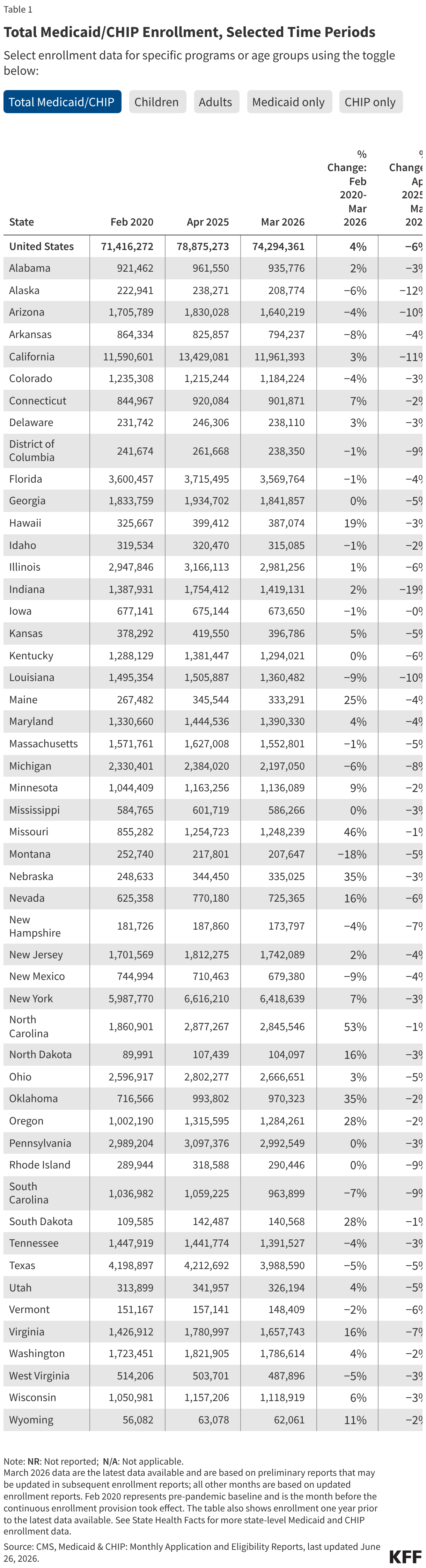
By June 2026, the immediate turbulence of the initial unwinding period had largely stabilized, though the program’s total enrollment footprint remained distinctly lower than its pandemic-era peak. Preliminary CMS reports updated through September 2025 and 2026 illustrate a steadying of numbers across child and adult demographics, as well as distinct tracking for Medicaid-only and CHIP-only populations.
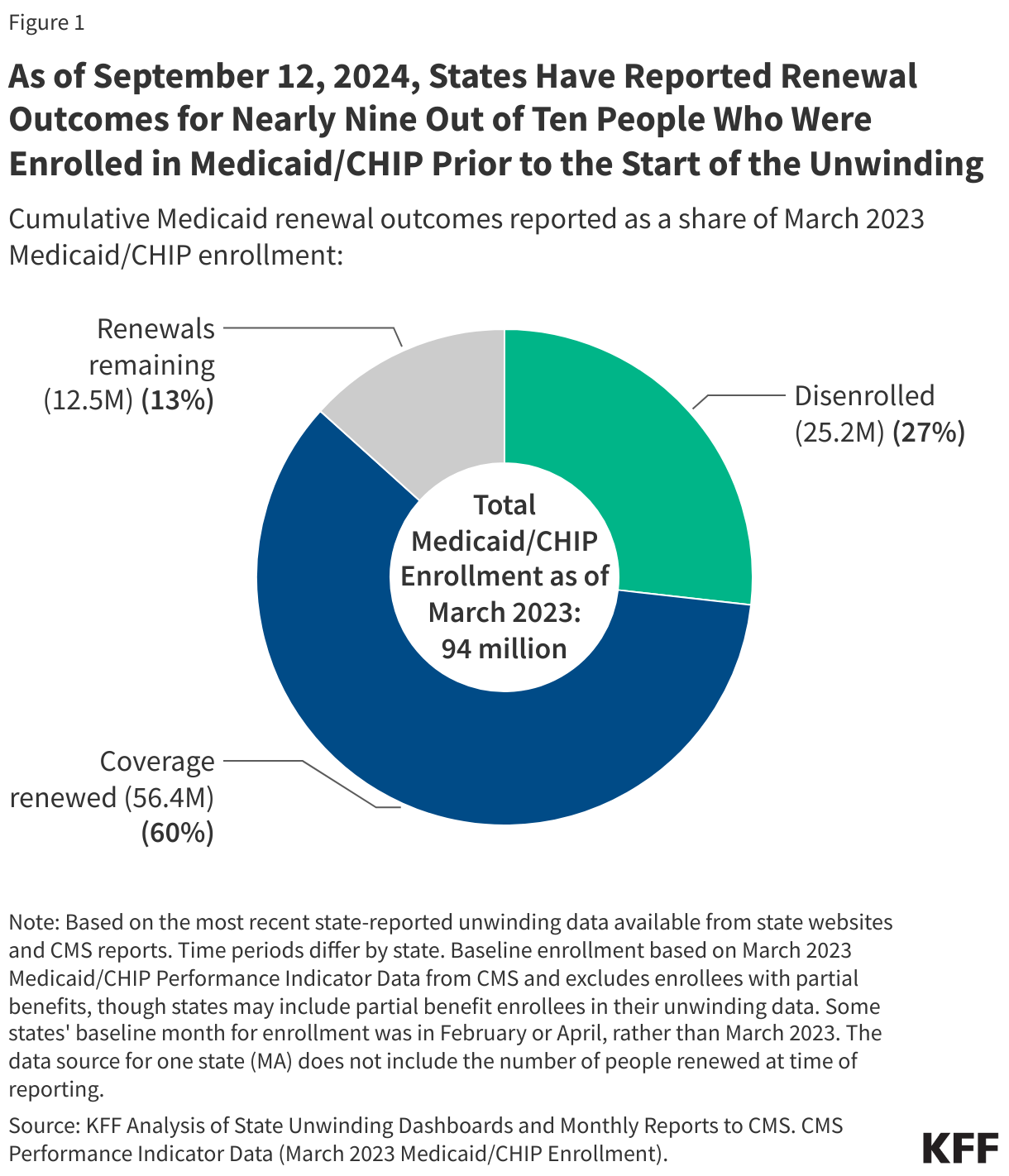
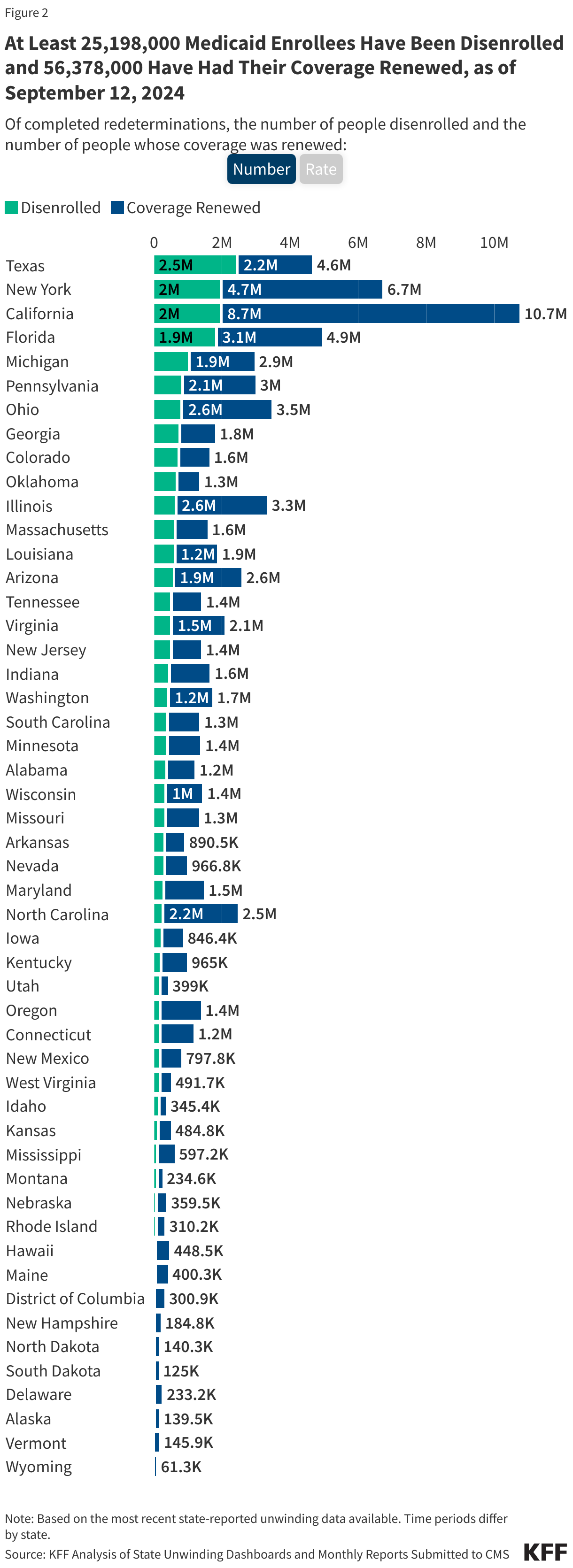
Despite national stabilization, granular state-level data highlights deep disparities in how jurisdictions handled the renewal backlog. By the time most states concluded their initial unwinding phases—with comprehensive baseline figures archived as of September 12, 2024—states had successfully reported renewal outcomes for nearly nine out of ten individuals who were enrolled in Medicaid or CHIP prior to the start of the unwinding. Cumulative data compiled by KFF and CMS reflect that at least 25,198,000 Medicaid enrollees were disenrolled nationwide, while approximately 56,378,000 individuals successfully had their coverage renewed.
The Mechanics of Renewal Outcomes: Ex Parte Renewals vs. Procedural Disenrollments
A critical finding from the unwinding period centers on the stark variance in how states processed renewals. Administrative pathways varied widely, directly influencing whether enrollees retained their health insurance.
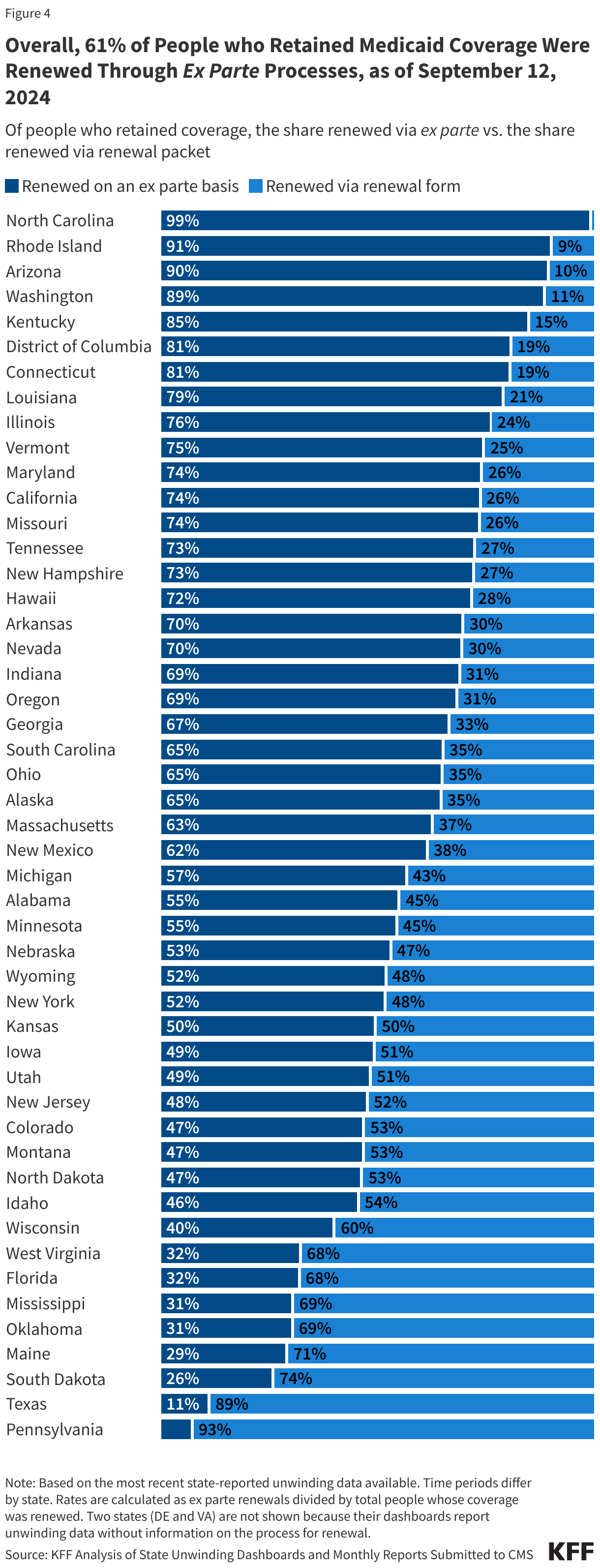
Data analyzing the mechanics of coverage retention reveal that, overall, 61% of individuals who successfully maintained their Medicaid coverage were renewed through "ex parte" processes. Ex parte renewals represent an administrative best practice where the state renews coverage automatically using existing electronic data sources—such as wage databases or supplemental nutrition assistance program (SNAP) records—without requiring the enrollee to complete a physical renewal form or submit documentation. States that robustly invested in automated ex parte systems generally experienced smoother transitions and lower rates of administrative coverage loss.
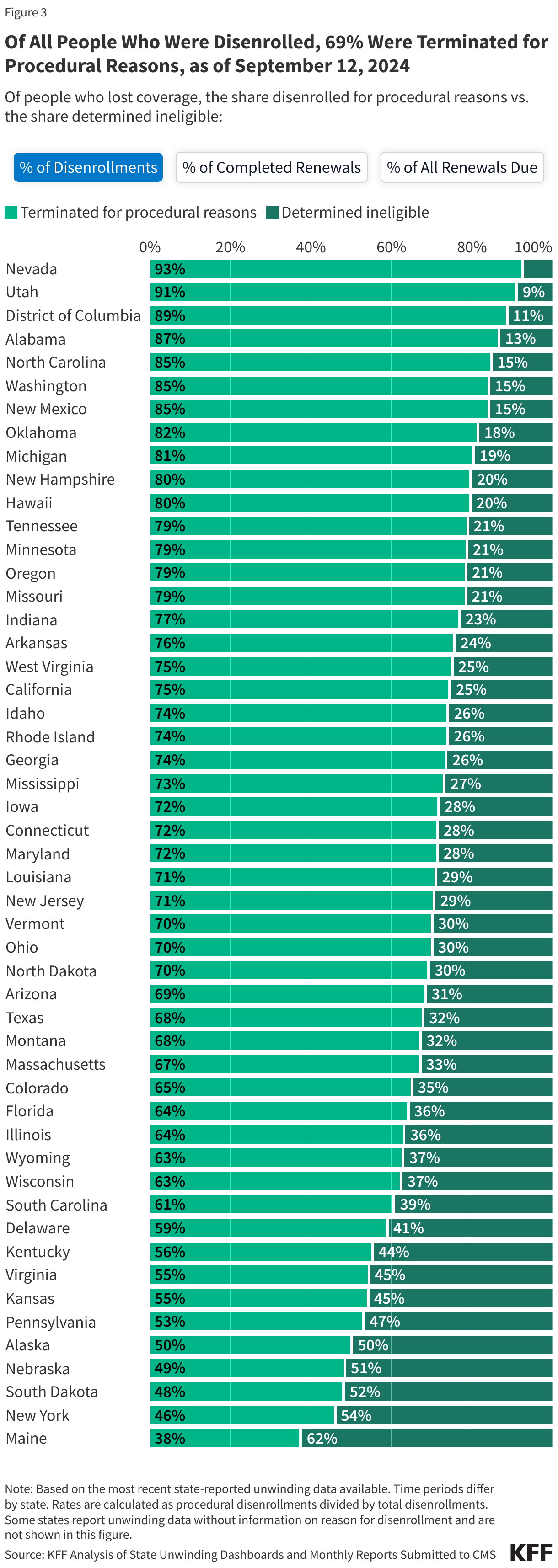
Conversely, millions of individuals lost coverage not because they were formally determined ineligible due to income or circumstance, but due to administrative paperwork barriers. Known as "procedural disenrollments," these terminations occurred when enrollees failed to return renewal packets or when state agencies lacked updated contact information to reach them.
As of the September 12, 2024 cutoff, data underscores the severe impact of procedural hurdles:
- Of all people who were disenrolled, a staggering 69% were terminated for procedural reasons.
- Evaluated against all completed renewals (which include both successful renewals and formal ineligibility terminations), procedural reasons accounted for roughly 21% of outcomes.
- When calculated as a share of all renewals due—including cases still pending at the time of reporting—procedural terminations accounted for approximately 20% of the total pool.
Furthermore, state-level disenrollment rates exhibited wide variation across the country. Rates of disenrollment among completed redeterminations ranged dramatically from a high of 57% in Montana to a low of 12% in North Carolina. This divergence reflected differences in state outreach strategies, technological capabilities, the aggressiveness of timeline pacing, and whether a state had expanded Medicaid under the Affordable Care Act.
Federal Data Alignments and Reporting Discrepancies
While state-reported dashboards and monthly reports often provide the most timely and granular insights, federal data published by the Centers for Medicare & Medicaid Services offer a standardized national baseline. CMS cumulative renewal data through August 2024—incorporating updated metrics submitted by states three months after original filings to account for resolved pending cases—demonstrate similar overarching trends while noting technical caveats.
Federal datasets frequently reflect data lags of several months. Additionally, discrepancies between state-reported dashboards and federal CMS repositories often stem from differing reporting methodologies, such as whether a state reports renewals at the individual level or the case level, or whether a state temporarily paused procedural terminations to implement corrective mitigation strategies. For instance, several states implemented temporary holds or adopted specialized outreach modifications when automated system updates were delayed, attempting to curb excessive administrative churn.
Implications of the 2025 Reconciliation Law and Future Outlook
The conclusion of the initial unwinding phase does not mean public health coverage parameters have settled permanently. The policy environment governing Medicaid is entering a new era of structural transformation following the enactment of the 2025 federal budget reconciliation law.
By tying continued eligibility for certain adult expansion populations and 1115 waiver participants to mandatory work and rigorous reporting hours starting in January 2027, the federal government has fundamentally altered program expectations. Healthcare economists and public policy experts anticipate that these new bureaucratic checkpoints will create a secondary wave of coverage loss. Much like the procedural disenrollments observed during the unwinding, work requirement verification processes are projected to disproportionately impact working-class adults who experience fluctuating hours, gig-economy employment, or administrative hurdles in documenting compliance.
Public health advocates have expressed profound concern that mandatory work provisions will introduce unnecessary friction into safety-net programs, leading to gaps in preventative care, increased uncompensated care burdens for hospitals, and overall poorer health outcomes for low-income populations. Conversely, proponents of the legislation argue that such measures reinforce personal responsibility, encourage workforce participation, and ensure program resources are strictly targeted toward qualifying individuals.
As states adapt to these impending federal requirements while managing ongoing monthly enrollment trackers, transparency and rigorous data collection remain paramount. Stakeholders, researchers, and policymakers continue to rely on comprehensive public dashboards—such as those maintained by CMS and analytical trackers provided by organizations like KFF—to monitor the delicate balance between fiscal responsibility and health security for tens of millions of vulnerable Americans.
Related posts: