Breakthrough in Neural Engineering: The Microfluidic Axialtrode Promises Precision in Brain Research and Future Epilepsy Treatment

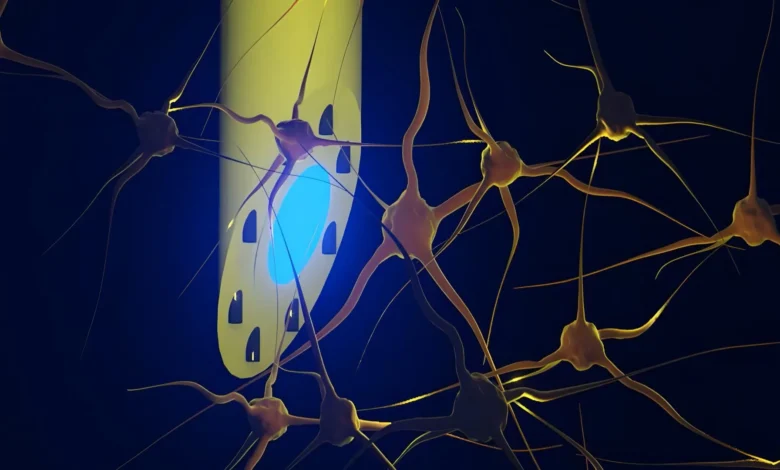
A collaborative team of researchers from the Technical University of Denmark (DTU), the University of Copenhagen, and University College London (UCL) has unveiled a pioneering advancement in neurotechnology: the microfluidic Axialtrode, or mAxialtrode. This needle-thin, flexible implant represents a paradigm shift in how scientists interact with the brain, offering a multifunctional platform that combines electrical recording, optical stimulation, and localized drug delivery within a single, minimally invasive device. The findings, recently detailed in the journal Advanced Science, signal a transition toward more integrated and less intrusive neurological interventions.
The Evolution of Neural Interfacing: From Rigid Probes to Soft Polymers
For decades, the standard for brain implants has been dominated by rigid, silicon-based probes. While effective at recording neuronal spikes, these devices present significant physiological drawbacks. Because the human brain is a soft, gelatinous organ that shifts slightly within the skull, rigid silicon electrodes often cause micro-trauma, leading to chronic inflammation and the formation of glial scars. This reactive tissue growth effectively insulates the electrode, degrading signal quality over time and limiting the long-term viability of the device.
The mAxialtrode addresses these limitations by utilizing soft, biocompatible polymers. Inspired by the principles of fiber-optic manufacturing, the device is created through a thermal drawing process. Researchers heat a large polymer preform—a structural template—and stretch it into an extremely fine, needle-like fiber. This process, akin to drawing fine glass, maintains the integrity of internal structures at a microscopic scale. The resulting implant is less than half a millimeter in diameter, offering a level of flexibility that allows the device to move in tandem with brain tissue, significantly reducing mechanical irritation.
Technical Architecture and Functionality
The mAxialtrode is not merely a sensor; it is an integrated laboratory on a fiber. Its internal architecture is remarkably complex for its size:
- Light-Conducting Core: At the center of the fiber lies an optical conduit that enables optogenetic stimulation. By delivering light to specific depths, researchers can activate or silence genetically sensitized neurons with millisecond precision.
- Microfluidic Channels: Surrounding the central core are eight microscopic channels designed for the delivery of pharmacological agents. This allows for the precise injection of drugs or chemical markers at defined coordinates, enabling researchers to observe the local effect of medication on neural activity in real-time.
- Electrophysiological Arrays: Integrated metal wires within the fiber structure act as recording electrodes. Unlike conventional "flat-ended" optical fibers that can only monitor the area immediately surrounding their distal tip, the mAxialtrode allows for vertical profiling. By placing sensing points along the length of the fiber, scientists can monitor electrical activity across multiple brain layers simultaneously.
This "axial" functionality—the ability to interact with the brain at various depths along a single track—is the core innovation of the device. Previously, mapping neural circuits across multiple depths required the insertion of multiple, bulky probes, which increased the risk of surgical complications and tissue damage.
Chronology of Development and Experimental Validation
The development of the mAxialtrode follows a trajectory typical of high-level bioengineering. The initial concept was spearheaded by Postdoc Kunyang Sui and Associate Professor Christos Markos at DTU, who sought to bridge the gap between static sensing and active therapeutic delivery.
Following the design phase, the team moved into rigorous in vivo validation. Collaborating with neurophysiologists at the University of Copenhagen and UCL, the researchers implanted the device into the brains of laboratory mice. The study focused on two key regions: the cerebral cortex and the hippocampus, both of which are critical to memory, spatial navigation, and the pathology of epilepsy.
The results, published in the peer-reviewed literature, confirmed that the device could successfully:
- Perform optogenetic stimulation using both blue and red light spectrums.
- Record extracellular action potentials (electrical activity) at varying depths.
- Deliver liquid substances at precise, spaced-out intervals (up to 3 mm apart) without cross-contamination.
Critically, the mice showed no behavioral signs of distress or cognitive impairment while carrying the implant, confirming the biocompatibility of the device during chronic observation periods.
Clinical Implications: A New Era for Epilepsy Treatment
The potential for treating epilepsy stands as one of the most promising applications for this technology. Epilepsy is frequently characterized by abnormal, synchronized electrical discharges in specific brain regions. Current surgical interventions for drug-resistant epilepsy often involve the resection of brain tissue, which carries significant risks, or the use of deep brain stimulation (DBS) electrodes that provide broad, non-specific electrical pulses.
The mAxialtrode offers a "closed-loop" potential. In a future clinical scenario, the device could monitor the brain for the early electrical signatures of an impending seizure. Upon detection, it could respond by releasing a precise dose of an anti-epileptic medication directly to the source of the seizure, while simultaneously applying targeted electrical stimulation to recalibrate the neural network. By combining these modalities, the system could significantly reduce the side effects associated with systemic drug administration, such as lethargy or cognitive fog.
Challenges and Future Regulatory Hurdles
Despite the enthusiasm surrounding the device, the research team remains cautious regarding the timeline for human application. Kunyang Sui and his colleagues emphasize that the transition from a research tool in mice to a clinical device for humans involves significant hurdles.
Regulatory frameworks, such as those governed by the FDA in the United States or the EMA in Europe, require extensive long-term safety data. Specifically, researchers must demonstrate that the polymer materials do not degrade in the brain’s chemical environment over periods of years, and that the microfluidic channels remain patent (unblocked) throughout the life of the implant.
Furthermore, the integration of pumps and light sources with a wearable, wireless system for human use remains an engineering challenge. The current setup requires the mice to be tethered to external equipment, which is suitable for controlled lab environments but impractical for patients living their daily lives.
Industry Impact and Broader Neuroscience Context
The mAxialtrode enters a crowded field of neural interface development, yet it distinguishes itself through its multi-modal versatility. Companies and academic labs worldwide are currently racing to develop "neural dust," flexible mesh electrodes, and high-density CMOS probes. However, the unique integration of fluidics and optics within a single sub-millimeter fiber gives the DTU-led team a distinct advantage in studies involving complex neurochemical and electrical feedback loops.
"This device allows us to ask questions that were previously impossible to answer," noted one independent observer in the field of neuro-engineering. "By observing how a specific layer of the cortex responds to a localized chemical nudge while simultaneously recording the output of deeper structures, we are gaining a higher-resolution map of the brain’s internal communication."
As the team moves toward patenting the technology, they are also engaging with clinical partners to define the most viable entry point for the device. While epilepsy is the primary target, other potential applications include the treatment of Parkinson’s disease, chronic pain management, and even advanced brain-computer interfaces (BCIs) that require both sensing and stimulation to function effectively.
The mAxialtrode represents a significant step forward in the quest to decode the brain. By moving away from rigid, single-function tools toward integrated, flexible, and multi-modal systems, the scientific community is slowly gaining the tools necessary to treat the brain not as a static black box, but as a dynamic, responsive, and complex network. As the project advances toward clinical feasibility, the focus will shift from proof-of-concept to long-term reliability, marking a critical transition in the history of medical technology.
Related posts: