Understanding the Subtle Language of Feline Affection and Trust in Domestic Settings

The domestic cat, Felis catus, is frequently misunderstood in popular culture as a solitary or aloof creature, particularly when compared to the highly social and expressive nature of the domestic dog. However, ethological research and behavioral studies conducted over the last several decades have increasingly demonstrated that cats are highly social animals capable of forming deep, enduring, and complex emotional bonds with their human companions. While their expressions of affection are distinct from those of canines, they are no less significant. Understanding these behaviors requires a shift in perspective, moving away from human-centric interpretations of affection and toward an appreciation of feline-specific communication methods.
The Ethology of Human-Feline Bonds
The transition of the cat from a wild predator to a domestic companion began approximately 9,000 to 10,000 years ago in the Near East. Unlike dogs, which underwent significant selective breeding for cooperative work and social responsiveness, cats largely self-domesticated. They adapted to human environments primarily due to the availability of rodent prey attracted to human grain stores. Consequently, the social structure of the domestic cat remains rooted in its ancestral instincts, favoring independence and territorial security.
Despite this history, modern research, such as the 2019 study published in the journal Current Biology by researchers at Oregon State University, confirms that cats exhibit secure attachment styles toward their owners. The study found that 64.3% of kittens and 65.8% of adult cats demonstrated "secure attachment," a metric comparable to that observed in dogs and even human infants. This suggests that the bond between human and cat is rooted in a fundamental biological need for security and social interaction, manifested through subtle behavioral cues.
Deciphering the Language of Trust
In the feline lexicon, trust is synonymous with affection. Because cats are both predators and prey in the wild, their survival depends on their ability to assess threats constantly. Therefore, any behavior that lowers their guard is a definitive indicator of a strong bond.
The Ocular Dialogue: The Slow Blink
One of the most profound displays of feline trust is the "slow blink." When a cat locks eyes with a human and slowly closes and opens its eyelids, it is essentially signaling that it does not perceive the human as a threat. In the wild, staring is an aggressive, predatory posture; by breaking that stare with a slow, deliberate movement, the cat is engaging in a non-verbal peace treaty. Behavioral experts suggest that humans can reciprocate this gesture to strengthen the bond, effectively speaking the cat’s language.
Olfactory Marking and Social Grooming
Cats possess scent glands distributed throughout their bodies, specifically in the temporal regions, cheeks, and chin. When a cat rubs its head or body against a human, it is not merely seeking tactile stimulation; it is participating in "allorubbing." This behavior serves to deposit pheromones on the human, essentially marking them as part of their "in-group." This is a sophisticated social ritual that reinforces group cohesion and creates a shared olfactory signature, providing the cat with a sense of security and familiarity.
Similarly, allogrooming—or the act of a cat licking its human—is a social behavior observed in feline colonies. By grooming a human, the cat is extending its caretaking responsibilities to the owner, reinforcing the social hierarchy and emotional closeness. It is an act of trust that signifies the human is considered a family member or a high-ranking social partner.
Physical Proximity as a Metric of Safety
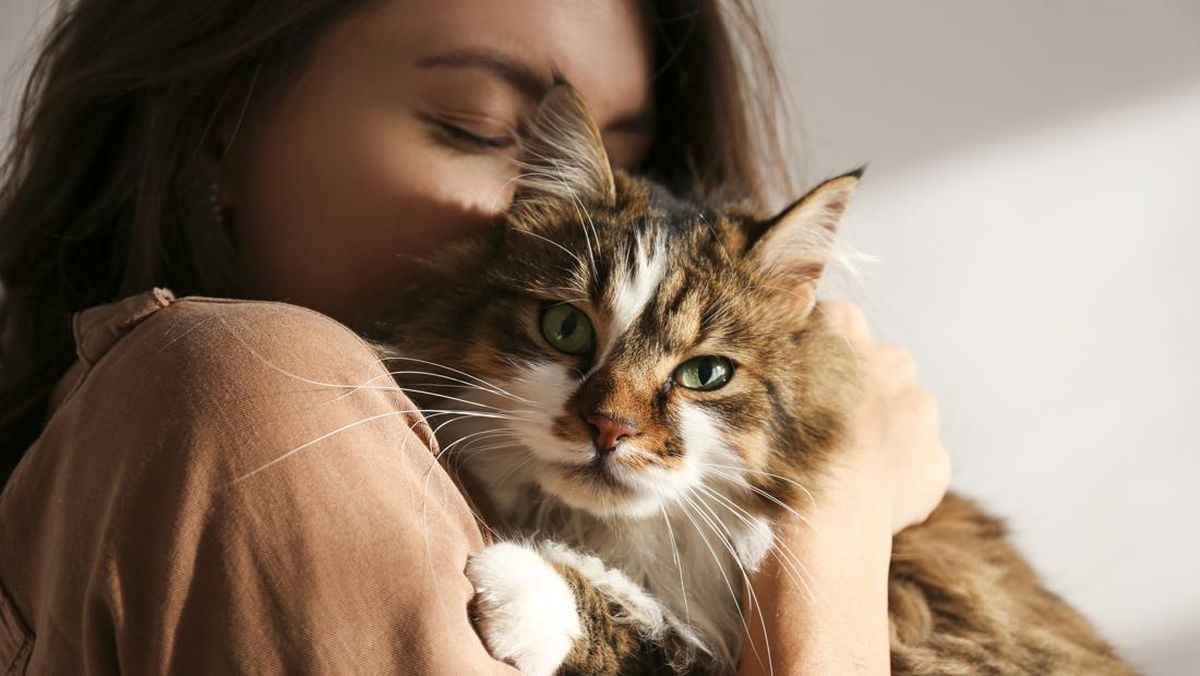
The location a cat chooses for rest is a critical indicator of its psychological state. A cat’s decision to sleep in the same room as its owner, or specifically on or near the owner’s body, is a high-stakes display of vulnerability. In a resting state, a cat is at its most defenseless. By choosing the owner as a "living anchor" during sleep, the cat is demonstrating that it trusts the human to act as a sentinel.
This extends to the behavior of "kneading" or "making biscuits." This rhythmic pressing of the paws is a vestigial behavior from kittenhood, associated with the nursing process. When an adult cat kneads a human, it is in a state of extreme relaxation and contentment. It signifies that the cat associates the human with the safety and comfort it experienced as a kitten.
Chronology and Development of the Bond
The development of these behaviors often follows a specific timeline in a multi-species household. During the first few months of a cat’s life, it learns to associate human presence with the satisfaction of primary needs: food, shelter, and comfort. As the cat matures, these associations transition into emotional attachments.
- Acclimation Phase: During the first weeks of integration, the cat establishes its territory. The human is initially treated as a part of the environment rather than a social peer.
- Observation Phase: The cat begins to monitor human movements, often "shadowing" the owner from a distance to study behaviors and assess predictability.
- Integration Phase: Once the environment is deemed safe, the cat begins to initiate contact. This is when behaviors such as greeting the owner at the door or initiating vocal communication (meowing) begin to manifest.
- Deep Attachment Phase: The cat incorporates the human into its daily survival rituals, such as sleeping nearby, grooming the owner, or sharing "gifts" (prey or toys), signaling a fully formed bond.
Official Responses and Veterinary Perspectives
Veterinary behaviorists emphasize that while these signs are positive, owners must respect feline boundaries to maintain trust. Dr. Mikel Delgado, a noted feline behaviorist, has frequently highlighted that "consent tests"—such as reaching out a finger and waiting for the cat to initiate contact—are crucial for maintaining a healthy relationship. Forcing affection often leads to the degradation of the trust markers listed above. When a cat displays its belly, for instance, it is a sign of extreme trust, but not necessarily an invitation for a belly rub. Many cats consider the abdomen their most vulnerable area and may react defensively if touched there, regardless of how much they trust the human.
Broader Impact and Implications
The psychological impact of human-feline bonds is significant for both parties. Research published by the Journal of Psychosomatic Research indicates that pet ownership, including cat ownership, is associated with lower levels of cortisol, reduced blood pressure, and a decreased risk of cardiovascular disease. For the cat, living in a home with a trusted human significantly reduces the environmental stressors that can lead to behavioral issues, such as anxiety-induced destructive habits or urinary issues.
Furthermore, the act of "talking" or vocalizing to humans is a behavior cats have evolved specifically for human interaction. Wild cats rarely meow at each other; they reserve vocalizations for specific, high-intensity interactions. The fact that a cat has adapted its communication style to facilitate dialogue with a human is a testament to the evolutionary flexibility of the species and the strength of the cross-species relationship.
Conclusion
The markers of feline affection—from the subtle slow blink to the more overt act of bringing "gifts"—are complex social signals that define a successful domestic relationship. These behaviors confirm that cats are not the aloof, indifferent animals of popular myth, but rather highly selective, observant, and affectionate companions. By recognizing and validating these behaviors, owners can foster a more secure and fulfilling environment for their pets. As our understanding of feline behavior continues to evolve through empirical study, it becomes increasingly clear that the cat-human bond is a sophisticated, bidirectional relationship rooted in mutual trust and the shared experience of domestic security.