World Health Organization Expresses Deep Regret Over United States Intent to Withdraw from Global Health Body

The World Health Organization (WHO) has formally expressed profound regret following the announcement that the United States intends to withdraw from the international agency. This decision marks a critical juncture in contemporary global health diplomacy, threatening to disrupt decades of institutional collaboration, funding structures, and cooperative disease surveillance. As a founding member that helped draft the WHO Constitution in 1948, the United States has historically served as both the organization’s largest financial contributor and a foundational pillar of its technical expertise.
The impending departure introduces profound questions regarding the future architecture of international health security, ongoing disease eradication initiatives, and the stability of multilateral responses to emerging pandemics. Public health experts, international relations scholars, and global leaders are closely monitoring the unfolding diplomatic and administrative developments, analyzing how a complete disengagement by Washington would reshape the operational capacities of the United Nations’ specialized health agency.
Background and Historical Context of US-WHO Relations
The partnership between the United States and the World Health Organization spans more than seven decades, defined by monumental achievements in global public health. When the WHO was established on April 7, 1948—following the ratification of its constitution by the requisite number of United Nations member states—the United States played a primary role in its creation. American leadership, scientific institutions, and philanthropic foundations have since been integral to shaping the organization’s strategic direction, governance, and operational priorities.
Throughout the Cold War and into the 21st century, the collaborative framework between Washington and Geneva yielded some of the most significant public health triumphs in human history. The most notable among these was the successful global eradication of smallpox, declared in 1980, which relied heavily on financial backing, logistical mobilization, and epidemiological expertise provided by the United States through the WHO. Furthermore, the decades-long global campaign to eradicate poliomyelitis has brought the world to the brink of success, largely due to the sustained partnership between American agencies—such as the Centers for Disease Control and Prevention (CDC)—and the global health body.
Beyond disease eradication, the U.S. government has historically relied on the WHO as an indispensable force multiplier for national security. By coordinating international disease surveillance, the WHO acts as an early-warning system that detects pathogens before they can cross international borders. American participation has ensured that U.S. public health officials have immediate access to real-time epidemiological data, enabling them to protect domestic populations from infectious threats originating in remote or politically unstable regions where independent American outreach might be difficult or impossible.
Timeline of Key Milestones and Recent Developments
1948: The World Health Organization is officially established, with the United States acting as a founding member state and a key contributor to its founding constitution.
1980: Following a decades-long international campaign spearheaded by the WHO and heavily supported by the United States and other member states, smallpox is officially declared eradicated.
1988–Present: The Global Polio Eradication Initiative, involving the WHO, the U.S. CDC, Rotary International, and UNICEF, drives down wild poliovirus cases by over 99.9% globally.
2017–2024: Over a seven-year period, the WHO implements the most extensive set of structural and administrative reforms in its history, focusing on enhanced accountability, cost-effectiveness, and measurable impact at the country level.
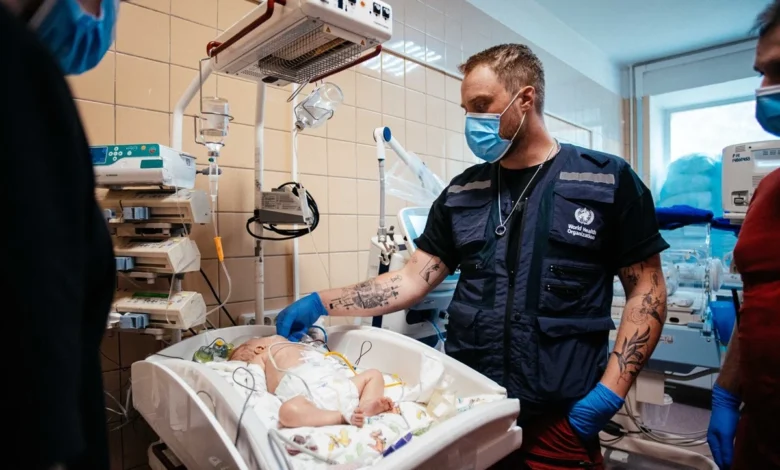
2024: Preparations are made for humanitarian medical transfers, such as baby Sofia from Ukraine to Germany, illustrating the vital operational role of the WHO in conflict zones and humanitarian crises.
Recent Announcement: The United States government announces its intention to withdraw from the World Health Organization, prompting widespread diplomatic concern and an official statement of regret from the Geneva-based agency.
Financial, Operational, and Data-Driven Implications of the Withdrawal
The withdrawal of the United States carries severe financial and operational repercussions for the WHO. As the organization’s single largest donor, the U.S. government provides hundreds of millions of dollars annually through both assessed contributions (mandatory dues based on national wealth and population) and voluntary contributions. These funds are designated for a wide array of programs, ranging from routine immunizations and maternal health initiatives to emergency responses against outbreaks of Ebola, cholera, avian influenza, and other high-consequence pathogens.
Without American financial support, the WHO faces the immediate challenge of structural budget deficits. These fiscal constraints could force the organization to scale back its footprint in fragile states, developing nations, and conflict zones where health infrastructure is either non-existent or severely degraded. Programs addressing neglected tropical diseases, non-communicable diseases, and health system strengthening could experience critical delays or reductions in scope.
From an epidemiological perspective, the absence of the United States risks creating a dangerous intelligence gap. The WHO relies on a global network of collaborating centers, many of which are based in prestigious American academic and research institutions. Disengagement could hinder the seamless exchange of genetic sequencing data, vaccine strains, and clinical trial results. While American scientists and researchers may continue to collaborate informally with international counterparts, the loss of formal institutional linkages could slow the global response time to emerging biological threats.
Official Responses and Diplomatic Reactions
In response to the announcement, leadership at the World Health Organization has maintained a diplomatic yet urgent tone. Highlighting the mutually beneficial nature of the seven-decade partnership, WHO officials have emphasized that American institutions have benefited immensely from their active participation in the World Health Assembly and the Executive Board.
"WHO plays a crucial role in protecting the health and security of the world’s people, including Americans, by addressing the root causes of disease, building stronger health systems, and detecting, preventing and responding to health emergencies," the organization stated. The agency noted that this work frequently takes place in dangerous environments where other entities cannot operate.
Furthermore, the WHO pointed to its ongoing reform agenda as evidence of its adaptability and commitment to fiscal responsibility. Over the past seven years, the organization has overhauled its internal monitoring mechanisms to maximize the impact of every contributed dollar. Despite the setback of the U.S. announcement, the agency has left the door open for renewed engagement.
"We hope the United States will reconsider and we look forward to engaging in constructive dialogue to maintain the partnership between the USA and WHO, for the benefit of the health and well-being of millions of people around the globe," the official statement concluded.
International observers and foreign ministries from other member states have also expressed anxiety over the announcement. Many diplomats fear that a U.S. withdrawal could trigger a domino effect, potentially encouraging other major donor nations to reevaluate or reduce their own multilateral financial commitments. Such a shift would fundamentally alter the landscape of global governance, moving away from centralized, rules-based international health coordination toward a more fragmented system of bilateral aid agreements.
Broader Impact on Global Health Security
The broader implications of the United States’ intended departure extend far beyond administrative budgets and diplomatic protocols. In an era defined by rapid globalization, international travel, and environmental pressures that drive zoonotic spillover—where animal diseases jump to humans—global health security is inextricably linked to local resilience. Pathogens do not recognize national borders, and no single nation, regardless of its economic or technological power, can insulate itself entirely from infectious disease threats.
The COVID-19 pandemic underscored the vital necessity of international cooperation, transparent data sharing, and coordinated supply chains for personal protective equipment, therapeutics, and vaccines. While the pandemic also exposed structural weaknesses and bureaucratic delays within international bodies—sparking intense debates over governance and accountability—proponents of multilateralism argue that abandoning these institutions is counterproductive. Instead, they contend that reform, strengthening, and active engagement are the most effective methods to address systemic vulnerabilities.
As the formal withdrawal process moves forward, the international community faces a critical transition period. Policymakers in Washington must weigh the domestic political drivers of the decision against the long-term strategic risks of isolationism in global health. Concurrently, the WHO and its remaining 193 member states must prepare for a leaner operational reality while keeping diplomatic channels open in the hope that future negotiations may preserve the historic alliance between the United States and the world’s leading public health authority.
Related posts: