From Novato Native to Academic Pioneer: Dr. Kenny Wilson’s Journey Unraveling the Cellular Mysteries of Brain Aging and Memory Loss

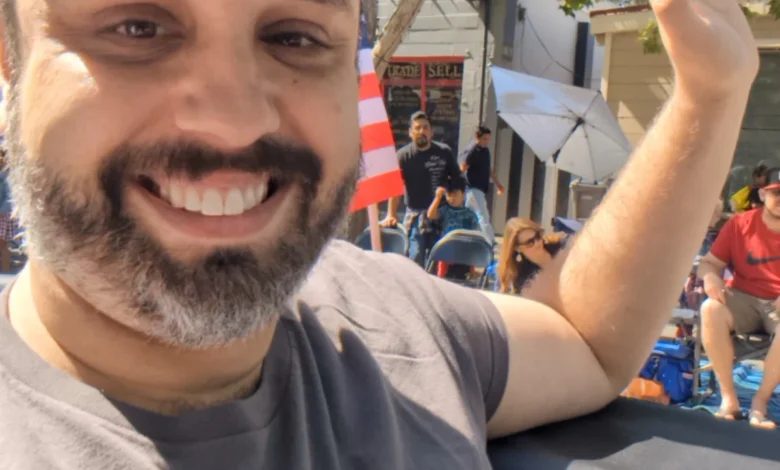
The landscape of aging research is increasingly defined by scientists who look beyond the superficial markers of growing older to examine the intricate cellular machinery operating within the human body. Among these researchers is Dr. Kenny Wilson, a molecular biologist whose trajectory from a middle school student struggling with science in Novato, California, to a newly appointed faculty member in the Department of Neurology at the Ohio State University Wexner Medical Center exemplifies a modern dedication to longevity science. Recently featured in the Buck Institute’s "Faces of Discovery" series, Dr. Wilson’s career encapsulates a thirteen-year evolution through some of the nation’s most rigorous academic and research environments, culminating in breakthroughs that could fundamentally alter how modern medicine approaches neurodegenerative conditions like Alzheimer’s disease.
Main Facts and the Core of Dr. Wilson’s Research
At the center of Dr. Wilson’s scientific inquiry is a profound yet devastating aspect of the human aging process: the gradual loss of memory and cognitive function. While the symptoms of cognitive decline and Alzheimer’s disease are widely recognized—manifesting as the heartbreaking inability of individuals to recall cherished memories or recognize beloved family members—the underlying biological catalysts remain elusive to medical science. Researchers understand the macro-level manifestations of these diseases, but the precise chronological sequence of cellular events that triggers memory loss has long remained hidden.
Dr. Wilson’s recent work focuses specifically on intracellular trafficking within neurons, the specialized cells responsible for generating thoughts and forming memories. Neurons rely on a sophisticated and rapid internal logistics network to transport "cargo"—essential molecules and signals—across cellular structures via electrical impulses. As the human body ages, this vital trafficking system begins to degrade. Dr. Wilson’s research successfully identified a specific gene capable of restoring and optimizing this cellular transport process. Remarkably, when this mechanism is enhanced in aging neurons, it yields a protective effect across multiple cellular components, including the preservation of neuronal DNA. Because DNA damage is a known hallmark of Alzheimer’s disease, this discovery opens promising new pathways for identifying cellular targets to prevent or treat neurodegeneration.
A Chronological Journey: From Novato Classrooms to the Ohio State University
Dr. Wilson’s path to becoming a prominent figure in neuroscience and aging biology is marked by a steady progression of academic milestones and institutional immersion. His interest in scientific inquiry did not begin with immediate academic brilliance; rather, it was forged through early struggles and inspiring mentorship. As a student at Our Lady of Loretto School in Novato, Wilson initially found science to be his most challenging subject, frequently earning high marks in other disciplines while struggling to connect with traditional, rote memorization models.
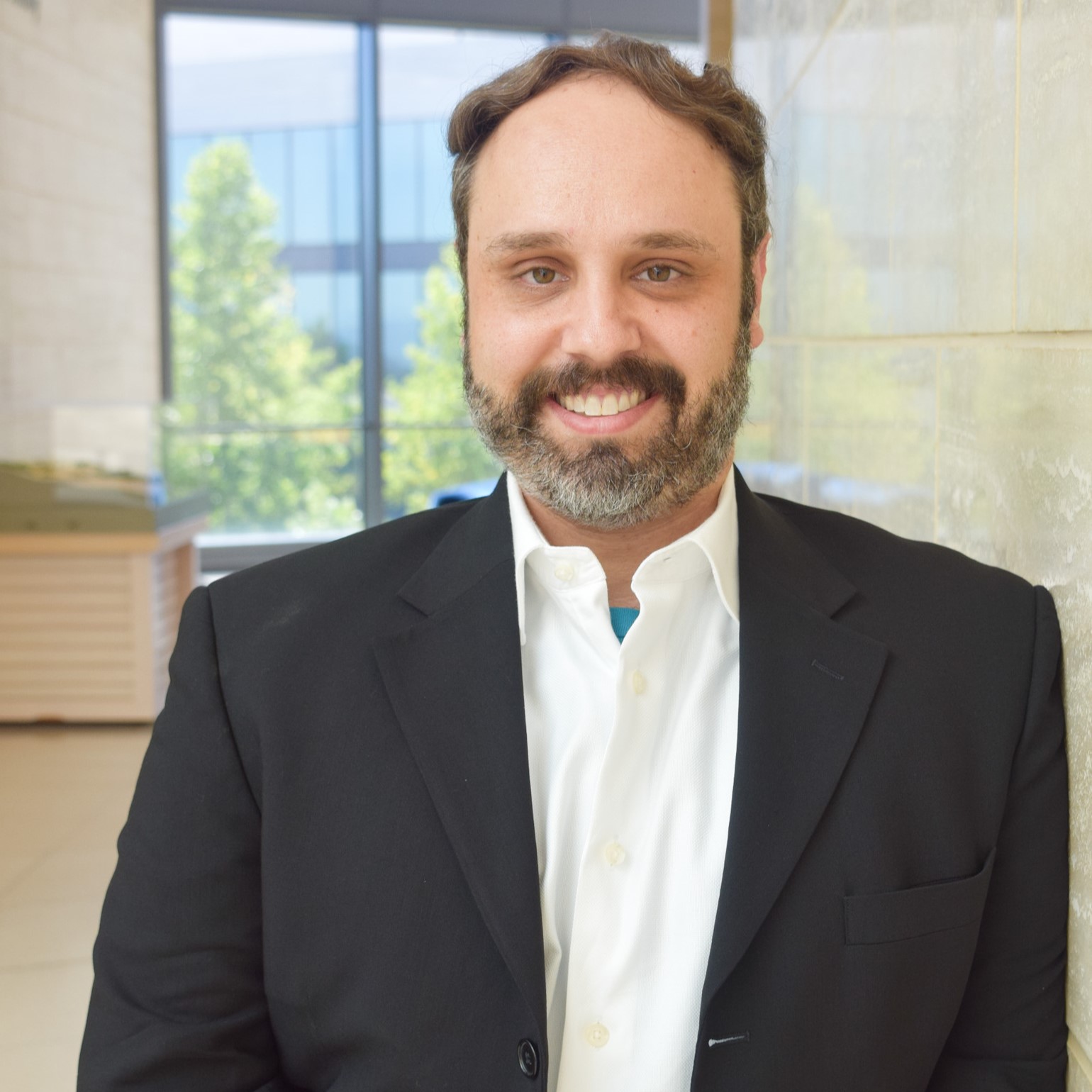
The turning point occurred when a middle school science teacher introduced experiential learning, encouraging students to conduct hands-on experiments both in the classroom and at home. This shift from memorizing established facts to independently discovering empirical truths sparked a lasting fascination with the natural world. By the time he reached high school, fueled by cultural and scientific milestones such as the unfolding discoveries of the Human Genome Project, Wilson was fully committed to a future in the biological sciences.
He pursued his undergraduate education at the University of California, Berkeley, earning a Bachelor of Science degree in Molecular and Cell Biology. Equipped with a rigorous foundational understanding of cellular structures and genetic mechanisms, Wilson returned to his hometown of Novato to join the Buck Institute for Research on Aging, an institution globally renowned for its singular focus on the biology of aging.
Wilson’s tenure at the Buck Institute spans more than a decade, during which he systematically advanced through higher education and specialized research roles. In 2014, he earned a Master’s degree through Dominican University. He subsequently entered the competitive PhD program in the Biology of Aging, a joint venture between the Buck Institute and the University of Southern California (USC). During his doctoral studies, Wilson conducted intensive research within the laboratory of Dr. Pankaj Kapahi, a prominent figure in metabolism and aging studies. He successfully defended his dissertation and earned his PhD in 2019.
Following the completion of his doctoral degree, Wilson transitioned into a postdoctoral fellowship at the Buck Institute, working under the mentorship of Dr. Lisa Ellerby, a recognized expert in neurodegenerative diseases such as Huntington’s disease. This fellowship allowed Wilson to sharpen his focus on the intersection of aging biology and neurological pathology, bridging the gap between general cellular aging and the specific vulnerabilities of brain tissue. This extensive preparation culminated in his recent appointment to the faculty in the Department of Neurology at the Ohio State University Wexner Medical Center, where he will establish his independent research program.
Supporting Data, Technological Integration, and the Future of Neurobiology
The urgency driving Dr. Wilson’s research is underscored by stark demographic and public health data regarding aging populations worldwide. According to the World Health Organization and the Alzheimer’s Association, tens of millions of people currently live with dementia globally, with Alzheimer’s disease accounting for the vast majority of cases. As global life expectancy rises, the prevalence of age-related cognitive decline is projected to increase exponentially, placing unprecedented economic and emotional burdens on healthcare systems and families alike.
In this context, the methodologies utilized by modern researchers are undergoing a revolutionary transformation. Reflecting on the evolution of his field over the next five to ten years, Dr. Wilson emphasizes the integration of cutting-edge technologies into biological research. Modern neuroscience is no longer confined to manual, labor-intensive microscopy and small-scale cellular observation. Instead, the incorporation of artificial intelligence and machine learning has drastically accelerated the pace of discovery.
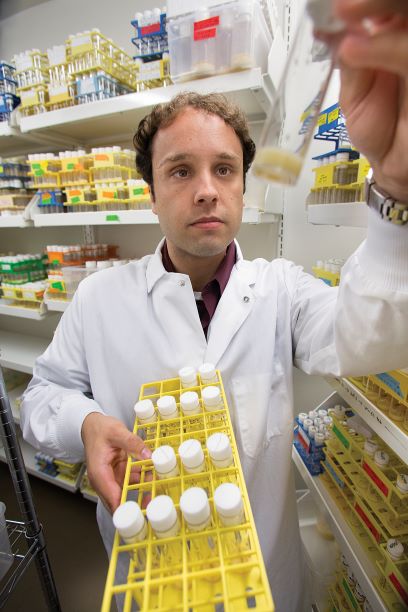
Computers are now routinely deployed to analyze vast datasets, identifying subtle patterns in healthy cells versus those subjected to age-related stress or disease—patterns that are often entirely imperceptible to the human eye. Furthermore, the advent of high-throughput robotics and automation allows researchers to screen thousands of pharmacological compounds simultaneously. Where it once took weeks or months to manually assess the impact of a single drug candidate on cellular function, robotic systems can now execute massive parallel trials. This technological leap dramatically shortens the timeline from initial biological discovery to viable therapeutic development, offering hope that potential treatments for cognitive decline can be identified and tested with unprecedented speed.
Broader Impact and Implications for Lifelong Cognitive Health
The ultimate objective of Dr. Wilson’s research program transcends academic publication; it targets the fundamental human desire to maintain cognitive vitality throughout an extended lifespan. The concept of "healthspan"—the period of life spent in good health, free from chronic disease and debilitating disability—has become the central organizing principle for institutions like the Buck Institute. While modern medicine has made remarkable strides in extending human life expectancy, ensuring that those additional years are accompanied by intact memory, reasoning, and independence remains one of science’s greatest challenges.
By focusing on the restoration of intracellular trafficking in neurons, Dr. Wilson’s work addresses a root cause of functional decline rather than merely managing symptoms after cognitive impairment has manifested. If the cellular mechanisms identified in his research can be successfully translated into pharmacological or lifestyle-based interventions, the impact on public health will be profound. Preserving neuronal communication and preventing DNA damage in the brain could delay or even prevent the onset of Alzheimer’s disease and other forms of age-related dementia.
As Dr. Wilson transitions to his new leadership role at the Ohio State University Wexner Medical Center, his journey from a curious student in Novato to a vanguard of neurodegeneration research highlights the power of sustained, curiosity-driven scientific inquiry. By combining rigorous molecular biology with advanced technological tools, researchers in the field of aging biology are moving steadily closer to a future where growing older does not mean relinquishing the memories and thoughts that define human identity.